

The Midcontinent Independent System Operator’s new strategic collaboration with Microsoft marks a pivotal moment in efforts to bring advanced cloud and artificial intelligence tools into the core of bulk power system planning and operations, promising faster analytics, improved forecasting, and a design intent to transform how the Midwest’s grid anticipates and responds to tomorrow’s challenges.
MISO is one of the largest regional transmission organizations in North America, responsible for balancing supply and demand, managing wholesale markets, and coordinating transmission planning across a broad footprint that spans 15 U.S. states and parts of Canada. The organization recently approved an unprecedented multi-tranche transmission expansion portfolio—an investment program that includes regional projects amounting to tens of billions of dollars and thousands of miles of new high-voltage lines to strengthen reliability and unlock new generation. At the same time, the energy system is changing rapidly: electrification, growth of data centers, large-scale renewables, and extreme-weather events are increasing both operational complexity and data volumes.
Against this backdrop, MISO and Microsoft have announced a joint effort to build a unified data platform that combines MISO’s operational domain knowledge with Microsoft Azure cloud infrastructure and Microsoft Foundry (Azure AI Foundry) capabilities. The initiative is framed around three high-level goals: accelerate and scale analytics, modernize long-range transmission planning and system modeling, and improve real-time reliability through AI-driven operational insights and visualization tools.
This matters because long-range planning is not only a modeling exercise—it’s a coordination challenge across utilities, states, and adjacent RTOs. Faster model runs and repeatable, auditable AI workflows can reduce planning friction, enable more rapid sensitivity studies, and make it easier to evaluate high-impact, long-lead projects such as the 765-kV regional backbone segments that the recent transmission portfolio envisions.
MISO’s recent transmission planning approvals include a multi-tranche portfolio with regional elements counted in the tens of billions of dollars and thousands of miles of transmission projects—capacities and timelines that will create substantial planning and interconnection workloads across the decade. MISO publicly reports that certain regional projects (Tranche 2.1 in recent filings) include long-distance, high-voltage corridors such as 765-kV backbones that are measured in the low thousands of miles, and that these regional projects are expected to enter in-service in the 2032–2034 window conditional on regulatory approvals.
Claims that data ingestion and related analytics workflows can be reduced from weeks to minutes are consistent with Microsoft’s own customer case studies where data platform modernization moved previously manual ingestion and preparation steps into automated, cloud-native pipelines. Those customer narratives report dramatic improvements in cycle time for certain data processes—impressive for planning and analytics—but operational transformation at scale across an RTO raises additional integration, governance, and validation requirements that must be managed before such timing improvements can be considered materialized across all workflows.
This trend raises strategic questions for utilities and RTOs: How much of their operational stack should be outsourced to third-party cloud platforms? How to standardize cross-vendor interoperability? And how can regulators ensure competitive, reliable market outcomes while enabling technological modernization?
However, meaningful benefits are contingent on rigorous governance, robust cybersecurity postures, transparent validation of AI outputs, and careful regulatory alignment. The promise of reducing cycle times from weeks to minutes is real for specific processes, but broad operationalization will require staged validation and conservative deployment strategies. If executed with technical discipline and stakeholder inclusivity, the initiative could become a template for how grid operators harness cloud-native AI, but the path from pilot to trusted production requires meticulous attention to safety, explainability, and long-term vendor and data strategy.
Ultimately, the partnership underscores a pragmatic industry truth: modern grid reliability is as much a software and data challenge as it is an engineering one. The coming years will test whether AI and cloud platforms can be harnessed to make planning faster, operations smarter, and the transition to a resilient, decarbonized grid more achievable.
Source: Data Center Dynamics MISO partners with Microsoft to deploy AI tools in effort to modernize grid planning and operations
 Background
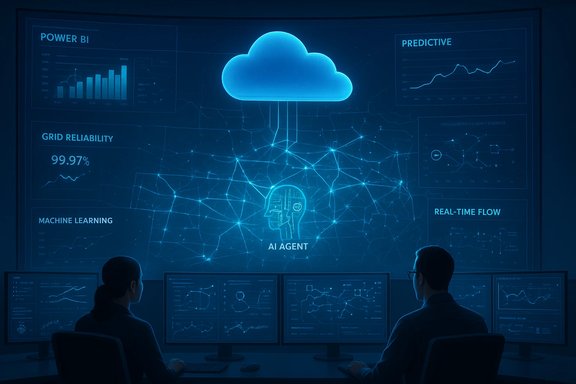
MISO is one of the largest regional transmission organizations in North America, responsible for balancing supply and demand, managing wholesale markets, and coordinating transmission planning across a broad footprint that spans 15 U.S. states and parts of Canada. The organization recently approved an unprecedented multi-tranche transmission expansion portfolio—an investment program that includes regional projects amounting to tens of billions of dollars and thousands of miles of new high-voltage lines to strengthen reliability and unlock new generation. At the same time, the energy system is changing rapidly: electrification, growth of data centers, large-scale renewables, and extreme-weather events are increasing both operational complexity and data volumes.Against this backdrop, MISO and Microsoft have announced a joint effort to build a unified data platform that combines MISO’s operational domain knowledge with Microsoft Azure cloud infrastructure and Microsoft Foundry (Azure AI Foundry) capabilities. The initiative is framed around three high-level goals: accelerate and scale analytics, modernize long-range transmission planning and system modeling, and improve real-time reliability through AI-driven operational insights and visualization tools.
What the partnership includes
Core technologies and tools
- Azure cloud infrastructure for cloud-native analytics, scalable compute, and storage.
- Microsoft Foundry (Azure AI Foundry) to host models, agent frameworks, model routing, observability, and governance for AI applications and multi-agent workflows.
- Power BI and Microsoft 365 Copilot for visualization, collaboration, and productivity integration across operators, planners, and stakeholders.
- Integrations with industry partners and third-party data sources to widen the scope of analytics and accelerate adoption.
Claimed operational benefits
- Faster cycle times for data ingestion and analysis, with MISO and Microsoft indicating a shift from processes that historically took weeks to running in minutes.
- Improved forecasting and long-range transmission planning via richer system models and machine learning-driven scenario analysis.
- Enhanced real-time detection and diagnosis of grid conditions through AI models and automated agent workflows, intended to help operators anticipate congestion and dispatch decisions earlier.
- A platform designed for extensibility, enabling new applications, partner integrations, and iterative improvement as the energy landscape evolves.
Why this matters for grid modernization
The scale of the technical challenge
Modernizing a bulk-power system requires managing enormous datasets from SCADA/EMS, market systems, weather feeds, DER telemetry, and planning models. Traditional workflows rely on disparate tools, manual coordination across teams, and sequential batch-processing models. The MISO–Microsoft approach explicitly targets that fragmentation by providing a single cloud-native data fabric and an AI/agent layer intended to automate and compress iterative workflows.This matters because long-range planning is not only a modeling exercise—it’s a coordination challenge across utilities, states, and adjacent RTOs. Faster model runs and repeatable, auditable AI workflows can reduce planning friction, enable more rapid sensitivity studies, and make it easier to evaluate high-impact, long-lead projects such as the 765-kV regional backbone segments that the recent transmission portfolio envisions.
Meeting demand and reliability pressures
The energy transition—driven by renewables, electrification, and the growth of hyperscale computing demand—places competing stresses on transmission and operations. Faster, more automated analytics can help grid operators proactively forecast congestion and interregional transfer constraints, model resource adequacy under a wider range of scenarios, and coordinate outage scheduling or redispatch actions with shorter notice. In practice, that could mean fewer emergency interventions and a more resilient grid when extreme weather compresses dispatch margins.Technical verification: what the public record shows
Multiple technical and corporate sources confirm the partnership’s high-level components and some of the operational claims behind it. Microsoft’s Foundry platform (marketed as Azure AI Foundry) is an enterprise-grade AI platform that bundles model hosting, multi-agent orchestration, governance, and instrumentation for observability. Foundry capabilities include model routing, agent services, a control plane for lifecycle and governance, and integrations with common Microsoft data and identity services. Azure’s Foundry messaging explicitly supports multi-agent workflows, hosted agents, observability tooling, and routes to deploy agents into Microsoft productivity surfaces.MISO’s recent transmission planning approvals include a multi-tranche portfolio with regional elements counted in the tens of billions of dollars and thousands of miles of transmission projects—capacities and timelines that will create substantial planning and interconnection workloads across the decade. MISO publicly reports that certain regional projects (Tranche 2.1 in recent filings) include long-distance, high-voltage corridors such as 765-kV backbones that are measured in the low thousands of miles, and that these regional projects are expected to enter in-service in the 2032–2034 window conditional on regulatory approvals.
Claims that data ingestion and related analytics workflows can be reduced from weeks to minutes are consistent with Microsoft’s own customer case studies where data platform modernization moved previously manual ingestion and preparation steps into automated, cloud-native pipelines. Those customer narratives report dramatic improvements in cycle time for certain data processes—impressive for planning and analytics—but operational transformation at scale across an RTO raises additional integration, governance, and validation requirements that must be managed before such timing improvements can be considered materialized across all workflows.
Strengths of the collaboration
1) Speed and scale via cloud-native design
Moving planning and real-time analytics to a cloud-native architecture unlocks elastic compute and parallelism. Large-scale scenario analysis, Monte Carlo runs, or ensemble forecasting can exploit on-demand clusters to reduce wall-clock time significantly. This is especially meaningful for long-range planning studies that previously were serialized due to compute or licensing constraints.2) Integrated AI and agent orchestration
Microsoft Foundry’s agent architecture allows creation of multi-step, tool-enabled agents that can automate repetitive analysis tasks—ingesting telemetry, enriching it with weather and market signals, running model variants, and surfacing prioritized exceptions to human operators. When properly governed, agents can augment human decision-making and reduce manual churn.3) Unified data and collaboration surfaces
By integrating Power BI and Copilot-style interfaces, the platform reduces context switching for planners and operators. Accessible dashboards with natural-language assistance can make complex model outputs more actionable for non-technical stakeholders and accelerate consensus-building in planning committees.4) Extensibility and partner integration
The architecture emphasizes integration with third-party models and data sources, which is essential in a sector where vendors supply niche power-flow simulators, renewables forecasting tools, and market analytics. A vendor-neutral integration layer reduces one barrier to broader industry participation.Risks and unresolved technical questions
1) Cybersecurity and operational risk
Shifting critical planning and near-real-time operational analytics into a public cloud and AI agent framework changes the attack surface. While enterprise cloud providers invest heavily in security controls, moving operational data, model weights, and agent workflows into an environment shared across customers increases the stakes. Threats include supply-chain compromise of models, data exfiltration, and adversarial attacks against AI models (poisoning or input manipulation). Robust segmentation, zero-trust architectures, hardware-backed key management, and operator-facing safety interlocks are essential but will add integration and governance complexity.2) Data governance and model explainability
AI-driven planning or reliability recommendations must be auditable, reproducible, and explainable to satisfy regulatory scrutiny and stakeholder trust. Machine learning surrogates for power-flow or contingency analysis may accelerate runs, but their approximations will require conservative validation and documented limits-of-applicability. The industry lacks mature, standardized playbooks for certifying AI components in bulk-power system planning, so MISO will need explicit governance processes that can withstand state regulator and federal oversight.3) Vendor lock-in and procurement dynamics
Deep integration with a single cloud vendor’s AI platform can raise long-term procurement and interoperability concerns. While Foundry emphasizes model portability and open protocols, the practical reality of tightly coupled data pipelines, identity frameworks, and productivity integrations may create migration friction. MISO and its stakeholders must balance the immediate operational benefits against the risk of constrained future choices or cost escalations.4) Reliability vs. automation trade-offs
Operational automation and faster analytics can shorten decision cycles, but they can also increase the risk of over-reliance on automated outputs. Real-time grid operations depend on deterministic, highly-tested tools. Introducing agentic decision support requires rigorous human-in-the-loop design, conservative thresholds for automated action, and clear separation of advisory vs. control functions. Until there is proven operational experience, automation should be scoped to augmentation rather than autonomous control for critical protective functions.5) Regulatory and interjurisdictional complexity
Regional projects in a multi-state RTO face approvals by several state regulators, sometimes with divergent priorities. Similarly, any analytics that alter market recommendations or commitment signals will touch Federal Energy Regulatory Commission (FERC) rules and market participant expectations. Transparent methodologies and stakeholder inclusion will be required to ensure that AI-assisted outputs do not create unintended market distortions.Operational and policy implications
Faster planning cycles, but the need for new validation regimes
Reducing model run-times makes it feasible to explore many more scenarios, run sensitivity sweeps, and test stochastic resource mix outcomes across climate and demand uncertainties. This could materially improve long-range investment decisions and deliver better-aligned transmission projects. However, regulators and stakeholders will require traceability—an auditable chain that ties AI-driven recommendations back to validated physical models and data sources.Informing interregional coordination
One of the chronic pain points in U.S. bulk-power planning is the seam between adjacent RTOs and utilities. Better data sharing and faster modeling can enable coordinated interregional studies, more accurate transfer capability estimates, and smoother interconnection queues. That said, data sharing raises commercial confidentiality and cybersecurity questions that must be negotiated.Enabling distributed resource integration
Improved data ingestion and agent-led analytics can help planners model distributed energy resources (DERs), flexible loads, and aggregators more effectively. That capability supports the increasing need to capture distributed flexibility in reliability and markets, but also requires finer-grained telemetry and standardized data formats from distribution-connected assets.Practical considerations for grid operators and stakeholders
- Establish clear governance: Define policies for AI model lifecycle management, data lineage, roles, and responsibilities to ensure reproducibility and regulatory compliance.
- Harden security: Implement zero-trust access, hardware-backed key management for critical assets, and continuous threat monitoring tailored to OT/IT intersections.
- Validate models continuously: Deploy a staged validation plan that compares AI outputs against physics-based simulators and historical events before scaling to production advisory use.
- Maintain human oversight: Use AI to prioritize and surface high-value signals, but retain operator authority for safety-critical decisions and protective actions.
- Build cross-domain teams: Expand staff skill sets to include data engineering, AI safety, and cloud operations alongside traditional power systems engineering.
What success looks like — and how to measure it
A successful deployment will be visible through tangible, measurable outcomes rather than aspirational statements. Key performance indicators might include:- Reduction in average scenario-run time for planning studies (target: a measurable shift from multi-day/week runs to single-digit hours or less for equivalent-depth studies).
- Increase in number of scenarios evaluated per planning cycle without sacrificing model fidelity.
- Demonstrated improvement in day-ahead and hour-ahead congestion prediction accuracy, measured against a baseline window.
- Quantified improvement in outage response times and reduced manual escalation steps for event triage.
- Evidence of secure, auditable model governance with documented incident response outcomes.
The competitive landscape and broader industry context
Major cloud and technology firms are increasingly engaging directly with grid operators and utilities. Hyperscalers are bringing compute, AI, and data services into collaborations that range from forecasting renewables to optimizing market operations. The MISO–Microsoft collaboration is part of a broader industry trend where digital and energy sector incumbents partner to address the twin pressures of rising demand and decarbonization.This trend raises strategic questions for utilities and RTOs: How much of their operational stack should be outsourced to third-party cloud platforms? How to standardize cross-vendor interoperability? And how can regulators ensure competitive, reliable market outcomes while enabling technological modernization?
Roadmap and likely near-term milestones
- Pilot integrations: Expect initial pilots focused on data ingestion automation, visualization dashboards, and targeted analytics (for example, probabilistic congestion forecasting).
- Validation and governance: Concurrent development of model governance, observability, and audit trails to satisfy internal and external stakeholders.
- Incremental operationalization: First operational gains will likely be advisory and decision-support focused before any automation is permitted into closed-loop control.
- Scale and partner ecosystem growth: Over time, expanded partner integrations and data sources (weather providers, DER aggregators, third-party model vendors) will broaden the platform’s utility.
The human element: workforce impact and upskilling
Digital transformation requires not only technology but also people and processes. MISO’s modernization ambitions will necessitate investment in workforce reskilling—integrating data engineers, ML operations specialists, and cloud architects with traditional system planners and control-room operators. Human-centered design and clear communication will be essential to ensure adoption and prevent siloed “shadow AI” tools that aren’t integrated into formal operations.Conclusion
The MISO–Microsoft collaboration presents a substantive step toward a more data-centric, AI-enabled future for bulk-power grid planning and operations. The blend of Azure’s cloud scale and Microsoft Foundry’s AI/agent ecosystem offers compelling capabilities: faster scenario analysis, automated data pipelines, and more intuitive visualization and collaboration. These strengths can materially improve planning throughput and operational awareness—critical capabilities as the grid accommodates new loads, renewable variability, and growing electrification.However, meaningful benefits are contingent on rigorous governance, robust cybersecurity postures, transparent validation of AI outputs, and careful regulatory alignment. The promise of reducing cycle times from weeks to minutes is real for specific processes, but broad operationalization will require staged validation and conservative deployment strategies. If executed with technical discipline and stakeholder inclusivity, the initiative could become a template for how grid operators harness cloud-native AI, but the path from pilot to trusted production requires meticulous attention to safety, explainability, and long-term vendor and data strategy.
Ultimately, the partnership underscores a pragmatic industry truth: modern grid reliability is as much a software and data challenge as it is an engineering one. The coming years will test whether AI and cloud platforms can be harnessed to make planning faster, operations smarter, and the transition to a resilient, decarbonized grid more achievable.
Source: Data Center Dynamics MISO partners with Microsoft to deploy AI tools in effort to modernize grid planning and operations
