Mobile users are increasingly turning to AI assistants for urgent, personal health questions and emotional support — a usage pattern Microsoft’s January 2026 analysis of more than half a million Copilot conversations makes starkly clear — and that shift is reshaping expectations for digital health tools, accelerating investment in purpose-built mental health platforms, and raising urgent questions about safety, accuracy, and governance.
Microsoft’s internal analysis of Copilot interactions during January 2026 examined over 500,000 de‑identified health and well‑being conversations. The company reports that those mobile conversations skewed toward immediate, personal concerns — symptom checks, condition management, and emotional well‑being — while desktop interactions were far more research‑oriented. Microsoft also says its consumer AI products, including Bing and Copilot, now handle tens of millions of health‑related queries every day, a volume the company describes as evidence of an unmet demand for accessible medical information and guidance.
At the same time, specialist mental‑health apps that combine therapeutic frameworks with AI — typified by Mexico‑founded Yana — are seeing heavy adoption. Yana’s founders and public company statements cite double‑digit millions of downloads and a large base of registered users; the platform has evolved from decision‑tree chatbots into generative‑AI powered companions that attempt to blend cognitive behavioral therapy (CBT) techniques with conversational flexibility.
This convergence — ubiquitous generalist AI assistants and fast‑maturing specialized mental‑health platforms — marks a notable inflection point for digital health. The implications are practical (how people access help at 2 a.m.), clinical (how accurate or safe AI advice is), commercial (which products win user trust), and regulatory (how to govern non‑clinical AI advice at scale).
But convenience is not the same as clinical validity. AI responses vary in accuracy and may lack context that a trained clinician would consider. The difference between useful guidance and harmful misinformation can be narrow when users ask about symptoms, medication interactions, or mental‑health crises.
Still, AI companionship raises hard boundaries: when should an AI escalate to human care? How do we prevent dependency on non‑clinical support that might delay or replace professional therapy for severe cases? Developers and clinicians are still grappling with how to define and enforce those boundaries.
Consumers will face a choice between:
Specialized platforms like Yana show how purpose‑built design can address some of the limitations of generalist assistants by embedding therapeutic frameworks, safety flows, and ongoing engagement mechanisms. Yet neither approach is a panacea. The future of digital health will depend on how well companies combine clinical rigor, robust safety engineering, transparent governance, and respectful data practices.
For users, clinicians, product teams, and policymakers, the central challenge is the same: harness the clear public utility of AI for health while preventing harm, preserving privacy, and ensuring that digital tools augment — rather than displace — trusted clinical care. The device in your pocket can offer timely support and direction, but for serious or ambiguous medical and mental‑health issues, that initial AI interaction should lead to validated clinical follow‑up, not stand in for it.
Source: Mexico Business News Mobile Users Bet on AI for Personal Health Queries
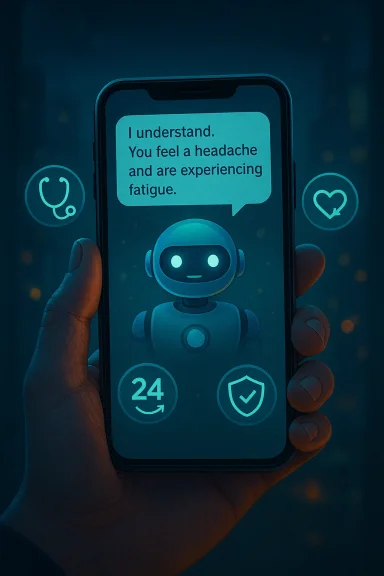 Background
Microsoft’s internal analysis of Copilot interactions during January 2026 examined over 500,000 de‑identified health and well‑being conversations. The company reports that those mobile conversations skewed toward immediate, personal concerns — symptom checks, condition management, and emotional well‑being — while desktop interactions were far more research‑oriented. Microsoft also says its consumer AI products, including Bing and Copilot, now handle tens of millions of health‑related queries every day, a volume the company describes as evidence of an unmet demand for accessible medical information and guidance.At the same time, specialist mental‑health apps that combine therapeutic frameworks with AI — typified by Mexico‑founded Yana — are seeing heavy adoption. Yana’s founders and public company statements cite double‑digit millions of downloads and a large base of registered users; the platform has evolved from decision‑tree chatbots into generative‑AI powered companions that attempt to blend cognitive behavioral therapy (CBT) techniques with conversational flexibility.
This convergence — ubiquitous generalist AI assistants and fast‑maturing specialized mental‑health platforms — marks a notable inflection point for digital health. The implications are practical (how people access help at 2 a.m.), clinical (how accurate or safe AI advice is), commercial (which products win user trust), and regulatory (how to govern non‑clinical AI advice at scale).
Overview: What the Microsoft data shows
Device choice shapes the conversation
Microsoft’s January 2026 dataset shows a clear split by device:- Mobile devices: Much more likely to host personal, urgent, or emotional queries. Users on phones asked about symptoms affecting themselves or family members, and emotional‑wellbeing conversations were significantly more common on mobile.
- Desktop devices: Skewed toward research, literature searches, and work‑oriented inquiries. Academic or clinical research queries were roughly three times more common on desktop than mobile.
Time of day matters
Microsoft’s analysis also found patterns across the 24‑hour cycle:- Emotional well‑being queries grew in prevalence in the evening and overnight hours compared with daytime.
- Symptom‑related questions also rose at night, when access to clinicians and pharmacies is more limited.
What people ask about
In the Copilot sample, topic distribution looked roughly like this (rounded figures reported by Microsoft):- ~40% general medical information (symptoms, conditions, treatments)
- ~11% detailed interpretation questions (symptoms or test results)
- ~6% help navigating healthcare systems (insurance, provider access)
- The remainder included emotional well‑being, fitness coaching, academic research, and paperwork assistance
Why this matters: the practical stakes
1) Real‑time access vs. clinical accuracy
AI assistants fill a practical gap: people need quick, comprehensible health information at odd hours or in stressful moments. For many, asking an AI on a mobile phone is the fastest path to an answer. That convenience can reduce anxiety, point a user toward appropriate care pathways, and help people interpret test results before they can see a clinician.But convenience is not the same as clinical validity. AI responses vary in accuracy and may lack context that a trained clinician would consider. The difference between useful guidance and harmful misinformation can be narrow when users ask about symptoms, medication interactions, or mental‑health crises.
2) Emotional support and therapeutic boundaries
When users ask about emotional well‑being, they often seek immediate validation or coping strategies. AI can offer frameworks drawn from CBT or other evidence‑based techniques to structure conversations and encourage healthy coping. Specialized tools like Yana emphasize this structured approach, training interactions around therapeutic techniques and safety guardrails.Still, AI companionship raises hard boundaries: when should an AI escalate to human care? How do we prevent dependency on non‑clinical support that might delay or replace professional therapy for severe cases? Developers and clinicians are still grappling with how to define and enforce those boundaries.
3) Product segmentation: generalist assistants vs. specialists
The landscape is bifurcating:- Generalist assistants (Copilot, ChatGPT, Gemini): Scale and ubiquity; integrated across platforms; able to handle broad questions but not always optimized for therapeutic safety.
- Specialist mental‑health platforms (Yana and peers): Purpose‑built conversational design, therapeutic frameworks, and safety flows; often focused on higher‑engagement retention and measured clinical outcomes.
Spotlight: Yana and the rise of specialized mental‑health AI
What Yana offers
Yana markets itself as an AI emotional companion rooted in CBT techniques. Over time the platform moved from rigid decision trees toward generative AI that adapts responses to users’ language and emotional cues. Typical features and claimed metrics include:- A large global user base measured in double‑digit millions of downloads.
- High message volumes exchanged in the app, indicating frequent engagement.
- A product design that emphasizes structured guidance, safety windows, and therapeutic framing rather than freeform chat.
Strengths of purpose‑built platforms
- Therapeutic structure: They are engineered to guide users through established therapeutic exercises (e.g., cognitive restructuring, behavioral activation).
- Safety design: Many include escalation protocols, risk detection for suicidal ideation, and handoffs to crisis resources.
- Data for outcomes: Focused platforms can measure engagement metrics and clinical proxies (session completion, symptom scores) more directly than a general assistant.
- Brand positioning: Users seeking mental‑health help may trust a named mental‑health app more than a general assistant that answers everything from recipes to legal questions.
Risks and blind spots
- Clinical limits: AI cannot replace trained therapists for diagnosis or complex care. There is a risk of overclaiming efficacy or blurring the therapeutic boundary.
- Equity and access: Not everyone has a modern smartphone or reliable connectivity. Language coverage and cultural competence vary across platforms.
- Data privacy and reuse: Sensitive mental‑health data require careful governance. How platforms store, share, and use conversational data matters for trust and regulation.
- Regulatory uncertainty: Many jurisdictions are still defining whether and how mental‑health AI should be regulated as medical devices or health services.
Technical and methodological considerations
De‑identification and automated processing
Microsoft’s analysis used de‑identified conversations processed by automated topic‑and‑intent extraction tools without human review. De‑identification and automated summarization are necessary for scale, but they introduce sources of error:- False negatives/positives: Automated topic classifiers sometimes mislabel the intent or emotional tone of a message.
- Loss of nuance: De‑identification can strip context needed to evaluate clinical risk. Without human review, nuanced cues (tone shifts, sarcasm, layered risk statements) may be missed.
- Sampling bias: Conversations that end in follow‑up clinical care are not captured in the same way as queries that resolved without care, making it difficult to measure real outcomes.
Model reasoning and clinical context
Microsoft says it’s working to develop models with stronger reasoning and richer clinical context. This is technically challenging:- Effective medical reasoning requires causal models, uncertainty representation, and domain‑specific knowledge bases.
- Integrating vetted clinical sources (guidelines, evidence summaries) into generative models remains an open engineering and design problem.
- Over‑reliance on broad internet corpora can propagate outdated or low‑quality medical content unless careful curation and grounding strategies are used.
Safety frameworks and provenance
Responsible health AI requires multiple layers:- Information provenance: Models should indicate whether answers are grounded in vetted clinical sources or general knowledge.
- Risk triage: Systems should detect high‑risk content (suicidal ideation, severe symptoms) and escalate appropriately.
- Human‑in‑the‑loop: For ambiguous or high‑stakes queries, systems should defer to human clinicians or recommend contacting professional help.
- Transparent limits: Clear user messaging about what the assistant can and cannot do reduces misplaced trust.
Critical analysis: benefits, trade‑offs, and risks
Benefits
- Triage and navigation at scale: AI can help large populations understand symptoms, prepare for clinician visits, and navigate complex health systems.
- 24/7 access: Mobile AI offers immediate reassurance or advice when clinics are closed — a real advantage in many geographies.
- Lowering barriers: Free or low‑cost AI services can reduce friction to basic mental‑health support for underserved communities.
- Data for population health: Aggregated, de‑identified patterns can highlight unmet needs, inform public health planning, and guide resource allocation.
Trade‑offs
- Accuracy vs. speed: Rapid answers may be shallow or occasionally incorrect. Systems must balance user experience with conservative clinical safety.
- Scale vs. personalization: Large generalist models can answer a broad set of queries but may not match the personalized therapeutic arcs that specialized platforms design for long‑term care.
- Commercial incentives: Monetization strategies (ads, premium features) can influence product design and potentially create conflicts with user welfare.
Risks
- Misinformation and harm: Incorrect triage advice could delay care for serious conditions.
- False reassurance: An AI’s denial of risk may discourage users from seeking urgent help.
- Overdependence: Users might replace human therapy with AI companionship for conditions that need professional treatment.
- Privacy breaches: Sensitive health and mental‑health data require robust safeguards; any leak would be consequential.
- Regulatory mismatch: Rapid product evolution can outpace regulators’ ability to set safety standards, leading to inconsistent protections globally.
Practical recommendations
For product teams building health‑facing AI
- Adopt conservative triage: When uncertain, err on the side of recommending professional evaluation rather than definitive diagnosis.
- Implement escalation pathways: Detect high‑risk language and provide immediate escalation options and crisis resources.
- Ground responses: Where possible, ground generative answers in vetted clinical sources and clearly signal when content is evidence‑based.
- Measure outcomes: Move beyond engagement metrics to measure whether interactions result in safer, faster access to appropriate care.
- Design for transparency: Tell users when content is generated by AI, what data was used, and what the system’s limitations are.
For clinicians and health systems
- Integrate AI as a supplement: Use AI tools to offload administrative triage and patient education, but preserve clinician oversight for diagnosis and treatment.
- Set governance policies: Define when AI outputs can be incorporated into clinical records and how to validate patient‑facing advice.
- Educate patients: Provide guidance to patients about what AI tools are good for and when to seek human care.
For policymakers and regulators
- Clarify classification: Decide which health‑advice AI systems meet the threshold for medical device regulation and which should be governed as digital health tools.
- Mandate safety standards: Establish minimum safety requirements (risk detection, escalation, provenance) for products that handle sensitive health queries.
- Protect data: Ensure robust privacy protections and limits on the commercial use of health‑related conversational data.
The commercial landscape and consumer choice
Generalist assistants will continue to absorb a large share of incidental health queries because they’re ubiquitous and integrated across devices and services. At the same time, purpose‑built mental‑health apps will compete on trust, therapeutic rigor, and safety features.Consumers will face a choice between:
- The convenience and breadth of a general assistant (fast, everywhere, breadth-first), and
- The safety‑and‑structure offered by specialist apps (deeper engagement, designed therapeutic flows).
What to watch next
- Clinical validation studies: Will specialist platforms publish randomized or controlled studies showing symptom improvement? Evidence of clinical impact will be decisive for long‑term adoption.
- Standards and audits: Expect increased calls for independent audits of health‑facing AI for accuracy, bias, and safety.
- Partnerships: Watch for more formal partnerships between AI platforms and accredited health institutions to improve provenance and credibility.
- Regulatory moves: Anticipate emerging regulations targeting medical advice from AI, especially in regions with strict medical device frameworks.
- User behavior shifts: Will users migrate from general assistants to certified mental‑health apps as awareness and literacy about safety grow?
Conclusion
The Microsoft analysis of Copilot conversations surfaces an unmistakable trend: mobile AI assistants have become a first port of call for personal health and emotional‑wellbeing queries. That behavior reflects unmet needs — immediacy, access, and low friction — and it creates both opportunity and responsibility for technology providers.Specialized platforms like Yana show how purpose‑built design can address some of the limitations of generalist assistants by embedding therapeutic frameworks, safety flows, and ongoing engagement mechanisms. Yet neither approach is a panacea. The future of digital health will depend on how well companies combine clinical rigor, robust safety engineering, transparent governance, and respectful data practices.
For users, clinicians, product teams, and policymakers, the central challenge is the same: harness the clear public utility of AI for health while preventing harm, preserving privacy, and ensuring that digital tools augment — rather than displace — trusted clinical care. The device in your pocket can offer timely support and direction, but for serious or ambiguous medical and mental‑health issues, that initial AI interaction should lead to validated clinical follow‑up, not stand in for it.
Source: Mexico Business News Mobile Users Bet on AI for Personal Health Queries