

 Moore and Microsoft Bring Agentic AI to Nonprofit Fundraising With SimioAccelerate
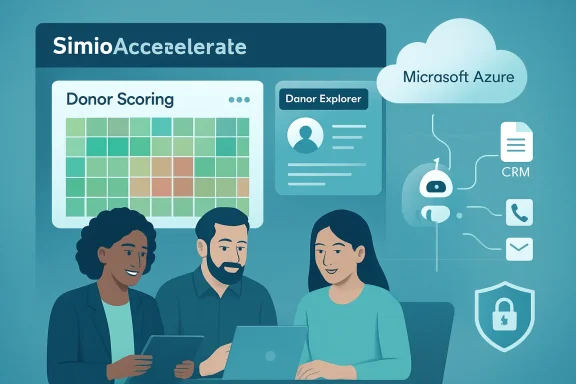
Moore has introduced SimioAccelerate, a new AI-powered fundraising intelligence platform built in collaboration with Microsoft on Microsoft Azure, positioning the product as a way for nonprofits of varying sizes to use large-scale donor data, predictive modeling and autonomous AI agents to identify fundraising opportunities and turn them into campaigns.The platform was announced on April 27, 2026, during AFP ICON 2026, the annual international conference of the Association of Fundraising Professionals. Moore describes SimioAccelerate as one of the first “agentic fundraising” platforms for the nonprofit sector, combining data from SimioCloud, Moore’s nonprofit-focused data platform, with Microsoft’s cloud and AI infrastructure.
For nonprofits, the pitch is direct: many organizations already have valuable donors and prospects in their own databases, but lack the staff, analytics infrastructure or data science resources to identify which relationships should be prioritized. SimioAccelerate is designed to connect a nonprofit’s first-party donor file with SimioCloud’s proprietary giving data, score the file against broader donation behavior, identify high-value opportunities and help generate campaign assets such as emails, call scripts and direct mail messaging.
Moore says a free version of SimioAccelerate is available now, while a premium subscription version is expected to reach general availability in May 2026.
Fundraising Intelligence Meets Agentic AI
The launch reflects a broader shift in enterprise software: AI is moving from passive assistance into workflow execution. Rather than simply producing a report or writing a suggested email, agentic systems are designed to perform multi-step tasks, coordinate between data sources and tools, and move a business process forward with limited manual intervention.In the case of SimioAccelerate, that process is fundraising.
The platform is intended to help nonprofits answer questions that are both familiar and difficult: Which donors are most likely to increase their giving? Which supporters may be ready for a major gift conversation? Which donors are under-engaged? Which communications should be sent next, and through which channel? Which appeals should be prioritized when fundraising teams have limited time?
Traditional donor analytics can surface some of these answers, but many nonprofits still rely on disconnected spreadsheets, CRM exports, manual segmentation, third-party consultants or static wealth-screening tools. Moore’s argument is that the next phase of fundraising technology will pair donor intelligence with AI agents capable of turning insights into action.
That distinction matters. A dashboard might show a fundraiser that a donor segment has high upgrade potential. An agentic system, by contrast, can help create the next-step communications, prioritize the list, recommend ask strategies and support campaign execution across email, phone, direct mail or other addressable channels.
Moore CEO Gretchen Littlefield framed the release as part of a larger transformation in philanthropy, saying fundraising is entering a new era in which data and AI will change how generosity is discovered and activated. The company says SimioAccelerate is intended to bring capabilities once limited to large enterprise fundraising operations to a wider range of nonprofit organizations.
Built on Microsoft Azure
A major part of the announcement is the Microsoft connection. Moore developed SimioAccelerate in collaboration with Microsoft on Azure, and Moore is identified as a Microsoft Elevate Partner.Microsoft Elevate is the company’s broader initiative aimed at expanding access to technology, AI skills and cloud services for nonprofits, educators, workforce programs and community organizations. For Microsoft, the nonprofit sector is both a mission-driven market and a practical test case for AI systems that must balance efficiency, trust, privacy and human relationships.
Harpreet Girn, vice president of global scale for Microsoft Elevate, said the collaboration brings together Azure, SimioCloud’s data and AI to help nonprofit organizations unlock new insights and accelerate their missions.
Azure’s role is especially important because donor intelligence platforms must process sensitive first-party data, connect it with external datasets and run predictive models in a way that can scale. Nonprofits may not have the same IT resources as large corporations, but they still face enterprise-grade demands around security, compliance, uptime and data governance.
By building on Azure, Moore is aligning SimioAccelerate with a cloud platform already widely used by nonprofits, enterprises and public-sector organizations. It also places the product within Microsoft’s expanding AI ecosystem, which includes Copilot-branded tools, Azure AI services, Power Platform, Dynamics 365 and partner-built vertical solutions.
The SimioCloud Data Layer
The core differentiator for SimioAccelerate is not simply that it uses AI, but that it connects AI to a large nonprofit-specific data foundation. Moore says the system is powered by giving signals from SimioCloud, which it describes as a national-scale nonprofit data cooperative.On its product page, Moore states that SimioCloud includes data from more than 132 million donors and more than 2.2 billion transactions, with benchmarking across more than 800 nonprofits. That matters because donor behavior is highly contextual. A general-purpose large language model can draft persuasive copy, summarize records or suggest campaign ideas, but it does not inherently know which donors have demonstrated real-world giving capacity, affinity or behavioral patterns across the nonprofit sector.
Moore’s position is that large language models alone are not enough. The fundraising value comes from combining AI generation with structured donor intelligence: giving history, cross-organization behavior, transaction data, donor lifecycle indicators, household or income signals, engagement patterns and predictive scoring.
In practical terms, SimioAccelerate is designed to analyze a nonprofit’s donor file against SimioCloud’s broader dataset. It can then surface donors who may have higher giving potential than the organization realized, identify upgrade opportunities, highlight risks and help prioritize outreach.
This is where the product moves beyond generic AI copywriting. A nonprofit could ask a chatbot to draft a fundraising email today. What SimioAccelerate is promising is more specific: first identify the right donor audience using predictive models and proprietary giving data, then generate communications aligned to that audience, then assist with campaign execution.
How SimioAccelerate Works
Moore’s public description of SimioAccelerate presents the workflow as a relatively simple self-service process.First, a nonprofit uploads its donor file. The platform is designed to be accessible to small fundraising teams, not only organizations with internal data science departments or complex enterprise systems.
Second, SimioCloud modeling scores and analyzes the file. The system compares donor records against broader giving behavior and predictive models. The goal is to identify high-value donors, likely upgrade candidates, risk areas and fundraising opportunities that may be hidden within the existing database.
Third, users explore dashboards and donor-level insights. Moore describes a “Donor Explorer” view that can show a fuller picture of individual donors, including recent gifts, lifetime value, co-op donation behavior, income indicators and other context.
Fourth, AI agents help translate those insights into outreach. Moore says the system can draft personalized communications, recommend actions and support generative email capabilities. The company also describes the platform as using Microsoft Copilot to generate personalized communications aligned to donor history and giving signals.
The intended outcome is a single workflow that moves from data upload to scoring, insights and campaign activation.
That is an important shift for nonprofits because many fundraising technology stacks are fragmented. A donor file may live in one CRM. Wealth screening may come from another vendor. Email campaigns may be created in a marketing platform. Direct mail may require another production workflow. Call scripts may be managed manually. Strategic recommendations may come from consultants. SimioAccelerate appears designed to collapse more of that process into one intelligence layer.
Why This Matters for Small and Mid-Sized Nonprofits
Large nonprofits, universities, hospitals and national charities have long had access to advanced fundraising analytics. They can purchase wealth screening, hire data analysts, maintain custom CRM integrations and build dedicated major-gifts research teams. Smaller organizations often cannot.That creates an intelligence gap. A small nonprofit may have loyal donors with significant giving potential, but without the right data signals, staff may not know which relationships to cultivate. A mid-sized organization may have thousands of records, but only a small team to manage appeals, stewardship and major gift outreach. Even when insights exist, staff may not have time to translate them into well-targeted campaigns.
SimioAccelerate is explicitly positioned as a way to make donor intelligence more accessible. Moore’s marketing describes the product as “self-service” and built for nonprofits that need advanced analytics without complex infrastructure or in-house data science teams.
If the platform performs as advertised, the appeal is clear. Instead of waiting weeks or months for analysis, a nonprofit could upload a file, receive scoring, view donor opportunities and generate outreach assets more quickly. That could be especially valuable during year-end fundraising, capital campaigns, emergency appeals or donor reactivation efforts.
The promise is not simply automation for its own sake. In fundraising, timing and relevance matter. A donor who recently increased giving to similar causes may be ready for a different conversation than someone who has lapsed. A long-time modest donor may have major-gift potential that is not obvious from internal records alone. A supporter with strong external giving behavior may be worth prioritizing for personal outreach rather than a generic email campaign.
For resource-constrained nonprofits, better prioritization can be as valuable as better messaging.
From Predictive Analytics to Execution
Predictive analytics in fundraising is not new. Nonprofits have used donor scoring, wealth screening, affinity models and segmentation for years. What is changing is how those outputs are consumed.Historically, predictive models often resulted in lists: top prospects, likely sustainers, renewal risks or upgrade candidates. Fundraisers then had to decide what to do with those lists. That handoff created friction. A model could identify an opportunity, but staff still needed to write appeals, coordinate campaigns, brief gift officers and track next steps.
SimioAccelerate is part of a new generation of tools that tries to close that gap. Its AI agents are described as orchestrating, automating and executing fundraising processes. In plain terms, that means the system is designed to help turn a data signal into an action plan and then into campaign content.
For example, if the system identifies a donor segment with upgrade potential, it may help generate email copy tailored to the organization’s brand and messaging. If a major gift prospect is identified, it may help produce a call script or talking points. If direct mail is appropriate, the system may support audience creation and message development.
The agentic framing is important because it suggests more than isolated AI features. Many platforms now include a generative AI button somewhere in the interface. SimioAccelerate’s positioning is broader: AI agents are embedded into the fundraising workflow and designed to coordinate steps across intelligence, content and activation.
For WindowsForum readers who follow enterprise technology, this mirrors a wider trend across industries. Sales platforms are adding AI agents to qualify leads and draft outreach. Customer support systems are using agents to triage cases and recommend responses. Security tools are using agentic workflows to investigate alerts. SimioAccelerate applies similar logic to nonprofit revenue operations.
The Role of First-Party Data
One notable part of the product’s design is the connection between a nonprofit’s own data and SimioCloud’s external signals. This first-party data layer is critical.A nonprofit’s donor database contains relationship context that no external model can fully replace: past gifts to that organization, event attendance, volunteer activity, campaign response history, communication preferences, stewardship notes and mission-specific affinity. External cooperative data can add broader giving behavior, but the value comes from combining both.
That combination also raises the importance of data hygiene. AI-powered fundraising tools are only as useful as the donor records they ingest. Duplicates, outdated contact information, inconsistent gift coding, missing consent fields and poor segmentation can weaken model performance and campaign execution.
For organizations considering tools like SimioAccelerate, the technology may create an incentive to improve internal data discipline. Clean donor files, accurate gift histories and well-maintained CRM processes become more valuable when connected to AI scoring and automated outreach.
At the same time, vendors will need to make onboarding simple. Many small nonprofits do not have dedicated database administrators. A self-service platform must be able to accept common donor file formats, provide clear upload guidance, flag data quality issues and explain how records are matched and scored.
Privacy, Consent and Donor Trust
Any platform that connects first-party donor records with cooperative data and AI-generated outreach will face questions about privacy, consent and trust. Nonprofits operate in a relationship-driven environment. Donors expect responsible handling of personal information, and many organizations are especially sensitive to reputational risk.Moore’s announcement emphasizes Azure’s scale and AI capabilities, but nonprofits evaluating the platform will likely want detailed answers on data governance. Key questions include how uploaded donor files are stored, how long data is retained, how records are matched against SimioCloud, what data is returned to the nonprofit, whether donor data is used to improve shared models, and how opt-outs or privacy requests are handled.
Organizations will also need to consider how AI-generated communications are reviewed. Fundraising messages often involve emotional storytelling, beneficiary narratives and donor-specific personalization. AI can accelerate drafting, but human oversight remains essential to avoid errors, inappropriate tone, over-personalization or claims that do not match the organization’s mission and policies.
There is also a strategic trust issue. Donors may not object to nonprofits using analytics, but they may react poorly if outreach feels invasive. The most effective use of donor intelligence is likely to be subtle and respectful: better timing, better relevance, better stewardship and better prioritization, not messaging that makes donors feel surveilled.
As AI becomes more common in fundraising, nonprofits will need internal guidelines for transparency, data minimization, review workflows and acceptable personalization.
Microsoft’s Expanding Nonprofit AI Footprint
The collaboration with Moore fits into Microsoft’s broader focus on nonprofit technology. Microsoft has been emphasizing affordable cloud services, AI skills, security, productivity tools and partner solutions for mission-driven organizations.Azure provides the infrastructure layer. Microsoft 365 and Copilot provide productivity and generative AI tools. Dynamics 365 and Power Platform support CRM, workflow automation and custom applications. Partner-built offerings such as SimioAccelerate add industry-specific capabilities on top of that stack.
This partner model is important because nonprofit fundraising has specialized requirements. Generic CRM and marketing automation tools can handle contacts and campaigns, but donor management involves pledges, recurring gifts, householding, tribute gifts, planned giving, major gifts, donor-advised funds, stewardship workflows and mission-specific communications. AI tools that ignore this context risk being too generic.
By working with Moore, Microsoft gains a nonprofit fundraising use case built around a specialized data asset. Moore gains the credibility and scalability of Azure, along with alignment to Microsoft’s Elevate initiative.
For nonprofits already using Microsoft tools, the collaboration may make SimioAccelerate more attractive. Many organizations are standardized on Microsoft 365, and some use Azure, Dynamics or Power Platform. A fundraising intelligence platform built within that ecosystem may be easier for IT leaders to evaluate than a standalone AI vendor with unclear infrastructure.
CHOP Case Study Signals Moore’s Direction
Moore’s SimioAccelerate product page also highlights a case study involving Children’s Hospital of Philadelphia. According to Moore, CHOP partnered with the company to improve major donor outreach by using a SimioJourney predictive model to identify and prioritize high-value Grateful Family prospects.The case study claims significant projected impact, including a $35 million projected increase in prospective major gifts, higher average gift size, faster velocity to gift, increased response rate and thousands of new major gift prospects identified.
While a case study is not the same as independent validation, it does illustrate the type of fundraising problem Moore is trying to productize. Healthcare philanthropy, especially grateful patient and family fundraising, depends heavily on identifying the right prospects and engaging them appropriately. Large hospitals may have sophisticated advancement operations, but the underlying challenge is common across the sector: find the donors most likely to deepen their support and engage them with the right message at the right time.
SimioAccelerate appears to package elements of that type of modeling and outreach workflow into a broader self-service product.
What “Free to Start” Could Mean
Moore says SimioAccelerate’s free platform is available now, with the premium subscription platform expected in May 2026. The company’s product page describes getting started for free with no contract or commitment.For nonprofits, the details of the free tier will matter. A free onboarding path could lower barriers for smaller organizations, but the practical value will depend on file size limits, available scoring features, dashboard access, AI generation capabilities, export options, data refresh frequency and support.
The premium subscription version will likely determine how deeply organizations can operationalize the platform. Advanced features may include larger data volumes, more detailed donor profiles, additional campaign channels, richer benchmarking, integrations, workflow automation, collaboration tools or more sophisticated AI agents.
The timing is also notable. Launching the free version in late April gives nonprofits several months before the year-end giving season, when many organizations generate a large share of annual donations. If the premium version becomes broadly available in May 2026, Moore will have time to onboard early users before fall campaign planning.
The Competitive Landscape
SimioAccelerate enters a crowded but evolving market. Nonprofit technology includes donor management platforms, CRM systems, fundraising automation tools, wealth screening providers, marketing platforms, payment processors, peer-to-peer fundraising systems and analytics vendors.What differentiates this launch is the combination of three elements: a cooperative donor dataset, predictive fundraising models and agentic AI execution. Many vendors offer one or two of those pieces. Fewer can credibly claim all three.
However, adoption will depend on trust and integration. Nonprofits are often cautious buyers, particularly when donor data is involved. They may already be invested in platforms such as Salesforce, Blackbaud, Microsoft-based CRM systems or custom databases. SimioAccelerate will need to fit into existing workflows rather than require organizations to rip and replace core systems.
It will also need to prove that AI-generated recommendations are understandable. Fundraisers may not act on a score if they do not know why a donor is being prioritized. Explainability is especially important in major gifts, where human judgment and relationship history remain central.
The most successful AI fundraising platforms will likely be those that augment fundraisers rather than attempt to replace them. Fundraising is not just a transaction optimization problem. It is relationship work, storytelling, stewardship and trust-building. AI can identify opportunities and reduce administrative burden, but human fundraisers still carry the mission relationship.
A New Phase for Fundraising Technology
SimioAccelerate’s launch is another signal that AI in the nonprofit sector is moving from experimentation to productized workflows. The first wave of generative AI adoption centered on drafting emails, writing grant language, summarizing documents and brainstorming campaign ideas. The next wave is more operational: agents that analyze data, recommend actions, generate assets and coordinate execution.For nonprofits, that creates opportunity and risk. Used well, AI can help small teams behave more strategically, reduce manual work and uncover revenue opportunities already present in their donor base. Used poorly, it can produce generic messaging, privacy concerns or over-automation in a field where authenticity matters.
Moore and Microsoft are betting that the combination of Azure infrastructure, SimioCloud donor intelligence and agentic AI can give nonprofits a practical path into that next phase.
The most important question will be whether SimioAccelerate can deliver enterprise-level fundraising intelligence without enterprise-level complexity. If it can, the platform could represent a meaningful shift for organizations that have historically lacked access to advanced donor analytics and AI-assisted campaign execution.
For now, the announcement positions SimioAccelerate as a noteworthy example of how vertical AI platforms are likely to evolve: not as general chatbots, but as domain-specific systems built around proprietary data, cloud-scale infrastructure and agents designed to move real workflows forward.
Source: The NonProfit Times Tech: Moore, Microsoft Unveil Agentic Fundraising Platform - The NonProfit Times
