

Mustafa Suleyman’s recent public remarks mark a deliberate pivot in how one of the industry’s most influential AI leaders frames generative systems: not only as productivity tools but as potential companions for emotional offloading — a digital “detox” that could help people process stress and make clearer decisions. His comments, made across podcast appearances and social posts this year, argue that chatbots designed with persistent memory, empathetic conversational style, and strict ethical limits can become judgment-free spaces for venting and reflection — while also raising urgent questions about dependency, privacy, and clinical safety.
Technology companies have spent the past decade reshaping public expectations about human-computer interaction. Models that once answered single queries now increasingly act as continuous assistants, integrated into email, documents, and operating systems. Mustafa Suleyman — cofounder of DeepMind and, since 2025, CEO of Microsoft AI — has emerged as a vocal proponent of a human-centered approach to this next phase, advocating for AI that augments human flourishing rather than replacing the messy, moral aspects of daily life. At the same time, he has repeatedly warned about the dangers of systems that appear conscious and the mental-health harms that can follow when people anthropomorphize machines. Suleyman’s framing comes at a moment when major cloud and platform investments are accelerating. Microsoft announced a $23 billion global AI investment plan in December 2025 — a multi-year build-out that will expand data centers, training programs, and infrastructure capacity, with a large portion earmarked for India and Canada. That spending underpins the technical plausibility of the features he discusses: persistent memory, agentic behavior, and long-horizon planning.
The responsible path forward is clear in principle: design empathy without deception, provide clear clinical boundaries, embed robust memory controls, and pair technological rollout with regulation and independent evaluation. If those guardrails hold, AI could become a force multiplier for human resilience — a widely available “listening space” that helps people speak, reflect, and then re-engage with the messy business of human relationships. If they do not, we risk outsourcing the labor of care to systems that can simulate warmth but cannot replicate the moral accountability of human caregivers.
Suleyman’s rhetoric — optimism tempered by warnings — is a useful frame: build for kindness, but build with brakes, independent verification, and the humility to pause. The next year will show whether industry commitments and public policy can align to make the “detox” vision a net benefit rather than a new form of social harm.
Source: WebProNews Microsoft AI CEO Envisions Empathetic Chatbots for Mental Health Support
 Background
Technology companies have spent the past decade reshaping public expectations about human-computer interaction. Models that once answered single queries now increasingly act as continuous assistants, integrated into email, documents, and operating systems. Mustafa Suleyman — cofounder of DeepMind and, since 2025, CEO of Microsoft AI — has emerged as a vocal proponent of a human-centered approach to this next phase, advocating for AI that augments human flourishing rather than replacing the messy, moral aspects of daily life. At the same time, he has repeatedly warned about the dangers of systems that appear conscious and the mental-health harms that can follow when people anthropomorphize machines. Suleyman’s framing comes at a moment when major cloud and platform investments are accelerating. Microsoft announced a $23 billion global AI investment plan in December 2025 — a multi-year build-out that will expand data centers, training programs, and infrastructure capacity, with a large portion earmarked for India and Canada. That spending underpins the technical plausibility of the features he discusses: persistent memory, agentic behavior, and long-horizon planning. The pitch: “Detoxify ourselves” — What Suleyman actually said
Suleyman’s most vivid phrasing — that chatbots could help people “detoxify ourselves” from emotional burdens — surfaced on a late-2025 podcast episode and subsequent coverage. He emphasized two complementary ideas: first, that many users already treat chatbots as a private, nonjudgmental space for working through breakups, anxiety, or recurring personal decisions; second, that well-designed AI could scale “basic kindness” by consistently practicing reflective listening, empathetic language, and privacy-preserving memory to help people articulate feelings and arrive at clarity. He explicitly cautioned that these systems are not a replacement for licensed therapy, but he argued they can serve as accessible first-line emotional outlets. This claim rests on three design elements Suleyman highlighted repeatedly:- Nonjudgmental conversational patterns (reflective, even-handed, empathetic).
- Persistent, contextual memory to build continuity across interactions.
- Clear ethical boundaries that prevent exploitative use cases (for instance, a refusal to build eroticized companions).
Technical reality: persistent memory, continuous planning, and agentic features
From one-shot answers to long-horizon assistants
Suleyman and others in the field describe the next stage of generative AI as a transition from “one-shot” Q&A to systems that maintain state, remember preferences, and perform multi-step tasks across time. He’s forecast that within short horizons these systems will support “continuous planning” — the ability to hold and act upon a stream of intentions rather than isolated prompts. Industry reporting and public posts attribute this expectation to Suleyman and to conversations inside Microsoft about making copilots more agentic and memory-capable. Technically, persistent memory and long-horizon planning are already being implemented as layered architectures:- Front-end chat interfaces that maintain session state and user profiles.
- Retrieval-augmented generation (RAG) systems that pull from saved user data and private documents.
- Agent orchestration layers that sequence model calls, verify action safety, and manage external APIs.
What “near-infinite memory” actually implies
When leaders use shorthand like “near-infinite memory,” they usually mean scalable, persistent state across many interactions rather than literally limitless storage. In practice, that implies:- User-indexed vectors and embeddings for semantic recall.
- Summarization pipelines to compress long threads into useful signals.
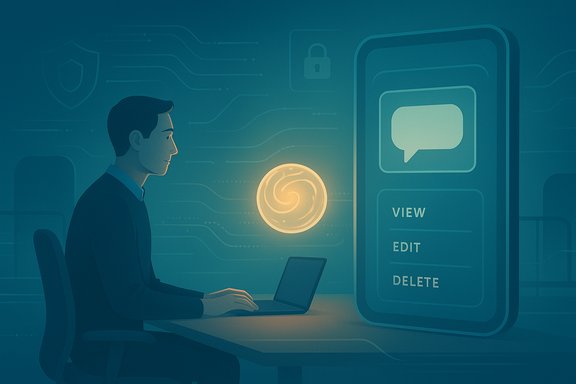
- Consent-driven policies and UI affordances for memory management (view, edit, forget).
The psychological risks: AI psychosis, dependency, and clinical boundaries
Suleyman has publicly warned about what’s been termed “AI psychosis” — cases in which users develop pathological beliefs or unhealthy attachments to chatbots that seem conscious. Media coverage and expert commentary document incidents where prolonged, emotionally intense chatbot engagement led to confusion, delusional thinking, or dangerous behaviors. Suleyman’s stance is to treat those patterns as a design and governance problem rather than inevitable collateral damage. Key psychological risks include:- Emotional over-reliance: substituting AI companionship for human relationships and formal therapy.
- Verification harms: users taking AI-generated guidance on medical, legal, or safety-critical topics without professional oversight.
- Anthropomorphization: as systems mimic human conversational cues (tone, pauses, memory), users may attribute intentionality or feeling where none exists.
Microsoft’s ethical red lines: no erotica and careful constraint
Suleyman has publicly drawn a line around certain applications. At industry forums he made clear Microsoft will not commodify “simulated erotica” or develop sexbot features — a position intended to limit harms tied to intimacy simulation, grooming, or extreme attachment. That decision sets Microsoft apart from some competitors and communicates a risk-averse ethical stance: pursue empathy and assistance, but not exploitation of vulnerabilities. This restraint is meaningful for product design. It implies:- Default safety filters tuned to protect minors and vulnerable adults.
- Explicit product policies banning sexualized or exploitative interaction modes.
- Conservative choices about personalization that could be manipulative.
Privacy and data governance — the hard trade-offs
If chatbots will remember, who controls those memories? Persistent conversational memory carries three overlapping risk vectors:- Data exposure: transcripts and summaries might contain deeply sensitive personal information.
- Secondary use: memory data could be repurposed for ads, profiling, or training models unless explicitly prevented.
- Legal exposure: in litigation, private chat logs could be discoverable if held by a platform or service.
Societal impacts: jobs, economic anxiety, and the paradox of AI as healer and disruptor
Microsoft’s $23 billion investment in AI infrastructure — plus similar commitments from peers — will accelerate automation and create demand for new roles while threatening many existing ones. Recent coverage shows AI as a frequently cited driver behind many of 2025’s major corporate workforce reductions. If chatbots become standard emotional tools, they could provide coping mechanisms for the stress these transformations produce; yet they could also normalize outsourcing the human labor of empathy to machines created by the same forces that displace workers. This paradox — AI as a balm produced by the forces that trigger the wound — complicates the moral calculus. Real-world implications:- Companies must pair automation with reskilling and income transition policies.
- Mental-health interventions tied to AI should be evaluated for efficacy against socioeconomic stressors, not only individual symptoms.
- Policymakers should consider whether platform-driven mental supports require regulation or public funding parity with clinical services.
Clinical questions: when is a chatbot appropriate — and how should it be evaluated?
Suleyman emphasizes that chatbots are not therapy, but that distinction is porous in practice. For responsible deployment in mental-health contexts, systems must meet a set of minimum standards:- Clear labeling: the system must be explicitly non-therapeutic unless clinically certified.
- Escalation pathways: if risk signals (self-harm, suicidal ideation, violence) are detected, the system must trigger human intervention.
- Evidence-backed metrics: developers must publish outcomes (engagement, symptom changes, adverse events) evaluated in peer-reviewed or regulatory contexts.
- Data minimization and consent: personal histories retained by memory systems should be opt-in, editable, and exportable.
- Liability frameworks: providers must clarify legal responsibilities for advice and behavior that cause harm.
Productization and user experience: how empathetic AI could be built — responsibly
Designing empathic chatbots that help users offload emotions requires a different UX discipline than building summarization or coding assistants. Practical design elements should include:- Transparency defaults: remind users periodically that they are interacting with a system that simulates empathy rather than experiences it.
- Memory controls in plain language: view, correct, export, and delete saved memories.
- Tone and boundary models: choose empathetic phrasing without making false claims about understanding or consciousness.
- Safety nets: human-in-the-loop mechanisms for mental-health escalations or when the system detects persistent maladaptive patterns.
Governance and regulation: where policy must catch up
Three policy priorities should be front and center:- Platform accountability: companies must disclose memory policies, training data usage, and escalation protocols for risk detection.
- Health-equivalent standards for therapeutic claims: anything marketed as “mental health” support must meet medical-device or behavioral-health evidence thresholds.
- Privacy-first defaults: persistent memory should be off by default for sensitive categories unless explicit opt-in is documented.
Practical guidance: what enterprises and users should do now
For organizations building or deploying empathetic chatbots:- Start with ethics-by-design: integrate safety checks and clinical review from day one.
- Treat memory as a product feature with lifecycle management: provide UI controls, retention policies, and audit logs.
- Invest in human fallback: ensure live clinicians or crisis-services handoffs for high-risk situations.
- Be conservative with claims: avoid marketing phrases that imply therapeutic equivalence.
- Use chatbots as an adjunct — not a substitute — for professional care if you have clinical needs.
- Read and manage memory settings immediately; if a tool stores conversations, find the privacy and deletion options.
- Watch for signs of over-reliance: if you find yourself preferring a bot to human interactions, consider seeking human support.
Strengths and potential benefits
- Accessibility: conversational AI can provide 24/7 access for people who lack affordable or timely therapy.
- Emotional hygiene: short, private venting sessions could lower stress and enable more constructive real-world interactions.
- Scalability: well-designed assistants can deliver consistent, high-quality reflective listening across millions of users.
- Complementary care: when integrated with verified escalation pathways, chatbots can augment clinical capacity and triage need.
Limitations and unresolved risks
- Evidence gap: robust longitudinal trials demonstrating meaningful mental-health outcomes from nonclinical chatbots are limited.
- Dependency and erosion of human networks: easy access to simulated support could reduce real-world help-seeking behavior.
- Data and legal risk: private memories create enormous legal and ethical liabilities.
- Platform fragmentation: divergent safety standards across vendors will produce uneven protection.
Conclusion
Mustafa Suleyman’s vision — empathetic chatbots that help people “detoxify” their emotional load — captures an attractive, human-centered use case for next-generation AI. The technical building blocks for persistent memory and continuous planning exist, and Microsoft’s large-scale investments make the scenarios plausible in the near term. Yet the societal and clinical implications are consequential: dependency risks, privacy trade-offs, and the need for evidence-based evaluation remain unresolved.The responsible path forward is clear in principle: design empathy without deception, provide clear clinical boundaries, embed robust memory controls, and pair technological rollout with regulation and independent evaluation. If those guardrails hold, AI could become a force multiplier for human resilience — a widely available “listening space” that helps people speak, reflect, and then re-engage with the messy business of human relationships. If they do not, we risk outsourcing the labor of care to systems that can simulate warmth but cannot replicate the moral accountability of human caregivers.
Suleyman’s rhetoric — optimism tempered by warnings — is a useful frame: build for kindness, but build with brakes, independent verification, and the humility to pause. The next year will show whether industry commitments and public policy can align to make the “detox” vision a net benefit rather than a new form of social harm.
Source: WebProNews Microsoft AI CEO Envisions Empathetic Chatbots for Mental Health Support
