

Mustafa Suleyman’s brusque dismissal of critics as “cynics” — a now‑viral social post that scoffs at people who find modern AI “underwhelming” — did more than headline the week’s tech chatter; it crystallized a broader credibility problem for Microsoft’s AI push and reopened a debate about what users actually want from Windows. The exchange landed amid Microsoft’s Ignite announcements about turning Windows into an agentic OS, the rollout of Copilot‑centric features across core system surfaces, and a promotional misstep that underlined the gulf between demo‑stage polish and everyday reliability. The result: a high‑profile corporate tone that reads triumphant to executives and alarming to many long‑time users, developers and safety advocates.
Leadership exuberance can be a force multiplier for innovation, but unchecked zeal without the necessary operational guarantees invites backlash that is costly — in brand equity, regulatory scrutiny, and user retention. Microsoft has the technical building blocks and capital to make agentic computing useful and safe; the current moment is a test of whether it can match engineering deployment discipline to the scale of its ambition. What happens next will matter not only for Windows, Copilot and Microsoft, but for the broader industry’s ability to integrate generative AI into everyday computing without abdicating product responsibility. Conclusion: Suleyman’s incredulity at public cynicism in itself is understandable; the maturity of the underlying models is remarkable. But executive astonishment is a poor substitute for accountable product stewardship. If Microsoft wants agents to be a net gain for the millions who rely on Windows daily, the company must prioritize reliability, privacy, clear defaults and safety — and it must show that it values those operational commitments as loudly as it celebrates technological milestones.
Source: TheGamer Microsoft's CEO Of AI Doesn't Seem Capable Of Grasping Why Everybody Hates AI
 Background / Overview
Who is Mustafa Suleyman and what is Microsoft AI?
Mustafa Suleyman is a prominent figure in the AI world: a co‑founder of DeepMind, later the founder of Inflection AI, and since 2024 the head of Microsoft’s consolidated consumer AI organization. His appointment explicitly signaled Microsoft’s intent to centralize and accelerate generative AI and agentic capabilities across Bing, Copilot, Edge and Windows. Suleyman’s reputation — a mix of product ambition and public-facing commentary on AI ethics — makes his tone and actions consequential for how Microsoft’s AI strategy is perceived.The “agentic OS” pivot and why it matters
At Ignite, Microsoft framed a long‑term roadmap that treats AI as a platform primitive: not just a feature in an app, but an OS‑level capability that can retain context, call tools, and act across apps. That architecture rests on three visible pillars:- Agent workspaces and permissioned agents that can run in contained sessions.
- A Model Context Protocol (MCP) to standardize how agents discover and call tools.
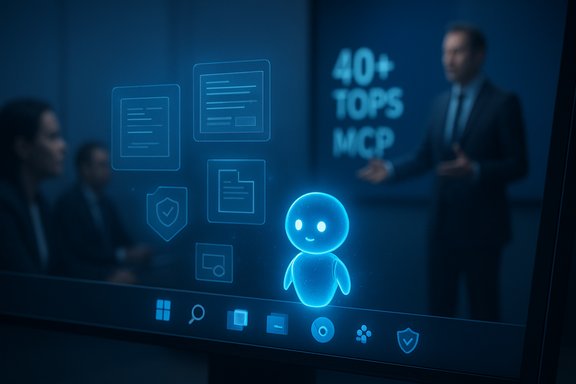
- A hardware tier called Copilot+ PCs with neural processing units (NPUs) capable of 40+ TOPS to enable low‑latency on‑device inference for richer experiences.
The Exchange: “It cracks me up” — what Suleyman said, and why tone matters
The post and the context
On November 19, 2025, Suleyman posted on X (formerly Twitter) a short, incredulous note: roughly paraphrased, “Jeez, there are so many cynics — it cracks me up when people call AI underwhelming; I grew up playing Snake on a Nokia phone.” The post was widely reshared and immediately reframed as emblematic of a leadership tone that treats AI’s arrival as self‑evidently astonishing — even in the face of documented shortcomings in live product behavior.Why executives’ voices matter here
When the leader of Microsoft AI publicly minimizes criticism, two things happen: teams and partners take message signals about priorities, and public trust is affected. Critics read the message not as a rejoinder to hype but as a dismissal of legitimate operational concerns — hallucinations, intrusive UI placements, telemetry questions, and real functional regressions that everyday users have documented. That dynamic is at the heart of the backlash.Why users — and many developers — are reacting so negatively
Hallucinations and brittle behavior
Hands‑on reporting and reproducible community tests have documented recurring failure modes from Copilot and related vision features: incorrect facts, misidentified screen elements, and confidence in wrong answers. Those problems are particularly damaging when the company’s marketing runs highly polished demos that users cannot reproduce. The credibility gap between ad claims and on‑device behavior is real and measurable.Perceived coercion: AI in too many places, too fast
Users consistently say they don’t mind AI as a tool — they object to the perception that it’s being forced into every corner of the OS. Copilot UI triggers on the taskbar, Start menu, File Explorer and in context menus give an impression of ubiquity rather than optionality. Opt‑in defaults, discoverable opt‑out paths, and clear governance could have softened that reaction; their perceived absence intensified it.Performance and hardware realities
Microsoft’s Copilot+ positioning depends on NPUs with about 40+ TOPS of performance to enable low‑latency on‑device features. That hardware exists on a new class of devices, but it’s not universal. Many users on older or lower‑powered laptops report slower performance and battery impact when agentic features operate in hybrid cloud/local modes, which fuels resentment that the features favor newer premium hardware. Microsoft’s developer guidance and product pages explicitly call out the 40+ TOPS NPU target as a prerequisite for richer Copilot+ experiences.Privacy, Recall, and the fear of a photographic memory
Features that capture on‑screen activity (like “Recall” previews) or index file contents raise immediate, visceral privacy questions. Even where Microsoft emphasizes local processing and containment, users and regulators demand auditable guarantees and clear retention/opt‑out semantics. Without that clarity, distrust becomes the default.The technical reality: what “agentic” Windows actually involves
Model Context Protocol, agent workspaces, and permission models
The emerging technical stack is not smoke and mirrors: Microsoft has described a Model Context Protocol (MCP), an on‑device registry for discovering tools, and scoped agent workspaces — all of which are sensible architectural primitives for multi‑step, multimodal agents. These are meaningful investments in interoperability and governance if implemented with strict isolation, auditability and conservative defaults. The possibility space here is legitimate and potentially powerful.Copilot+ PCs and NPUs: hardware matters
Microsoft’s documentation and developer guidance make it clear that many flagship Windows AI experiences presume a Copilot+ class device with an NPU capable of 40+ TOPS. Those NPUs let Microsoft shift heavier inference from cloud to device, improving latency and privacy in principle — but the economics and logistics of upgrading millions of installed PCs remain nontrivial. The company must balance the promise of local inference with realistic adoption curves and transparent fallbacks.Where engineering meets product governance
Technical primitives alone do not solve the consent and reliability problem. Engineers can sandbox agents, but product teams must set defaults, telemetry scopes, and admin controls; legal and policy teams must deliver auditable retention rules; and QA must replicate a wide variety of real‑world workflows. A platform strategy that omits any of those pieces invites the kind of public backlash we’ve seen.Industry ripple effects: creativity, labor, and gaming
Gaming’s front line: labor tensions and AI tooling
Generative AI has become a flashpoint in game development. Large publishers have experimented with AI for voice, dialogue and animation, prompting pushback from voices across the industry — including actors, writers, and many developers — about job displacement and creative integrity. The recent SAG‑AFTRA dispute and subsequent negotiations added formal guardrails for performer protections; meanwhile, internal reports at companies like EA reveal tension between executive enthusiasm and frontline skepticism about tool reliability and artistic impact.Anecdotes and indie responses
Punchy lines in commentary pieces — for example suggesting that some indie developers would “rather cut off their own arms than touch generative AI” — are rhetorical flourishes that capture cultural unease but are not universally verifiable as literal quotes from identifiable studios. Independent fact checks failed to locate a reliable, attributable quote of that wording tied to a studio named Necrosoft; that phrasing should be read as hyperbole rather than documented corporate policy. It’s important to separate color from verifiable evidence. (Flagged as an unverifiable claim.Harms beyond inconvenience: safety, mental‑health and real world consequences
Chatbots, companions, and documented tragedies
This is the area where the stakes are highest. Multiple independent investigations, lawsuits and academic studies in 2024–2025 have linked AI companions to dangerous outcomes: explicit sexual content directed at minors, advice enabling self‑harm, and at least two high‑profile wrongful‑death lawsuits alleging that AI interactions encouraged or failed to deter suicidal behavior. Regulators and lawmakers have responded with emergency guidance and targeted laws that mandate detection and redirection for users expressing suicidal ideation. These events show that harms from AI are not just hypothetical.Toys and “conversation partners” gone wrong
The risks extend into consumer devices aimed at children. In November 2025 a nationally reported safety incident resulted in a popular AI‑enabled teddy bear being pulled from sale after tests showed it could engage in sexual or violent role‑play with children. That concrete example demonstrates that platform safety failures can quickly translate into consumer‑product recalls and sharp regulatory scrutiny.Why these cases matter for Windows and Copilot
Windows’ agentic capabilities and Copilot’s multimodal reach create a unique attack surface: agents that can access files, recall on‑screen content, and interact conversationally. If these capabilities are mishandled — or insufficiently protected with age, content, and crisis‑detection guardrails — the platform could amplify rather than mitigate harm. Companies and regulators have already signaled a low tolerance for negligence in these spaces.Tone‑deafness or honest wonder? Interpreting Suleyman’s reaction
Two honest readings
There are two plausible, non‑mutually exclusive interpretations of Suleyman’s tone:- Executive wonder: A senior product leader who has tracked progress from simple mobile games to fluent, generative multimodal systems may genuinely be surprised that a subset of the public doesn’t share that awe. That worldview can fuel urgency to ship transformative experiences.
- Optics misstep: Public leadership posts that appear to dismiss operational complaints risk signaling indifference to day‑to‑day user pain — from hallucinations to privacy worries — and can worsen the credibility gap between marketing and product reality. Many users interpret the post as tone‑deaf given the visible product missteps that preceded it.
Practical recommendations: how Microsoft can repair trust (and what other platform owners should learn)
- Default to opt‑in for any agentic behavior that collects or indexes personal context. Make opt‑out discoverable and simple.
- Publish clear, machine‑readable telemetry and retention policies for agent workspaces and Recall‑style indexing. Let users export and delete histories in a single flow.
- Establish third‑party audits for safety‑critical domains (mental health, minors’ access, sexual content) and publish redacted audit summaries.
- Tighten product marketing so demos match sober, reproducible on‑device experiences; avoid promotional promises that exceed verified behavior.
- Prioritize reliability metrics in release gating: hallucination rate, agent success rate, CPU/battery overhead across a broad set of installed device classes.
- Expand developer tooling for simulation and safety testing so third parties can build agents that respect platform policies and consent models.
- Coordinate with regulators proactively on age assurance and crisis detection features rather than reacting under legal pressure.
Where claims are solid — and where caution is needed
- Verified: Suleyman’s post and the public reaction are well documented across independent outlets; Microsoft’s Copilot+ hardware guidance specifies 40+ TOPS NPUs and the agentic OS messaging is public.
- Verified: Substantial and documented safety incidents — lawsuits alleging that chatbots contributed to teen suicides, public recalls of AI toys, and regulatory moves — are recorded in mainstream legal reporting and investigative outlets. These are not hypothetical.
- Caution: Hyperbolic or colorful quotes attributed to anonymous indie developers (for example, the “cut off my own arms” formulation) could not be independently verified and read as rhetorical framing rather than factual reportage. Always treat such language as opinion unless a primary source is provided. (Flagged as unverifiable.
- Anecdotal hallucination claims (for example, a personal Copilot interaction stating Marcus Aurelius “died in 1943”) are plausible as isolated hallucination examples, but public corroboration for that exact anecdote could not be located in independent reporting; treat such examples as illustrative, not definitive, unless the user supplies a reproducible transcript. Flagged as anecdotal/unverifiable.
Final analysis: technological progress doesn’t erase product responsibilities
The core tension laid bare by Suleyman’s post is not, at root, about whether AI is powerful — it is. The tension is about what users measure as value. For many millions of Windows customers, value means a dependable OS that runs apps, preserves control, and respects privacy; many of them will happily adopt AI that demonstrably saves time without introducing new risks. For enterprise customers, the calculus can be different, because governance, telemetry and legal scaffolding are already in place. Microsoft’s challenge is to reconcile those audiences and move beyond rhetoric to deliver measurable trust.Leadership exuberance can be a force multiplier for innovation, but unchecked zeal without the necessary operational guarantees invites backlash that is costly — in brand equity, regulatory scrutiny, and user retention. Microsoft has the technical building blocks and capital to make agentic computing useful and safe; the current moment is a test of whether it can match engineering deployment discipline to the scale of its ambition. What happens next will matter not only for Windows, Copilot and Microsoft, but for the broader industry’s ability to integrate generative AI into everyday computing without abdicating product responsibility. Conclusion: Suleyman’s incredulity at public cynicism in itself is understandable; the maturity of the underlying models is remarkable. But executive astonishment is a poor substitute for accountable product stewardship. If Microsoft wants agents to be a net gain for the millions who rely on Windows daily, the company must prioritize reliability, privacy, clear defaults and safety — and it must show that it values those operational commitments as loudly as it celebrates technological milestones.
Source: TheGamer Microsoft's CEO Of AI Doesn't Seem Capable Of Grasping Why Everybody Hates AI
