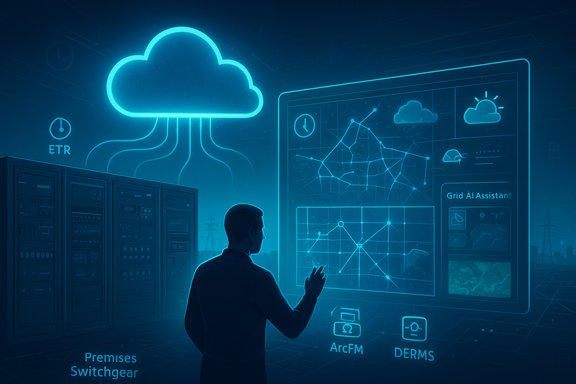
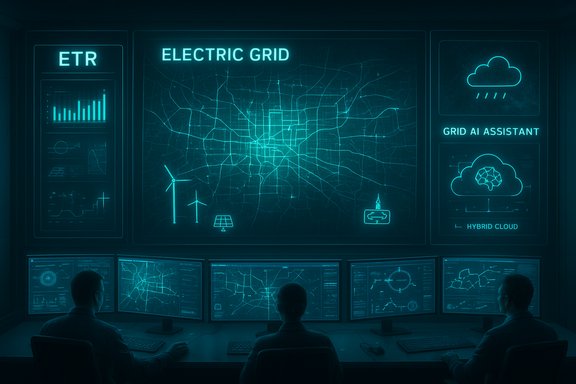
Schneider Electric’s One Digital Grid Platform is a pragmatic, AI-first push to stitch planning, operations and asset management into a single modular environment — promising faster outage restoration, better DER (distributed energy resource) integration and a path to grid modernisation that does not force utilities to rip out existing systems.
The energy industry is under twin pressures: a steep rise in electricity demand driven by AI data centres, electrification and industrial reshoring, and growing customer expectations for faster, more transparent outage communications. Schneider Electric positions the One Digital Grid Platform as a consolidation and productisation of its existing EcoStruxure portfolio — notably EcoStruxure ADMS, DERMS and ArcFM — combined with new AI overlays and a formalised hybrid-cloud deployment model on Microsoft Azure. The platform was publicly announced during Schneider’s global events in 2025 and is marketed as available globally. Core marketing themes are familiar to utility buyers: modular adoption, hybrid cloud flexibility (on‑premises where latency and safety demand it; Azure for scale and analytics), and targeted AI features that are woven into operators’ existing workflows rather than replacing them outright. Schneider’s internal modelling — the company’s Sustainability Research Institute — warns that the U.S. will need between 1,000 and 2,000 TWh per decade to meet new demand driven by AI computing, manufacturing and electrification, and cites grid instability as already costing businesses billions. The International Energy Agency (IEA) and other independent bodies corroborate the direction and scale of data‑centre-driven demand growth, making grid modernisation a practical urgency rather than vendor hyperbole. Where Schneider provides specific decade‑scale numbers, those are its modelling outputs and should be treated as company-sourced projections.
Key structural points:
Major practical risks:
Recommended sequencing:
Actionable next steps for utility CIOs and grid managers:
Conclusion
One Digital Grid is a credible, enterprise‑grade effort to bring AI into the operational core of utilities, pairing Schneider Electric’s domain expertise with Microsoft’s cloud scale. It is strongest as a modular, hybrid deployment that respects operational boundaries and demands rigorous data and governance work up front. For utilities that treat the platform as the start of a disciplined programme — with PoV measurement, cybersecurity rigour and contractual protections — the platform can shorten the route to measurable reliability and efficiency gains. For those that expect an off‑the‑shelf cure for data quality, integration debt and governance gaps, the platform will reveal the hard organisational work still required to modernise the grid.
Source: IT Brief Australia https://itbrief.com.au/story/schneider-electric-unveils-ai-driven-one-digital-grid-for-utilities/
 Background / Overview
The energy industry is under twin pressures: a steep rise in electricity demand driven by AI data centres, electrification and industrial reshoring, and growing customer expectations for faster, more transparent outage communications. Schneider Electric positions the One Digital Grid Platform as a consolidation and productisation of its existing EcoStruxure portfolio — notably EcoStruxure ADMS, DERMS and ArcFM — combined with new AI overlays and a formalised hybrid-cloud deployment model on Microsoft Azure. The platform was publicly announced during Schneider’s global events in 2025 and is marketed as available globally. Core marketing themes are familiar to utility buyers: modular adoption, hybrid cloud flexibility (on‑premises where latency and safety demand it; Azure for scale and analytics), and targeted AI features that are woven into operators’ existing workflows rather than replacing them outright. Schneider’s internal modelling — the company’s Sustainability Research Institute — warns that the U.S. will need between 1,000 and 2,000 TWh per decade to meet new demand driven by AI computing, manufacturing and electrification, and cites grid instability as already costing businesses billions. The International Energy Agency (IEA) and other independent bodies corroborate the direction and scale of data‑centre-driven demand growth, making grid modernisation a practical urgency rather than vendor hyperbole. Where Schneider provides specific decade‑scale numbers, those are its modelling outputs and should be treated as company-sourced projections. What One Digital Grid actually is
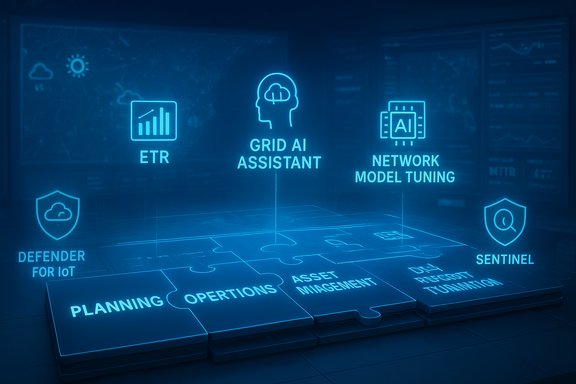
At heart, One Digital Grid is a platformisation and packaging exercise: it pulls proven operational products into a single modular environment and adds AI‑enabled services that run on a Microsoft Azure hybrid cloud backbone.Key structural points:
- It bundles EcoStruxure ADMS, DERMS and ArcFM into a coherent platform layer to reduce integration friction with existing operational systems.
- The platform is modular: utilities can adopt planning, operations, asset management, outage communications or DER orchestration independently and grow capabilities over time without a big bang replacement.
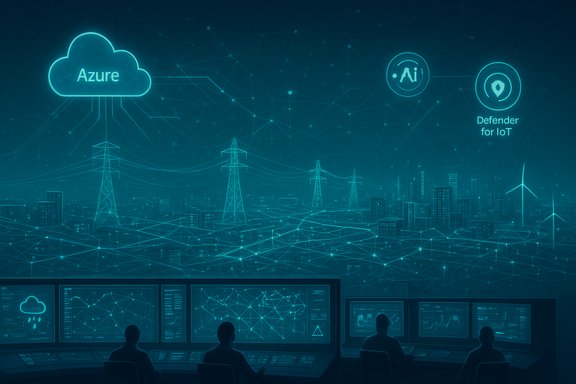
- Hybrid deployment model is first‑class: latency‑sensitive control loops can remain on premise while analytics, model training and non‑real‑time services scale in Azure. Integration with Azure OpenAI, Defender for IoT, Sentinel and Azure Arc is explicit.
AI-driven features explained
Schneider highlights three headline AI capabilities. Each has clear practical aims; each also has realistic dependencies that determine how effective it will be in any given utility.Estimated Time of Restoration (ETR)
- What it does: generates and continuously updates restoration time estimates during outages by combining live grid telemetry, weather forecasts, crew locations/status and historical outage patterns. It also integrates with third‑party storm preparedness tools such as AiDASH.
- Why it matters: accurate ETRs reduce customer call volumes, lower regulator and penalty risk, and improve public trust during events such as storms, wildfires or controlled power shutoffs.
- Practical limits: ETR accuracy is strongly contingent on the fidelity of telemetry, the freshness of GIS/asset models, the accuracy of crew‑location data and ingest latency. Where those inputs are weak, ETRs will be noisy and could erode trust if communications are overly confident.
Grid AI Assistant
- What it does: an embedded assistant inside EcoStruxure ADMS to support operators with troubleshooting, recommended actions and performance optimisation. The assistant surfaces hypotheses about likely fault locations and suggests workflow steps.
- Why it matters: in pressured control rooms, an AI assistant can accelerate diagnosis and reduce manual cross‑referencing across siloed systems.
- Practical limits: operationalising an assistant requires rigorous human‑in‑the‑loop controls, traceability and audit logs. Generative outputs must be grounded in reliable retrievals from the utility’s own contextual datasets or they risk hallucination in operational contexts.
AI-based Network Model Tuning
- What it does: compares digital network models (GIS, connectivity, protection settings) with telemetry and customer‑meter data to identify mismatches and recommend reconciliations.
- Why it matters: inaccurate digital twins are a major cause of wrong decisions in outage management, DER interconnection studies and protection coordination. Automated model tuning can shrink the manual reconciliation burden and reduce errors.
- Practical limits: the tool surfaces discrepancies — fixing them usually requires coordinated field audits and data governance. The model‑tuning feature reduces the time to find a problem, not necessarily the cost to fix it.
Cloud, cybersecurity and the Microsoft partnership
Schneider has explicitly built the platform to run on Microsoft Azure and integrates several Azure services as part of its security and AI stack: Azure OpenAI Service, Defender for IoT, Microsoft Sentinel and Azure Arc for hybrid management. Microsoft has publicly endorsed the collaboration, framing it as a route to bring cloud scale and managed AI into utility operations. Why Azure matters:- Hyperscaler scale for model training and data lakes is attractive when utility telemetry and long‑window historical data are terabytes to petabytes.
- First‑party integrations with Azure security services simplify one element of the cybersecurity story — but they do not eliminate the utility’s responsibility to implement segmentation, key management and continuous validation.
- Hybrid OT/IT architectures expand the attack surface. Integrations with Defender for IoT and Sentinel are necessary but not sufficient; utilities must validate network segmentation, identity policies, and patch governance as part of procurement and integration.
- Latency and control‑loop boundaries must be explicitly designed: certain ADMS control plane decisions cannot tolerate cloud round‑trips. Hybrid designs are sensible, but vendors and utilities must agree on which functions must remain local and how failover behaves under loss of connectivity.
Operational impact and the ROI story — what’s provable, what’s vendor‑sourced
Schneider’s launch materials cite a Forrester Consulting study that attributes substantial financial and operational benefits to utilities running Schneider ADMS technology: 184% ROI, US$62 million in business benefits, US$40 million net financial gain and 16‑month payback, plus operational metrics such as up to 20% fewer outage penalties, 65% reduction in time for control room operators, and 35% faster field crew resolution. These figures have been widely repeated in press coverage. Critical context on those numbers:- These are vendor‑cited, Forrester‑derived figures. They should be treated as directional until the underlying study, methodology, baseline assumptions and sample sizes are examined. Utilities should request the full Forrester analysis during vendor evaluation.
- Realised benefits vary dramatically by baseline maturity: a utility starting with poor GIS fidelity and limited telemetry will see a different outcome from a utility that already runs high‑quality AMI, GIS and dispatch systems.
- The most reliable way to validate vendor ROI claims is an instrumented Proof of Value (PoV) that benchmarks baseline MTTR, ETR accuracy, operator time and outage penalty metrics over a statistically significant period.
Risks, unknowns and practical integration work
Modernisation is more people and process than product. The platform’s promise will be realised only if utilities confront a set of non‑trivial dependencies.Major practical risks:
- Data quality and model accuracy: AI functions depend on accurate GIS, telemetry, naming conventions and crew logs. Automated model tuning can find mismatches, but field fixes are often manual and costly.
- Brownfield integration complexity: connecting legacy SCADA historians, multiple GIS versions, and disparate workforce management systems requires substantial systems engineering and normalization of tag semantics. Expect a meaningful integration budget.
- Cybersecurity and supply‑chain concentration: heavy reliance on EcoStruxure + Azure + Azure OpenAI consolidates risk. Procurement should insist on clear portability clauses, data egress/export paths and third‑party security attestations.
- Operational safety & governance: AI outputs must be advisory for any action that could impact safety or regulatory compliance. Human‑in‑the‑loop gating and auditable decision logs are essential.
- Public utilities and cooperatives often have procurement rules, data‑sovereignty requirements and audit procedures that complicate managed cloud deployments. Legal and procurement teams should be engaged early.
How to pilot the platform (a practical 4‑phase path)
Utilities that treat One Digital Grid as a programme rather than a product are more likely to succeed. A conservative, measurable rollout reduces risk and produces defensible business cases.Recommended sequencing:
- Phase 1 — Proof of Value (PoV)
- Select a contained feeder or service area with reasonably complete GIS and crew log data.
- Deploy the ETR and Grid AI Assistant in advisory mode for 90 days.
- Instrument measurement: baseline MTTR, number of customer calls, ETR accuracy (p95 vs actual), operator time per incident.
- Phase 2 — City / County scale
- Extend integration to include DERMS workflows and more complex feeder topologies.
- Integrate AiDASH storm forecasting and test ETR performance during weather events.
- Phase 3 — Customer engagement
- Open ETR outputs to customer portals and contact centre automations once accuracy meets tolerance thresholds.
- Measure customer satisfaction and call‑deflection effects.
- Phase 4 — Asset performance & closed‑loop automation
- Expand asset lifecycle modules and APM; move to prescriptive maintenance with human gating.
- Mature model governance (versioning, rollback, performance monitoring).
- Map all telemetry sources, tag names and retention policies.
- Run automated data‑quality scans and remediate top‑20 discrepancies.
- Deploy a sandbox on Azure with telemetry replay tooling to test at scale.
- Run AI modules in advisory mode and compare predictions against reality for 90 days.
- Iterate on data and model retraining cadence based on measured error patterns.
Market context and competitive landscape
Schneider’s offering arrives at a time when independent analysis and regulatory bodies are warning that data‑centre growth and electrification will put stress on grids. The IEA projects global data‑centre electricity consumption could more than double by 2030, with AI the primary driver — a trend that places a premium on operational software that improves utilisation, resilience and interconnection speed. Schneider’s sustainability research echoes this urgency, though the precise energy‑add estimates are Schneider’s modelling outputs. The ADMS market is competitive and growing — analyst firms and leaderboards list Schneider among the major players alongside vendors that include GE, Oracle, OSI and regional specialists. Utilities evaluating One Digital Grid will compare it against ADMS/DERMS offerings from other incumbent vendors and niche startups that focus purely on AI/analytics. Third‑party analyst praise (for example ABI Research rankings) boosts Schneider’s credibility but should not replace fit‑for‑purpose technical due diligence.What utilities should insist on during procurement
The product’s success or failure will hinge on contract discipline and operational SLAs. Key contractual asks:- Request the Forrester study and a clear breakdown of its assumptions (sample size, baseline scenario, time horizon). Treat vendor ROI claims as negotiation inputs, not guarantees.
- Insist on an interoperable data escape and portability plan: export formats, export cadence and timelines for decommissioning.
- Require independent penetration test reports and ongoing OT segmentation attestations for all hybrid/cloud elements.
- Define PoV deliverables with measurable KPIs (MTTR, ETR accuracy, operator time saved, false positive/negative rates) and commercial recourse if pilot thresholds are not met.
Strengths, weaknesses and the bottom line
Strengths- Pragmatic modernisation path: reuses proven ADMS/DERMS building blocks so utilities can add AI without ripping and replacing operational systems.
- Hybrid cloud realism: explicit focus on Azure, with built‑in integrations for security and model hosting, offers a scalable deployment path.
- Operationally relevant AI: features like ETR and model tuning target concrete, high‑value problems (customer communications, model drift, DER integration).
- Data & integration dependency: the AI features are data‑hungry; poor asset models or missing telemetry significantly reduce ROI.
- Vendor and cloud concentration risk: EcoStruxure + Azure is powerful but creates lock‑in vector; procurement must preserve portability.
- Operational governance requirement: AI‑augmented operations demand investment in governance, operator training and model lifecycle management; these are non‑trivial costs.
Final verdict for IT and grid leaders
Schneider Electric’s One Digital Grid Platform is not a miraculous shortcut that magically solves decades of underinvestment. It is a well‑constructed, vendor‑backed platform that packages existing operational software and overlays AI in pragmatic, workflow‑centric ways. For utilities that already have reasonable telemetry coverage, modern GIS and disciplined asset governance, the platform can accelerate outage response, improve DER orchestration and reduce some operational costs — but the size of those gains is conditional, not guaranteed.Actionable next steps for utility CIOs and grid managers:
- Demand the Forrester study and review its assumptions against your baseline.
- Run a narrowly scoped PoV focusing on ETR accuracy and operator UX, with clear KPIs and contractual recourse.
- Require hybrid architecture diagrams that show which ADMS control functions remain on‑premises, and test failover behaviour under connectivity loss.
- Build a centre‑of‑excellence for model governance, operator training and OT security so the organisation can sustain the platform’s benefits beyond the pilot phase.
Conclusion
One Digital Grid is a credible, enterprise‑grade effort to bring AI into the operational core of utilities, pairing Schneider Electric’s domain expertise with Microsoft’s cloud scale. It is strongest as a modular, hybrid deployment that respects operational boundaries and demands rigorous data and governance work up front. For utilities that treat the platform as the start of a disciplined programme — with PoV measurement, cybersecurity rigour and contractual protections — the platform can shorten the route to measurable reliability and efficiency gains. For those that expect an off‑the‑shelf cure for data quality, integration debt and governance gaps, the platform will reveal the hard organisational work still required to modernise the grid.
Source: IT Brief Australia https://itbrief.com.au/story/schneider-electric-unveils-ai-driven-one-digital-grid-for-utilities/