
OpenAI appears to be preparing to place advertisements inside ChatGPT after code strings referencing an “ads feature,” “bazaar content,” “search ad,” and “search ads carousel” were discovered in a recent Android beta build — a leak that signals the company is actively developing an ad layer focused first on search and commerce-oriented answers.
The discovery was made by an application engineer who unpacked the ChatGPT Android beta APK (version 1.2025.329) and compared it with previous builds, spotting strings that had not existed before. Those strings strongly suggest a structured advertising framework is being added to the mobile client, likely including product-style cards and a carousel format for sponsored results. OpenAI has previously said it is exploring multiple revenue avenues beyond subscriptions, and executives have acknowledged advertising is “something we may try at some point,” while insisting on a careful, tastefully implemented approach. The code-level evidence in the beta is the clearest public signal yet that experimentation has moved from discussion to in‑app engineering.
This also implies new telemetry and ad-serving endpoints inside client apps, plus server-side components that handle auctions, billing, and reporting — the exact types of modules that would justify the observed “ads feature” code base. However, internal strings alone do not prove how ranking, labeling, or revenue models will work in practice; those details remain unverified until official product or documentation is released.
Advertisers will likely welcome a new high-intent channel, but publishers and smaller web creators could suffer from reduced click-through and lost referral traffic if answers satisfy user intent without linking to source sites. That tension — between immediate user convenience and the health of the broader open web — will be a core debate as ad-enabled AI assistants proliferate.
Source: Adgully.com OpenAI tests the waters for ads in ChatGPT, according to android beta leak
 Background
The discovery was made by an application engineer who unpacked the ChatGPT Android beta APK (version 1.2025.329) and compared it with previous builds, spotting strings that had not existed before. Those strings strongly suggest a structured advertising framework is being added to the mobile client, likely including product-style cards and a carousel format for sponsored results. OpenAI has previously said it is exploring multiple revenue avenues beyond subscriptions, and executives have acknowledged advertising is “something we may try at some point,” while insisting on a careful, tastefully implemented approach. The code-level evidence in the beta is the clearest public signal yet that experimentation has moved from discussion to in‑app engineering. Why this matters: commercial context and timing
The move to test ads inside ChatGPT is not surprising from a business perspective. Running large-scale LLMs at consumer scale is expensive: inference, fine-tuning, safety tooling, and global delivery add substantial operational cost. An ad-supported tier would allow OpenAI to subsidize free users while preserving a premium, ad-free experience for paying subscribers. That hybrid model — ads for free users, no ads for subscribers — mirrors long-standing consumer internet economics. There is also precedent in the market. Google has been embedding ads in its AI Overviews and its new AI Mode for search, and Microsoft has integrated advertising and commerce placements into Copilot and other generative interfaces. Smaller players like Perplexity have experimented with sponsored follow-ups. Those moves show how search-derived conversational AI is becoming new ad inventory — and why OpenAI would consider similar monetisation.What the beta strings imply: formats, placement and intent
The specific terms found in the APK point to a commerce-first rollout rather than a blanket insertion of banners into every conversation. The notable strings are:- ads feature — a module or feature flag that enables advertising logic inside the app.
- bazaar content — language that strongly evokes a marketplace or product-feed style layout, not a text banner.
- search ad — indicates ads tied to search-like queries or retrieval workflows.
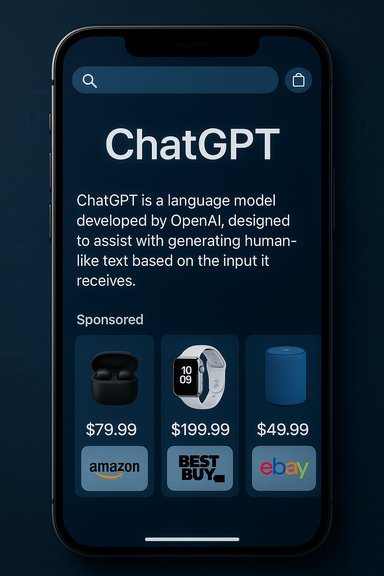
- search ads carousel — a horizontally scrollable set of sponsored product cards that can live inside an answer or search result.
Possible technical approach
The likely technical pattern OpenAI would adopt mirrors what other companies are doing: when a query triggers web retrieval or commerce intent detection, the system augments the answer with ranked, labeled sponsored items pulled from an advertiser inventory. Ranking could combine traditional auction signals with generative-relevance scoring from the model so sponsored cards are contextually relevant to the prompt and to the assistant’s generated summary.This also implies new telemetry and ad-serving endpoints inside client apps, plus server-side components that handle auctions, billing, and reporting — the exact types of modules that would justify the observed “ads feature” code base. However, internal strings alone do not prove how ranking, labeling, or revenue models will work in practice; those details remain unverified until official product or documentation is released.
How OpenAI could position ads: a likely product roadmap
Although nothing is confirmed, the code clues and industry patterns allow a plausible phased rollout:- Initial pilot limited to search and commerce queries where purchase intent is clear, using a small set of advertisers and marketplace-style cards.
- Controlled experiments on a subset of free-tier users or geographies, gathering metrics on click-through, conversion lift, and user sentiment.
- Expansion to more query types (e.g., travel, local services) and new ad formats (showroom-style rich cards or multimedia ads), with options for personalization and targeting layered in.
- A stable product that preserves an ad-free experience for paying customers, tied to Plus/Pro subscription tiers.
Benefits OpenAI is likely weighing
- Revenue diversification: Ads can scale quickly and subsidize free users, potentially reducing pressure to raise subscription prices or throttle free access.
- Commerce capture: If ChatGPT becomes a dominant discovery surface for product recommendations, native ads become a powerful channel for advertisers.
- Lower friction for advertisers: Conversational ad formats promise high intent and better conversion metrics than traditional display placements.
- User access: An ad-supported free tier could permit broader access for users who cannot or will not pay for Plus/Pro, keeping the product widely adopted.
The trade-offs and risks
Introducing ads inside an assistant that users rely on for neutral answers carries meaningful technical, ethical, and regulatory risks.Trust and neutrality
If commercial placements are indistinguishable from neutral recommendations, user trust can erode quickly. Even with clear labeling, the presence of sponsored content inside answers risks creating perception biases: users may believe recommendations are model-driven when they’re influenced by advertising dollars. Past industry experience shows labelling and separation are necessary but not sufficient to preserve trust.Relevance vs. manipulation
Generative systems can be nudged by incentives. The editorial controls that decide whether to show a sponsored product must be robust to prevent manipulation where paid results displace better, organic options. The danger is not just bad UX — it’s that monetisation could change the assistant’s behavior in subtle ways that favor advertisers. Any technical integration must guarantee that the factual basis of answers isn’t compromised for commercial gain.Privacy and targeting
Ads typically rely on signals: query text, profile data, location, past interactions. That raises immediate privacy questions for an assistant that stores long conversational histories and may access connected accounts. Users will want transparency about what conversational data is used for ad personalization, whether data is shared with third-party advertisers, and what opt-outs exist. These are also the focal points of regulators in regions with strict privacy law. The beta strings don’t reveal data flows, so claims about targeting should be marked as unverified until OpenAI clarifies data-handling practices.Safety and content moderation
Ad content may come with its own safety concerns: misleading product claims, disallowed items, or offers that run afoul of local laws. OpenAI would need ad review pipelines and brand-safety mechanisms to ensure sponsored items comply with the assistant’s safety policies — a non-trivial operational cost and ongoing engineering challenge.Regulatory and antitrust scrutiny
The more an assistant becomes a new default search surface, the more scrutiny it attracts from regulators worried about market power, dark patterns, and consumer harm. A monetised ChatGPT raises questions similar to those already facing search giants: how are advertisers given access? Are auctions fair? Do publishers lose traffic? These systemic concerns will invite close regulatory interest as rollout continues.UX scenarios: how ads might look in practice
- Search-shopping combo: A user asks “best noise-canceling headphones under $300.” The assistant returns a summarized recommendation and a labeled “Sponsored” carousel with product cards linking to merchant pages. This preserves the model’s summary while offering paid options.
- In-chat commerce suggestion: During a planning conversation about a trip, the assistant lists hotels and includes a sponsored “showroom” card with availability and price comparison from participating partners. The card is visually distinct and marked as sponsored.
- Follow-up suggestions: Sponsored follow-up prompts such as “See today’s top deals” might appear as separate buttons or suggestions next to organic follow-up questions. This model closely resembles Perplexity’s sponsored follow-ups and Microsoft’s Copilot placements.
What OpenAI should disclose (and what to look for)
To preserve user trust while experimenting with advertising, OpenAI should publish clear policies and product details before any broad rollout. Essential disclosures include:- A clear definition of where ads will appear (e.g., only in retrieval-enabled answers).
- How ads are labeled and visually separated from the assistant’s core text.
- What user data, if any, is used to target ads, and whether advertisers receive personally identifiable information.
- Whether paying subscribers will be guaranteed a fully ad-free experience, and how that is enforced.
- The advertisers or ad exchanges allowed into the inventory and enforcement against deceptive offers.
Developer and enterprise considerations
For IT admins, developers, and integrators who use ChatGPT or OpenAI APIs in business settings, ad integration raises immediate operational decisions:- Contractual guarantees: Enterprise SLAs and data contracts need clarity on ad exposure — many organizations will not want employee-facing tools to carry consumer ads.
- API vs. consumer divergence: OpenAI may choose to keep advertising confined to consumer apps while leaving APIs and enterprise products ad-free. Enterprises should seek written assurances and technical controls if that separation matters.
- Ad leakage risk: Developers using ChatGPT for internal tools must confirm that their data won’t be used to inform ad targeting or training without consent.
- Content filtering: Teams may need to add extra moderation layers if paid content is surfaced by the assistant in customer-facing contexts.
Competition and market implications
If OpenAI launches an ad product inside ChatGPT, it will accelerate the industry’s convergence around conversational commerce. Google and Microsoft already bring advertising expertise to generative AI; OpenAI’s user base and developer ecosystem could make its platform another major ad surface.Advertisers will likely welcome a new high-intent channel, but publishers and smaller web creators could suffer from reduced click-through and lost referral traffic if answers satisfy user intent without linking to source sites. That tension — between immediate user convenience and the health of the broader open web — will be a core debate as ad-enabled AI assistants proliferate.
What to watch next (timeline and signals)
- Public statements from OpenAI product leads clarifying scope and privacy safeguards.
- A controlled opt-in pilot or feature flag inside mobile/desktop apps visible to a subset of users.
- Updated terms of service or privacy policy language defining ad data use.
- Reports from early advertisers or ad partners, which often leak before formal product announcements.
- Regulatory filings or inquiries if domestic authorities express concern about ad targeting or competitive effects.
Practical advice for users and IT pros
- Expect changes to the free experience: users who rely on ChatGPT without paying should prepare for targeted offers in shopping and search-like queries.
- Preserve privacy settings: watch for new privacy controls and ad opt-out options, and use them if you prefer minimal personalization.
- For enterprises, renegotiate data usage clauses before adopting consumer-grade assistants in workflows where sensitive data is present.
- For developers building on top of OpenAI APIs, ask for contractual clarity around ad-related telemetry and confirm whether training or targeting can use your app’s interactions.
Strengths of an ad-supported ChatGPT (if done well)
- Makes premium features more accessible by subsidizing costs.
- Creates a scalable revenue stream that can fund continued model improvements.
- Enables direct commerce experiences inside the assistant, shortening purchaser journeys.
- Gives advertisers access to high-intent conversational moments that may outperform traditional search ads.
Unverifiable and open questions
- The exact targeting signals OpenAI will permit (conversation history, account data, cross-device signals) are not visible in the APK strings, and remain unverified.
- Auction mechanics, advertiser onboarding processes, and revenue share models are not represented in public code fragments and are unknown.
- The timeline for rollout — whether a private A/B pilot or a broader launch in specific markets — has not been announced.
Conclusion
The discovery of ad-related code in the ChatGPT Android beta is a clear signal that OpenAI is developing an advertising infrastructure targeted initially at search and commerce flows. That direction aligns with broader industry trends where generative AI increasingly becomes a new ad surface, driven by the economics of running large models and the commercial lure of conversational commerce. The upside for users is more accessible free services and new discovery formats; the downside is the erosion of neutrality, potential privacy trade-offs, and the risk of commerce influencing recommendations. The balance will depend on design details — labeling, data governance, separation between organic answers and sponsored content, and enterprise assurances — none of which are fully visible in the leaked strings. Until OpenAI provides full disclosure and concrete product rules, the community and regulators should expect vigorous debate about how to preserve trust while building sustainable business models for AI assistants.Source: Adgully.com OpenAI tests the waters for ads in ChatGPT, according to android beta leak
