

PayPal’s simultaneous push into “agentic commerce” and its public stumble with the Honey browser extension has created a study in contrasts: a strategic acquisition intended to harden the company’s long-term AI commerce positioning, and an operational disruption that threatens a revenue pipeline and investor confidence in the near term. The company announced an agreement to acquire Tel Aviv–based orchestration specialist Cymbio to accelerate its Store Sync and Copilot Checkout initiatives, even as three major affiliate networks have suspended or expelled Honey for alleged attribution manipulation — a development PayPal says stems from legacy code that “appears to affect less than 0.1%” of traffic. These twin threads — ambitious AI-enabled product engineering versus fragile, legacy operational controls — frame PayPal’s immediate challenge: prove agentic commerce can scale and monetize without further operational surprises or regulatory fallout.
PayPal’s January 2026 Cymbio agreement is explicitly tactical: fold a multi‑channel catalog, inventory and order‑orchestration platform into PayPal’s Store Sync so merchants can be discovered and transacted with inside AI assistants such as Microsoft Copilot and Perplexity. The acquisition is intended to reduce merchant onboarding friction and to protect merchants’ brand and merchant‑of‑record status while enabling PayPal to capture payment flows in emerging AI surfaces. PayPal’s announcement describes Cymbio as powering Store Sync and names early merchant pilots including Abercrombie & Fitch, Fabletics and Ashley Furniture.
At the same time, Honey — the browser extension PayPal acquired years earlier that finds discount codes and earns affiliate commissions on tracked conversions — was removed or suspended by multiple affiliate platforms in mid‑January 2026. Rakuten Advertising terminated Honey’s network membership, impact.com suspended its Discovery Marketplace access, and Awin confirmed compliance breaches and suspended payments while coordinating remediation. The enforcement actions revolve around alleged attribution interference — code behavior that networks say undermines proper merchant attribution and diverts commissions — and they immediately cut Honey off from thousands of retailer relationships.
These two developments — acquisition for future positioning and operational disruption today — are pulling investor attention in opposite and deal signals strategic intent to own the plumbing for AI‑driven discovery-to-fulfillment commerce. The Honey fallout exposes an execution, governance and reputational risk with immediate commercial consequences. Together they determine whether PayPal’s agentic commerce vision earns the market’s trust or becomes another long‑dated bet undermined by near‑term operational headwinds.
Yet strategy alone is not a substitute for impeccable operational discipline. The Honey situation is a timely reminder that code-level decisions and inadequate governance can create outsized legal, reputational and commercial damage. For PayPal, the immediate priority is remediation, transparent third‑party audits where needed, and credible remediation plans with affiliate networks and merchants. Concurrently, PayPal must execute Cymbio integration with conservative SLAs and public metrics to prove the agentic commerce thesis.
For merchants, platform operators and the Windows‑centric IT teams that keep back‑office systems running, the practical imperative is to prepare: fix product data, harden inventory endpoints, instrument AgentOps telemetry, and negotiate clear contractual protections. For investors, PayPal’s story is now a choice between patience for a technical, multi‑quarter transformation and skepticism that short‑term operational damage could obscure or delay the payoff. The next several quarters — integration milestones, Honey remediation outcomes, and early adoption evidence from Copilot and other agentic surfaces — will determine whether PayPal’s bet on the future of commerce is prophetic or prematurely costly.
Conclusion
PayPal’s Cymbio deal is the clearest sign yet that payments companies see the next battleground for commerce inside AI assistants. The acquisition is a practical move to own the plumbing AI agents need to turn intent into fulfilled orders. But agentic commerce will be judged on operational metrics — catalog accuracy, inventory parity, dispute rates and merchant economics — not on product marketing. Meanwhile, the Honey affiliate fallout is a live demonstration that governance lapses, even if affecting a small fraction of traffic by certain measures, can produce outsized operational and reputational fallout. PayPal’s near‑term challenge is to contain and remediate the Honey disruption while executing Cymbio’s integration reliably enough to build merchant confidence and to deliver measurable agentic conversion lifts. Success will require engineering discipline, transparent governance, and measured commercial rollout — and the market will be watching every operational metric closely as proof that the future‑facing bet can survive the realities of today’s commerce plumbing.
Source: AD HOC NEWS PayPal’s AI Ambitions Face Operational Headwinds
 Background / Overview
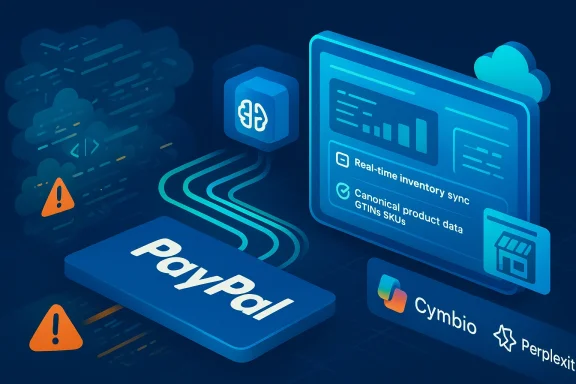
PayPal’s January 2026 Cymbio agreement is explicitly tactical: fold a multi‑channel catalog, inventory and order‑orchestration platform into PayPal’s Store Sync so merchants can be discovered and transacted with inside AI assistants such as Microsoft Copilot and Perplexity. The acquisition is intended to reduce merchant onboarding friction and to protect merchants’ brand and merchant‑of‑record status while enabling PayPal to capture payment flows in emerging AI surfaces. PayPal’s announcement describes Cymbio as powering Store Sync and names early merchant pilots including Abercrombie & Fitch, Fabletics and Ashley Furniture. At the same time, Honey — the browser extension PayPal acquired years earlier that finds discount codes and earns affiliate commissions on tracked conversions — was removed or suspended by multiple affiliate platforms in mid‑January 2026. Rakuten Advertising terminated Honey’s network membership, impact.com suspended its Discovery Marketplace access, and Awin confirmed compliance breaches and suspended payments while coordinating remediation. The enforcement actions revolve around alleged attribution interference — code behavior that networks say undermines proper merchant attribution and diverts commissions — and they immediately cut Honey off from thousands of retailer relationships.
These two developments — acquisition for future positioning and operational disruption today — are pulling investor attention in opposite and deal signals strategic intent to own the plumbing for AI‑driven discovery-to-fulfillment commerce. The Honey fallout exposes an execution, governance and reputational risk with immediate commercial consequences. Together they determine whether PayPal’s agentic commerce vision earns the market’s trust or becomes another long‑dated bet undermined by near‑term operational headwinds.
What PayPal bought: Cymbio and the technical logic
Cymbio in one line
Cymbio is a multi‑channel orchestration platform that normalizes product feeds, maintains inventory and price parity, routes orders to merchants (including dropship flows), and presents machine‑readable product records to third‑party channels — a practical match for the requirements of agentic commerce.Why PayPal needs orchestration
AI assistants don’t browse retailer pages; they consume structured product records, apply ranking and selection logic, and then hand off checkout. That model raises four operational requirements:- Canonical product metadata (GTINs, SKUs, dimensions, policies) so agents can compare apples to apples.
- Inventory and price parity to avoid agentic recommendations that lead to failed orders, chargebacks, and customer dissatisfaction.
- Order orchestration to preserve merchant‑of‑record status, route fulfilment properly, and map agent-originated orders to merchant systems.
- Auditable provenance to facilitate attribution, disputes and regulatory compliance.
Technical mechanics PayPal will inherit
Cymbio’s stack provides practical, battle‑tested features PayPal needs:- Feed ingestion and canonicalization templates for marketplaces and agentic endpoints.
- Real‑time inventory sync and price update pipelines to preserve parity.
- Dropship orchestration and order routing that fit merchants’ existing fulfilment flows.
- Data provenance traces that pair with payment metadata for dispute adjudication.
The Honey controversy: what happened and why it matters
The enforcement actions
Between January 12 and January 17, 2026, Rakuten Advertising terminated Honey’s membership, impact.com suspended Honey’s account and Discovery Marketplace access pending remediation, and Awin suspended payments after an investigation that the network characterized as confirmation of policy breaches. The networks cite violations of stand‑down or attribution integrity rules — policies that require certain partners to “stand down” during compliance testing and prohibit interference with the attribution chain that credits marketing partners. These enforcement steps cut Honey off from major retail clients and affiliate revenue.The technical allegation at the center
Independent researchers and journalists published analysis that Honey’s extension included selective behavior — sometimes called a “selective stand‑down” — which made the extension behave differently for users likely to be compliance testers versus ordinary consumers. In plain terms, networks allege Honey used heuristics (cookies, account metadata, point thresholds) to detect monitoring or testing accounts and avoided the disallowed behavior when it detected those signals — behavior networks consider deliberate deception of compliance tools. The disclosures trace back to reporting from late 2024 and subsequent technical analysis in 2025.PayPal’s response
PayPal and Honey published statements saying the code responsible has been identified and deactivated, and that the affected code pre‑dated PayPal’s acquisition of Honey. Honey also noted the behavior “appears to affect less than 0.1% of traffic” in its initial communications. Independent critics — including privacy and affiliate‑fraud researchers — push back on the “less than 0.1%” framing and emphasize that even small‑user‑segment manipulation can conceal systemic problems and evade standard compliance tests. The factual claim about the traffic fraction is drawn from Honey’s public statement and has not been independently verified by regulators at the time of writing.Immediate business impact
For Honey’s affiliate model, network access is the lifeblood of commissions. Rakuten alone provides links to roughly 2,000 merchants; losing those partnerships cuts Honey’s ability to monetise a substantial slice of shopper flows. The advertising and affiliate ecosystem generates predictable referral revenue only if attribution is reliable and auditable; network suspensions translate to near‑term declines in affiliate income and raise the specter of merchant disputes, class‑action litigation and longer‑term loss of goodwill.Market reaction, investor implications and the valuation question
Short‑term market signal
News of the affiliate network actions and the Cymbio acquisition appeared in the same news cycle; markets responded to both the execution risk and the strategic move. Reports noted PayPal’s share performance was under pressure and that the business narrative must balance near‑term operational damage with long‑term optionality tied to agentic commerce. Market commentary cited low forward multiples as an argument for undervaluation, while cautious analysts flagged weak momentum and the potential for further negative surprises. Specific intraday price levels reported in some regional outlets (expressed in euros) reflect local market quotes or exchange‑traded receipts and should be treated as ephemeral; live-market data should be consulted for trading decisions. These price observations — including specific euro figures — were not universally corroborated across primary U.S. feeds and therefore are flagged here as market snapshot reporting rather than definitive valuation metrics.The earnings calendar as a focal point
Investors were focused on the company’s upcoming quarterly release and call as a test of whether PayPal can materially dampen the negative optics. Several outlets referenced an investor focus on the fourth-quarter print and the company’s guidance and commentary around branded checkout traction. Where precise street consensus EPS figures (for example, an $1.28 per‑share expectation) were reported in certain briefings, independent confirmation across primary consensus trackers was not consistently available at press time; treat quoted consensus numbers as journalistic reporting rather than a consolidated broker consensus unless verified with live consensus services.How to think about the tradeoff
- Short term: Honey’s affiliate disruption risks lower revenues, merchant disputes, legal exposure and PR damage. Those are quantifiable near‑term headwinds.
- Medium/long term: Cymbio acquisition can materially lower merchant onboarding costs and increase PayPal’s addressable TPV inside agentic channels — but realization of that upside requires merchant adoption, operational reliability and favorable economics for PayPal and merchants.
Regulatory, legal and reputational risks
Consumer protection and attribution liability
Agentic commerce—where an AI assistant discovers and purchases on a consumer’s behalf — creates new disclosure and liais responsible when an agent misrepresents a product, or when an AI‑originated order fails due to stale inventory? Regulators are already actively discussing frameworks for transparency and accountability in AI decisioning, and payments firms embedded in agentic flows face exposure to consumer protection rules and potential rulemaking around automated purchases. The Honey episode sharpens that risk: attribution interference and concealment of testing undermine trust and invite scrutiny not only from networks but from competition and consumer protection authorities.Data governance and cross‑border complexity
Cymbio is headquartered in Tel Aviv and PayPal operates globally. Consolidating catalog and transactional metadata into centralized orchestration layers raises data‑transfer, residency and privacy compliance questions that must be resolved across the EU, UK, US and APAC markets. Clear SLAs, retention policies, and contractual clauses about data sharing with AI platforms will be required to reduce legal risk.Litigation and class actions
Honey has already been the focus of public investigations and has faced litigation related to its exteattern of selective compliance or attribution manipulation can become a legal liability vector, including state consumer protection claims, FTC interest, or private suits that allege deceptive practices. Remediation will likely require more than code fixes: governance changes, third‑party audits and transparent disclosure to networks may be necessary to rebuild trust.Operational execution risk: why integration is harder than it looks
Complexity is the enemy of trust
Merging two operational stacks — PayPal’s payments, fraud and settlement systems with Cymbio’s real‑time orchestration — presents classic integration hazards: API incompatibilities, SLA mismatches, catalog mapping errors, and scale‑driven edge cases. Early merchant pilots can mask edge failures that emerge only under broad mayPal must deliver reliable inventory parity, low failure rates, and tight dispute‑handling to avoid creating new customer or merchant headaches.Merchant economics — the adoption hinge
Merchants will join Store Sync only if the economics are positive: additional discovery and conversion must offset integration and fees. PayPal faces a monetization decision: make Store Sync widely available as a trusted baseline capability to maximize reach, or tier features and charge premium prices. Aggressive monetization risks merchant pushback; generous access risks slower revenue capture. Either path requires transparent SLAs and measurable case studies.Fraud, consent and token governance
s the attack surface. Delegated, tokenized payment flows reduce direct card exposure but create new token lifecycle and consent‑phishing risks. PayPal’s fraud tooling is a competitive advantage, but the company must adapt detection models to agentic patterns and prove that delegated authorizations are robust, auditable and revocable.Practical guidance for merchants, deorum readers
For merchants and e‑commerce teams
- Prioritize product data hygiene: GTINs, accurate titles, images, dimensions, shipping windows, and return policies are table stakes for agentic discovery.
- Pilot conservatively: start with a narrow SKU set and instrument returns, chargebacks and conversion metrics by channel.
- Negotiate SLAs: demand catalog freshness commitments, remediation timelines and clear indemnity language for agent-originated orders.
- Preserve control: insist on mechanisms that maintain merchant branding and the customer relationship, and require auditable provenance for agen### For platform and middleware developers
- Adopt API‑first catalog and inventory models that can be consumed by agentic endpoints.
- Extend observability: log token issuance, assistant prompts presented, final purchase tokens and order handoffs for dispute readiness.
- Harden consent UX and token revocation primitives; test for cross‑device and voice‑triggered consent flows.
For security and operations teams (Windows-centric considerations)
- If back‑office or PIM systems run on Windows servers or Windows-based desktop tooling, ensure those systems can emit standardized webhooks and APIs for real‑time inventory and order reconciliation.
- Add monitoring on Windows-hosted middleware for transient sync failures and ensure rapid rollback processes for feed updates that could cascade into incorrect agentic recommendations.
- Validate that Windows-based integration agents and ETL processes can securely store or proxy tokens without introducing unapproved token reuse or leakage.
Strengths, weaknesses and a verdict on strategy
Notable strengths
- Strategic fit: Cymbio’s orchestration capabilities align directly with Store Sync’s needs, reducing merchant engineering lift.
- Distribution leverage: PayPal’s wallet, buyer/seller protections and existing partnership with Microsoft Copilot are powerful assets to capture agent‑initiated transaction share.
- Operational intent: owning orchestration reduces PayPal’s dependence on third‑party connectors and speeds merchant enablement.
Key weaknesses and risks
- Execution risk: real‑time catalog hygiene and inventory parity at scale is brittle and highly sensitive to integration mistakes.
- Concentration and governance: consolidating discovery and payments creates potential lock‑in, antitrust interest, and bargaining power issues for merchants.
- Reputational/legal exposure: the Honey episode is an immediate demonstration that code-level behavior and governance lapses carry outsized consequences.
Verdict
PayPal’s Cymbio acquisition is strategically coherent and operationally sensible — it buys a feature set PayPal needs to make Store Sync viable at scale. But the transaction is not a cure for governance or legacy operational problems,rsy amply demonstrates. The company’s long‑term upside in agentic commerce depends on two deliverables: airtight operational controls (catalog accuracy, low dispute rates, transparent SLAs) and credible, independent proof that agentic discovery materially lifts conversion and TPV without worsening merchant economics.What to watch next (milestones and metrics)
- Integration milestones: timeline for Cymbio feature availability inside Store Sync and migration paths for Cymbio customers.
- Merchant SLAs and pricing: whether PayPal offers basic Store Sync for free or tiers functionality behind fees.
- Operational KPIs: catalog accuracy rates, inventory parity percentages, agentic dispute and chargeback rates.
- Network remediation: whether Rakuten, impact.com and Awin reinstate Honey and under what conditions; any settlement or remedy terms.
- Regulatory movement: consumer protection or competition authority inquiries tied to agentic commerce provenance and platform consolidation.
Final analysis — balancing opportunity and caution
PayPal has made a clear strategic choice: move beyond being a payments button to owning the operational plumbing of AI‑driven commerce. The Cymbio acquisition materially narrows the technical gap that makes AI‑assisted shopping reliable and merchant‑friendly. If PayPal can convert Store Sync into a widely adopted, low‑friction merchant on‑ramp and maintain robust fraud, dispute, and data governance controls, it can capture durable incremental TPV and monetization levers around wallet funding, BNPL and promotional economics.Yet strategy alone is not a substitute for impeccable operational discipline. The Honey situation is a timely reminder that code-level decisions and inadequate governance can create outsized legal, reputational and commercial damage. For PayPal, the immediate priority is remediation, transparent third‑party audits where needed, and credible remediation plans with affiliate networks and merchants. Concurrently, PayPal must execute Cymbio integration with conservative SLAs and public metrics to prove the agentic commerce thesis.
For merchants, platform operators and the Windows‑centric IT teams that keep back‑office systems running, the practical imperative is to prepare: fix product data, harden inventory endpoints, instrument AgentOps telemetry, and negotiate clear contractual protections. For investors, PayPal’s story is now a choice between patience for a technical, multi‑quarter transformation and skepticism that short‑term operational damage could obscure or delay the payoff. The next several quarters — integration milestones, Honey remediation outcomes, and early adoption evidence from Copilot and other agentic surfaces — will determine whether PayPal’s bet on the future of commerce is prophetic or prematurely costly.
Conclusion
PayPal’s Cymbio deal is the clearest sign yet that payments companies see the next battleground for commerce inside AI assistants. The acquisition is a practical move to own the plumbing AI agents need to turn intent into fulfilled orders. But agentic commerce will be judged on operational metrics — catalog accuracy, inventory parity, dispute rates and merchant economics — not on product marketing. Meanwhile, the Honey affiliate fallout is a live demonstration that governance lapses, even if affecting a small fraction of traffic by certain measures, can produce outsized operational and reputational fallout. PayPal’s near‑term challenge is to contain and remediate the Honey disruption while executing Cymbio’s integration reliably enough to build merchant confidence and to deliver measurable agentic conversion lifts. Success will require engineering discipline, transparent governance, and measured commercial rollout — and the market will be watching every operational metric closely as proof that the future‑facing bet can survive the realities of today’s commerce plumbing.
Source: AD HOC NEWS PayPal’s AI Ambitions Face Operational Headwinds
