

Polestar Analytics has been recognized as a Microsoft Azure Specialized Partner in AI Apps and Analytics, according to a TipRanks item based on a company LinkedIn post, marking a partner-status milestone for a consulting firm that sells enterprise data, cloud, analytics, and production AI services. The announcement is not a product launch, an acquisition, or a financial disclosure. It is something subtler but still commercially meaningful: Microsoft has added another services firm to the group it can point customers toward when Azure AI projects need to become real deployments. For WindowsForum readers, the news is less about Polestar alone than about how Microsoft is turning partner credentials into a filter for the next wave of enterprise AI spending.
The public story of AI in the Microsoft ecosystem is usually told through models, copilots, chips, and cloud regions. That story is incomplete. The less glamorous but more durable business sits in the implementation layer: data cleanup, identity plumbing, workload migration, governance, deployment patterns, security reviews, cost controls, and the thousand small decisions that determine whether an AI demo survives contact with a real enterprise.
That is where firms like Polestar Analytics operate. The company’s positioning around data foundations, analytics ecosystems, scalable Azure architectures, and production-grade AI is not accidental language. It maps almost perfectly to the pain points Microsoft faces as it tries to convert AI excitement into Azure consumption.
Microsoft can sell Azure OpenAI Service, Microsoft Fabric, Azure Databricks integrations, Synapse-era estates, Power BI, AI Search, and application modernization services. But large organizations rarely buy these as clean, isolated components. They buy programs: a data modernization effort here, a governance framework there, a few AI assistants attached to internal workflows, and eventually a strategic cloud relationship that spreads across departments.
A specialization does not prove that every future project will work. It does, however, tell customers that Microsoft has seen enough evidence to let the partner wear a more specific badge than generic cloud enthusiasm. In a market crowded with consultancies promising “AI transformation,” that narrowing function matters.
For Polestar, the immediate benefit is credibility. Enterprises buying AI and analytics consulting are not short of choices. They can turn to global systems integrators, boutique data firms, offshore delivery houses, cloud-native specialists, or internal platform teams. A Microsoft specialization gives Polestar a shorthand answer to a procurement question every buyer eventually asks: why should we believe you can deliver this on Azure?
The more strategic benefit is access. Microsoft’s partner ecosystem is not just a directory; it is a sales machine. Partners with relevant designations can become more visible in co-selling motions, marketplace discovery, technical referrals, and customer conversations where Microsoft wants implementation capacity attached to Azure growth.
That does not mean business automatically follows. A badge cannot replace account relationships, delivery quality, references, pricing discipline, or industry expertise. But in enterprise services, where the first hurdle is often getting invited into the room, recognition from the platform owner can tilt the odds.
That shift favors partners with analytics depth. AI applications are only as useful as the data, retrieval patterns, permissions, and operational processes underneath them. A company that can connect data engineering, cloud architecture, and AI deployment is better positioned than one selling a thin wrapper around a model endpoint.
Microsoft knows this. Its Azure AI pitch increasingly depends on the broader Microsoft data stack, including Fabric, Power BI, Azure Databricks partnerships, Azure AI Search, and Azure OpenAI Service. The competitive claim is not merely that Microsoft has powerful models; it is that enterprises can build AI where their identities, documents, apps, telemetry, and data platforms already live.
Polestar’s specialization therefore lands in a market where customers are trying to reduce AI sprawl. Many organizations have experimented across multiple clouds and model providers, but enterprise standardization has a way of pulling projects back toward existing procurement channels and security architectures. If a customer has already standardized on Microsoft 365, Entra ID, Power BI, and Azure, an Azure-focused AI and analytics partner becomes an easier internal sell.
Analytics modernization is where AI ambition becomes either feasible or theatrical. Without clean data pipelines, reliable semantic models, access controls, lineage, and performance tuning, AI projects become brittle. They hallucinate against bad context, leak sensitive information through poor retrieval design, or fail because the underlying data cannot be trusted.
That is why Microsoft’s analytics specialization requirements are more than ceremonial. They are designed to validate skills, customer work, and Azure consumption across real services. Eligible workloads such as Fabric, Azure Data Factory, Azure Data Lake, Azure Synapse Analytics, and Azure Databricks sit at the center of enterprise data modernization.
For Polestar, this gives the announcement a stronger foundation than a generic AI marketing push. The firm is not claiming only to build clever AI interfaces. It is claiming recognition in the substrate that makes those interfaces useful.
Specializations are part of that distribution strategy. They allow Microsoft to scale expertise without employing every architect, data engineer, and AI consultant itself. A customer can hear the strategic pitch from Microsoft, then receive implementation help from a partner whose capabilities have been validated against Microsoft’s program criteria.
This is especially important for mid-market and enterprise customers that lack the internal staff to execute AI and analytics programs alone. Even large companies with strong IT teams often turn to partners for accelerators, migration factories, governance templates, and architecture reviews. The partner is not merely hired labor; it becomes a translation layer between Microsoft’s roadmap and the customer’s operational reality.
The risk, of course, is that partner labels can blur together. Microsoft has changed partner programs, renamed designations, retired old “Gold” and “Silver” branding, and introduced new specializations as the cloud business evolved. For buyers, the alphabet soup can be exhausting. But the underlying logic remains: Microsoft wants customers to see validated partners as a safer way to adopt more Azure.
But investors should resist the temptation to overread the announcement. A specialization is not a booked contract. It is not a guarantee of margin expansion. It does not disclose backlog, utilization, customer retention, or average deal size. It is best understood as a business-development asset rather than a financial event.
The more interesting question is whether Polestar can convert the recognition into repeatable, higher-value engagements. AI and analytics consulting can be lucrative when it moves beyond staff augmentation into strategic platform work. It can also become commoditized when buyers treat partners as interchangeable implementation vendors.
That is where Microsoft alignment cuts both ways. Deep Azure specialization may help Polestar win customers standardizing on Microsoft. It may also make the firm more exposed to Microsoft’s product shifts, partner incentives, and changing co-sell priorities. In cloud services, being close to the platform owner is valuable, but it is not the same thing as controlling the platform.
A buyer should still ask for customer references in comparable industries. They should ask what portion of the team is certified, who will actually be assigned to the project, and whether the partner has delivered production systems rather than pilots. They should ask how the partner handles security boundaries, data classification, cost governance, model evaluation, and post-deployment support.
The most important question is whether the partner can say no. AI programs fail when everyone agrees to build whatever sounds exciting in the kickoff meeting. Good partners force prioritization. They separate workflows that need generative AI from those that need better search, better dashboards, better process automation, or simply cleaner data.
That discipline is especially important in Azure environments because the platform offers multiple overlapping ways to solve a problem. A customer might use Fabric, Databricks, Synapse remnants, Power BI semantic models, Azure AI Search, Azure Functions, Kubernetes, Logic Apps, or Copilot Studio depending on context. The right answer depends less on fashion than on architecture.
That does not eliminate the need for partners. It changes the partner’s job. Instead of building everything from scratch, partners increasingly integrate, govern, extend, and operationalize Microsoft’s packaged AI capabilities. The value moves from novelty to fit.
This is a healthier market than the one dominated by pilot projects. Enterprises do not need another chatbot demo that summarizes a PDF. They need systems that respect permissions, connect to the right data, produce auditable outputs, and fit into real workflows. That requires engineering, not theater.
For a firm like Polestar, the opportunity is to occupy that pragmatic middle ground. Not every customer wants a global integrator. Not every customer can do the work internally. A specialized partner can win by being technical enough for architects, credible enough for Microsoft, and focused enough to avoid the bureaucracy of larger competitors.
A company rolling out AI against internal documents may need Entra ID permissions, SharePoint content governance, Purview policies, Azure AI Search indexing, Power BI reporting, and Windows endpoint controls. A data modernization project may affect desktop reporting workflows, Excel models, Teams collaboration, and line-of-business applications. The AI stack is not somewhere else; it is becoming woven into the Microsoft estate administrators already manage.
That makes partner capability relevant to IT pros even when they are not choosing the partner themselves. A poorly designed AI or analytics engagement can create downstream problems for admins: shadow data stores, over-permissioned service principals, unmanaged connectors, confusing cost allocation, and security exceptions that become permanent. A well-designed engagement can simplify governance and reduce operational drag.
The best Azure partners understand that Microsoft environments are lived-in systems. They are not greenfield diagrams. They contain legacy Windows servers, brittle reporting jobs, inherited Active Directory assumptions, business-critical Excel workbooks, Power BI workspaces of varying quality, and executives who want AI outcomes before the data estate is ready.
That reality gives partner specializations a strategic role. Microsoft is not simply rewarding firms for past work; it is shaping the market for future work. By defining specializations around AI apps, analytics, security, infrastructure, and business applications, Microsoft nudges partners to invest in the capabilities it wants customers to buy.
This is not unique to Microsoft. AWS and Google Cloud also use partner programs to signal validated expertise and steer customers toward implementation help. What makes Microsoft’s version distinct is the density of its enterprise footprint. A partner selling Azure AI is often also stepping into environments shaped by Windows, Office, Teams, Power Platform, Dynamics, SQL Server, and decades of Microsoft licensing relationships.
That density can be powerful or suffocating. Customers benefit when integration reduces friction. They suffer when platform lock-in narrows technical choices or when partner recommendations are shaped more by incentives than by architecture. The best buyers use Microsoft’s partner signals as inputs, not instructions.
That proof phase will separate firms with reusable delivery methods from firms that rely on bespoke heroics. It will reward partners that understand evaluation, monitoring, prompt and retrieval governance, data contracts, and operational support. It will punish those that treat AI as a presentation layer detached from enterprise architecture.
Polestar’s recognition should be viewed through that lens. The badge gives the company a stronger market signal, but the market will now ask for evidence at a higher level. Recognition opens doors; delivery keeps them open.
This is where the language in the company’s post about years of work matters. If accurate, it suggests the specialization is an outcome of accumulated delivery rather than a sudden pivot into AI. That distinction is important because AI services firms that had strong data practices before the boom are generally better positioned than firms that discovered “enterprise AI” when the marketing budget changed.
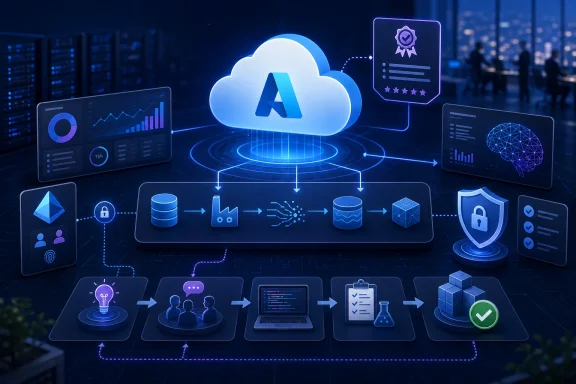 Microsoft’s AI Boom Still Needs Human Integrators
The public story of AI in the Microsoft ecosystem is usually told through models, copilots, chips, and cloud regions. That story is incomplete. The less glamorous but more durable business sits in the implementation layer: data cleanup, identity plumbing, workload migration, governance, deployment patterns, security reviews, cost controls, and the thousand small decisions that determine whether an AI demo survives contact with a real enterprise.That is where firms like Polestar Analytics operate. The company’s positioning around data foundations, analytics ecosystems, scalable Azure architectures, and production-grade AI is not accidental language. It maps almost perfectly to the pain points Microsoft faces as it tries to convert AI excitement into Azure consumption.
Microsoft can sell Azure OpenAI Service, Microsoft Fabric, Azure Databricks integrations, Synapse-era estates, Power BI, AI Search, and application modernization services. But large organizations rarely buy these as clean, isolated components. They buy programs: a data modernization effort here, a governance framework there, a few AI assistants attached to internal workflows, and eventually a strategic cloud relationship that spreads across departments.
A specialization does not prove that every future project will work. It does, however, tell customers that Microsoft has seen enough evidence to let the partner wear a more specific badge than generic cloud enthusiasm. In a market crowded with consultancies promising “AI transformation,” that narrowing function matters.
The Badge Is a Sales Instrument, Not a Trophy
Microsoft partner specializations are often described in the soft language of recognition, but their real purpose is commercial routing. They help Microsoft distinguish between partners that merely resell or recommend Azure and partners that can show delivery capacity in specific technical areas. That distinction matters because Microsoft’s field sellers need credible allies when a customer wants help moving from strategy slides to implementation.For Polestar, the immediate benefit is credibility. Enterprises buying AI and analytics consulting are not short of choices. They can turn to global systems integrators, boutique data firms, offshore delivery houses, cloud-native specialists, or internal platform teams. A Microsoft specialization gives Polestar a shorthand answer to a procurement question every buyer eventually asks: why should we believe you can deliver this on Azure?
The more strategic benefit is access. Microsoft’s partner ecosystem is not just a directory; it is a sales machine. Partners with relevant designations can become more visible in co-selling motions, marketplace discovery, technical referrals, and customer conversations where Microsoft wants implementation capacity attached to Azure growth.
That does not mean business automatically follows. A badge cannot replace account relationships, delivery quality, references, pricing discipline, or industry expertise. But in enterprise services, where the first hurdle is often getting invited into the room, recognition from the platform owner can tilt the odds.
Azure AI Has Moved From Experimentation to Architecture
The timing is the revealing part. The first wave of generative AI spending was often experimental: pilots, proofs of concept, internal chatbots, document summarization, and executive workshops. The next wave is more architectural. Customers are asking whether their data estate can support governed AI, whether workloads can scale economically, and whether their security model can survive new classes of automation.That shift favors partners with analytics depth. AI applications are only as useful as the data, retrieval patterns, permissions, and operational processes underneath them. A company that can connect data engineering, cloud architecture, and AI deployment is better positioned than one selling a thin wrapper around a model endpoint.
Microsoft knows this. Its Azure AI pitch increasingly depends on the broader Microsoft data stack, including Fabric, Power BI, Azure Databricks partnerships, Azure AI Search, and Azure OpenAI Service. The competitive claim is not merely that Microsoft has powerful models; it is that enterprises can build AI where their identities, documents, apps, telemetry, and data platforms already live.
Polestar’s specialization therefore lands in a market where customers are trying to reduce AI sprawl. Many organizations have experimented across multiple clouds and model providers, but enterprise standardization has a way of pulling projects back toward existing procurement channels and security architectures. If a customer has already standardized on Microsoft 365, Entra ID, Power BI, and Azure, an Azure-focused AI and analytics partner becomes an easier internal sell.
The Analytics Specialization May Be the More Important Half
The headline phrase “AI Apps and Analytics” naturally directs attention toward AI. But the analytics half may be the more commercially durable signal. Enterprises can defer an AI assistant; they cannot indefinitely defer the messy work of modernizing data platforms that no longer support the speed, governance, or cost profile the business wants.Analytics modernization is where AI ambition becomes either feasible or theatrical. Without clean data pipelines, reliable semantic models, access controls, lineage, and performance tuning, AI projects become brittle. They hallucinate against bad context, leak sensitive information through poor retrieval design, or fail because the underlying data cannot be trusted.
That is why Microsoft’s analytics specialization requirements are more than ceremonial. They are designed to validate skills, customer work, and Azure consumption across real services. Eligible workloads such as Fabric, Azure Data Factory, Azure Data Lake, Azure Synapse Analytics, and Azure Databricks sit at the center of enterprise data modernization.
For Polestar, this gives the announcement a stronger foundation than a generic AI marketing push. The firm is not claiming only to build clever AI interfaces. It is claiming recognition in the substrate that makes those interfaces useful.
Microsoft Is Using Partners to Industrialize AI Delivery
Microsoft’s great advantage in enterprise AI is not that it alone has access to frontier models. That position has become more complicated as customers evaluate multiple model providers, open-weight models, domain-specific systems, and multi-cloud architectures. Microsoft’s advantage is distribution: Windows, Office, Teams, Dynamics, GitHub, Azure, identity, management, and a partner network that knows how to sell into large organizations.Specializations are part of that distribution strategy. They allow Microsoft to scale expertise without employing every architect, data engineer, and AI consultant itself. A customer can hear the strategic pitch from Microsoft, then receive implementation help from a partner whose capabilities have been validated against Microsoft’s program criteria.
This is especially important for mid-market and enterprise customers that lack the internal staff to execute AI and analytics programs alone. Even large companies with strong IT teams often turn to partners for accelerators, migration factories, governance templates, and architecture reviews. The partner is not merely hired labor; it becomes a translation layer between Microsoft’s roadmap and the customer’s operational reality.
The risk, of course, is that partner labels can blur together. Microsoft has changed partner programs, renamed designations, retired old “Gold” and “Silver” branding, and introduced new specializations as the cloud business evolved. For buyers, the alphabet soup can be exhausting. But the underlying logic remains: Microsoft wants customers to see validated partners as a safer way to adopt more Azure.
For Investors, This Is a Credibility Signal With Limits
TipRanks framed the development in investor terms, which is understandable. Partner recognition can support a consulting firm’s credibility, help with enterprise win rates, and improve access to cloud ecosystem opportunities. For a private company, these signals can matter even when they do not come with revenue figures attached.But investors should resist the temptation to overread the announcement. A specialization is not a booked contract. It is not a guarantee of margin expansion. It does not disclose backlog, utilization, customer retention, or average deal size. It is best understood as a business-development asset rather than a financial event.
The more interesting question is whether Polestar can convert the recognition into repeatable, higher-value engagements. AI and analytics consulting can be lucrative when it moves beyond staff augmentation into strategic platform work. It can also become commoditized when buyers treat partners as interchangeable implementation vendors.
That is where Microsoft alignment cuts both ways. Deep Azure specialization may help Polestar win customers standardizing on Microsoft. It may also make the firm more exposed to Microsoft’s product shifts, partner incentives, and changing co-sell priorities. In cloud services, being close to the platform owner is valuable, but it is not the same thing as controlling the platform.
The Enterprise Buyer Still Has to Ask Hard Questions
For CIOs, CTOs, and data leaders, the practical takeaway is not “hire the partner with the newest badge.” The smarter conclusion is that specializations should be treated as a useful first filter. They can reduce diligence time, but they cannot replace it.A buyer should still ask for customer references in comparable industries. They should ask what portion of the team is certified, who will actually be assigned to the project, and whether the partner has delivered production systems rather than pilots. They should ask how the partner handles security boundaries, data classification, cost governance, model evaluation, and post-deployment support.
The most important question is whether the partner can say no. AI programs fail when everyone agrees to build whatever sounds exciting in the kickoff meeting. Good partners force prioritization. They separate workflows that need generative AI from those that need better search, better dashboards, better process automation, or simply cleaner data.
That discipline is especially important in Azure environments because the platform offers multiple overlapping ways to solve a problem. A customer might use Fabric, Databricks, Synapse remnants, Power BI semantic models, Azure AI Search, Azure Functions, Kubernetes, Logic Apps, or Copilot Studio depending on context. The right answer depends less on fashion than on architecture.
The Real Competition Is Not Just Other Consultancies
Polestar’s competitive field includes obvious rivals: analytics consultancies, AI boutiques, Microsoft partners, and global systems integrators. But the more interesting competition comes from customer internal teams and from platform abstraction. As Microsoft packages more AI functionality into Copilot-branded products, some customers may need fewer custom applications for common use cases.That does not eliminate the need for partners. It changes the partner’s job. Instead of building everything from scratch, partners increasingly integrate, govern, extend, and operationalize Microsoft’s packaged AI capabilities. The value moves from novelty to fit.
This is a healthier market than the one dominated by pilot projects. Enterprises do not need another chatbot demo that summarizes a PDF. They need systems that respect permissions, connect to the right data, produce auditable outputs, and fit into real workflows. That requires engineering, not theater.
For a firm like Polestar, the opportunity is to occupy that pragmatic middle ground. Not every customer wants a global integrator. Not every customer can do the work internally. A specialized partner can win by being technical enough for architects, credible enough for Microsoft, and focused enough to avoid the bureaucracy of larger competitors.
Windows Shops Should Read This as an Azure Stack Story
WindowsForum readers may wonder why a partner specialization deserves attention in a community often focused on Windows updates, Microsoft 365 changes, security, devices, and admin tooling. The answer is that enterprise Windows environments increasingly sit inside a broader Microsoft cloud operating model. Identity, endpoint management, analytics, collaboration, and AI are now linked in ways that make old boundaries less meaningful.A company rolling out AI against internal documents may need Entra ID permissions, SharePoint content governance, Purview policies, Azure AI Search indexing, Power BI reporting, and Windows endpoint controls. A data modernization project may affect desktop reporting workflows, Excel models, Teams collaboration, and line-of-business applications. The AI stack is not somewhere else; it is becoming woven into the Microsoft estate administrators already manage.
That makes partner capability relevant to IT pros even when they are not choosing the partner themselves. A poorly designed AI or analytics engagement can create downstream problems for admins: shadow data stores, over-permissioned service principals, unmanaged connectors, confusing cost allocation, and security exceptions that become permanent. A well-designed engagement can simplify governance and reduce operational drag.
The best Azure partners understand that Microsoft environments are lived-in systems. They are not greenfield diagrams. They contain legacy Windows servers, brittle reporting jobs, inherited Active Directory assumptions, business-critical Excel workbooks, Power BI workspaces of varying quality, and executives who want AI outcomes before the data estate is ready.
The Partner Economy Is Becoming Part of Microsoft’s Product Strategy
Microsoft’s partner program used to be easy to caricature as a channel-sales apparatus. It still is that, but it has also become a product-adoption mechanism. When Microsoft wants customers to adopt Fabric, Azure OpenAI, Defender, Sentinel, or Copilot-related services, partners become the hands that turn adoption targets into configured systems.That reality gives partner specializations a strategic role. Microsoft is not simply rewarding firms for past work; it is shaping the market for future work. By defining specializations around AI apps, analytics, security, infrastructure, and business applications, Microsoft nudges partners to invest in the capabilities it wants customers to buy.
This is not unique to Microsoft. AWS and Google Cloud also use partner programs to signal validated expertise and steer customers toward implementation help. What makes Microsoft’s version distinct is the density of its enterprise footprint. A partner selling Azure AI is often also stepping into environments shaped by Windows, Office, Teams, Power Platform, Dynamics, SQL Server, and decades of Microsoft licensing relationships.
That density can be powerful or suffocating. Customers benefit when integration reduces friction. They suffer when platform lock-in narrows technical choices or when partner recommendations are shaped more by incentives than by architecture. The best buyers use Microsoft’s partner signals as inputs, not instructions.
AI Services Firms Are Entering Their Proof Phase
The AI consulting market is leaving the easy part behind. In 2023 and 2024, many firms could win attention by showing what generative AI might do. By 2026, the bar is higher. Customers want measurable productivity gains, governed deployments, defensible costs, and systems that do not collapse after the innovation budget moves on.That proof phase will separate firms with reusable delivery methods from firms that rely on bespoke heroics. It will reward partners that understand evaluation, monitoring, prompt and retrieval governance, data contracts, and operational support. It will punish those that treat AI as a presentation layer detached from enterprise architecture.
Polestar’s recognition should be viewed through that lens. The badge gives the company a stronger market signal, but the market will now ask for evidence at a higher level. Recognition opens doors; delivery keeps them open.
This is where the language in the company’s post about years of work matters. If accurate, it suggests the specialization is an outcome of accumulated delivery rather than a sudden pivot into AI. That distinction is important because AI services firms that had strong data practices before the boom are generally better positioned than firms that discovered “enterprise AI” when the marketing budget changed.
The Polestar Badge Says More About Microsoft’s AI Channel Than One Firm
The concrete significance of this announcement sits at the intersection of partner economics and enterprise architecture. It is a useful marker for Polestar, but it is also a sign of how Microsoft wants the AI services market to mature.- Polestar Analytics now has a Microsoft Azure specialization signal it can use in enterprise AI, analytics, and cloud transformation sales.
- The recognition is commercially meaningful, but it should not be treated as a substitute for revenue, margin, or backlog data.
- The analytics component may matter as much as the AI component because production AI depends on governed, reliable data platforms.
- Microsoft benefits when specialized partners help customers move from AI pilots to Azure-based production systems.
- Enterprise buyers should still evaluate references, project staffing, security practices, cost governance, and post-deployment support before awarding strategic work.
- Windows and Microsoft 365 administrators should expect AI and analytics projects to touch identity, governance, endpoint management, data access, and everyday operational workflows.
References
- Primary source: TipRanks
Published: Fri, 29 May 2026 00:18:31 GMT
Polestar Analytics Gains Microsoft Azure AI and Analytics Specialization - TipRanks.com
A LinkedIn post from Polestar Analytics highlights that the company is now recognized as a Specialized Partner in AI Apps and Analytics on Microsoft Azure. The post...www.tipranks.com
- Official source: learn.microsoft.com
Apply for specializations - Partner Center | Microsoft Learn
Strengthen your business profile in the Microsoft partner directory. Learn how to use Partner Center to apply for and earn advanced specializations.learn.microsoft.com - Official source: azure.microsoft.com
Azure Partners – Find an Azure Expert Partner | Microsoft Azure
Get technical advice and support from expert Microsoft Azure partners to deliver solutions that help your business grow. Find a partner that meets your needs.azure.microsoft.com
- Related coverage: polestaranalytics.com
Microsoft Azure Consulting Services- Polestar Analytics
Get a detailed assessment of Microsoft Azure with Microsoft Gold Partners for bringing innovative & cost saving solutions with a cloud-first approach.www.polestaranalytics.com
- Related coverage: linkedin.com
Polestar Analytics hiring Artificial Intelligence Engineer in New York, United States | LinkedIn
Posted 3:39:47 PM. Polestar Analytics is hiring two AI Engineers to join our on-site delivery team in the tri-state…See this and similar jobs on LinkedIn.www.linkedin.com
- Official source: microsoft.com
Your request has been blocked. This could be due to several reasons.
www.microsoft.com
- Official source: devicepartner.microsoft.com
Microsoft Partner Blog
devicepartner.microsoft.com
- Official source: techcommunity.microsoft.com
Explore the Azure specialization V.Next pilot—a streamlined path to Microsoft Azure specializations
Earn the Build AI Apps on Microsoft Azure specialization at a lower cost with V.Next pilot. techcommunity.microsoft.com
- Official source: blogs.microsoft.com
From vision to reality: Microsoft's partners embrace AI to deliver customer value - The Official Microsoft Blog
Artificial intelligence is a defining technology of our time. Over the past year we’ve begun to see how it can unlock profound possibilities for individuals, organizations and society — and it’s clear that we have only scratched the surface. For Microsoft and our partners across industries, AI...blogs.microsoft.com - Official source: microsoft.github.io
- Related coverage: experteach.eu
