

Poloplast’s move off a green‑screen ERP and into a modern, AI‑ready planning stack has transformed forecasting, inventory visibility, and planning cadence—replacing spreadsheet-driven guesswork with demand‑driven supply‑chain planning and a single source of truth across finance and operations. The Austrian plastics manufacturer implemented Microsoft Dynamics 365 Supply Chain Management and Demand Planning during a private preview, partnered on the ERP roll‑out with BE‑terna, and has since layered process mining and Power Platform automation to shorten planning cycles, reduce external storage costs, and surface item‑level budgets for master planning. (microsoft.com)
For more than seven decades, Poloplast has built a reputation in Europe for polymer compounds and plastic pipe systems used in building services and civil engineering. Like many manufacturers the company faced a familiar IT constraint: an aging AS/400 ERP that limited automation, reporting, and the handoff between sales forecasts and production planning. Poloplast’s leadership chose to modernize with Microsoft Dynamics 365 to solve three linked problems: poor forecasting, disconnected planning and production, and limited process transparency. (microsoft.com)
The modernization journey is anchored on four technology pillars:
Key, verifiable benefits reported by Poloplast after moving forecasting into Demand Planning:
Poloplast’s approach illustrates three industry trends:
That said, the most sensitive dependencies are not the software features but the underlying data quality, integration discipline, and governance around AI‑driven workflows. Poloplast’s next steps—moving from insight to AI‑assisted automation—are plausible and promising, but must be staged and governed to avoid automating exceptions or amplifying noisy data. The path Poloplast shows is repeatable: measure, standardize, then automate, and ensure finance and operations share the same numbers before you let algorithms drive production decisions. (be-terna.com)
Poloplast’s experience offers a clear, pragmatic blueprint: modern ERP and low‑code demand planning give manufacturers better forecasts; process mining turns assumptions into facts; and BPP‑style integration can finally close the loop between forecast-driven operations and financial planning—if teams invest equally in data hygiene, governance, and change management. (microsoft.com)
Source: Microsoft Poloplast modernizes manufacturing and streamlines forecasting and planning with Dynamics 365 | Microsoft Customer Stories
 Background / Overview
For more than seven decades, Poloplast has built a reputation in Europe for polymer compounds and plastic pipe systems used in building services and civil engineering. Like many manufacturers the company faced a familiar IT constraint: an aging AS/400 ERP that limited automation, reporting, and the handoff between sales forecasts and production planning. Poloplast’s leadership chose to modernize with Microsoft Dynamics 365 to solve three linked problems: poor forecasting, disconnected planning and production, and limited process transparency. (microsoft.com)The modernization journey is anchored on four technology pillars:
- Dynamics 365 Supply Chain Management (Demand planning) for forecasting and planning workflows. (microsoft.com)
- Dynamics 365 Finance (claimed Business Performance Planning use) to align operational demand with budgeting and financial plans (see verification notes below).
- Microsoft Power Platform (Power Automate, Power Apps, Power BI) for automation, custom front‑end scenarios, and reporting. (be-terna.com)
- Process mining using Power Automate Process Mining to visualize actual process flows and prioritize optimizations. (be-terna.com)
What Poloplast implemented — the verified facts
Dynamics 365 Demand Planning: a low‑code forecasting layer
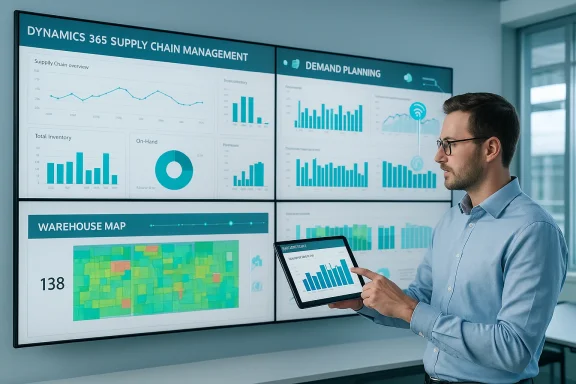
Poloplast was an early participant in the private preview of the Demand Planning app for Dynamics 365 Supply Chain Management. Demand Planning is built on the Power Platform and offers a low‑code, user‑friendly interface that uses statistical forecasting algorithms, collaborative reporting, and embedded analytics to extend forecasting horizons and improve accuracy. After deployment, Poloplast extended its forecast horizon from roughly three months to 18 months and reported measurable reductions in external storage and more precise raw‑material purchasing. (microsoft.com)Key, verifiable benefits reported by Poloplast after moving forecasting into Demand Planning:
- Longer planning horizon: from three months to about one and a half years. (microsoft.com)
- Lower external storage costs through statistically driven allocation of warehouse space and more precise purchasing. (microsoft.com)
- Faster, collaborative forecasting that reduced email/phone coordination because planners and sales could see item availability directly in the ERP. (microsoft.com)
Process Mining: turning event logs into prioritized action
With BE‑terna, Poloplast used Microsoft Power Automate Process Mining to analyze warehouse movements and the incoming invoice process. The analysis uncovered 138 distinct warehouse process variants, produced heatmaps that revealed bottlenecks and flow frequencies, and enabled data‑driven evaluation of a recent warehouse redesign. Those insights improved audit readiness, training artifacts, and provided the foundation for future AI‑driven automation. (be-terna.com)Power Platform + Visualization
Poloplast’s rollout emphasized use of the Power Platform for:- Power Automate process mining and automation. (be-terna.com)
- Power Apps for supplier communications and transport management (as described in the provided material; see verification notes).
- Power BI and an Azure SQL database for consolidated reporting and self‑service analytics (as described in the provided material; see verification notes).
Business Performance Planning: capabilities and verification
Poloplast’s material describes a follow‑on phase where the company implemented Dynamics 365 Finance Business Performance Planning (BPP) to connect operational demand to budgeting and financial planning, enabling bottom‑up detail and top‑down adjustments in real time. While Poloplast’s account includes detailed quotes about faster budgeting cycles, item‑level budget population in Dynamics 365, and integration between demand planning and BPP, publicly available customer pages specifically documenting Poloplast’s BPP rollout were not found during verification. For the functional claims about BPP itself, Microsoft’s documentation confirms the platform capabilities that Poloplast describes:- BPP enables modeling of dimensions and cubes, write‑back from Power BI/Excel to Dataverse, and collaborative planning visuals in Power BI. This aligns exactly with the Poloplast narrative about creating plans, layering demand assumptions, and writing back results for master planning and budgeting visibility.
Why this matters: operational and financial impacts
Faster decision cycles and near‑real‑time planning
Poloplast reports that Business Performance Planning gave them the ability to see planning results “one minute after we enter the data,” enabling a hybrid bottom‑up and top‑down planning model. Whether that latency is one minute or a few minutes, the critical shift is away from slow, manual consolidations toward interactive, iterative planning sessions where finance and operations work from the same dataset. This is precisely the use case BPP is designed for: write‑back planning, versioning, and scenario analysis inside Power BI and Excel.Item‑level truth for master planning and reduced waste
The combination of demand planning and item‑level budgeting means Poloplast can populate production plans from demand forecasts rather than manual exports and re‑entry. The result is:- More accurate master production scheduling.
- Less overstock and fewer external warehousing costs.
- Faster cycle planning between production runs.
Process transparency that supports automation and governance
Discovering 138 warehouse process variants is instructive: it shows that surface‑level process maps rarely reflect reality. Process mining converted event logs into visual maps, making decisions about standardization, KPIs, and robotic automation much safer because they were based on measured behavior rather than assumption. This is a crucial step before attempting AI agents or RPA for transactional work—Poloplast’s approach follows best practice: measure, standardize, then automate. (be-terna.com)A critical look: strengths, risks, and open questions
Strengths and notable innovations
- End‑to‑end traceability: Poloplast’s combined approach (Demand Planning → master planning → reporting) creates a single source of truth that keeps sales, production, and finance aligned—reducing rework and lead‑time mismatches. (microsoft.com)
- Data‑driven process improvement: Process mining produced actionable evidence (138 variants) to guide rationalization and automation prioritization. That lowers the chance of automating the wrong process. (be-terna.com)
- Modern, low‑code tooling for business users: Demand Planning’s no‑code/low‑code design and the Power Platform’s citizen‑developer model make it easier for domain experts—not just IT—to build and adapt processes and analytics. (microsoft.com)
- Potential for AI augmentation: Poloplast is testing AI features and exploring Microsoft Copilot–style summarization and assistants to speed knowledge transfer and answer routine queries. Early Copilot and BPP integrations can accelerate analysis and reduce manual report preparation. (microsoft.com)
Key risks and practical challenges
- Data quality and master‑data governance: Forecasting, BPP calculations, and process mining all depend on clean, consistent event and item master data. If SKUs, units of measure, or transaction timestamps are inconsistent, statistical forecasting and process mining results will be noisy or misleading. Mitigation: invest in master‑data cleansing, canonical item mapping, and continuous data validation checkpoints. (microsoft.com)
- Integration and mapping complexity: Integrating historical ERP records, document management systems, and external logistics platforms for process mining and BPP write‑back requires robust dual‑write and ETL strategies. Microsoft’s hybrid dual‑write and Dataverse features help, but implementation mistakes (timeouts, mismapped fields) can break plan flows. Mitigation: staged integration with automated reconciliation and load testing.
- Vendor and platform lock‑in: A deep investment in Dynamics 365, Dataverse, Power Platform, and Microsoft‑centric automation can reduce flexibility to swap foundational components later. Mitigation: enforce open interfaces, isolate IP in documented APIs, and maintain exportable data models and cubes.
- AI and Copilot governance: As Poloplast explores AI summarization and Copilot workflows, governance issues arise: hallucination risk, compliance with financial controls, and auditability. Mitigation: limit Copilot actions to read‑only or supervised writebacks in early phases and enforce explainability logs for every AI‑driven decision.
- Change management and people: Transforming planning from spreadsheets to a live model disrupts long‑established decision habits. Poloplast must invest in training, updated SOPs, and clear role definitions to capture the benefits. Process mining already creates training artifacts; extend that to formal curriculum for planners and sales managers. (be-terna.com)
Open or unverified claims
- The provided material describes an integrated Dynamics 365 Finance Business Performance Planning deployment at Poloplast and quotes internal employees about one‑minute result turnarounds and item‑level budget writebacks. Microsoft Learn confirms that BPP supports the exact capabilities claimed (dimension/cube modeling, write‑back from Power BI/Excel, Dataverse integration), but a publicly available Microsoft or partner page explicitly documenting Poloplast’s BPP implementation and the Nicole Eidenberger / Patrick Keller quotes about BPP could not be located during verification. For transparency: treat those specific implementation details and timings as reported by the company and technically feasible on Dynamics 365 BPP, but currently uncorroborated by an independent case page.
Practical recommendations for manufacturers considering the same path
If your organization is evaluating a similar modernization effort, use Poloplast’s journey as a concrete template but design with these practical steps in mind:- Start with the data: perform master‑data audits, canonical SKU mapping, and transaction timestamp validation before enabling statistical demand planning or process mining. Accurate inputs enable trustworthy outputs.
- Pilot Demand Planning on a selected product family and measure forecast accuracy improvements versus a control group. Use back‑testing and holdout windows to validate algorithmic choices.
- Run process mining early and aim to reduce process variants first; automation should follow standardization. Poloplast’s discovery of 138 warehouse variants shows how complex real workflows can be. (be-terna.com)
- Adopt BPP (or analogous planning models) gradually: validate write‑back flows to Dataverse in a sandbox, then extend to production reporting once reconciliations are clean. Microsoft documentation shows that BPP is explicitly designed for iterative, collaborative planning via Power BI and Excel.
- Build governance for AI features: define permitted actions, audit trails, and rollback procedures for Copilot‑driven writebacks. Start with assisted insights before granting automated financial postings.
- Invest in people: create role‑based training for demand planners, warehouse leads, and finance users; use process mining visualizations as teaching tools. (be-terna.com)
Technical checklist: what to validate in your own environment
- Master data completeness (item codes, units, BOMs) and consistency across ERP/warehouse/document systems.
- Event‑log integrity (timestamps, event IDs) so process mining yields accurate flows. (be-terna.com)
- Dual‑write synchronization and Dataverse mapping for BPP write‑back and Power BI live visuals.
- Data residency, encryption, and role‑based access for AI agents and Power Platform apps.
- Backup/DR for the Azure SQL or other reporting layers used for analytics and historical reconciliation.
The broader context: why ERP modernization + BPP matters now
Manufacturers face margin pressure, volatile raw‑material markets, and rising customer expectations for on‑time deliveries. Moving from monthly spreadsheet cycles to continuous, model‑driven planning shortens decision loops and reduces buffer inventories—critical levers to protect margin and service levels.Poloplast’s approach illustrates three industry trends:
- Democratized forecasting: low‑code demand tools let business users own forecasting models rather than data scientists alone. (microsoft.com)
- Process mining as foundation: discover before you automate; process mining is essential to avoid replicating broken flows. (be-terna.com)
- Tighter finance‑operations coupling: BPP and writeback in Power BI/Excel bridge the historical gap between ops assumptions and ledger outcomes—allowing CFOs to run “what if” scenarios faster and with more granularity.
Conclusion
Poloplast’s modernization story is a practical example of what happens when a mid‑sized manufacturer stops treating forecasting as a spreadsheet ritual and treats it as a connected, measurable, and governable process. By combining Dynamics 365 Demand Planning with Power Platform‑based process mining and, reportedly, Business Performance Planning in Dynamics 365 Finance, Poloplast moved from siloed prediction to integrated planning—reducing storage costs, speeding budgeting, and giving planners the visibility to make confident, data‑driven choices. Key technical enablers—Power Platform, Dataverse write‑back, and Power BI planning visuals—are publicly documented and align with the company’s reported improvements. (microsoft.com)That said, the most sensitive dependencies are not the software features but the underlying data quality, integration discipline, and governance around AI‑driven workflows. Poloplast’s next steps—moving from insight to AI‑assisted automation—are plausible and promising, but must be staged and governed to avoid automating exceptions or amplifying noisy data. The path Poloplast shows is repeatable: measure, standardize, then automate, and ensure finance and operations share the same numbers before you let algorithms drive production decisions. (be-terna.com)
Poloplast’s experience offers a clear, pragmatic blueprint: modern ERP and low‑code demand planning give manufacturers better forecasts; process mining turns assumptions into facts; and BPP‑style integration can finally close the loop between forecast-driven operations and financial planning—if teams invest equally in data hygiene, governance, and change management. (microsoft.com)
Source: Microsoft Poloplast modernizes manufacturing and streamlines forecasting and planning with Dynamics 365 | Microsoft Customer Stories
