

Microsoft’s reported Windows K2 quality initiative and Xbox’s confirmed Project Helix console effort are converging in 2026 because Helix is being positioned as a Windows-backed Xbox platform that can play console and PC games, while K2 is aimed at making Windows faster, leaner, and more reliable. That connection is not a side plot. It is the hinge on which Microsoft’s next Xbox strategy may swing. If Windows remains the thing players tolerate to get to their games, Helix risks becoming a PC with a console costume; if K2 succeeds, Microsoft may finally have the software foundation for the Xbox it has been promising for years.
For most of Xbox’s life, the console bargain was simple: trade openness for certainty. You bought the box, signed into the service, inserted a disc or downloaded a game, and expected the thing to behave like an appliance. That bargain is why console players forgive weaker upgrade paths, walled gardens, and slower mod support. They are not buying theoretical flexibility; they are buying predictability.
Project Helix changes that bargain. Microsoft has described its next-generation Xbox console as a device built to play both Xbox console games and Windows PC games, with custom AMD silicon, DirectX advances, and a more unified development story. That is an ambitious pitch, but it drags Xbox directly into Windows’ oldest problem: Windows is excellent at being many things to many people, and much less excellent at disappearing when you only want one thing.
That is where Windows K2 becomes more than a Windows quality program. According to Windows Central’s reporting, K2 is aimed at improving Windows quality, responsiveness, debloating, and gaming performance, with Valve’s SteamOS reportedly treated internally as a performance benchmark. If that framing is accurate, Microsoft is not merely trying to make Windows feel nicer on laptops. It is trying to remove the friction that could make its next Xbox strategy collapse under its own premise.
The uncomfortable truth is that Microsoft has spent years telling users that Xbox is no longer just a box. Project Helix is the hardware manifestation of that idea. But the more Xbox becomes Windows, the more Windows has to start behaving like Xbox.
That matters because gaming handhelds have exposed Windows’ awkwardness in a way desktop towers never did. On a desktop, Windows’ complexity is expected. On a seven-inch device controlled primarily with thumbsticks, every pop-up, update prompt, desktop-scale dialog box, input mismatch, and background service feels like a betrayal.
SteamOS is not magic. Anti-cheat compatibility remains inconsistent, Game Pass is effectively absent outside cloud workarounds, and many non-Steam workflows still remind users that Linux gaming has not solved every problem. But Valve did something Microsoft has struggled to do: it made the operating system feel subordinate to the gaming session.
Windows, by contrast, often feels like the gaming session is just one scheduled activity among many. It may be downloading updates, indexing files, surfacing notifications, syncing services, running overlays, launching store components, and trying to be a general-purpose PC while the player is asking it to be a console. That is tolerable on a rig under a desk. It is corrosive on an Xbox-branded handheld, and potentially fatal on a next-generation console pitched as both Xbox and PC.
That distinction is everything. A console can use Windows components without asking the player to manage Windows. A console can benefit from PC compatibility without inheriting every PC annoyance. The question is whether Microsoft can draw that line cleanly enough for users who do not care what kernel, graphics API, package format, or storefront entitlement model makes their games run.
Xbox Mode is an obvious bridge. Microsoft is bringing a full-screen, controller-optimized Xbox experience to Windows 11, and the company has described it as preserving Windows’ openness while making the experience more familiar to console players. That is the right direction, but an interface layer is not the same as a console experience.
A real console experience is what happens when everything goes wrong. Does the device recover from a failed update without asking the user to troubleshoot like a sysadmin? Does a controller remain the first-class input method in every critical flow? Does sleep and resume work predictably? Do shader compilation, driver updates, store authentication, and background services stay out of the player’s way? Does the system know when it is a game machine and when it is a PC?
If Helix cannot answer those questions convincingly, the Xbox brand will absorb Windows’ rough edges. That is a much bigger risk than a few percentage points of frame-rate disadvantage.
But the larger issue is trust. Console users trust the box to be boring. PC users tolerate mess because the upside is enormous: more storefronts, more hardware choices, more mods, more input options, more settings, more freedom. Project Helix is an attempt to combine those worlds, but combining them only works if the user gets the benefits of both rather than the compromises of each.
K2’s reported focus on responsiveness, reduced sluggishness, and debloating speaks directly to that. Windows has accumulated layers of services, experiences, compatibility scaffolding, telemetry pathways, update machinery, and promotional surfaces over decades. Some of that is necessary. Some of it is defensible on a productivity machine. Far less of it is defensible on a gaming appliance.
Microsoft does not need to turn Windows into SteamOS. It needs to make Windows capable of getting out of the way with the same discipline SteamOS shows on the Steam Deck. That may mean deeper gaming profiles, stricter background task suppression, better controller-first recovery paths, improved update atomicity, and tighter performance guarantees for OEM handhelds and living-room hardware.
The benchmark is not just average FPS. It is whether the system feels like it belongs to the player rather than to Microsoft’s backlog of services.
That is strategically powerful. Developers already build for Windows because PC gaming is too large to ignore. If Microsoft can make the next Xbox part of that same development surface, it lowers the cost of supporting Xbox at a time when exclusive console development is increasingly expensive and risky.
This also fits Microsoft’s broader shift away from the console as a single destination. Xbox Play Anywhere, Game Pass, cloud saves, cross-progression, and multi-device libraries all point toward Xbox as an identity and ecosystem rather than a box under the television. Project Helix could be the hardware that makes that platform story coherent.
But developers do not rescue a bad living-room experience. A system can be elegant for studios and irritating for players at the same time. Windows itself proves the point: it is the most important PC gaming platform in the world, but that does not automatically make it the best console operating environment.
If Microsoft optimizes Helix primarily around development efficiency, it may win support on paper while losing affection in practice. The next Xbox has to be attractive to studios without making players feel like they bought a reference PC.
Handhelds compress the user experience. A driver hiccup, update loop, login problem, launcher conflict, or background process that might be a minor irritation on a desktop becomes glaring on a portable device. The smaller the screen, the less patience the user has for desktop assumptions.
That is why anecdotal reports of Windows reinstalls, update failures, inconsistent performance gains from Xbox Mode, and SteamOS comparisons carry more weight than they might seem to. They are not isolated complaints about niche devices. They are symptoms of a platform that was built to be universal being asked to behave like an appliance.
Microsoft can learn from this. In fact, it appears to be trying. Xbox Mode, DirectStorage improvements, shader delivery work, and the reported K2 effort all suggest the company understands that gaming on Windows cannot remain a pile of good technologies wrapped in inconsistent behavior.
The question is whether those improvements arrive as a coherent product before Helix has to make its first impression.
That is a strange burden. Xbox Series X and Series S may not have won the generation culturally, but they still deliver the basic console experience well: quick access to games, a controller-first interface, reliable updates most of the time, and a clear distinction between console and PC. Helix threatens to blur that distinction in ways that could be exciting or alienating.
For longtime Xbox players, PC game compatibility is a compelling bonus only if it does not compromise the console core. If the next Xbox can run Steam, Epic, Battle.net, and Xbox titles while still behaving like an Xbox, Microsoft has something genuinely differentiated. If it boots into a polished front end but periodically drops users into Windows maintenance reality, the spell breaks.
There is also a branding risk. Microsoft has spent years broadening Xbox beyond hardware, but the console audience still wants to know why it should buy an Xbox box. “Because it is basically a PC” is not enough. A PC already exists. The value proposition has to be that Helix is the best place to get PC breadth with console calm.
That is a hard product to build. It requires discipline Microsoft has not always shown with Windows.
All of that is appealing, and much of it is true. But openness does not automatically create a good product. Sometimes it creates a support matrix with a logo on top.
Valve’s Steam Deck works partly because Valve is willing to make opinionated choices. Steam comes first. The interface is focused. The verified program is imperfect but useful. The system has a default path. Users can break out into desktop Linux, but they do not have to live there.
Microsoft’s challenge is harder because Windows’ value is precisely that it supports everything. But Helix cannot present everything with equal priority. It needs taste. It needs hierarchy. It needs to know when the Xbox experience owns the screen and when Windows is merely the machinery underneath.
This is where K2 could become a cultural test inside Microsoft. Debloating Windows is not only an engineering problem; it is a product-governance problem. Every team thinks its service, notification, integration, or background task is justified. A gaming-first Windows profile requires someone with authority to say no.
If Project Helix is going to feel like a console, Microsoft must make Windows less democratic about what gets to interrupt the player.
The more important performance problem is consistency. Players notice stutter, slow resumes, first-run shader hitches, launcher delays, and background activity at least as much as they notice benchmark averages. A console’s great trick is that it narrows variability. Developers target known hardware; the platform holder controls the environment; the user rarely sees the plumbing.
Helix complicates that trick by introducing PC compatibility. If Microsoft allows the full chaos of PC gaming onto a living-room Xbox without strong guardrails, performance will vary in ways console users are not trained to accept. If it locks things down too aggressively, it weakens the PC promise that makes Helix interesting.
That balance may define the product. Microsoft needs enough openness to make Helix more than another Xbox, but enough curation to keep it from becoming a Windows PC with a friendlier launcher. K2’s reported mission gives Microsoft a chance to improve the base layer before that compromise hardens into a product identity.
That advantage should not make Microsoft complacent. Subscription gravity can get users through the door, but it does not make them love the device. If launching a Game Pass title on Helix feels smooth, fast, and console-like, Microsoft’s ecosystem becomes a serious differentiator. If it feels like juggling app updates, account prompts, store dependencies, and Windows quirks, Game Pass becomes a reason to endure the device rather than celebrate it.
The same applies to backward compatibility. Microsoft’s commitment to keeping four generations of Xbox games playable is one of the platform’s strongest emotional assets. Helix can build on that, but only if the old library feels native rather than emulated through layers of compromise.
A next-generation Xbox that plays Xbox classics, modern console releases, PC games, and Game Pass titles from a single coherent interface would be genuinely compelling. The difference between that and a messy convergence box is execution, not vision.
But the product will be judged by the first hour in a living room. Does the box update cleanly? Does the controller work everywhere? Does it resume a game without drama? Does it hide the desktop unless the user asks for it? Does it make PC storefronts feel like supported citizens rather than tolerated guests? Does it keep Windows’ power without importing Windows’ clutter?
That is why K2 may be more important to Xbox than any single hardware spec. The next Xbox’s problem is unlikely to be that the GPU is too weak on a spec sheet. The problem will be whether Microsoft can make a general-purpose operating system feel purpose-built.
The company has tried versions of this before. Windows Media Center hinted at a living-room PC future that never fully arrived. Windows 8 tried to force a touch-first shell across devices and paid the price. Xbox One launched with an entertainment convergence pitch that underestimated how strongly players wanted games first. Microsoft has learned from some of these mistakes, but Helix revisits the same fundamental temptation: one platform to rule many contexts.
K2, if it is real in the form described, is an implicit admission that the old Windows answer is not enough. You cannot simply put an Xbox interface on top of Windows 11 and call the problem solved. The foundation has to change.
For OEMs, the stakes are equally direct. A reliable gaming-focused Windows layer would make handheld PCs easier to sell and support. Today, every manufacturer has to paper over Windows’ handheld weaknesses with its own utilities, launchers, overlays, and firmware tools. That fragmentation is exactly the kind of mess a platform owner is supposed to solve.
For developers, Helix could simplify targeting Xbox and PC. But if the user experience disappoints, developers may get another platform checkbox rather than a thriving audience. Microsoft needs Helix to be not only easy to support, but desirable to own.
For security-minded users, there is a subtler tension. A more appliance-like Windows gaming mode must not become an opaque mess of exceptions, privileged services, and hidden state. Microsoft will need to preserve update integrity and platform security while making maintenance feel invisible. That is difficult, but consoles have been doing versions of it for years.
The irony is that the next Xbox may succeed by showing less Windows, not more. The best proof of K2’s value would be a Helix device where players rarely think about K2 at all.
That is a humbling place for Microsoft to be. Windows is one of the most successful software platforms ever built, but success at scale often breeds tolerance for friction. Console players have less tolerance. Handheld players have even less.
If Project Helix is the grand convergence of Xbox and PC, Windows K2 is the janitorial work that makes the grand convergence livable. It is the effort to clear the floor before Microsoft invites console users, PC players, developers, OEMs, and Game Pass subscribers into the same room.
The market will not grade Microsoft on how elegant the strategy looks in a keynote. It will grade Microsoft on whether the device feels fast, quiet, reliable, and obvious.
Source: Windows Central Most people haven’t connected Project Helix to Windows K2 yet — but the link could decide Xbox’s future
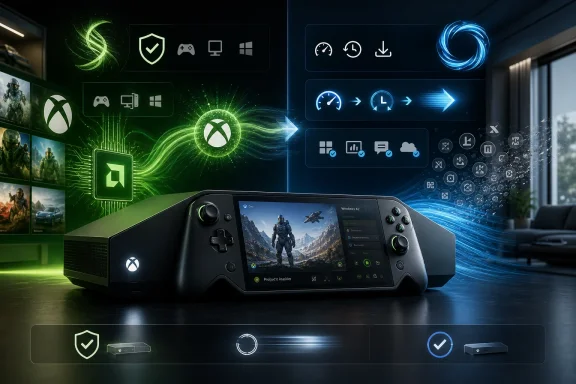 Microsoft’s Xbox Bet Has Quietly Become a Windows Bet
For most of Xbox’s life, the console bargain was simple: trade openness for certainty. You bought the box, signed into the service, inserted a disc or downloaded a game, and expected the thing to behave like an appliance. That bargain is why console players forgive weaker upgrade paths, walled gardens, and slower mod support. They are not buying theoretical flexibility; they are buying predictability.Project Helix changes that bargain. Microsoft has described its next-generation Xbox console as a device built to play both Xbox console games and Windows PC games, with custom AMD silicon, DirectX advances, and a more unified development story. That is an ambitious pitch, but it drags Xbox directly into Windows’ oldest problem: Windows is excellent at being many things to many people, and much less excellent at disappearing when you only want one thing.
That is where Windows K2 becomes more than a Windows quality program. According to Windows Central’s reporting, K2 is aimed at improving Windows quality, responsiveness, debloating, and gaming performance, with Valve’s SteamOS reportedly treated internally as a performance benchmark. If that framing is accurate, Microsoft is not merely trying to make Windows feel nicer on laptops. It is trying to remove the friction that could make its next Xbox strategy collapse under its own premise.
The uncomfortable truth is that Microsoft has spent years telling users that Xbox is no longer just a box. Project Helix is the hardware manifestation of that idea. But the more Xbox becomes Windows, the more Windows has to start behaving like Xbox.
SteamOS Became the Benchmark by Doing Less
Valve’s SteamOS did not become a threat to Windows gaming because Linux suddenly became universally friendly. It became a threat because, on handheld gaming hardware, it feels designed around the thing in your hands. It boots into the right experience, suspends and resumes cleanly, hides complexity when it can, and makes the user feel like the device has a center of gravity.That matters because gaming handhelds have exposed Windows’ awkwardness in a way desktop towers never did. On a desktop, Windows’ complexity is expected. On a seven-inch device controlled primarily with thumbsticks, every pop-up, update prompt, desktop-scale dialog box, input mismatch, and background service feels like a betrayal.
SteamOS is not magic. Anti-cheat compatibility remains inconsistent, Game Pass is effectively absent outside cloud workarounds, and many non-Steam workflows still remind users that Linux gaming has not solved every problem. But Valve did something Microsoft has struggled to do: it made the operating system feel subordinate to the gaming session.
Windows, by contrast, often feels like the gaming session is just one scheduled activity among many. It may be downloading updates, indexing files, surfacing notifications, syncing services, running overlays, launching store components, and trying to be a general-purpose PC while the player is asking it to be a console. That is tolerable on a rig under a desk. It is corrosive on an Xbox-branded handheld, and potentially fatal on a next-generation console pitched as both Xbox and PC.
Project Helix Cannot Be Just an Xbox Skin
The danger for Microsoft is not that Project Helix runs Windows technology. Xbox has long shared deep architectural DNA with Windows, DirectX, and Microsoft’s broader developer stack. The danger is that Helix might feel like Windows with a controller shell bolted on.That distinction is everything. A console can use Windows components without asking the player to manage Windows. A console can benefit from PC compatibility without inheriting every PC annoyance. The question is whether Microsoft can draw that line cleanly enough for users who do not care what kernel, graphics API, package format, or storefront entitlement model makes their games run.
Xbox Mode is an obvious bridge. Microsoft is bringing a full-screen, controller-optimized Xbox experience to Windows 11, and the company has described it as preserving Windows’ openness while making the experience more familiar to console players. That is the right direction, but an interface layer is not the same as a console experience.
A real console experience is what happens when everything goes wrong. Does the device recover from a failed update without asking the user to troubleshoot like a sysadmin? Does a controller remain the first-class input method in every critical flow? Does sleep and resume work predictably? Do shader compilation, driver updates, store authentication, and background services stay out of the player’s way? Does the system know when it is a game machine and when it is a PC?
If Helix cannot answer those questions convincingly, the Xbox brand will absorb Windows’ rough edges. That is a much bigger risk than a few percentage points of frame-rate disadvantage.
K2 Is Really About Trust, Not Benchmarks
The Windows K2 story is easy to reduce to SteamOS versus Windows frame rates. That is the most clickable version of the debate, and it matters. If SteamOS can outperform Windows on comparable handheld hardware in popular games, Microsoft has a problem that no amount of brand positioning can erase.But the larger issue is trust. Console users trust the box to be boring. PC users tolerate mess because the upside is enormous: more storefronts, more hardware choices, more mods, more input options, more settings, more freedom. Project Helix is an attempt to combine those worlds, but combining them only works if the user gets the benefits of both rather than the compromises of each.
K2’s reported focus on responsiveness, reduced sluggishness, and debloating speaks directly to that. Windows has accumulated layers of services, experiences, compatibility scaffolding, telemetry pathways, update machinery, and promotional surfaces over decades. Some of that is necessary. Some of it is defensible on a productivity machine. Far less of it is defensible on a gaming appliance.
Microsoft does not need to turn Windows into SteamOS. It needs to make Windows capable of getting out of the way with the same discipline SteamOS shows on the Steam Deck. That may mean deeper gaming profiles, stricter background task suppression, better controller-first recovery paths, improved update atomicity, and tighter performance guarantees for OEM handhelds and living-room hardware.
The benchmark is not just average FPS. It is whether the system feels like it belongs to the player rather than to Microsoft’s backlog of services.
The Developer Story Is Stronger Than the User Story
Microsoft’s strongest argument for Helix is aimed at developers. A unified Xbox and Windows path could reduce duplicated work, make PC games more naturally compatible with Xbox hardware, and allow Microsoft to tell studios that supporting the next Xbox is less like targeting a separate console and more like targeting a curated Windows gaming environment.That is strategically powerful. Developers already build for Windows because PC gaming is too large to ignore. If Microsoft can make the next Xbox part of that same development surface, it lowers the cost of supporting Xbox at a time when exclusive console development is increasingly expensive and risky.
This also fits Microsoft’s broader shift away from the console as a single destination. Xbox Play Anywhere, Game Pass, cloud saves, cross-progression, and multi-device libraries all point toward Xbox as an identity and ecosystem rather than a box under the television. Project Helix could be the hardware that makes that platform story coherent.
But developers do not rescue a bad living-room experience. A system can be elegant for studios and irritating for players at the same time. Windows itself proves the point: it is the most important PC gaming platform in the world, but that does not automatically make it the best console operating environment.
If Microsoft optimizes Helix primarily around development efficiency, it may win support on paper while losing affection in practice. The next Xbox has to be attractive to studios without making players feel like they bought a reference PC.
Handhelds Are the Warning Label for the Living Room
The ROG Xbox Ally and similar Windows handhelds are not just adjacent products. They are test rigs for Microsoft’s entire console-PC convergence thesis. Every time a Windows gaming handheld feels clumsy next to a Steam Deck, it previews the criticism Helix will face if Microsoft does not fix the foundations.Handhelds compress the user experience. A driver hiccup, update loop, login problem, launcher conflict, or background process that might be a minor irritation on a desktop becomes glaring on a portable device. The smaller the screen, the less patience the user has for desktop assumptions.
That is why anecdotal reports of Windows reinstalls, update failures, inconsistent performance gains from Xbox Mode, and SteamOS comparisons carry more weight than they might seem to. They are not isolated complaints about niche devices. They are symptoms of a platform that was built to be universal being asked to behave like an appliance.
Microsoft can learn from this. In fact, it appears to be trying. Xbox Mode, DirectStorage improvements, shader delivery work, and the reported K2 effort all suggest the company understands that gaming on Windows cannot remain a pile of good technologies wrapped in inconsistent behavior.
The question is whether those improvements arrive as a coherent product before Helix has to make its first impression.
Microsoft’s Biggest Rival May Be Its Own Installed Base
The next Xbox will not compete only with PlayStation, Steam Deck, gaming laptops, and living-room PCs. It will compete with the expectations set by every prior Xbox console.That is a strange burden. Xbox Series X and Series S may not have won the generation culturally, but they still deliver the basic console experience well: quick access to games, a controller-first interface, reliable updates most of the time, and a clear distinction between console and PC. Helix threatens to blur that distinction in ways that could be exciting or alienating.
For longtime Xbox players, PC game compatibility is a compelling bonus only if it does not compromise the console core. If the next Xbox can run Steam, Epic, Battle.net, and Xbox titles while still behaving like an Xbox, Microsoft has something genuinely differentiated. If it boots into a polished front end but periodically drops users into Windows maintenance reality, the spell breaks.
There is also a branding risk. Microsoft has spent years broadening Xbox beyond hardware, but the console audience still wants to know why it should buy an Xbox box. “Because it is basically a PC” is not enough. A PC already exists. The value proposition has to be that Helix is the best place to get PC breadth with console calm.
That is a hard product to build. It requires discipline Microsoft has not always shown with Windows.
Openness Is Not a Substitute for Taste
Microsoft’s favorite word in this strategy is openness. Windows is open. Xbox Mode preserves openness. Helix will break down barriers between console and PC. Players will access games through purchases, subscriptions, and major storefronts. Developers will have a broader path to reach users.All of that is appealing, and much of it is true. But openness does not automatically create a good product. Sometimes it creates a support matrix with a logo on top.
Valve’s Steam Deck works partly because Valve is willing to make opinionated choices. Steam comes first. The interface is focused. The verified program is imperfect but useful. The system has a default path. Users can break out into desktop Linux, but they do not have to live there.
Microsoft’s challenge is harder because Windows’ value is precisely that it supports everything. But Helix cannot present everything with equal priority. It needs taste. It needs hierarchy. It needs to know when the Xbox experience owns the screen and when Windows is merely the machinery underneath.
This is where K2 could become a cultural test inside Microsoft. Debloating Windows is not only an engineering problem; it is a product-governance problem. Every team thinks its service, notification, integration, or background task is justified. A gaming-first Windows profile requires someone with authority to say no.
If Project Helix is going to feel like a console, Microsoft must make Windows less democratic about what gets to interrupt the player.
Performance Is the Easy Part to Measure and the Hard Part to Feel
Gaming performance comparisons between Windows and SteamOS are useful, but they can mislead. A five percent frame-rate gap in one title is not destiny. Driver maturity, shader handling, game engine behavior, power profiles, and thermal tuning can all swing results.The more important performance problem is consistency. Players notice stutter, slow resumes, first-run shader hitches, launcher delays, and background activity at least as much as they notice benchmark averages. A console’s great trick is that it narrows variability. Developers target known hardware; the platform holder controls the environment; the user rarely sees the plumbing.
Helix complicates that trick by introducing PC compatibility. If Microsoft allows the full chaos of PC gaming onto a living-room Xbox without strong guardrails, performance will vary in ways console users are not trained to accept. If it locks things down too aggressively, it weakens the PC promise that makes Helix interesting.
That balance may define the product. Microsoft needs enough openness to make Helix more than another Xbox, but enough curation to keep it from becoming a Windows PC with a friendlier launcher. K2’s reported mission gives Microsoft a chance to improve the base layer before that compromise hardens into a product identity.
Game Pass Gives Windows an Advantage SteamOS Cannot Match
For all the justified praise SteamOS receives, Microsoft still has a weapon Valve cannot easily copy: Game Pass. Native Game Pass support on Windows remains a major advantage for handhelds, laptops, desktops, and any future Xbox-PC hybrid. For many players, especially in the Xbox ecosystem, that library matters more than operating system elegance.That advantage should not make Microsoft complacent. Subscription gravity can get users through the door, but it does not make them love the device. If launching a Game Pass title on Helix feels smooth, fast, and console-like, Microsoft’s ecosystem becomes a serious differentiator. If it feels like juggling app updates, account prompts, store dependencies, and Windows quirks, Game Pass becomes a reason to endure the device rather than celebrate it.
The same applies to backward compatibility. Microsoft’s commitment to keeping four generations of Xbox games playable is one of the platform’s strongest emotional assets. Helix can build on that, but only if the old library feels native rather than emulated through layers of compromise.
A next-generation Xbox that plays Xbox classics, modern console releases, PC games, and Game Pass titles from a single coherent interface would be genuinely compelling. The difference between that and a messy convergence box is execution, not vision.
The Helix-K2 Connection Is the Part Microsoft Cannot Market Around
Microsoft can announce custom AMD silicon. It can showcase ray tracing leaps, machine-learning graphics features, shader delivery improvements, and DirectX tooling. It can tell developers that the path from Windows PC to Xbox is becoming smoother. Those are all real ingredients.But the product will be judged by the first hour in a living room. Does the box update cleanly? Does the controller work everywhere? Does it resume a game without drama? Does it hide the desktop unless the user asks for it? Does it make PC storefronts feel like supported citizens rather than tolerated guests? Does it keep Windows’ power without importing Windows’ clutter?
That is why K2 may be more important to Xbox than any single hardware spec. The next Xbox’s problem is unlikely to be that the GPU is too weak on a spec sheet. The problem will be whether Microsoft can make a general-purpose operating system feel purpose-built.
The company has tried versions of this before. Windows Media Center hinted at a living-room PC future that never fully arrived. Windows 8 tried to force a touch-first shell across devices and paid the price. Xbox One launched with an entertainment convergence pitch that underestimated how strongly players wanted games first. Microsoft has learned from some of these mistakes, but Helix revisits the same fundamental temptation: one platform to rule many contexts.
K2, if it is real in the form described, is an implicit admission that the old Windows answer is not enough. You cannot simply put an Xbox interface on top of Windows 11 and call the problem solved. The foundation has to change.
The Next Xbox Will Be Judged by What It Refuses to Show
The practical stakes for Windows users and administrators extend beyond Xbox fans. If Microsoft succeeds with K2, the benefits could spill into ordinary Windows 11 machines: fewer background intrusions, better gaming profiles, faster UI response, more predictable updates, and stronger discipline around performance. Gaming may be the pressure that forces Windows to become less indulgent about its own sprawl.For OEMs, the stakes are equally direct. A reliable gaming-focused Windows layer would make handheld PCs easier to sell and support. Today, every manufacturer has to paper over Windows’ handheld weaknesses with its own utilities, launchers, overlays, and firmware tools. That fragmentation is exactly the kind of mess a platform owner is supposed to solve.
For developers, Helix could simplify targeting Xbox and PC. But if the user experience disappoints, developers may get another platform checkbox rather than a thriving audience. Microsoft needs Helix to be not only easy to support, but desirable to own.
For security-minded users, there is a subtler tension. A more appliance-like Windows gaming mode must not become an opaque mess of exceptions, privileged services, and hidden state. Microsoft will need to preserve update integrity and platform security while making maintenance feel invisible. That is difficult, but consoles have been doing versions of it for years.
The irony is that the next Xbox may succeed by showing less Windows, not more. The best proof of K2’s value would be a Helix device where players rarely think about K2 at all.
The Console Future Now Depends on the Boring Work
The most concrete reading of Microsoft’s strategy is also the least glamorous: Xbox’s future depends on operating-system quality. Not just silicon. Not just subscriptions. Not just acquisitions. Not just backward compatibility. The foundation has to be boringly excellent.That is a humbling place for Microsoft to be. Windows is one of the most successful software platforms ever built, but success at scale often breeds tolerance for friction. Console players have less tolerance. Handheld players have even less.
If Project Helix is the grand convergence of Xbox and PC, Windows K2 is the janitorial work that makes the grand convergence livable. It is the effort to clear the floor before Microsoft invites console users, PC players, developers, OEMs, and Game Pass subscribers into the same room.
The market will not grade Microsoft on how elegant the strategy looks in a keynote. It will grade Microsoft on whether the device feels fast, quiet, reliable, and obvious.
The Xbox Future Hidden Inside a Windows Cleanup Job
Project Helix and Windows K2 should be read together because one supplies the ambition and the other supplies the conditions for that ambition to survive contact with users. The short version is not that Windows must beat SteamOS at every benchmark. It is that Windows must stop feeling like the wrong starting point for dedicated gaming hardware.- Project Helix is being positioned as a next-generation Xbox console platform that bridges Xbox console games and Windows PC games.
- Windows K2 reportedly targets the exact weaknesses that could make a Windows-backed Xbox feel clumsy: bloat, sluggishness, responsiveness, and gaming performance.
- SteamOS has become dangerous to Microsoft because it feels coherent on gaming handhelds, not because Linux has solved every compatibility problem.
- Xbox Mode is a necessary step, but a full-screen interface cannot compensate for unreliable updates, background clutter, or desktop-first assumptions.
- Game Pass, backward compatibility, and PC storefront support could make Helix uniquely compelling if Microsoft delivers a console-first experience.
- The next Xbox will be judged less by its technical openness than by how successfully it hides complexity from players who never asked to manage a PC.
Source: Windows Central Most people haven’t connected Project Helix to Windows K2 yet — but the link could decide Xbox’s future
