

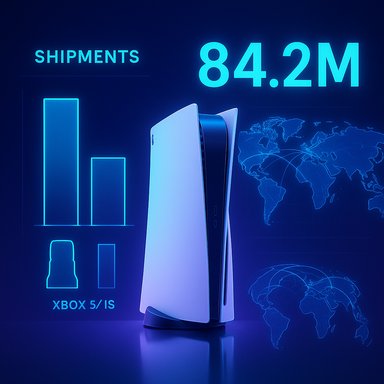
The PlayStation 5 has cleared a major commercial milestone: Sony’s latest financial report shows the PS5 has now sold 84.2 million units worldwide, a tally that — by Sony’s own accounting and industry tallies — puts the PS5 ahead of every Xbox console released to date and inside the top ten of all-time best‑selling consoles.
Sony reported the updated figure as part of its most recent financial results, which covered the quarter ending September 30, 2025. That quarter added roughly 3.9 million PS5 units, bringing the lifetime total to 84.2 million units shipped to retailers (Sony reports sell‑in numbers). Independent outlets and industry press reproduced the figure from Sony’s statement. By contrast, the most successful Xbox model historically — the Xbox 360 — finished its run at roughly 84 million units (reported in Microsoft’s communications and repeatedly cited in archive reporting), which places the PS5 slightly ahead of Microsoft’s best single Xbox total after five years on market. Earlier‑generation Xbox family totals (the original Xbox, Xbox One, and the current Series X|S family) sit well below the PS5 figure, by commonly reported estimates. Independent analyst compilations and reporting have also amplified the comparison between the platforms in the current generation: analysis shown in media coverage of industry data put the combined Xbox Series X and Series S shipments at about 28.3 million units by mid‑2024, while the PS5 was reported at roughly 61.7 million for the same mid‑2024 snapshot — a gap of more than two‑to‑one in favor of PlayStation at that time. Microsoft has not published consolidated, up‑to‑date lifetime sales figures for the Series family on a regular basis, so some of the Xbox Series numbers referenced in press reports are based on third‑party research and regulatory filings rather than an official Microsoft quarterly disclosure.
That said, the headline requires two important contextual qualifiers. First, measurement methods differ and many Xbox totals in circulation are analyst reconstructions rather than consistent, ongoing Microsoft disclosures. Second, hardware units are only one part of the competitive story; Microsoft’s subscription and cloud strategy is deliberately optimized for recurring revenue and broader device reach rather than peak console shipments alone.
For readers and market observers, the milestone should be read as both a success story for Sony’s platform strategy and a reminder that modern console competition is multi‑dimensional: hardware momentum helps, but subscriptions, services, and multi‑platform distribution increasingly determine who wins on revenue, engagement, and long‑term ecosystem value.
Conclusion: The PS5’s climb to 84.2 million units is real, measurable, and consequential — but it’s not the whole story. Retail and investor debates should pair the shipment figure with engagement, software revenue, and subscription trends to form a complete picture of where PlayStation and Xbox stand in the evolving industry.
Source: Windows Report PlayStation 5 (PS5) Officially Outsells Every Xbox Console Released So Far
 Background / Overview
Sony reported the updated figure as part of its most recent financial results, which covered the quarter ending September 30, 2025. That quarter added roughly 3.9 million PS5 units, bringing the lifetime total to 84.2 million units shipped to retailers (Sony reports sell‑in numbers). Independent outlets and industry press reproduced the figure from Sony’s statement. By contrast, the most successful Xbox model historically — the Xbox 360 — finished its run at roughly 84 million units (reported in Microsoft’s communications and repeatedly cited in archive reporting), which places the PS5 slightly ahead of Microsoft’s best single Xbox total after five years on market. Earlier‑generation Xbox family totals (the original Xbox, Xbox One, and the current Series X|S family) sit well below the PS5 figure, by commonly reported estimates. Independent analyst compilations and reporting have also amplified the comparison between the platforms in the current generation: analysis shown in media coverage of industry data put the combined Xbox Series X and Series S shipments at about 28.3 million units by mid‑2024, while the PS5 was reported at roughly 61.7 million for the same mid‑2024 snapshot — a gap of more than two‑to‑one in favor of PlayStation at that time. Microsoft has not published consolidated, up‑to‑date lifetime sales figures for the Series family on a regular basis, so some of the Xbox Series numbers referenced in press reports are based on third‑party research and regulatory filings rather than an official Microsoft quarterly disclosure. What the numbers really mean
Shipments vs. sell‑through: the measurement caveat
One critical nuance is that Sony’s published numbers are sell‑in (units shipped to retailers and distribution partners), not necessarily sell‑through (units purchased by end customers). Industry reporting commonly treats Sony’s figures and Microsoft’s sporadic disclosures equivalently for high‑level market comparisons, but readers should be aware that sell‑in can overstate consumer purchases during periods of inventory buildup or channel returns.- Sell‑in: units shipped from manufacturer to retailers/distributors (Sony’s commonly reported figure).
- Sell‑through: units bought by consumers from retailers.
Why the milestone is newsworthy
This moment is meaningful for three practical reasons:- It demonstrates the PS5’s durable commercial momentum across five years despite component shortages at launch, higher hardware prices in many markets, and a crowded competing device landscape.
- It places the PS5 at or above the lifetime shipments of Microsoft’s best‑selling Xbox model (Xbox 360), marking a symbolic reversal of fortunes when measured by a single model’s cumulative sales.
- It crystallizes a broader generation‑level gap: press analyses have highlighted that, in aggregate, PlayStation continues to outpace Xbox in pure hardware shipments this generation, even as Microsoft pursues subscriptions and cloud distribution as strategic priorities.
Cross‑checks and verification
The headline PS5 figure comes directly from Sony’s financial reporting and is carried in industry outlets; it’s possible to cross‑check the company disclosure with independent press coverage and historical console lists:- Sony’s reported 84.2 million PS5 shipments is replicated in multiple outlets that summarize Sony’s results.
- The Xbox 360 lifetime total of roughly 84 million is a long‑standing figure in Microsoft’s public history and industry retrospectives; GameSpot and Digital Trends archived Microsoft statements and reporting that referenced the 84 million lifetime figure as of 2014.
- The comparative current‑generation snapshot (PS5 vs. Xbox Series X|S) is based on third‑party analytics (Aldora Intelligence) and The Wall Street Journal’s reporting that aggregated those analytics with Sony’s public numbers — this is widely cited in the trade press. Because Microsoft does not publish a comprehensive Series X|S lifetime shipments number on a quarterly basis, the 28.3 million Series total cited in mid‑2024 coverage should be treated as an analyst estimate presented by the WSJ.
Deconstructing the competitive picture
Sony: hardware, software, and momentum
Sony’s PS5 achievement is not just a hardware headline; it is the byproduct of several coordinated factors:- First‑party exclusives and strong third‑party support continue to drive platform desirability. Sony’s content pipeline — combined with high‑profile launches timed around holiday seasons — has repeatedly spiked hardware demand.
- Pricing and SKU management: Sony’s hardware price adjustments and regional pricing strategies have shifted over time, yet the PS5 maintained consistent demand across numerous quarters.
- Service growth: PlayStation Network metrics (monthly active users) moved higher in Sony’s report, strengthening the argument that the platform’s ecosystem (subscriptions, digital storefront, cloud) remains an important lever.
Microsoft: strategic tradeoffs and a services pivot
Microsoft’s strategic posture has been less about how many boxes it ships and more about where players play:- Microsoft has emphasized Xbox Game Pass and cloud delivery, while deliberately deemphasizing standalone console unit counts in public reporting for several years. That approach makes direct hardware comparisons less central to Microsoft’s investment story.
- Industry reporting based on third‑party analytics suggests Xbox Series shipments lag the PS5 materially this generation. However, Microsoft’s available disclosures have been selective, and where figures exist they are often fragmented (regional presentations, trial filings, slide decks), which contributes to uncertainty.
- The strategic tradeoff is explicit: Microsoft is accepting fewer hardware units for broader distribution via subscriptions, cloud streaming, and cross‑platform native releases. This can blunt the capital and perception benefits of a big console installed base but may increase recurring revenue and addressable audience.
Broader industry context
How consoles stack historically
The PS5’s place on the all‑time best‑seller list is noteworthy: by Sony’s count the PS5 sits firmly in the top ten best‑selling consoles of all time (PS2, DS, Switch, PS4, and others remain above it), and its climb to 84.2 million units after roughly five years compares favorably to historical pace for major Sony consoles. That speed — achieving roughly the same lifetime units as the Xbox 360 in a fraction of the time — is a signal of the modern market’s scale and Sony’s continued channel strength.Regional dynamics and tailwinds
Regional performance matters more than raw global units in many strategic discussions. The Xbox franchise has historically performed strongly in North America while lagging in key global markets (notably Japan), which affects the shape of the installed base and publisher decisions about exclusivity and localization. PlayStation’s consistent global footprint — particularly across Europe and Asia — contributes to the PS5’s broader lifetime shipping strength.Strengths that made this possible
- Content pipeline: Sony’s first‑party studios and publishing partnerships produced high‑impact titles that drive hardware attach rates and attract new platform buyers.
- Retail and distribution reach: Sony’s global retail relationships and distribution cadence allowed steady replenishment and holiday pushes even after initial launch shortages abated.
- Value stacking: PlayStation’s combination of hardware, exclusive content, and service bundles (PlayStation Plus tiers) provides multiple consumer touchpoints for monetization.
Risks and limitations
- Counting methodology differences: As noted, comparing Sony’s sell‑in numbers to any Microsoft figure must be done with caution. Microsoft’s historical decision to stop routinely publishing hardware unit figures complicates apples‑to‑apples comparisons. Analysts and journalists therefore rely on third‑party trackers and occasional regulatory disclosures, which can differ in methodology. Label claims accordingly.
- Sustainability of hardware demand: The PS5’s next growth waves will be influenced by macroeconomic conditions, software slates (notably any surprise delays for big tentpole franchises), and how Sony manages any mid‑generation hardware updates or SKU segmentation. Price increases or supply tightening can both depress and spike shipments in different quarters.
- Microsoft’s non‑hardware levers: Microsoft’s strategy of prioritizing ecosystem reach through Game Pass and cloud streaming could ultimately reduce the importance of raw hardware totals as a success metric. Xbox’s commercial health should therefore be assessed by a wider set of KPIs (subscriber counts, ARR from services, engagement), not only console units.
Strategic implications
For Sony
- Brand and leverage: Reaching 84.2 million shipments composes a strong bargaining position with third‑party publishers and hardware partners, validating Sony’s continued investment in first‑party development.
- Momentum toward PS4 parity: With a relatively small gap to the PS4’s lifetime — and sustained holiday software lineups on the calendar — Sony could see the PS5 eclipse the PS4 in cumulative shipments in the medium term if current trends hold.
- Service monetization pressure: A large installed base raises expectations for subscription and digital revenue performance; Sony will need to keep the software cadence and subscription conversion metrics strong to maximize the installed base’s long‑term value.
For Microsoft
- Narrative shift: Microsoft’s public messaging has explicitly moved away from hardware as the principal commercial narrative. That makes the PS5 milestone less of a direct financial threat and more a reputational point to manage.
- Product strategy choices: Microsoft can respond through a mix of more competitive first‑party launches, expanded Game Pass value, or deeper cross‑platform play. The tradeoffs are strategic: focus on hardware parity or double down on services and IP reach.
- Long‑term product calculus: Microsoft’s decisions over a future Xbox console cycle (pricing, exclusivity, cloud integration) will be influenced by the magnitude of PlayStation’s installed base and how quickly Sony monetizes it via software and services.
What to watch next
- Quarterly figures from Sony (particularly at fiscal year end) that will show whether PS5 sell‑in continues at the present cadence or accelerates during holiday windows.
- Any official, consolidated Xbox Series X|S update from Microsoft (the company has a history of selective disclosures), as more precise Microsoft figures would clarify the current generation gap. In the absence of that, expect third‑party analytics firms to continue filling the vacuum.
- Software attach and subscription metrics — these will determine platform profitability more than unit counts alone. Sony’s PlayStation Network user counts and software sales in the same reporting periods are the leading indicators to watch.
Final assessment
The PS5 reaching 84.2 million shipments is a verifiable, company‑reported milestone that has immediate symbolic weight: the PlayStation 5 now sits ahead of every single Xbox console in terms of cumulative unit shipments for a single model family. This is an important public benchmark and will be used in industry narratives about the shape of this console generation.That said, the headline requires two important contextual qualifiers. First, measurement methods differ and many Xbox totals in circulation are analyst reconstructions rather than consistent, ongoing Microsoft disclosures. Second, hardware units are only one part of the competitive story; Microsoft’s subscription and cloud strategy is deliberately optimized for recurring revenue and broader device reach rather than peak console shipments alone.
For readers and market observers, the milestone should be read as both a success story for Sony’s platform strategy and a reminder that modern console competition is multi‑dimensional: hardware momentum helps, but subscriptions, services, and multi‑platform distribution increasingly determine who wins on revenue, engagement, and long‑term ecosystem value.
Conclusion: The PS5’s climb to 84.2 million units is real, measurable, and consequential — but it’s not the whole story. Retail and investor debates should pair the shipment figure with engagement, software revenue, and subscription trends to form a complete picture of where PlayStation and Xbox stand in the evolving industry.
Source: Windows Report PlayStation 5 (PS5) Officially Outsells Every Xbox Console Released So Far
