

The Qatar Mediation Forum will convene on Monday and Tuesday, bringing diplomats, mediators and senior humanitarian actors to Doha for two days of high-level panels and closed roundtables focused on the strains facing modern peacemaking and the future of principled mediation.
The 2025 Qatar Mediation Forum (QMF) is organised by the Centre for Conflict and Humanitarian Studies (CHS) in partnership with the Doha Forum. It is explicitly positioned as a practitioner-led, invitation-only space that mixes off‑the‑record roundtables with public panels to address how mediation must adapt amid growing geopolitical fragmentation, new technologies and the erosion of diplomatic norms. The CHS framing and programme overview describe the event as a focused, two-day convening intended to produce a short report of recommendations at its close. The announcement carried in Qatar’s English-language press confirms the dates and scope: the forum is scheduled for 7 and 8 December 2025, will bring together representatives from major mediation actors — including the United Nations, the African Union, the International Committee of the Red Cross and prominent NGOs — and will centre discussion around both ongoing high-intensity conflicts and structural changes to the mediation ecosystem. Coverage in local outlets repeated the same details.
The public statements that accompany the forum point to several drivers for convening now:
Doha’s convening role gives the QMF practical value; the added challenge is ensuring that outcomes are more than analytical reflections — that they are instruments of change backed by resources, transparency where feasible, and sustained institutional follow-through. Observers should look for the forum’s concluding report and any donor or partnership commitments as the principal indicators of whether the QMF moves from discussion to durable impact.
Source: Qatar Tribune https://www.qatar-tribune.com/artic...n-forum-to-be-held-on-monday-and-tuesday/amp/
 Background
The 2025 Qatar Mediation Forum (QMF) is organised by the Centre for Conflict and Humanitarian Studies (CHS) in partnership with the Doha Forum. It is explicitly positioned as a practitioner-led, invitation-only space that mixes off‑the‑record roundtables with public panels to address how mediation must adapt amid growing geopolitical fragmentation, new technologies and the erosion of diplomatic norms. The CHS framing and programme overview describe the event as a focused, two-day convening intended to produce a short report of recommendations at its close. The announcement carried in Qatar’s English-language press confirms the dates and scope: the forum is scheduled for 7 and 8 December 2025, will bring together representatives from major mediation actors — including the United Nations, the African Union, the International Committee of the Red Cross and prominent NGOs — and will centre discussion around both ongoing high-intensity conflicts and structural changes to the mediation ecosystem. Coverage in local outlets repeated the same details. What the programme says: structure, themes and format
Two-day format and hybrid elements
- Day 1 is organised around thematic panels examining the changing international system, the role of Gulf states in regional cooperation, and diplomacy’s capacity to address great‑power competition and nuclear risks.
- Day 2 focuses on comparative lessons from ongoing conflicts — including Sudan, the Gaza Strip and the Democratic Republic of Congo — and addresses practical safeguarding of mediators, local mediation capacity, and mediation in a multipolar world.
- The forum combines high-level panels with closed roundtables designed for candid, practice-oriented dialogue. The CHS emphasises a hybrid format and notes that some sessions are by invitation and conducted under Chatham House-style norms to permit frank exchange.
Key institutional participants (as announced)
The public notice lists participation or engagement from:- The Centre for Conflict and Humanitarian Studies (organiser),
- Doha Forum (partner),
- Representatives and experts from the United Nations family,
- The African Union,
- The International Committee of the Red Cross (ICRC),
- International Crisis Group and other mediation-focused NGOs and think tanks.
Why Doha — and why now?
Qatar’s international diplomacy has long included a mediation and facilitation track that reaches across regional and thematic fault lines. The QMF is framed as both a continuation of that role and as an attempt to systematise practice amid a global environment that organisers describe as more fragmented and transactional than in the recent past.The public statements that accompany the forum point to several drivers for convening now:
- A rising number of protracted conflicts and a decline in successful negotiated settlements,
- Increasing geopolitical competition among great powers that complicates neutral mediation,
- New operational risks for mediators in front-line environments,
- The need to develop locally grounded mediation strategies in contexts where external actors are disengaging.
Major discussion topics: what to expect
The public programme highlights several topics that capture prevailing debates in modern mediation:- Mediation in a changing international system — how the retreat from multilateralism and the rise of transactional diplomacy alter mediator leverage, legitimacy and methods.
- Gulf states and regional cooperation — the evolving role of Gulf actors (including Qatar) in regional conflict resolution and whether this role changes norms or complements multilateral institutions.
- Great-power competition and nuclear risk — the limits of traditional peacemaking instruments in an era where strategic rivalries shape conflict calculus.
- Lessons from active conflicts — operational takeaways from Sudan, Gaza, DRC and other theatres where mediators face asymmetric violence, fragmented authority and humanitarian collapse.
- Protecting mediators and enabling local mediation — practical protections for negotiation teams and investment in local, community-level mediation capacity.
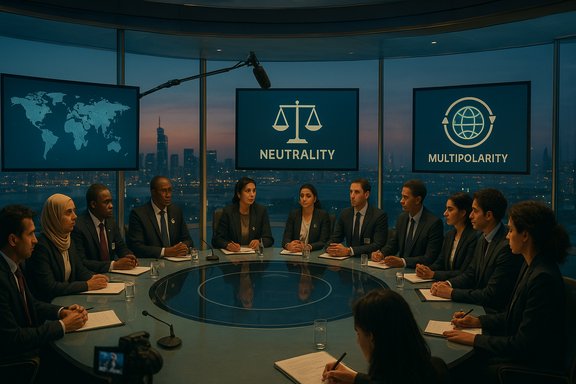
- Principles-based mediation in a multipolar world — how core mediation ethics (inclusivity, impartiality, consent) can be preserved or adapted when power dynamics and external sponsorship shift rapidly.
Participants and accountability: invited, not open
Organisers have described the QMF as invitation-only with closed roundtables to encourage frankness. That format has two practical effects:- It enables mediators to share sensitive operational insights that might otherwise be precluded by public scrutiny, and
- It limits public transparency about the detailed make-up of panels, the full list of attendees, and any behind‑the‑scenes initiatives that emerge.
What the forum aims to produce
Organisers say the forum will conclude with a report that summarises insights and formulates recommendations to strengthen mediation practice. That output is meant to serve both practitioners and states, offering short-term operational guidance and medium-term proposals for policy reform or capacity-building. Past editions and affiliated Doha Forum activities show a pattern: events produce thematic reports used as inputs into follow‑on programming and technical assistance streams. However, the utility of such reports depends heavily on:- the willingness of states and institutions to adopt recommendations,
- follow-through funding and technical support, and
- mechanisms for translating high-level recommendations into local-level training and institutional reform.
Critical analysis — strengths and strategic value
Strengths
- Practitioner-driven focus: By combining front-line mediators with institutional actors, the QMF creates a rare forum for operationally grounded policy discussion. This mix can surface feasible, context-sensitive innovations rather than abstract prescriptions.
- Leveraging Doha’s diplomatic convening power: Qatar’s role as an active mediator and host grants the forum credibility and access to parties and intermediaries who may not attend more politicised venues. Doha’s neutral convening space is a practical asset for conflict-relevant dialogue.
- Timely agenda: The programme explicitly addresses contemporary fault lines — multipolar competition, local mediation capacity, and mediator protection — aligning the forum with the most pressing operational dilemmas mediators face today.
- Hybrid format enabling frank exchange: The closed roundtables under Chatham House-style conditions can produce honest reflections about what works and what doesn’t, which is essential for refining practice.
Practical benefits for the global mediation ecosystem
- Short-term: shared operational lessons that can be deployed by mediation teams in active theatres.
- Medium-term: policy recommendations for donor agencies and regional organisations to structure capacity-building and protective measures for mediators.
- Long-term: potential to institutionalise best practices that strengthen locally led mediation and reduce dependency on external brokers.
Risks, blind spots and potential downsides
While the forum offers clear strategic value, there are also real limitations and risks to consider.Limited transparency and accountability
The invitation-only, partially off‑the‑record design fosters candid conversation but constrains public scrutiny. That matters when recommendations involve state behaviour or donor conditionality: absent transparency, it is harder to hold actors accountable for follow-through or to evaluate whether reported outcomes amount to meaningful change. Observers should therefore treat high-level statements of intent as provisional until concrete programming and measurable commitments appear.Political constraints and geopolitical instrumentalisation
Qatar and other Gulf states have distinct foreign-policy aims; while this does not invalidate their mediation, it means the forum must navigate perceptions of partiality. Great-power competition complicates neutral facilitation: actors with competing strategic stakes may selectively embrace mediation outcomes that align with their interests — a dynamic that can hollow out principled mediation unless mitigations are adopted. The forum’s ability to detect and address these dynamics will determine its practical influence.From recommendations to resources
Producing a policy report is the easier part; translating recommendations into sustained capacity-building requires funding, institutional commitment, and coordination across donors and implementing partners. Without accompanying resource pledges and technical roadmaps, the forum risks producing useful ideas that lack implementation pathways. Practitioners should press for clear next steps and measurable milestones tied to funder commitments.Security and mediator protection gaps
Panel descriptions identify protecting mediators as a priority. But protecting teams inside active conflict zones demands operational investments — security protocols, rapid evacuation mechanisms, insurance and legal protections for negotiators. These are costly and politically sensitive, and the forum’s value will be measured by whether it mobilises resources and policy changes that materially reduce risks for mediators on the ground.What to watch for after the forum
- Publication of the final QMF report with actionable recommendations and timelines.
- Any concrete donor commitments, training initiatives or pilot programmes announced to operationalise the forum’s outputs.
- Named partnerships between CHS/Doha Forum and multilateral institutions for follow‑on capacity-building, monitoring and evaluation.
- Evidence that mediation participants commit to measurable safeguards for mediator security and to inclusive, locally led approaches in specific conflict theatres.
Broader significance: Qatar’s mediation profile in 2025
The QMF is one piece of a broader pattern: Qatar continues to invest in diplomatic platforms and mediation initiatives that amplify its international role. That profile has strategic benefits — it opens channels of influence, helps Qatar host constructive dialogues on intractable problems, and projects soft power. Yet it also places Doha at the intersection of sensitive geopolitical frictions where reputation, operational neutrality and legal risk must be carefully managed. The forum’s success will be judged not only by the quality of its discussions but by the degree to which it catalyses verifiable, practical change in mediation practice. (Regional reporting and internal forum documentation similarly highlight the dual nature of such initiatives: credible convening power and a responsibility to produce transparent, implementable outcomes rather than symbolic resolutions alone.Verification note and caveats
- Multiple, independent local and institutional sources confirm the forum dates (7–8 December 2025), the organising bodies (CHS in partnership with the Doha Forum) and the high-level themes. These confirmations appear in Qatar Tribune, The Peninsula and the Qatar News Agency briefings, as well as the CHS event page and the Doha Forum programme.
- The event’s invitation-only elements and Chatham House-style sessions mean that detailed attendee lists, verbatim debates, and closed roundtable outputs are not publicly available. Any reporting that claims named outcomes or private agreements from those sessions should be treated cautiously unless supported by a public communiqué or subsequent, verifiable announcements.
- Where press coverage summarises expected panel topics, the public programme confirms broad themes; however, specific operational commitments (funding, deployments, training agreements) must be verified in follow‑on statements or post-forum reporting to be considered fulfilled. Readers should expect a public synthesis report rather than a complete transcript of proceedings.
Practical takeaways for policy‑makers and practitioners
- Prioritise conversion of high‑level recommendations into funded pilot projects: budgeted pilots with clear metrics allow the mediation community to test operational ideas and generate evidence of efficacy.
- Embed transparency where possible: even if candid roundtables are needed, a publicly available synthesis with measurable next steps increases credibility and accountability.
- Strengthen mediator protection funding streams: donors should consider pooled funding mechanisms that support security, insurance and rapid extraction capabilities for negotiation teams.
- Invest in local mediation capacity: support must go beyond token gestures and instead fund durable training, mentoring and institutional linkages that enable local actors to lead peace processes.
- Monitor geopolitical risks: mediation actors and funders should require conflict of interest and impartiality safeguards where regional or external power politics might affect the neutrality of initiatives.
Conclusion
The Qatar Mediation Forum 2025 is a timely, practitioner-centred effort to map the changing terrain of peace mediation. Convened at a moment of intensifying geopolitical competition and complex, protracted conflicts, the forum’s design — a blend of closed practitioner roundtables and public panels — is well suited to surface operational dilemmas and produce policy-relevant recommendations. Its real test will be whether the ideas generated translate into funded action, measurable improvements in mediator protection and strengthened, locally led mediation capacity in conflict-affected countries.Doha’s convening role gives the QMF practical value; the added challenge is ensuring that outcomes are more than analytical reflections — that they are instruments of change backed by resources, transparency where feasible, and sustained institutional follow-through. Observers should look for the forum’s concluding report and any donor or partnership commitments as the principal indicators of whether the QMF moves from discussion to durable impact.
Source: Qatar Tribune https://www.qatar-tribune.com/artic...n-forum-to-be-held-on-monday-and-tuesday/amp/
