

Twenty-four-year-old Quenlin “Quen” Blackwell has quietly turned a decade of short-form jokes and viral moments into a modern creator empire — spanning viral memes, branded campaigns, a cooking show with celebrity guests, runway spots for luxury labels, and a move into scripted television and agency representation that signal a mainstream pivot. Her trajectory — from Vine teenager “Quensadilla” to a multi‑platform personality signed with a top agency — offers a clear case study in how authenticity, platform agility, and strategic monetization can turn internet notoriety into a diversified career.
Quenlin Blackwell grew up in Dallas, Texas, and began posting online when she was a child, experimenting on Facebook and later rising to early fame on Vine as a teenager. That Vine-era notoriety — a mix of physical comedy and instantly shareable “freak content” — laid the groundwork for sustained followings on TikTok, Instagram, X (formerly Twitter), and YouTube. Her public profile has expanded beyond short videos into modeling, branded partnerships, a YouTube cooking series, and small acting roles. These milestones are documented in recent profiles and industry reporting that chart both the creative choices and the business moves she’s made to professionalize her online presence. Quen’s public persona emphasizes authenticity and spontaneity: she frequently frames her career as an extension of her real personality, a trait she has credited for her relatability and longevity with audiences. That emphasis on being “a true person” has become a central tenet of how she markets herself to fans and brands alike.
For brands, talent managers, and creators studying her path, the lessons are clear: invest in craft and infrastructure, treat authenticity as a brand asset to be protected, and design monetization paths that balance immediate revenue with long‑term reputation and creative control. Quen’s next moves — especially in acting and product execution — will determine whether she cements a legacy beyond social virality into lasting cultural and commercial relevance.
Source: afrotech.com Who Is Quen Blackwell? Meet One Of The Internet’s Biggest Personalities - AfroTech
 Background
Quenlin Blackwell grew up in Dallas, Texas, and began posting online when she was a child, experimenting on Facebook and later rising to early fame on Vine as a teenager. That Vine-era notoriety — a mix of physical comedy and instantly shareable “freak content” — laid the groundwork for sustained followings on TikTok, Instagram, X (formerly Twitter), and YouTube. Her public profile has expanded beyond short videos into modeling, branded partnerships, a YouTube cooking series, and small acting roles. These milestones are documented in recent profiles and industry reporting that chart both the creative choices and the business moves she’s made to professionalize her online presence. Quen’s public persona emphasizes authenticity and spontaneity: she frequently frames her career as an extension of her real personality, a trait she has credited for her relatability and longevity with audiences. That emphasis on being “a true person” has become a central tenet of how she markets herself to fans and brands alike. From Vine to Platform Agility: How Quen Built Her Audience
The early playbook
Quen’s origin story follows a recognizable creator playbook: early experimentation, a platform‑level breakout, and platform migration. After going viral on Vine at 14, she moved audiences to Twitter/X, Instagram, TikTok, and YouTube as Vine shut down and social media habits evolved. That migration required adapting her comedy and content style from six‑second gags to longer-form reaction and lifestyle pieces — a shift she appears to have managed without losing the energy that won her fans in the first place.Network effects and meme culture
A crucial inflection point for Quen was becoming the subject and author of memeable content. One emote or reaction clip can turn into a reaction template that scales far beyond its original post, and Quen’s face and cadence have become part of social shorthand for Gen Z reaction memes. Those cultural artifacts do more than earn likes — they cement a creator’s presence in social libraries and GIF banks used across platforms, elevating name recognition well beyond follower counts.Quantifying reach (with caveats)
Published profiles place her multi‑platform reach in the multi‑millions: aggregated follower counts have been reported as ranges that climb as Quen expands into modeling and music‑video cameos. These tally estimates are useful indicators, but follower totals are ephemeral and platform metrics shift daily; any static number should be understood as a snapshot, not a permanent fact. For that reason, profiles citing her “more than 10 million” or “collectively more than 19 million” followers should be treated as time‑sensitive approximations rather than precise ledger entries.Authenticity as a Monetizable Asset
Why authenticity sells
Quen’s public commentary repeatedly returns to a simple thesis: relatability scales. She tells interviewers that her upbringing and personal code keep her “authentic,” and she positions that authenticity as the competitive advantage that preserves audience trust even as she signs on with major brands and agencies. For many advertisers, a creator who can be both aspirational and approachable is ideal — they bring credibility to product storytelling without the performative gloss that can alienate younger audiences.Turning personality into revenue
That authenticity has been packaged into several monetization channels:- Brand partnerships and campaign work with beauty and fashion labels.
- Sponsored short‑form content and integrated product storytelling.
- A paid fan channel (Patreon) and premium content behind paywalls.
- A direct‑to‑consumer fashion label (Riquera) and modeling gigs that support licensing and personal branding.
Business Moves: Agency, Team, and Brand Partnerships
Representation shift: UTA to CAA
Industry reporting shows Quen’s representation evolving as her career scaled. After an earlier relationship with United Talent Agency (UTA), she signed with Creative Artists Agency (CAA) in 2024, a move that typically signals a creator’s intent to pursue larger entertainment, fashion, and IP opportunities. Agency shifts like this matter: CAA’s roster and connections can open doors to scripted television, fashion campaigns, and global brand deals at a different tier than direct influencer outreach alone.Brand deals and category mix
Profiles list a range of beauty and fashion partnerships that show strategic category fit: cosmetic brands, runway shows, and eyewear/campaign spots. Working with both heritage labels and newer DTC fashion names demonstrates versatility: Quen can appear in a high‑fashion runway context while also delivering influencer commerce activations suited for short‑form platforms. Some outlets report specific partnerships with beauty brands and fashion houses; these placements help diversify income and raise mainstream recognition (and with it, cross‑industry opportunities). Caveat: individual campaign details and timelines reported in trade outlets are accurate at publication but can change rapidly.Riquera: creator brand to product brand
Quen’s clothing label, Riquera, has been described as a creator‑to‑brand venture that she launched and then paused briefly to secure manufacturing and design stability. Building physical products is a common but hard transition for creators: the first drop often surfaces supply chain and quality issues that require operational fixes. Quen’s decision to pause and retool demonstrates a pragmatic approach — better to build a stable supply chain than chase rapid drops that damage reputation.Feeding Starving Celebrities — The Cooking Show That Scaled
Format and production
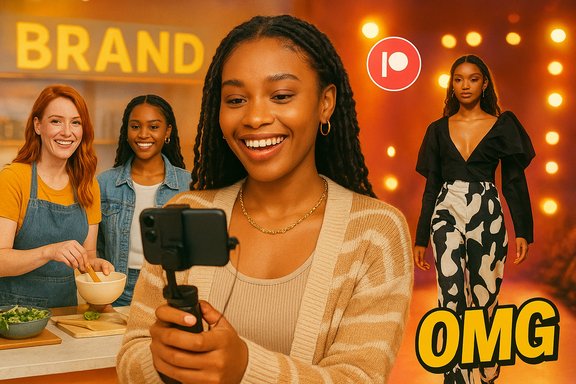
Quen expanded to YouTube with a cooking series titled “Feeding Starving Celebrities” (or similar variations cited in trade coverage). It began informally in a friend’s home and expanded into a studio production as the show gained traction. The show features celebrities and musical guests cooking and conversing, a format that mixes the intimacy of a cooking vlog with the attention economy of guest appearances. That hybrid format is ideal for long‑form monetization (ads, sponsorships, and Patreon) while remaining shareable in short clips across social platforms.Patreon and paid content
Quen monetizes the show with a subscription tier (Patreon) that offers unseen footage and previews for a nominal monthly fee. This is a straightforward creator economics play: use free YouTube content to build reach and convert the most engaged fans into paying subscribers for deeper access. It’s an effective funnel when executed transparently and when paid content feels additive rather than gated content that should be free.Audience signals
Individual episodes have delivered strong engagement signals; several guest episodes have reached multi‑million views on YouTube, indicating both the format’s potential and the amplifying effect of high‑profile guests. These view counts and engagement metrics are the load‑bearing proof points that justify larger brand deals and agency interest. Still, any single episode’s views are ephemeral and must be measured against long‑term audience retention and repeat viewership.Fashion and Modeling: From Off‑White to Major Runways
Runway credibility
Quen’s runway debut with Off‑White during Paris Fashion Week and subsequent appearances — including a reported spot at the Victoria’s Secret Fashion Show and campaigns across beauty and fashion brands — demonstrate a successful transition into high‑fashion visibility. Those runway opportunities reflect a wider industry trend: houses and shows increasingly cast social talent to reach younger demographics and to harness creators’ direct promotional reach.The dual role of creator-models
Creator-model crossovers bring both brand lift and scrutiny. On one hand, creators bring built‑in audiences that convert to views and sales. On the other, the fashion world’s reliance on creators raises questions about modeling craft versus social reach. Quen’s emphasis on training and modeling herself — and her choice to pause and regroup on her clothing label — suggests an awareness of those tradeoffs and a willingness to invest in the skills fashion brands expect.Acting and Mainstream Media: HBO’s “I Love LA”
Quen’s casting in HBO’s Rachel Sennott–created series I Love LA marks a notable cross‑over into scripted television. The show’s ensemble and guest casting suggest a mainstreamization of digital talent into linear and streaming media — a recognition that creators can carry audience attention into scripted formats. For Quen, this role represents both a credibility boost and a new career axis beyond social media. Industry writeups and series press indicate a November premiere window for the show and list Quen among guest cast members. As with other career moves, this development benefits from agency representation and cross‑industry relationships.Controversies and Personal Challenges: Context and Consequences
High visibility inevitably brings scrutiny. Quen’s public history includes several sensitive episodes that have shaped public perception:- Early public discussion and backlash around an episode framed as a prank about a $100,000 couch purchase, which generated criticism.
- Past public attention and accusations regarding living arrangements with a high‑profile producer; both parties publicly denied an inappropriate relationship.
- Deeply personal tragedy: the death of her older brother in 2024, a private event that became part of public reporting.
- Her own disclosed struggles with eating disorders and mental‑health challenges.
Critical Analysis: Strengths, Business Savvy, and Risks
Strengths
- Platform agility: Quen successfully migrated audiences across platform cycles (Vine → Twitter/X → TikTok → YouTube), which is rare and valuable.
- Authenticity as IP: Her persona functions as a durable creative asset, used across campaigns, shows, and product drops.
- Diversified revenue stack: From brand deals to Patreon, a clothing line, and agency-driven entertainment deals, Quen has spread revenue risk across channels.
- Agency backing: Signing with CAA positions her for higher-profile entertainment and fashion opportunities that require formal representation and deal negotiation.
Risks and fragilities
- Reputation risk: Viral controversy and misunderstandings (or perceived pranks) can erode trust quickly and jeopardize long‑term brand relationships.
- Product and operations risk: Creator‑led physical product lines frequently stumble on manufacturing, sizing, and logistics; early course corrections are a good sign, but scaling remains hard.
- Talent commodification risk: As fashion and entertainment increasingly recruit creators, there’s a risk that platform vanity (follower count) will be prioritized over craft, which can limit long‑term agency as roles mature.
- Mental‑health exposure: Intense public scrutiny, amplified by algorithmic feedback loops, heightens mental‑health pressures that creators experience privately but must manage publicly.
What Her Arc Means for Brands and Creators
- Creators who invest in an authentic, consistent persona while building operational teams are more likely to convert virality into durable income.
- Agencies and legacy entertainment models are increasingly comfortable packaging creators for scripted media and luxury brands; this is now a mainstream talent pipeline.
- Brands should treat creator partnerships as multi‑year investments: short‑term viral picks can generate immediate ROI, but long‑term brand affinity needs sustained storytelling and alignment of values.
- Creator product lines remain attractive but require early operational discipline; the public’s tolerance for quality issues is low.
What to Watch Next
- The reception of Quen’s HBO guest appearance and whether it leads to recurring roles or more scripted opportunities. Early show press lists her among guest cast members; how audiences respond will matter for casting momentum.
- Riquera’s next product drop and whether the brand can sustain consistent manufacturing and inventory without diluting the creator brand.
- The growth trajectory of “Feeding Starving Celebrities” as a studio‑level property (sponsorship deals, branded content integrations, or TV formats).
- Any major, clearly stated brand partnerships that move beyond one‑off posts into ambassador or global campaign roles.
Final Assessment
Quen Blackwell’s career is a pragmatic illustration of creator evolution: early virality, careful audience curation, team building, strategic agency representation, and cross‑industry engagement. Her strengths — a relatable on‑camera presence, a clear personal brand, and a growing professional infrastructure — position her well for continued expansion into fashion and scripted media. At the same time, she faces the standard creator-era hazards: reputation volatility, product scaling challenges, and the emotional toll of relentless visibility.For brands, talent managers, and creators studying her path, the lessons are clear: invest in craft and infrastructure, treat authenticity as a brand asset to be protected, and design monetization paths that balance immediate revenue with long‑term reputation and creative control. Quen’s next moves — especially in acting and product execution — will determine whether she cements a legacy beyond social virality into lasting cultural and commercial relevance.
Source: afrotech.com Who Is Quen Blackwell? Meet One Of The Internet’s Biggest Personalities - AfroTech
