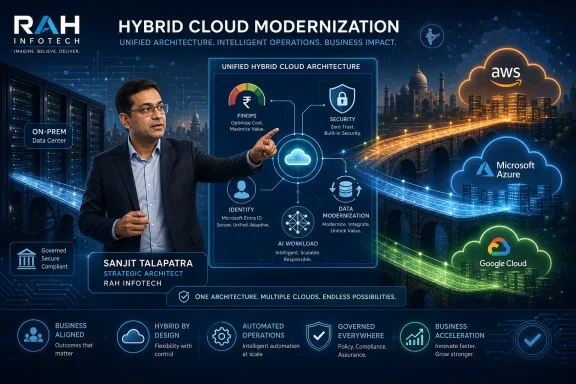
RAH Infotech appointed Sanjit Talapatra as vice president for cloud and digital transformation in India on June 3, 2026, bringing in the former NTT Data cloud architecture leader to expand enterprise transformation work across AWS, Microsoft Azure and Google Cloud. The hire is not merely another executive shuffle in the channel ecosystem. It is a sign that cloud services are moving from migration theater into a more demanding phase of architecture, execution and measurable business change. For RAH, the bet is that enterprises now need fewer slide decks about cloud strategy and more help making sprawling, hybrid, AI-hungry platforms actually work.
The announcement lands at a moment when “cloud transformation” has become one of the most overused phrases in enterprise technology. For years, it could mean anything from moving email to SaaS, to shifting virtual machines into a hyperscaler, to rewriting applications around containers and managed databases. That ambiguity suited vendors, consultants and distributors because it allowed almost every IT project to be branded as transformation.
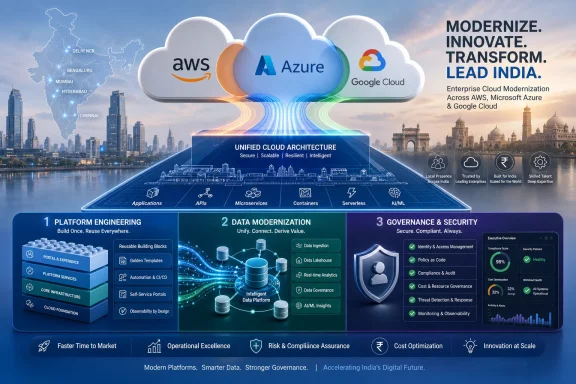
Talapatra’s appointment suggests RAH Infotech wants to narrow that ambiguity into a more operational proposition. His remit spans cloud architecture, platform engineering, data modernisation and enterprise transformation programmes across AWS, Azure and Google Cloud. That is a practical cluster of responsibilities, not a ceremonial title.
The key word in RAH’s framing is execution. The company says customers increasingly want support beyond strategy and planning, with more emphasis on implementations that are commercially viable, technically robust and scalable. That language reflects a market where many enterprises have already bought into cloud conceptually but remain stuck in the harder work of rationalising applications, governing data, securing identities and proving return on investment.
This is where the channel is changing. The old value-added distributor model was built around vendor aggregation, reseller enablement and fulfilment. The new one increasingly looks like a consulting and integration layer, especially in markets where customers are juggling security, cloud, data and AI at the same time.
That experience matters because enterprise cloud projects rarely fail at the level of slogans. They fail in dependency maps, security exceptions, integration debt, data ownership disputes and operating model confusion. A cloud migration can be green on a dashboard while the business still sees higher costs, slower delivery and a more complicated compliance posture.
RAH is not hiring a hyperscaler evangelist. It is hiring someone whose stated mandate is to stitch together architecture, platform engineering and data modernisation across multiple hyperscale environments. In a market that has largely accepted multi-cloud reality, that distinction is important.
AWS, Azure and Google Cloud each have credible claims on enterprise workloads, but most large organisations are not making clean, single-platform decisions. They inherit cloud estates through acquisitions, departmental buying, legacy vendor relationships and regulatory demands. The result is not a beautiful cloud operating model; it is a map of compromises.
Talapatra’s appointment implicitly acknowledges that cloud transformation has become less about choosing a cloud and more about managing the consequences of having many.
But as a strategy, cloud-first was always incomplete. It said where workloads might land, not why they should move, how data should flow, who should govern the platform, or what operating model should emerge afterward. Many organisations discovered that lifting workloads into cloud did not automatically create agility, and in some cases created new cost and management problems.
The more current enterprise problem is cloud-entanglement. Applications run across on-premises data centers, hosted environments, SaaS platforms and multiple public clouds. Data is distributed across transactional systems, data lakes, warehouses and AI experimentation environments. Security teams must govern identities, secrets, APIs and third-party access across all of it.
This is why Talapatra’s reference to infrastructure, data and AI functioning as a connected system is more than marketing language. AI has exposed the weakness of fragmented infrastructure because models are only as useful as the data pipelines, governance controls and application integrations around them. A company cannot credibly pursue AI-driven decision-making if its data estate remains trapped in disconnected silos and its cloud estate is managed as a set of unrelated vendor accounts.
For RAH, this creates an opening. If it can position itself not only as a distributor of technology but as a guide through that entanglement, it can move higher in the value chain. That is the strategic significance of this hire.
Enterprises now want cloud projects to support AI initiatives, improve data accessibility, reduce operational friction and provide resilience. Those goals require architecture discipline. They also require the political skill to align infrastructure teams, application owners, security leaders, finance departments and business executives around a shared operating model.
That is where many cloud programmes encounter friction. The technology can be mature while the organisation remains unprepared. FinOps may be weak, identity governance may be inconsistent, data quality may be poor, and application teams may still be using cloud as expensive hosting rather than as a platform for modern delivery.
RAH’s move reflects this market reality. The company is not simply saying that more customers want cloud. It is saying customers want help turning cloud initiatives into deployments that scale and survive contact with business constraints. That is a different kind of demand.
For channel partners, this is also a defensive move. Hyperscalers have increasingly built direct enterprise relationships, while global systems integrators offer end-to-end transformation services. Regional distributors and solution providers have to prove they can add value beyond procurement and licensing. Advisory capability, cloud architecture and implementation depth are how they defend relevance.
Microsoft’s enterprise footprint gives Azure a natural role in organisations already standardized around Windows Server, Active Directory, Microsoft 365, SQL Server and Power Platform. AWS remains the broadest cloud platform by perception and often by service depth, especially in cloud-native and startup-influenced engineering cultures. Google Cloud has strength in data, analytics, Kubernetes heritage and AI positioning.
Enterprises rarely experience these differences as neat categories. They experience them as trade-offs. One business unit may want Google’s analytics stack, another may be committed to Azure because of identity and productivity integration, while a digital product team already has production systems on AWS. The CIO then has to turn those choices into a secure, governable, financially accountable environment.
That is why multi-cloud advisory is hard to execute honestly. Vendors often use multi-cloud language while steering customers toward their preferred stack. Customers, meanwhile, sometimes use multi-cloud as a hedge without accepting the cost of managing multiple platforms well. Good architecture is not the celebration of choice; it is the disciplined reduction of unnecessary complexity.
RAH’s success in this expanded practice will depend on whether it can offer that discipline. The company’s stated emphasis on commercially viable and technically robust deployments is promising because it recognizes that cloud decisions are not purely technical. Architecture that cannot be operated, financed or secured at scale is not architecture; it is a demo.
That is not a trivial task. Many enterprises have decades of data distributed across ERP systems, CRM platforms, custom applications, spreadsheets, data warehouses and industry-specific platforms. Some of it is duplicated, stale, poorly classified or difficult to access without manual intervention. AI initiatives built on that foundation can quickly become expensive experiments rather than production-grade capabilities.
Data modernisation also forces uncomfortable conversations about ownership. Infrastructure teams can provision platforms, but business units understand context. Security teams can set controls, but data stewards must define sensitivity and lineage. Developers can build pipelines, but executives must decide which decisions should actually be automated or augmented.
This is why the cloud-and-AI narrative can be misleading when told as a simple adoption curve. AI adoption depends on cloud infrastructure, but it also depends on organisational readiness, data governance and platform engineering. The companies that treat AI as a feature to be switched on will likely struggle. The companies that treat it as an operating model change have a better chance.
Talapatra’s stated focus on connected ecosystems fits that second interpretation. It positions AI not as a standalone product category but as an outcome of properly integrated infrastructure, data and application platforms. That is exactly the sort of message enterprise customers are increasingly receptive to, because many have already learned that isolated AI pilots do not transform operations.
In practical terms, that can include standardised landing zones, infrastructure-as-code patterns, CI/CD pipelines, observability stacks, policy controls, developer portals and reusable service templates. The aim is not to slow teams down with bureaucracy. It is to prevent every application team from reinventing its own cloud architecture, security model and deployment workflow.
This matters even more in multi-cloud environments. Without a platform approach, organisations end up with inconsistent identity policies, duplicated tooling, uneven monitoring and unpredictable cost behaviour. Developers move fast at first, then slow down as the estate becomes harder to govern.
The irony is that many cloud transformation programmes talk about agility while underinvesting in the engineering systems that make agility sustainable. They focus on migration waves and application counts because those metrics are easy to report. Platform maturity is harder to explain but more important over time.
RAH’s decision to place platform engineering inside the same leadership scope as cloud architecture and data modernisation is therefore sensible. It implies that the company sees transformation as a system of delivery, not just a collection of projects. That is the right instinct for a market where enterprises are tired of one-off modernisation efforts that do not become durable capabilities.
Margins on resale alone are under pressure, and enterprise customers increasingly expect partners to bring design, integration, managed services and business context. A distributor that can help partners build repeatable cloud practices becomes more valuable than one that merely passes through licenses. A solution provider that understands identity, security, cloud cost, data architecture and AI readiness becomes harder to replace.
This is particularly relevant in India, where the enterprise base is broad and varied. Large banks, manufacturers, telecom operators, retailers, healthcare providers and digital-native firms are at different stages of cloud maturity. Some are still modernising infrastructure. Others are building AI platforms, adopting cloud-native development models or rationalising complex hybrid estates.
A single hyperscaler playbook will not fit that diversity. Nor will a generic consulting deck. Customers need context-sensitive execution, and partners need access to expertise that can help them compete with larger global integrators.
Talapatra’s appointment can be read as RAH strengthening that layer. The company appears to be betting that channel partners and enterprise customers will increasingly value transformation leadership that is vendor-aware but not confined to one vendor’s worldview.
Enterprise customers have heard big transformation promises before. They have seen programmes that begin with executive alignment sessions and end with partial migrations, cost overruns or technology sprawl. The language of “intelligence-led enterprises” will resonate only if it is matched by hard delivery practices.
RAH will need to show that its expanded practice can produce concrete outcomes. That means reference architectures, repeatable delivery models, skilled implementation teams, partner enablement, governance frameworks and post-deployment support. It also means being honest with customers when their AI ambitions are outpacing their data maturity or when multi-cloud strategy is really just unmanaged procurement.
The best cloud advisors often play the role of constructive constraint. They help customers avoid unnecessary complexity, delay premature technology choices and focus on operating models. That role can be commercially uncomfortable because it may mean saying no to projects that sound exciting but lack foundations.
If RAH wants this hire to signal real differentiation, it should resist the temptation to market every cloud, data and AI project as transformation. The market no longer needs more inflated language. It needs better execution.
Azure’s role in that estate is often central, but not exclusive. Even organisations deeply committed to Microsoft are likely to use AWS, Google Cloud or specialist SaaS platforms somewhere in the business. That reality creates integration and governance problems that Windows administrators increasingly encounter at the identity, policy, endpoint and data layers.
The rise of AI intensifies those pressures. Microsoft’s own ecosystem is pushing customers toward Copilot experiences, Fabric-style data integration, Azure AI services and deeper use of cloud identity. But those services do not eliminate the need to govern data, modernise applications or rationalise hybrid infrastructure. They make those tasks more urgent.
This is why hires like Talapatra’s matter beyond RAH’s own customer base. They reflect a broader industry recognition that enterprise transformation is now an architectural discipline spanning cloud platforms, data systems and AI tooling. The Windows admin who once lived primarily in Group Policy and server patching now operates in an environment where identity, cloud posture, data access and automation are inseparable.
The winners in this market will be the partners that can translate that complexity into manageable steps. The losers will be those that sell cloud consumption without helping customers build the muscle to operate it.
Partner enablement in this context should mean more than webinars and vendor certifications. It should mean helping partners assess customer readiness, design migration and modernisation roadmaps, build cloud landing zones, implement governance, manage cloud economics and connect data strategy to AI use cases. It should also mean giving smaller and mid-sized partners access to architectural depth they may not have in-house.
The challenge is scale. Senior architects can make a major difference in strategic accounts, but a channel-led transformation practice needs repeatable patterns. RAH will need to package knowledge without oversimplifying it. That is a difficult balance.
If done well, the company could strengthen its position as a bridge between hyperscalers, technology vendors, resellers and enterprise buyers. If done poorly, the appointment risks becoming another executive announcement that briefly signals ambition but does not materially change delivery capacity.
The early language suggests RAH understands the need for practical execution. The next evidence will come from whether the company builds visible offerings, partner programmes and customer outcomes around that leadership.
Cloud is no longer the destination. It is the substrate on which enterprises are trying to build new decision systems, customer experiences, security models and software delivery practices. That makes the work more valuable but also more complex.
For RAH, hiring a former NTT Data technical architecture leader is a statement that it wants to compete in that higher-complexity layer. It wants to be seen not merely as a route to market for technology vendors, but as a partner capable of shaping transformation programmes. That is an ambitious repositioning, and ambition in the channel only matters if it becomes delivery muscle.
For customers, the appointment is a reminder to interrogate cloud partners more carefully. The question is no longer whether a provider has relationships with AWS, Azure and Google Cloud. The question is whether it can help decide what belongs where, how platforms will be governed, how data will be modernised, how AI will be operationalised and how costs will be controlled.
 RAH Is Buying Execution, Not Just Expertise
The announcement lands at a moment when “cloud transformation” has become one of the most overused phrases in enterprise technology. For years, it could mean anything from moving email to SaaS, to shifting virtual machines into a hyperscaler, to rewriting applications around containers and managed databases. That ambiguity suited vendors, consultants and distributors because it allowed almost every IT project to be branded as transformation.Talapatra’s appointment suggests RAH Infotech wants to narrow that ambiguity into a more operational proposition. His remit spans cloud architecture, platform engineering, data modernisation and enterprise transformation programmes across AWS, Azure and Google Cloud. That is a practical cluster of responsibilities, not a ceremonial title.
The key word in RAH’s framing is execution. The company says customers increasingly want support beyond strategy and planning, with more emphasis on implementations that are commercially viable, technically robust and scalable. That language reflects a market where many enterprises have already bought into cloud conceptually but remain stuck in the harder work of rationalising applications, governing data, securing identities and proving return on investment.
This is where the channel is changing. The old value-added distributor model was built around vendor aggregation, reseller enablement and fulfilment. The new one increasingly looks like a consulting and integration layer, especially in markets where customers are juggling security, cloud, data and AI at the same time.
The Former NTT Data Architect Fits the Moment
Talapatra’s background gives RAH a recognizable enterprise-services profile. Before joining the company, he served at NTT Data as Associate Director – Technical Architects, where he led cloud-led transformation programmes for Fortune 500 clients. His previous roles at KPMG India, Capgemini, Atos and Infosys place him squarely in the consulting and systems-integration world that large enterprises still rely on when projects cross business units, platforms and geographies.That experience matters because enterprise cloud projects rarely fail at the level of slogans. They fail in dependency maps, security exceptions, integration debt, data ownership disputes and operating model confusion. A cloud migration can be green on a dashboard while the business still sees higher costs, slower delivery and a more complicated compliance posture.
RAH is not hiring a hyperscaler evangelist. It is hiring someone whose stated mandate is to stitch together architecture, platform engineering and data modernisation across multiple hyperscale environments. In a market that has largely accepted multi-cloud reality, that distinction is important.
AWS, Azure and Google Cloud each have credible claims on enterprise workloads, but most large organisations are not making clean, single-platform decisions. They inherit cloud estates through acquisitions, departmental buying, legacy vendor relationships and regulatory demands. The result is not a beautiful cloud operating model; it is a map of compromises.
Talapatra’s appointment implicitly acknowledges that cloud transformation has become less about choosing a cloud and more about managing the consequences of having many.
Cloud-First Has Given Way to Cloud-Entangled
Talapatra’s own comment that enterprises are moving beyond “cloud-first” toward intelligence-led operating models is notable because it captures a quiet shift in enterprise thinking. “Cloud-first” was once useful as a forcing function. It told IT teams to stop defaulting to on-premises infrastructure and to evaluate cloud services before buying more hardware.But as a strategy, cloud-first was always incomplete. It said where workloads might land, not why they should move, how data should flow, who should govern the platform, or what operating model should emerge afterward. Many organisations discovered that lifting workloads into cloud did not automatically create agility, and in some cases created new cost and management problems.
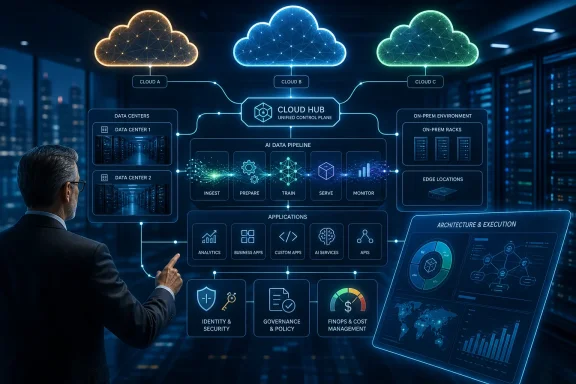
The more current enterprise problem is cloud-entanglement. Applications run across on-premises data centers, hosted environments, SaaS platforms and multiple public clouds. Data is distributed across transactional systems, data lakes, warehouses and AI experimentation environments. Security teams must govern identities, secrets, APIs and third-party access across all of it.
This is why Talapatra’s reference to infrastructure, data and AI functioning as a connected system is more than marketing language. AI has exposed the weakness of fragmented infrastructure because models are only as useful as the data pipelines, governance controls and application integrations around them. A company cannot credibly pursue AI-driven decision-making if its data estate remains trapped in disconnected silos and its cloud estate is managed as a set of unrelated vendor accounts.
For RAH, this creates an opening. If it can position itself not only as a distributor of technology but as a guide through that entanglement, it can move higher in the value chain. That is the strategic significance of this hire.
India’s Cloud Market Is Moving Into Its Harder Second Act
The Indian enterprise technology market has spent years building momentum around digital transformation, cloud adoption and cybersecurity. The first act was adoption: getting companies to move workloads, modernise basic infrastructure and accept cloud as a mainstream enterprise platform. The second act is optimisation and integration, and it is much less forgiving.Enterprises now want cloud projects to support AI initiatives, improve data accessibility, reduce operational friction and provide resilience. Those goals require architecture discipline. They also require the political skill to align infrastructure teams, application owners, security leaders, finance departments and business executives around a shared operating model.
That is where many cloud programmes encounter friction. The technology can be mature while the organisation remains unprepared. FinOps may be weak, identity governance may be inconsistent, data quality may be poor, and application teams may still be using cloud as expensive hosting rather than as a platform for modern delivery.
RAH’s move reflects this market reality. The company is not simply saying that more customers want cloud. It is saying customers want help turning cloud initiatives into deployments that scale and survive contact with business constraints. That is a different kind of demand.
For channel partners, this is also a defensive move. Hyperscalers have increasingly built direct enterprise relationships, while global systems integrators offer end-to-end transformation services. Regional distributors and solution providers have to prove they can add value beyond procurement and licensing. Advisory capability, cloud architecture and implementation depth are how they defend relevance.
The Hyperscaler Layer Needs Translators
AWS, Microsoft Azure and Google Cloud are powerful platforms, but they are also sprawling ecosystems with distinct architectures, commercial models and service philosophies. The more services each cloud adds, the more customers need translation rather than simple access. A procurement relationship is not the same as an architectural strategy.Microsoft’s enterprise footprint gives Azure a natural role in organisations already standardized around Windows Server, Active Directory, Microsoft 365, SQL Server and Power Platform. AWS remains the broadest cloud platform by perception and often by service depth, especially in cloud-native and startup-influenced engineering cultures. Google Cloud has strength in data, analytics, Kubernetes heritage and AI positioning.
Enterprises rarely experience these differences as neat categories. They experience them as trade-offs. One business unit may want Google’s analytics stack, another may be committed to Azure because of identity and productivity integration, while a digital product team already has production systems on AWS. The CIO then has to turn those choices into a secure, governable, financially accountable environment.
That is why multi-cloud advisory is hard to execute honestly. Vendors often use multi-cloud language while steering customers toward their preferred stack. Customers, meanwhile, sometimes use multi-cloud as a hedge without accepting the cost of managing multiple platforms well. Good architecture is not the celebration of choice; it is the disciplined reduction of unnecessary complexity.
RAH’s success in this expanded practice will depend on whether it can offer that discipline. The company’s stated emphasis on commercially viable and technically robust deployments is promising because it recognizes that cloud decisions are not purely technical. Architecture that cannot be operated, financed or secured at scale is not architecture; it is a demo.
AI Has Made Data Modernisation the Main Event
The most important part of the announcement may be the least glamorous: data modernisation. Cloud migration once dominated enterprise transformation stories because infrastructure was visible and budgetable. AI has changed the center of gravity. Now the real question is whether companies can make their data usable, governed and available enough to support intelligent systems.That is not a trivial task. Many enterprises have decades of data distributed across ERP systems, CRM platforms, custom applications, spreadsheets, data warehouses and industry-specific platforms. Some of it is duplicated, stale, poorly classified or difficult to access without manual intervention. AI initiatives built on that foundation can quickly become expensive experiments rather than production-grade capabilities.
Data modernisation also forces uncomfortable conversations about ownership. Infrastructure teams can provision platforms, but business units understand context. Security teams can set controls, but data stewards must define sensitivity and lineage. Developers can build pipelines, but executives must decide which decisions should actually be automated or augmented.
This is why the cloud-and-AI narrative can be misleading when told as a simple adoption curve. AI adoption depends on cloud infrastructure, but it also depends on organisational readiness, data governance and platform engineering. The companies that treat AI as a feature to be switched on will likely struggle. The companies that treat it as an operating model change have a better chance.
Talapatra’s stated focus on connected ecosystems fits that second interpretation. It positions AI not as a standalone product category but as an outcome of properly integrated infrastructure, data and application platforms. That is exactly the sort of message enterprise customers are increasingly receptive to, because many have already learned that isolated AI pilots do not transform operations.
Platform Engineering Becomes the Unfashionable Differentiator
Platform engineering is another telling phrase in Talapatra’s mandate. It lacks the boardroom sparkle of generative AI, but it is often the difference between cloud chaos and repeatable delivery. Platform engineering creates the internal paved roads that developers use to build, deploy and operate software safely.In practical terms, that can include standardised landing zones, infrastructure-as-code patterns, CI/CD pipelines, observability stacks, policy controls, developer portals and reusable service templates. The aim is not to slow teams down with bureaucracy. It is to prevent every application team from reinventing its own cloud architecture, security model and deployment workflow.
This matters even more in multi-cloud environments. Without a platform approach, organisations end up with inconsistent identity policies, duplicated tooling, uneven monitoring and unpredictable cost behaviour. Developers move fast at first, then slow down as the estate becomes harder to govern.
The irony is that many cloud transformation programmes talk about agility while underinvesting in the engineering systems that make agility sustainable. They focus on migration waves and application counts because those metrics are easy to report. Platform maturity is harder to explain but more important over time.
RAH’s decision to place platform engineering inside the same leadership scope as cloud architecture and data modernisation is therefore sensible. It implies that the company sees transformation as a system of delivery, not just a collection of projects. That is the right instinct for a market where enterprises are tired of one-off modernisation efforts that do not become durable capabilities.
The Channel’s Center of Gravity Is Shifting Toward Advisory
RAH Infotech has long been associated with cybersecurity, cloud and digital infrastructure solutions. Like many value-added distributors, it operates in a channel environment where vendors need market reach, partners need enablement and customers need solutions that actually fit their environments. But the channel’s economics are changing.Margins on resale alone are under pressure, and enterprise customers increasingly expect partners to bring design, integration, managed services and business context. A distributor that can help partners build repeatable cloud practices becomes more valuable than one that merely passes through licenses. A solution provider that understands identity, security, cloud cost, data architecture and AI readiness becomes harder to replace.
This is particularly relevant in India, where the enterprise base is broad and varied. Large banks, manufacturers, telecom operators, retailers, healthcare providers and digital-native firms are at different stages of cloud maturity. Some are still modernising infrastructure. Others are building AI platforms, adopting cloud-native development models or rationalising complex hybrid estates.
A single hyperscaler playbook will not fit that diversity. Nor will a generic consulting deck. Customers need context-sensitive execution, and partners need access to expertise that can help them compete with larger global integrators.
Talapatra’s appointment can be read as RAH strengthening that layer. The company appears to be betting that channel partners and enterprise customers will increasingly value transformation leadership that is vendor-aware but not confined to one vendor’s worldview.
The Risk Is That Transformation Becomes Another Umbrella Term
There is, however, a danger in the breadth of the mandate. Cloud architecture, platform engineering, data modernisation, enterprise transformation and AI enablement are each substantial domains. Combining them under one practice can create a compelling market message, but it can also blur accountability.Enterprise customers have heard big transformation promises before. They have seen programmes that begin with executive alignment sessions and end with partial migrations, cost overruns or technology sprawl. The language of “intelligence-led enterprises” will resonate only if it is matched by hard delivery practices.
RAH will need to show that its expanded practice can produce concrete outcomes. That means reference architectures, repeatable delivery models, skilled implementation teams, partner enablement, governance frameworks and post-deployment support. It also means being honest with customers when their AI ambitions are outpacing their data maturity or when multi-cloud strategy is really just unmanaged procurement.
The best cloud advisors often play the role of constructive constraint. They help customers avoid unnecessary complexity, delay premature technology choices and focus on operating models. That role can be commercially uncomfortable because it may mean saying no to projects that sound exciting but lack foundations.
If RAH wants this hire to signal real differentiation, it should resist the temptation to market every cloud, data and AI project as transformation. The market no longer needs more inflated language. It needs better execution.
Windows Shops Should Read This as Part of a Larger Enterprise Pattern
For WindowsForum readers, the appointment may seem at first glance like a channel personnel move in India’s enterprise market. But the underlying pattern is familiar to anyone managing Microsoft-heavy environments. The enterprise estate is no longer neatly divided between Windows servers, VMware clusters, SQL databases and endpoint fleets. It is now a mesh of Microsoft 365, Entra ID, Azure services, SaaS platforms, security tools, legacy applications and workloads that may live anywhere.Azure’s role in that estate is often central, but not exclusive. Even organisations deeply committed to Microsoft are likely to use AWS, Google Cloud or specialist SaaS platforms somewhere in the business. That reality creates integration and governance problems that Windows administrators increasingly encounter at the identity, policy, endpoint and data layers.
The rise of AI intensifies those pressures. Microsoft’s own ecosystem is pushing customers toward Copilot experiences, Fabric-style data integration, Azure AI services and deeper use of cloud identity. But those services do not eliminate the need to govern data, modernise applications or rationalise hybrid infrastructure. They make those tasks more urgent.
This is why hires like Talapatra’s matter beyond RAH’s own customer base. They reflect a broader industry recognition that enterprise transformation is now an architectural discipline spanning cloud platforms, data systems and AI tooling. The Windows admin who once lived primarily in Group Policy and server patching now operates in an environment where identity, cloud posture, data access and automation are inseparable.
The winners in this market will be the partners that can translate that complexity into manageable steps. The losers will be those that sell cloud consumption without helping customers build the muscle to operate it.
The Real Test Will Be Partner Enablement
RAH’s announcement explicitly mentions enterprise customers and channel partners. That second audience is important. If the company can turn Talapatra’s expertise into partner-facing capability, the impact could extend beyond a handful of direct engagements.Partner enablement in this context should mean more than webinars and vendor certifications. It should mean helping partners assess customer readiness, design migration and modernisation roadmaps, build cloud landing zones, implement governance, manage cloud economics and connect data strategy to AI use cases. It should also mean giving smaller and mid-sized partners access to architectural depth they may not have in-house.
The challenge is scale. Senior architects can make a major difference in strategic accounts, but a channel-led transformation practice needs repeatable patterns. RAH will need to package knowledge without oversimplifying it. That is a difficult balance.
If done well, the company could strengthen its position as a bridge between hyperscalers, technology vendors, resellers and enterprise buyers. If done poorly, the appointment risks becoming another executive announcement that briefly signals ambition but does not materially change delivery capacity.
The early language suggests RAH understands the need for practical execution. The next evidence will come from whether the company builds visible offerings, partner programmes and customer outcomes around that leadership.
The Hire Says More About Cloud’s Future Than Its Past
The most revealing aspect of this appointment is that it is not framed around cloud migration alone. It is framed around cloud, data, platform engineering and AI as connected elements of enterprise modernisation. That is where the market has been heading, but not every channel organisation has adjusted its operating model accordingly.Cloud is no longer the destination. It is the substrate on which enterprises are trying to build new decision systems, customer experiences, security models and software delivery practices. That makes the work more valuable but also more complex.
For RAH, hiring a former NTT Data technical architecture leader is a statement that it wants to compete in that higher-complexity layer. It wants to be seen not merely as a route to market for technology vendors, but as a partner capable of shaping transformation programmes. That is an ambitious repositioning, and ambition in the channel only matters if it becomes delivery muscle.
For customers, the appointment is a reminder to interrogate cloud partners more carefully. The question is no longer whether a provider has relationships with AWS, Azure and Google Cloud. The question is whether it can help decide what belongs where, how platforms will be governed, how data will be modernised, how AI will be operationalised and how costs will be controlled.
RAH’s Cloud Bet Comes Down to a Few Hard Promises
The significance of Talapatra’s appointment is not that RAH has added another senior executive. It is that the company is aligning its cloud practice with the problems enterprises are actually facing in 2026: fragmented platforms, AI pressure, data readiness, cost discipline and the need for repeatable engineering models.- RAH Infotech has appointed Sanjit Talapatra as vice president for cloud and digital transformation, with a mandate spanning AWS, Microsoft Azure and Google Cloud.
- Talapatra joins from NTT Data, where he worked on cloud-led transformation programmes for large enterprise clients.
- The appointment signals RAH’s intent to move deeper into advisory, architecture and implementation rather than limiting its cloud role to planning or distribution.
- The strongest part of the strategy is its focus on connecting cloud infrastructure, platform engineering, data modernisation and AI readiness.
- The main risk is execution, because broad transformation promises only matter if RAH can turn them into repeatable customer and partner outcomes.
- For enterprise IT teams, the news reflects a wider shift from cloud-first thinking toward integrated operating models built around governed data, secure platforms and AI-capable infrastructure.
References
- Primary source: CRN Asia
Published: 2026-06-04T08:30:25.703312
RAH Infotech hires former NTT Data exec as VP to deepen enterprise cloud transformation capabilities
Sanjit Talapatra will lead cloud architecture, platform engineering and data modernisation initiatives across AWS, Microsoft Azure and Google Cloud.www.crnasia.com - Related coverage: businessnewsthisweek.com
RAH appoints Sanjit Talapatra as Vice President– Cloud & Digital Transformation | Business News This Week
Stay updated with Business News This Week – your source for the latest business news weekly, market updates, and top business storiesbusinessnewsthisweek.com - Related coverage: govconwire.com
Former Oracle Exec Aaron Millstone Joins NTT Data to Lead Digital Transformation - GovCon Wire
Former Oracle Exec Aaron Millstone Joins NTT Data to Lead Digital Transformation www.govconwire.com
- Related coverage: rittech.com
- Related coverage: thecompanycheck.com
Rah Infotech Private Limited - 2026 Insights
Explore Rah Infotech Private Limited, a information technology private limited company in New Delhi, Delhi, India. Est. 2005. FY 2026 financials, directors,...www.thecompanycheck.com - Related coverage: consultancy.asia
NTT DATA - Global news | Consultancy Asia
An overview of NTT DATA global news. Browse NTT DATA articles by area of expertise, industry or topic. www.consultancy.asia
- Related coverage: techachievemedia.com
Vikas Dhall Appointed Vice President – Sales (Services) at RAH Infotech
At RAH Infotech, Vikas Dhall will be responsible for leading the Services business, expanding customer reach, and accelerating growth techachievemedia.com
- Related coverage: theorg.com
AH INFOTECH | The Org
We are a global IT services and consulting company focused on delivering high-quality cloud solutions for business. We are a group of professionals that has a detailed understanding of today's fast-evolving cloud platforms, connected devices, and utility computing. We love working with...theorg.com - Related coverage: businesswire.com