

IPv6 can expose more durable network identifiers than many users expect because early EUI-64 addressing embedded a device’s MAC-derived fingerprint, household prefixes may remain stable, and poorly designed VPN or router configurations can let IPv6 traffic bypass privacy assumptions even on otherwise modern systems. None of this makes IPv6 inherently unsafe, and the protocol is not about to expose passwords or banking details merely because a provider enables it. The real problem is subtler: IPv6 changes which identifiers are visible, how long they survive, and which familiar IPv4-era protections can no longer be taken for granted. For Windows users and network administrators, the correct response is verification rather than panic.
IPv4’s address pool has effectively been exhausted for years, leaving providers to conserve addresses, share them among customers, acquire increasingly costly allocations, or move more traffic to IPv6. IPv6 removes that scarcity by providing a vastly larger address space, allowing networks to assign globally routable addresses without depending on the address-sharing machinery that became normal under IPv4.
That is a genuine infrastructure improvement. It makes large networks easier to design, removes awkward workarounds, and gives service providers room to connect more homes, phones, servers, sensors, and appliances. But the transition also changes assumptions that users have accumulated after decades behind home routers and shared public IPv4 addresses.
The old model often made a household look like one public address. A laptop, phone, television, game console, smart plug, and doorbell camera might all appear to internet services as traffic originating from the same external IPv4 address. The router kept track of which internal connection belonged to which device through network address translation, or NAT.
IPv6 generally does not need that address-sharing workaround. Devices can receive their own globally routable addresses, which is architecturally cleaner but initially sounds alarming: if every device has a public address, is every device now exposed directly to the internet?
Usually, no. A globally routable address is not the same thing as permission for unsolicited inbound traffic to reach a device. A correctly configured stateful firewall can allow return traffic for connections initiated inside the network while rejecting unexpected inbound connections, regardless of whether NAT is present.
That distinction matters because NAT has acquired an exaggerated reputation as a security system. Its obscuring effect was useful, but it was partly a side effect of address conservation. IPv6 asks users and administrators to depend explicitly on firewall policy rather than assuming that address translation will quietly provide the desired boundary.
MakeUseOf’s warning about IPv6 privacy is therefore best read as a challenge to inherited assumptions. IPv6 is not merely IPv4 with longer addresses. It has a different addressing model, and privacy depends on understanding both halves of the address rather than treating an IP address as a single, opaque label.
A MAC address is described in the source material as a 12-digit hexadecimal identifier containing information associated with the manufacturer and the device. It is intended to identify a network interface at the local-network layer, not to serve as a durable public tracking token carried from website to website.
EUI-64 blurred that boundary. The network prefix could change when a laptop moved from home Wi-Fi to an office, hotel, or coffee shop, but the MAC-derived interface identifier could remain recognizable. An observer comparing addresses from different networks could potentially infer that the connections came from the same network adapter.
That is an unusually direct form of linkability. Browser cookies, account logins, advertising identifiers, and fingerprinting scripts can all correlate activity, but EUI-64 created the possibility that the address itself would carry a persistent, hardware-derived signature.
The privacy problem was not that an IPv6 address openly displayed a person’s name or physical location. It was that a supposedly routine network identifier could become stable across contexts in which users reasonably expected separation. The laptop used at home in the morning and on hotel Wi-Fi that evening could leave related technical fingerprints even though the surrounding network had changed.
It is important not to convert that historical design problem into the claim that every modern IPv6 address contains a readable MAC address. MakeUseOf notes that current operating systems have adopted privacy mechanisms, and Windows, macOS, Linux, Android, and iOS all support some form of temporary IPv6 addressing by default. Implementations differ, and a device can have several IPv6 addresses for different purposes at the same time.
Windows documentation also exposes controls related to temporary IPv6 address generation, evidence that the operating system treats privacy addressing as an explicit part of the network stack rather than an aftermarket browser feature. That does not guarantee that every adapter, policy, VPN, virtual machine, appliance, or managed endpoint is behaving as expected, but it demonstrates how far mainstream operating systems have moved from treating a MAC-derived suffix as the only practical option.
The larger lesson is that address generation is itself a privacy control. Administrators routinely scrutinize DNS, proxies, endpoint telemetry, and browser settings while assuming that an IP address is simply issued by the network. In IPv6, the method used to construct the interface identifier can determine whether an address is a short-lived label or a long-lived correlation mechanism.
RFC 8981 describes temporary-address generation as an extension to stateless address autoconfiguration. Its goal is not to make a user anonymous in the broad sense, but to limit the period during which an observer can trivially correlate network activity because the same address was used repeatedly.
That is a narrower and more defensible promise. A rotating address cannot erase cookies, browser fingerprints, account sessions, payment records, or provider logs. It can, however, make an address less useful as a durable identifier and reduce the time during which a learned address remains valuable.
The reduction in temporary-address lifetime illustrates the direction of the standards work. Under RFC 4941, the temporary-address valid lifetime cited in the source material was seven days. RFC 8981 reduced the default to two days.
The standards do not claim that two days is a magical boundary between private and trackable. RFC 8981’s practical contribution is to narrow the default exposure window and provide a clearer model for replacing temporary addresses as they age. Different environments may still need different behavior.
A corporate network, for example, may value stable endpoint identification for access controls, logging, incident response, or service hosting. A consumer laptop initiating outbound web connections benefits more directly from rotating source addresses. One machine may therefore maintain both stable and temporary addresses, selecting among them according to operating-system policy and application behavior.
This coexistence explains why simply seeing multiple IPv6 addresses on a Windows PC is not evidence of compromise. Some can be link-local, some stable, and some temporary. A VPN may add another interface, while virtualization platforms and containers may add more.
The relevant question is not “Why does this computer have so many addresses?” It is “Which address is selected for outbound internet traffic, how was its interface identifier generated, and how long can an observer continue to correlate it?”
RFC 8981 addresses only part of that chain. It improves the device-specific half of the address, but it cannot by itself force an ISP to rotate the network prefix assigned to a household. Temporary addresses do not make the household prefix temporary.
An ISP or other network operator assigns a prefix to the customer’s network. According to MakeUseOf, that prefix can remain unchanged for weeks or months because IPv6 does not impose the same scarcity pressure that encouraged some providers to move IPv4 addresses around.
This creates a second layer of correlation. A temporary address may prevent a tracker from easily proving that two connections came from the same laptop, yet a stable prefix can suggest that they came from the same household or customer network.
That distinction is easy to miss in consumer privacy advice. Users are often told that their “IP address changed,” when only part of an IPv6 address may have changed. If the interface identifier rotates but the provider-assigned prefix remains stable, the full addresses will look different while preserving a network-level relationship.
The privacy extensions are still valuable. Separating devices behind one prefix is better than giving every adapter a permanent MAC-derived suffix. But the result is closer to pseudonym rotation inside a recognizable neighborhood than to complete disconnection from previous activity.
This also complicates simplistic IPv4 comparisons. A residential IPv4 address can remain stable, too, and a website can correlate visits from that address. NAT may hide which internal device produced each connection, but it does not make the household anonymous. IPv6 moves some of that ambiguity from address sharing to temporary interface identifiers while potentially retaining a stable prefix.
The practical concern grows when one device does not follow the same privacy rules as the others. Research discussed by APNIC has warned that a single device using an EUI-64-style identifier can reportedly weaken privacy for a wider household by giving observers a durable marker associated with the prefix. A modern laptop’s temporary addressing cannot fully compensate for an older appliance that repeatedly broadcasts a recognizable interface identifier.
That is particularly relevant to consumer Internet of Things equipment. Smart-home products can remain deployed for years, receive inconsistent updates, and use network stacks that do not behave like current desktop or mobile operating systems. The weakest IPv6 implementation in a home may not be the Windows PC that receives monthly servicing; it may be the forgotten camera, hub, printer, or media device that nobody has logged into since installation.
For enterprise networks, stable prefixes are not automatically undesirable. They simplify routing, monitoring, inventory, firewalling, and the publication of internal or external services. Privacy and manageability are not always aligned, and an administrator should not blindly force consumer-style address rotation onto systems that require dependable addressing.
The policy should match the role. Client endpoints initiating outbound sessions have a strong case for temporary addresses. Servers, infrastructure appliances, and managed services generally require stable addressing. The mistake is not choosing stability; it is allowing stability to arise accidentally from a hardware-derived identifier without understanding its tracking consequences.
A user who signs into the same Microsoft, Google, social-media, retail, or workplace account remains identifiable regardless of how often the local operating system changes its IPv6 address. Cookies and local storage can survive an address change. Browser characteristics, display properties, installed fonts, language settings, and behavioral patterns can contribute to fingerprinting.
The ISP also remains in the path. Temporary addressing does not prevent the access provider from knowing which customer received a prefix or when traffic traversed its network. Nor does it prevent a destination from recording every temporary address used during a session.
The privacy gain is nevertheless real because internet tracking is cumulative. Removing one stable identifier does not make a person invisible, but retaining an unnecessary hardware-derived identifier gives trackers another reliable correlation point. Security engineering generally works by eliminating avoidable signals rather than waiting for one perfect anonymity mechanism.
This is why RFC 8981 frames temporary addresses around limiting straightforward address-based correlation. The standard does not pretend to replace a VPN, anonymous browsing system, anti-tracking controls, or sound application design. It solves a networking-layer problem at the networking layer.
Administrators should apply the same disciplined framing. If an organization needs to prevent websites from correlating employees across sessions, IPv6 temporary addresses are only one component. Browser policy, identity separation, proxy architecture, DNS handling, endpoint management, and application telemetry remain relevant.
Conversely, disabling IPv6 across an organization does not automatically create privacy. It may merely push traffic back through a stable public IPv4 address while adding compatibility problems and hiding gaps in VPN or firewall design. Avoiding the newer protocol can postpone an audit, but it does not replace one.
This is not a failure of encryption inside the tunnel. It is a coverage failure: the tunnel can work exactly as designed for the traffic routed into it while another protocol takes a different path.
The result is often called an IPv6 leak. A destination may see an ISP-assigned IPv6 address even though the user expects to present only the VPN provider’s address. Depending on the application and routing configuration, the leak can undermine location masking and reveal a persistent customer prefix.
MakeUseOf compares the shape of this problem to WebRTC leaks, in which browser or communications functionality can expose an address outside the user’s expected VPN path. The mechanisms are not identical, but the user experience is: the VPN icon reports success while the effective privacy boundary contains a hole.
Modern VPN providers have improved their treatment of IPv6, but implementations remain inconsistent. Some route IPv6 through the tunnel, some block it to prevent leakage, and some expose settings that vary by operating system or application generation.
Proton VPN’s support guidance, for example, recommends leaving IPv6 leak protection enabled and documents different IPv6 behavior across platforms. That variation is a reminder that the provider’s brand name alone is not enough; a feature can be available on one operating system and handled differently on another.
MakeUseOf suggests Proton VPN and Mullvad VPN as alternatives when a current service fails IPv6 testing. That recommendation should not be interpreted as permission to skip verification. VPN applications change, protocol modes differ, operating-system updates alter routing behavior, and corporate security agents can interact with the network stack.
The test is straightforward. Run an IPv6 test without the VPN and record the address that appears. Connect the VPN, repeat the test, and compare the result. If the same ISP-provided IPv6 address remains visible, the VPN is not providing the coverage the user expected.
Test-IPv6 is the site named in the source material, but the important element is the before-and-after method rather than loyalty to one test page. Repeat the check with the actual VPN application, protocol, browser, and network connection used day to day. A result obtained over Ethernet does not necessarily prove that a different adapter, mobile hotspot, or virtual interface follows the same route.
Testing should also account for disconnection behavior. A VPN that protects IPv6 while connected may still expose traffic briefly during startup, reconnection, sleep recovery, network switching, or application failure unless an effective kill switch or firewall policy closes the gap.
For business deployments, relying on each employee to visit a test site is insufficient. Administrators need repeatable validation across supported Windows builds, VPN client versions, tunneling modes, and network types. The correct acceptance criterion is not merely that the client says “connected,” but that both IPv4 and IPv6 obey the intended routing and filtering policy.
A public address means that the address is globally meaningful and routable in principle. Whether an unsolicited packet reaches a Windows endpoint still depends on routers, stateful firewalls, host firewalls, access-control policy, and the availability of a listening service.
Most consumer routers are intended to reject unsolicited inbound IPv6 traffic by default, just as they reject unexpected inbound IPv4 traffic. MakeUseOf notes that users should nevertheless verify this behavior in the router’s administration interface, where controls may be labeled “IPv6 firewall” or “IPv6 filtering.”
That verification matters because IPv4 and IPv6 filtering can be implemented as separate policy paths. A carefully configured IPv4 firewall does not prove that equivalent IPv6 rules exist. Administrators can secure one protocol while accidentally leaving the other dependent on defaults.
The same principle applies to Windows Defender Firewall and third-party endpoint security. Rules can have protocol, profile, address-scope, interface, or application conditions that behave differently once IPv6 is active. An application that was unreachable over IPv4 may become reachable over IPv6 if the firewall policy does not cover both stacks.
The answer is not to treat every globally routable device address as a vulnerability. The answer is to test inbound behavior and document the policy. Firewalling replaces address scarcity—not security.
There is also an important difference between privacy and reachability. Temporary addresses reduce correlation and shorten the period during which a learned address remains useful, but they are not a substitute for inbound filtering. RFC-related operational guidance warns against assuming that a large or randomized IPv6 address space makes systems impossible to discover.
Attackers do not need to enumerate every theoretical address blindly. They can learn addresses from logs, DNS, applications, outbound connections, misconfigurations, and predictable infrastructure patterns. A temporary address can reduce an exposure window, but a listening service still requires authentication, patching, and an appropriate firewall rule.
Likewise, a stable address is not automatically insecure. Servers need stable addresses, and enterprises need deterministic management paths. Security comes from intentional publication and controlled reachability, not from hoping that an address is too obscure to find.

Windows support for IPv6 privacy features is mature enough that most users should not respond by disabling IPv6 reflexively. The more useful task is to observe which addresses Windows creates, which one it selects for outbound traffic, and how surrounding infrastructure handles it.
Microsoft’s documentation includes networking commands and controls for inspecting IPv6 interfaces and modifying parameters related to temporary address generation. Those capabilities are particularly useful in managed environments where local policy, security software, legacy configuration, or an imaging process may have changed the expected defaults.
An endpoint audit should distinguish physical adapters from VPN, virtual-switch, container, and tunnel interfaces. A Windows machine can behave correctly on its Wi-Fi adapter while a virtual or third-party interface introduces a stable address or unintended route.
Administrators should also separate client policy from server policy. Temporary source addresses are designed primarily for outbound sessions and may be unsuitable as the sole addressing strategy for systems that must accept predictable inbound connections. A Windows workstation browsing the web and a Windows server hosting a service do not have identical requirements.
Logging architecture deserves attention as well. If temporary addresses rotate, security systems must still map activity back to the correct endpoint and time period. Asset inventories that store only one IP address per device will be unreliable in an environment where a host legitimately holds several addresses and replaces temporary ones.
That does not justify disabling privacy extensions. It means telemetry should be identity-aware and time-aware, associating events with devices, users, certificates, interface data, and lease or address history rather than pretending an IP address is a permanent asset identifier.
Help-desk and incident-response procedures must evolve accordingly. An analyst who sees several IPv6 addresses associated with one host should not immediately conclude that the machine is spoofing identities. Conversely, an analyst who sees one interface identifier persist across multiple external prefixes should recognize that as a possible privacy or configuration concern.
Network access controls also need testing. Rules written only for IPv4 ranges, monitoring systems that parse only dotted-decimal addresses, and inventory tools that truncate or normalize IPv6 incorrectly can create blind spots unrelated to the protocol’s inherent security.
IPv6 readiness is therefore less about flipping an enablement switch than about removing IPv4-only assumptions from the management stack. VPNs, DNS, endpoint agents, proxies, firewalls, SIEM pipelines, vulnerability scanners, and support tooling all need to understand the addresses Windows is actually using.
The same longitudinal approach should be applied to VPN testing. A clean result today does not prove permanent protection because providers update clients, users switch protocols, and operating systems alter routes. Router resets can restore defaults, while new adapters and virtual networking software can introduce additional paths.
For a home user, a small record of test results is enough. Note the visible IPv6 address without the VPN, test again while connected, and revisit the result later. Check after replacing the router, changing ISP equipment, or reinstalling the VPN application.
For an organization, the process should be automated or incorporated into validation. A VPN release should not reach a broad Windows fleet merely because it connects successfully in a lab. It should demonstrate that intended DNS, IPv4, and IPv6 traffic all traverse or are blocked by the expected controls.
This also exposes the limits of privacy theater. A rapidly changing interface identifier looks reassuring, but it has limited value if the household prefix remains stable, the browser preserves durable trackers, or the VPN leaks the ISP route. Effective privacy comes from understanding the full path rather than celebrating one rotating number.
That full path begins with address creation on the endpoint, continues through route selection and the local firewall, crosses the router and provider network, and may enter a VPN tunnel before reaching a destination. A failure at any stage can invalidate assumptions formed at another.
IPv6 makes that chain more visible because it removes the comforting shorthand that a device is “behind NAT.” The resulting architecture is not necessarily weaker. It is simply less forgiving of vague thinking.
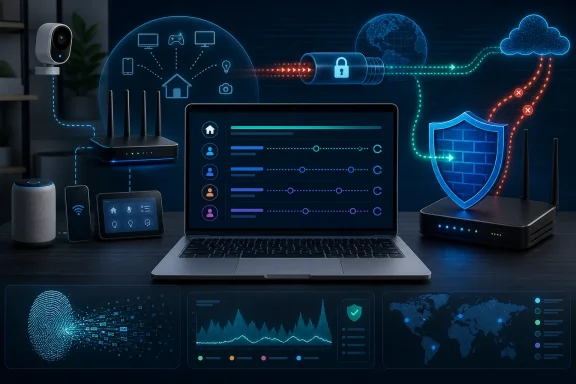 IPv6 Solves an Address Crisis but Changes the Privacy Bargain
IPv4’s address pool has effectively been exhausted for years, leaving providers to conserve addresses, share them among customers, acquire increasingly costly allocations, or move more traffic to IPv6. IPv6 removes that scarcity by providing a vastly larger address space, allowing networks to assign globally routable addresses without depending on the address-sharing machinery that became normal under IPv4.That is a genuine infrastructure improvement. It makes large networks easier to design, removes awkward workarounds, and gives service providers room to connect more homes, phones, servers, sensors, and appliances. But the transition also changes assumptions that users have accumulated after decades behind home routers and shared public IPv4 addresses.
The old model often made a household look like one public address. A laptop, phone, television, game console, smart plug, and doorbell camera might all appear to internet services as traffic originating from the same external IPv4 address. The router kept track of which internal connection belonged to which device through network address translation, or NAT.
IPv6 generally does not need that address-sharing workaround. Devices can receive their own globally routable addresses, which is architecturally cleaner but initially sounds alarming: if every device has a public address, is every device now exposed directly to the internet?
Usually, no. A globally routable address is not the same thing as permission for unsolicited inbound traffic to reach a device. A correctly configured stateful firewall can allow return traffic for connections initiated inside the network while rejecting unexpected inbound connections, regardless of whether NAT is present.
That distinction matters because NAT has acquired an exaggerated reputation as a security system. Its obscuring effect was useful, but it was partly a side effect of address conservation. IPv6 asks users and administrators to depend explicitly on firewall policy rather than assuming that address translation will quietly provide the desired boundary.
MakeUseOf’s warning about IPv6 privacy is therefore best read as a challenge to inherited assumptions. IPv6 is not merely IPv4 with longer addresses. It has a different addressing model, and privacy depends on understanding both halves of the address rather than treating an IP address as a single, opaque label.
EUI-64 Turned a Hardware Identifier Into a Network Trail
The most striking privacy problem comes from EUI-64, the original IPv6 interface-ID generation method described in MakeUseOf’s account. Under that approach, the system takes a network adapter’s MAC address and folds it into the back half of the IPv6 address.A MAC address is described in the source material as a 12-digit hexadecimal identifier containing information associated with the manufacturer and the device. It is intended to identify a network interface at the local-network layer, not to serve as a durable public tracking token carried from website to website.
EUI-64 blurred that boundary. The network prefix could change when a laptop moved from home Wi-Fi to an office, hotel, or coffee shop, but the MAC-derived interface identifier could remain recognizable. An observer comparing addresses from different networks could potentially infer that the connections came from the same network adapter.
That is an unusually direct form of linkability. Browser cookies, account logins, advertising identifiers, and fingerprinting scripts can all correlate activity, but EUI-64 created the possibility that the address itself would carry a persistent, hardware-derived signature.
The privacy problem was not that an IPv6 address openly displayed a person’s name or physical location. It was that a supposedly routine network identifier could become stable across contexts in which users reasonably expected separation. The laptop used at home in the morning and on hotel Wi-Fi that evening could leave related technical fingerprints even though the surrounding network had changed.
It is important not to convert that historical design problem into the claim that every modern IPv6 address contains a readable MAC address. MakeUseOf notes that current operating systems have adopted privacy mechanisms, and Windows, macOS, Linux, Android, and iOS all support some form of temporary IPv6 addressing by default. Implementations differ, and a device can have several IPv6 addresses for different purposes at the same time.
Windows documentation also exposes controls related to temporary IPv6 address generation, evidence that the operating system treats privacy addressing as an explicit part of the network stack rather than an aftermarket browser feature. That does not guarantee that every adapter, policy, VPN, virtual machine, appliance, or managed endpoint is behaving as expected, but it demonstrates how far mainstream operating systems have moved from treating a MAC-derived suffix as the only practical option.
The larger lesson is that address generation is itself a privacy control. Administrators routinely scrutinize DNS, proxies, endpoint telemetry, and browser settings while assuming that an IP address is simply issued by the network. In IPv6, the method used to construct the interface identifier can determine whether an address is a short-lived label or a long-lived correlation mechanism.
The Standards Process Shortened the Tracking Window
IPv6 privacy extensions were created to reduce that linkability by replacing hardware-derived interface identifiers with temporary, randomized values that change over time. The progression described by MakeUseOf begins with RFC 3041, continues through RFC 4941, and reaches RFC 8981, published in 2021.RFC 8981 describes temporary-address generation as an extension to stateless address autoconfiguration. Its goal is not to make a user anonymous in the broad sense, but to limit the period during which an observer can trivially correlate network activity because the same address was used repeatedly.
That is a narrower and more defensible promise. A rotating address cannot erase cookies, browser fingerprints, account sessions, payment records, or provider logs. It can, however, make an address less useful as a durable identifier and reduce the time during which a learned address remains valuable.
The reduction in temporary-address lifetime illustrates the direction of the standards work. Under RFC 4941, the temporary-address valid lifetime cited in the source material was seven days. RFC 8981 reduced the default to two days.
| Addressing approach | Interface-ID basis | Valid lifetime cited | Privacy consequence |
|---|---|---|---|
| EUI-64 | MAC address folded into the back half of the IPv6 address | Persistent behavior described | Can correlate the same adapter across networks |
| RFC 4941 temporary addressing | Randomized, rotating interface identifier | 7 days | Reduces hardware-derived tracking but leaves a longer correlation window |
| RFC 8981 temporary addressing | Randomized, rotating interface identifier | 2 days by default | Further shortens the useful life of an observed temporary address |
A corporate network, for example, may value stable endpoint identification for access controls, logging, incident response, or service hosting. A consumer laptop initiating outbound web connections benefits more directly from rotating source addresses. One machine may therefore maintain both stable and temporary addresses, selecting among them according to operating-system policy and application behavior.
This coexistence explains why simply seeing multiple IPv6 addresses on a Windows PC is not evidence of compromise. Some can be link-local, some stable, and some temporary. A VPN may add another interface, while virtualization platforms and containers may add more.
The relevant question is not “Why does this computer have so many addresses?” It is “Which address is selected for outbound internet traffic, how was its interface identifier generated, and how long can an observer continue to correlate it?”
RFC 8981 addresses only part of that chain. It improves the device-specific half of the address, but it cannot by itself force an ISP to rotate the network prefix assigned to a household. Temporary addresses do not make the household prefix temporary.
A Rotating Device Address Can Still Sit Behind a Stable Home Prefix
An IPv6 address can be understood, at a high level, as combining a network prefix with an interface identifier. Privacy extensions concentrate on preventing the interface identifier from becoming a permanent hardware fingerprint, but the prefix can remain recognizable.An ISP or other network operator assigns a prefix to the customer’s network. According to MakeUseOf, that prefix can remain unchanged for weeks or months because IPv6 does not impose the same scarcity pressure that encouraged some providers to move IPv4 addresses around.
This creates a second layer of correlation. A temporary address may prevent a tracker from easily proving that two connections came from the same laptop, yet a stable prefix can suggest that they came from the same household or customer network.
That distinction is easy to miss in consumer privacy advice. Users are often told that their “IP address changed,” when only part of an IPv6 address may have changed. If the interface identifier rotates but the provider-assigned prefix remains stable, the full addresses will look different while preserving a network-level relationship.
The privacy extensions are still valuable. Separating devices behind one prefix is better than giving every adapter a permanent MAC-derived suffix. But the result is closer to pseudonym rotation inside a recognizable neighborhood than to complete disconnection from previous activity.
This also complicates simplistic IPv4 comparisons. A residential IPv4 address can remain stable, too, and a website can correlate visits from that address. NAT may hide which internal device produced each connection, but it does not make the household anonymous. IPv6 moves some of that ambiguity from address sharing to temporary interface identifiers while potentially retaining a stable prefix.
The practical concern grows when one device does not follow the same privacy rules as the others. Research discussed by APNIC has warned that a single device using an EUI-64-style identifier can reportedly weaken privacy for a wider household by giving observers a durable marker associated with the prefix. A modern laptop’s temporary addressing cannot fully compensate for an older appliance that repeatedly broadcasts a recognizable interface identifier.
That is particularly relevant to consumer Internet of Things equipment. Smart-home products can remain deployed for years, receive inconsistent updates, and use network stacks that do not behave like current desktop or mobile operating systems. The weakest IPv6 implementation in a home may not be the Windows PC that receives monthly servicing; it may be the forgotten camera, hub, printer, or media device that nobody has logged into since installation.
For enterprise networks, stable prefixes are not automatically undesirable. They simplify routing, monitoring, inventory, firewalling, and the publication of internal or external services. Privacy and manageability are not always aligned, and an administrator should not blindly force consumer-style address rotation onto systems that require dependable addressing.
The policy should match the role. Client endpoints initiating outbound sessions have a strong case for temporary addresses. Servers, infrastructure appliances, and managed services generally require stable addressing. The mistake is not choosing stability; it is allowing stability to arise accidentally from a hardware-derived identifier without understanding its tracking consequences.
Privacy Extensions Reduce Address Tracking, Not Internet Tracking
The phrase “privacy address” can promise too much. Rotating an IPv6 interface identifier makes one form of address-based correlation harder, but it does not neutralize the tracking mechanisms that dominate the modern web.A user who signs into the same Microsoft, Google, social-media, retail, or workplace account remains identifiable regardless of how often the local operating system changes its IPv6 address. Cookies and local storage can survive an address change. Browser characteristics, display properties, installed fonts, language settings, and behavioral patterns can contribute to fingerprinting.
The ISP also remains in the path. Temporary addressing does not prevent the access provider from knowing which customer received a prefix or when traffic traversed its network. Nor does it prevent a destination from recording every temporary address used during a session.
The privacy gain is nevertheless real because internet tracking is cumulative. Removing one stable identifier does not make a person invisible, but retaining an unnecessary hardware-derived identifier gives trackers another reliable correlation point. Security engineering generally works by eliminating avoidable signals rather than waiting for one perfect anonymity mechanism.
This is why RFC 8981 frames temporary addresses around limiting straightforward address-based correlation. The standard does not pretend to replace a VPN, anonymous browsing system, anti-tracking controls, or sound application design. It solves a networking-layer problem at the networking layer.
Administrators should apply the same disciplined framing. If an organization needs to prevent websites from correlating employees across sessions, IPv6 temporary addresses are only one component. Browser policy, identity separation, proxy architecture, DNS handling, endpoint management, and application telemetry remain relevant.
Conversely, disabling IPv6 across an organization does not automatically create privacy. It may merely push traffic back through a stable public IPv4 address while adding compatibility problems and hiding gaps in VPN or firewall design. Avoiding the newer protocol can postpone an audit, but it does not replace one.
VPNs Can Protect the Tunnel They Built and Still Miss the Traffic
The most actionable risk in MakeUseOf’s account is the possibility of a VPN that handles IPv4 while failing to tunnel or block IPv6 correctly. In that situation, the user sees a connected VPN interface and assumes all traffic is protected, but IPv6-capable applications may continue reaching the internet through the ISP.This is not a failure of encryption inside the tunnel. It is a coverage failure: the tunnel can work exactly as designed for the traffic routed into it while another protocol takes a different path.
The result is often called an IPv6 leak. A destination may see an ISP-assigned IPv6 address even though the user expects to present only the VPN provider’s address. Depending on the application and routing configuration, the leak can undermine location masking and reveal a persistent customer prefix.
MakeUseOf compares the shape of this problem to WebRTC leaks, in which browser or communications functionality can expose an address outside the user’s expected VPN path. The mechanisms are not identical, but the user experience is: the VPN icon reports success while the effective privacy boundary contains a hole.
Modern VPN providers have improved their treatment of IPv6, but implementations remain inconsistent. Some route IPv6 through the tunnel, some block it to prevent leakage, and some expose settings that vary by operating system or application generation.
Proton VPN’s support guidance, for example, recommends leaving IPv6 leak protection enabled and documents different IPv6 behavior across platforms. That variation is a reminder that the provider’s brand name alone is not enough; a feature can be available on one operating system and handled differently on another.
MakeUseOf suggests Proton VPN and Mullvad VPN as alternatives when a current service fails IPv6 testing. That recommendation should not be interpreted as permission to skip verification. VPN applications change, protocol modes differ, operating-system updates alter routing behavior, and corporate security agents can interact with the network stack.
The test is straightforward. Run an IPv6 test without the VPN and record the address that appears. Connect the VPN, repeat the test, and compare the result. If the same ISP-provided IPv6 address remains visible, the VPN is not providing the coverage the user expected.
Test-IPv6 is the site named in the source material, but the important element is the before-and-after method rather than loyalty to one test page. Repeat the check with the actual VPN application, protocol, browser, and network connection used day to day. A result obtained over Ethernet does not necessarily prove that a different adapter, mobile hotspot, or virtual interface follows the same route.
Testing should also account for disconnection behavior. A VPN that protects IPv6 while connected may still expose traffic briefly during startup, reconnection, sleep recovery, network switching, or application failure unless an effective kill switch or firewall policy closes the gap.
For business deployments, relying on each employee to visit a test site is insufficient. Administrators need repeatable validation across supported Windows builds, VPN client versions, tunneling modes, and network types. The correct acceptance criterion is not merely that the client says “connected,” but that both IPv4 and IPv6 obey the intended routing and filtering policy.
NAT’s Disappearance Makes Firewall Policy More Visible
The absence of NAT is often presented as though it leaves every IPv6 device standing naked on the public internet. That is technically misleading and operationally dangerous because it encourages organizations either to fear IPv6 unnecessarily or to assume that enabling translation would solve the underlying security problem.A public address means that the address is globally meaningful and routable in principle. Whether an unsolicited packet reaches a Windows endpoint still depends on routers, stateful firewalls, host firewalls, access-control policy, and the availability of a listening service.
Most consumer routers are intended to reject unsolicited inbound IPv6 traffic by default, just as they reject unexpected inbound IPv4 traffic. MakeUseOf notes that users should nevertheless verify this behavior in the router’s administration interface, where controls may be labeled “IPv6 firewall” or “IPv6 filtering.”
That verification matters because IPv4 and IPv6 filtering can be implemented as separate policy paths. A carefully configured IPv4 firewall does not prove that equivalent IPv6 rules exist. Administrators can secure one protocol while accidentally leaving the other dependent on defaults.
The same principle applies to Windows Defender Firewall and third-party endpoint security. Rules can have protocol, profile, address-scope, interface, or application conditions that behave differently once IPv6 is active. An application that was unreachable over IPv4 may become reachable over IPv6 if the firewall policy does not cover both stacks.
The answer is not to treat every globally routable device address as a vulnerability. The answer is to test inbound behavior and document the policy. Firewalling replaces address scarcity—not security.
There is also an important difference between privacy and reachability. Temporary addresses reduce correlation and shorten the period during which a learned address remains useful, but they are not a substitute for inbound filtering. RFC-related operational guidance warns against assuming that a large or randomized IPv6 address space makes systems impossible to discover.
Attackers do not need to enumerate every theoretical address blindly. They can learn addresses from logs, DNS, applications, outbound connections, misconfigurations, and predictable infrastructure patterns. A temporary address can reduce an exposure window, but a listening service still requires authentication, patching, and an appropriate firewall rule.
Likewise, a stable address is not automatically insecure. Servers need stable addresses, and enterprises need deterministic management paths. Security comes from intentional publication and controlled reachability, not from hoping that an address is too obscure to find.
Windows Administrators Need to Audit the Whole Address Path
Windows support for IPv6 privacy features is mature enough that most users should not respond by disabling IPv6 reflexively. The more useful task is to observe which addresses Windows creates, which one it selects for outbound traffic, and how surrounding infrastructure handles it.
Microsoft’s documentation includes networking commands and controls for inspecting IPv6 interfaces and modifying parameters related to temporary address generation. Those capabilities are particularly useful in managed environments where local policy, security software, legacy configuration, or an imaging process may have changed the expected defaults.
An endpoint audit should distinguish physical adapters from VPN, virtual-switch, container, and tunnel interfaces. A Windows machine can behave correctly on its Wi-Fi adapter while a virtual or third-party interface introduces a stable address or unintended route.
Administrators should also separate client policy from server policy. Temporary source addresses are designed primarily for outbound sessions and may be unsuitable as the sole addressing strategy for systems that must accept predictable inbound connections. A Windows workstation browsing the web and a Windows server hosting a service do not have identical requirements.
Logging architecture deserves attention as well. If temporary addresses rotate, security systems must still map activity back to the correct endpoint and time period. Asset inventories that store only one IP address per device will be unreliable in an environment where a host legitimately holds several addresses and replaces temporary ones.
That does not justify disabling privacy extensions. It means telemetry should be identity-aware and time-aware, associating events with devices, users, certificates, interface data, and lease or address history rather than pretending an IP address is a permanent asset identifier.
Help-desk and incident-response procedures must evolve accordingly. An analyst who sees several IPv6 addresses associated with one host should not immediately conclude that the machine is spoofing identities. Conversely, an analyst who sees one interface identifier persist across multiple external prefixes should recognize that as a possible privacy or configuration concern.
Network access controls also need testing. Rules written only for IPv4 ranges, monitoring systems that parse only dotted-decimal addresses, and inventory tools that truncate or normalize IPv6 incorrectly can create blind spots unrelated to the protocol’s inherent security.
IPv6 readiness is therefore less about flipping an enablement switch than about removing IPv4-only assumptions from the management stack. VPNs, DNS, endpoint agents, proxies, firewalls, SIEM pipelines, vulnerability scanners, and support tooling all need to understand the addresses Windows is actually using.
Action checklist for admins
- Confirm that Windows client endpoints are generating and using temporary IPv6 addresses for appropriate outbound connections.
- Inventory stable, temporary, link-local, VPN, virtual, and server-facing addresses rather than recording only one address per host.
- Run before-and-after IPv6 tests with every approved VPN client, tunneling mode, and supported network adapter.
- Verify that router and perimeter controls include active “IPv6 firewall” or “IPv6 filtering” policies and reject unsolicited inbound traffic as intended.
- Review Windows and third-party firewall rules for IPv6 coverage instead of assuming IPv4 rules automatically provide equivalent protection.
- Repeat testing after VPN upgrades, router resets, endpoint-image changes, and major network reconfiguration.
Verification Beats a One-Time Privacy Setting
MakeUseOf recommends checking an IPv6 address over several weeks, and that simple exercise reveals more than a single snapshot. If the full address changes, the next step is to determine which portion changed. A rotating interface identifier with an unchanged prefix indicates a different privacy posture from a completely reassigned prefix.The same longitudinal approach should be applied to VPN testing. A clean result today does not prove permanent protection because providers update clients, users switch protocols, and operating systems alter routes. Router resets can restore defaults, while new adapters and virtual networking software can introduce additional paths.
For a home user, a small record of test results is enough. Note the visible IPv6 address without the VPN, test again while connected, and revisit the result later. Check after replacing the router, changing ISP equipment, or reinstalling the VPN application.
For an organization, the process should be automated or incorporated into validation. A VPN release should not reach a broad Windows fleet merely because it connects successfully in a lab. It should demonstrate that intended DNS, IPv4, and IPv6 traffic all traverse or are blocked by the expected controls.
This also exposes the limits of privacy theater. A rapidly changing interface identifier looks reassuring, but it has limited value if the household prefix remains stable, the browser preserves durable trackers, or the VPN leaks the ISP route. Effective privacy comes from understanding the full path rather than celebrating one rotating number.
That full path begins with address creation on the endpoint, continues through route selection and the local firewall, crosses the router and provider network, and may enter a VPN tunnel before reaching a destination. A failure at any stage can invalidate assumptions formed at another.
IPv6 makes that chain more visible because it removes the comforting shorthand that a device is “behind NAT.” The resulting architecture is not necessarily weaker. It is simply less forgiving of vague thinking.
The Practical IPv6 Privacy Verdict
IPv6 privacy has improved substantially from the EUI-64 model described in MakeUseOf’s report, but temporary addressing solves only device-level correlation and does not automatically rotate an ISP prefix, cover a broken VPN, configure a router firewall, or defeat web tracking. The most useful conclusions are concrete:- EUI-64 could turn a MAC-derived interface identifier into a durable cross-network fingerprint.
- RFC 8981 reduced the cited default temporary-address valid lifetime from seven days under RFC 4941 to two days.
- Windows and other mainstream operating systems support some form of temporary IPv6 addressing by default, but actual behavior still requires verification.
- A stable household prefix can correlate activity even when individual device identifiers rotate.
- VPN protection must be tested separately for IPv6 rather than inferred from a connected status icon.
- Globally routable IPv6 addresses require deliberate firewall policy, not panic or blind reliance on NAT.
References
- Primary source: MakeUseOf
Published: 2026-07-11T15:01:08.694822
IPv6 will replace the old internet, but it has some serious privacy issues
It's not horrendous, but there are some settings you need to check. www.makeuseof.com
- Related coverage: protonvpn.com
Proton VPN and IPv6 support | Proton VPN
Proton VPN is moving towards full IPv6 support, which is now available on our browser extension and Linux app.protonvpn.com - Related coverage: blog.apnic.net
How IoT devices can endanger your IPv6 privacy | APNIC Blog
A single Internet connected device employing EUI-64 can enable tracking of other devices, even if all other devices use privacy mechanisms.blog.apnic.net