

Samsung’s 2026 TV strategy is no longer about selling a bigger panel with a shinier spec sheet. It is about turning the living room screen into an AI-first interface that can answer questions, guide entertainment choices, and weave itself into the rest of the connected home. The company’s Australian launch pushes that vision hard, with Vision AI Companion, Microsoft Copilot, Perplexity, massive new screen sizes, and a broader rollout of Glare Free technology across the lineup. Samsung is also making a clear play for premium buyers who want better picture quality, less cable clutter, and a screen that feels designed for the way Australians actually live. g’s 2026 home entertainment range is one of the company’s most ambitious TV refreshes in years, and it arrives at an important moment for the wider industry. TV makers have spent much of the last decade competing on panel technology, brightness, color, refresh rate, and design, but those upgrades have gradually become harder for ordinary buyers to distinguish. Samsung’s answer is to shift the conversation upward: the TV is no longer just a display, but a conversational household hub that sits at the center of entertainment, sports, gaming, and everyday information retrieval. That direction is visible in the company’s new Australian lineup and in the global messaging around its broader AI living strategy.
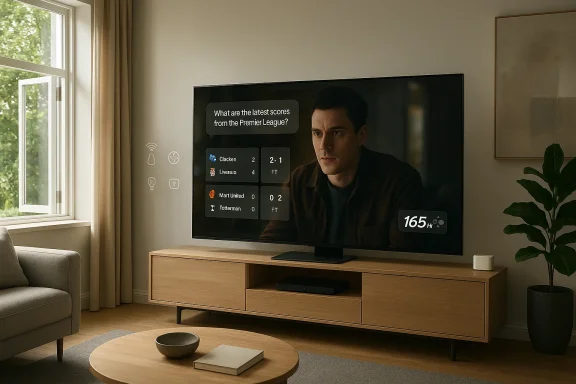
The most significanal of Vision AI Companion across the 2026 range and select 2025 models. Samsung is presenting it as more than a basic voice assistant. It combines Bixby, Microsoft Copilot, and Perplexity into a shared interface that can surface contextual answers and on-screen information while you are watching TV. In practical terms, that means the set can help answer questions about a scene, identify an actor, suggest what to watch next, or surface related information without forcing users to reach for a phone or laptop. Samsung’s own framing suggests it sees the television as a communal device, not a solo productivity screen.
The hardware story is equally aggressive. Samsung is expanding its premium Micro RGB lineup, pushing OLED across more tiers, and bringing Glare Free technology to more models, including the S90H in the OLED family. That matters in a market like Australia, where bright rooms, reflective windows, and open-plan living areas are common. Samsung is effectively saying that a premium television should not only look better in a dark demo room, but also remain usable at midday with the curtains open.
This is also a software story. Samsung is leaning hard on One UI Tizen and promising seven years of OS updates, which is a major signal in a category where “smart” TVs often age badly long before the panel fails. By tying the new AI features to a long support window, Samsung is trying to make the purchase feel more future-proof and more platform-like, not merely more expensive. That longer horizon is one of the clearest signs that Samsung wants to own the TV’s operating experience, not just its screen technology.
Samsung has spent years repositioning its TV business from a hardware catalog into a layered ecosystem. The company already built strong momentum with its The Frame lifestyle line, then expanded its premium identity through Neo QLED, OLED, and smart services like TV Plus and Gaming Hub. The 2026 refresh does not abandon that history; instead, it adds a more explicit AI layer across the whole portfolio and sharpens the distinction between Samsung’s “performance” TVs and its “design” TVs.
The larger market context matters. Most premium TV buyers today can get excellent picture quality from several brands, but the buying decision increasingly hinges on subtle differences: glare handling, cable management, refresh rates, app ecosystems, and how the TV fits into the room when it is off. Samsung’s strategy is to bundle those anxieties into one narrative. The set should be bright enough for Australian living spaces, smart enough to feel helpful, and elegant enough to disappear into the décor when needed. That is a stronger story than simply saying “our panel is brighter.”
The TV as an interface is not a new idea, but Samsung is making it more mainstream by combining familiar interaction models with third-party AI. Copilot is especially important here because it changes the public perception of the TV assistant from a niche voice-search helper into something closer to a shared family concierge. Samsung’s own materials and Microsoft’s earlier launch messaging both reinforce that Copilot on Samsung TVs is meant to transform the largest screen in the home into a more personal companion.
Samsung has also been building a broader “AI living” narrative across appliances, housing concepts, and commercial displays, which helps explain why the TV launch feels so expansive. The company is not treating its new sets as isolated consumer electronics. It is trying to make them part of a cross-category identity where AI is the glue between the home, the screen, the network, and the room itself. That is a meaningful strategic shift because it suggests Samsung sees the TV as a gateway to the rest of its ecosystem, not just as a standalone profit center.
The most persuasive use cases are also the least abstract. A user can ask who an actor is, what a restaurant in a show might be, or what song is playing. Samsung says the system can provide visualised responses, which is important because the big screen should be able to present answers in a way that feels communal rather than personal. A TV assistant that answers out loud alone is a gimmick; one that overlays useful information on-screen starts to become part of the viewing experience itself.
Samsung is also trying to anchor VAC in real household behavior. The company’s messaging around family viewing underscores a simple truth: many households still gather around a single screen, even in a fragmented streaming era. That gives the TV a role that smartphones and tablets cannot fully replace. If the assistant can help answer a group question in the moment, it becomes less like software and more like part of the conversation. That is the bet.
There is also a branding advantage in the word “Companion.” It makes the feature sound less mechanical and more socially acceptable in a shared room. In consumer technology, the difference between a tool and a companion is partly emotional, but it matters. Samsung clearly wants people to think of the TV as something that helps the whole room, not just the person holding the remote.
The technical pitch is all about precision. Samsung says the technology enables more natural color, stronger contrast, and highly controlled brightness. The company also touts a ≥100% BT.2020 gamut ratio on the R95 model and AI-assisted color refinement via the Micro RGB AI Engine Pro. In plain English, Samsung is trying to push both accuracy and spectacle at the same time. That combination matters because premium buyers want vividness, but they increasingly expect color to remain believable rather than cartoonish.
Samsung is also leaning into industrial design. The R95 model’s Infinity Air Design, slim profile, and Wireless One Connect readiness are meant to reduce the clutter that often breaks the illusion of a giant “floating” screen. In luxury electronics, the cable experience can be as important as the panel itself. Samsung understands that a premium TV should look intentional even when it is off. That is not decoration; it is product strategy.
For rivals, the challenge is not just matching one spec. It is matching Samsung’s ability to the software, the design language, and the brand story into a single premium pitch. A TV can be technically excellent and still lose the narrative battle if it lacks an identity. Samsung’s advantage is that it is selling a platformed experience, not just a panel.
Samsung is also pushing the design language hard. The FloatLayer Design and Wireless One Connect focus on cleaner visual setups, while ArtfulColor and Art Store integration blur the line between display and décor. That aligns with how many buyers actually think about premium TVs now. They are not just buying a motion machine for films; they are buying a large object that has to fit a room aesthetically.
The broader OLED pitch also includes serious gaming credentials. Support for 165Hz, AMD FreeSync Premium Pro, and NVIDIA G-SYNC** makes the set competitive for users who split time between console gaming, PC gaming, and streaming. This matters because premium TV buyers are increasingly hybrid users. They do not want a television that is excellent for one thing and merely acceptable for everything else.
That is why this feature carries strategic weight. It is easy to market peak brightness or resolution. It is harder, but more valuable, to make a television remain comfortable and legible in the environments people actually use. Samsung seems to understand that the best premium feature is often the one that disappears once the TV is on. Invisible convenience sells better than flashy inconvenience.
The art ecosystem also matters more than ever. Samsung says the Art Store now offers over 5,000 curated artworks, and VAC can suggest new pieces based on user taste. That creates a loop where the TV is no longer just a display of what you already chose to watch, but a surface that participates in the home’s mood and aesthetic. The TV becomes part of the room’s identity.
The standard Frame still gets meaningful updates too, including easier wall mounting, improved back access, and expanded bezel and finish options. Those details may sound mundane, but they are the kind of features that reduce friction over time. Samsung is showing that it understands the difference between a nice demo and a nice ownership experience. That difference is where premium loyalty is built.
There is also a market segmentation benefit. Buyers who care deeply about aesthetics can move into The Frame ecosystem, while buyers who want better gaming, larger screens, or more serious cinematic performance can step up to OLED or Micro RGB. Samsung is covering multiple emotional buying triggers with one overall brand architecture. That is a smarter strategy than trying to force every consumer into the same premium narrative.
The company is also expanding its Q-Symphony approach so multiple compatible audio devices can work together with the TV. Samsung says users can now link up to five compatible audio devices simultaneously. That is notable because it turns sound into a room-scale design problem rather than a single-device one. For larger homes, open-plan living rooms, or serious home cinema setups, this could matter more than many buyers initially realize.
Samsung’s new Music Studio Series sits in this same design-led category. These are presented not as boxy soundbars but as wireless speakers that resemble furniture, with the Music Stu1.1-channel layout, Dolby Atmos, and a super tweeter reaching 35kHz**. The message is clear: audio should look as refined as the screen it supports.
For sports, AI Soccer Mode Pro is a smart localization move. Sports viewing is communal, emotional, and often noisy, so the ability to sharpen ball tracking while balancing crowd noise can make a real difference in the living room. It is a reminder that the best TV features are often the ones that cater to specific habits rather than generic Sound Controller Pro** improves dialogue clarity.
The next test is whether the promised AI behavior feels natural after the first week. If Vision AI Companion becomes a genuinely useful part of the household routine, Samsung will have done something important: it will have made the television feel alive without making it annoying. If not, the range may still succeed on design and picture quality alone, but the AI narrative will be remembered as a layer rather than a leap.
What to watch next:
Source: techAU Samsung’s 2026 line-up adds Microsoft Copilot AI to your home, massive screens and glare-free tech | techAU
The most significanal of Vision AI Companion across the 2026 range and select 2025 models. Samsung is presenting it as more than a basic voice assistant. It combines Bixby, Microsoft Copilot, and Perplexity into a shared interface that can surface contextual answers and on-screen information while you are watching TV. In practical terms, that means the set can help answer questions about a scene, identify an actor, suggest what to watch next, or surface related information without forcing users to reach for a phone or laptop. Samsung’s own framing suggests it sees the television as a communal device, not a solo productivity screen.
The hardware story is equally aggressive. Samsung is expanding its premium Micro RGB lineup, pushing OLED across more tiers, and bringing Glare Free technology to more models, including the S90H in the OLED family. That matters in a market like Australia, where bright rooms, reflective windows, and open-plan living areas are common. Samsung is effectively saying that a premium television should not only look better in a dark demo room, but also remain usable at midday with the curtains open.
This is also a software story. Samsung is leaning hard on One UI Tizen and promising seven years of OS updates, which is a major signal in a category where “smart” TVs often age badly long before the panel fails. By tying the new AI features to a long support window, Samsung is trying to make the purchase feel more future-proof and more platform-like, not merely more expensive. That longer horizon is one of the clearest signs that Samsung wants to own the TV’s operating experience, not just its screen technology.
 Background
Samsung has spent years repositioning its TV business from a hardware catalog into a layered ecosystem. The company already built strong momentum with its The Frame lifestyle line, then expanded its premium identity through Neo QLED, OLED, and smart services like TV Plus and Gaming Hub. The 2026 refresh does not abandon that history; instead, it adds a more explicit AI layer across the whole portfolio and sharpens the distinction between Samsung’s “performance” TVs and its “design” TVs.The larger market context matters. Most premium TV buyers today can get excellent picture quality from several brands, but the buying decision increasingly hinges on subtle differences: glare handling, cable management, refresh rates, app ecosystems, and how the TV fits into the room when it is off. Samsung’s strategy is to bundle those anxieties into one narrative. The set should be bright enough for Australian living spaces, smart enough to feel helpful, and elegant enough to disappear into the décor when needed. That is a stronger story than simply saying “our panel is brighter.”
The TV as an interface is not a new idea, but Samsung is making it more mainstream by combining familiar interaction models with third-party AI. Copilot is especially important here because it changes the public perception of the TV assistant from a niche voice-search helper into something closer to a shared family concierge. Samsung’s own materials and Microsoft’s earlier launch messaging both reinforce that Copilot on Samsung TVs is meant to transform the largest screen in the home into a more personal companion.
Samsung has also been building a broader “AI living” narrative across appliances, housing concepts, and commercial displays, which helps explain why the TV launch feels so expansive. The company is not treating its new sets as isolated consumer electronics. It is trying to make them part of a cross-category identity where AI is the glue between the home, the screen, the network, and the room itself. That is a meaningful strategic shift because it suggests Samsung sees the TV as a gateway to the rest of its ecosystem, not just as a standalone profit center.
Vision AI Companion and the AI TV Pivot
Samsung’s most important software move is Vision AI Companion, or VAC. The idea is straightforward but consequential: instead of making users navigate menus, search apps, or switch devices, Samsung wants the TV itself to respond with contextual, visually useful answers. That is a subtle but powerful repositioning because it turns the television from passive entertainment hardware into an active participant in the room.What VAC actually changes
The platform links Bixby, Copilot, and Perplexity, and that multi-model approach matters. Bixby provides the familiar Samsung layer, Copilot brings Microsoft’s broad conversational capability, and Perplexity adds search-oriented retrieval. Samsung is effectively hedging against the limitations of any single AI assistant while also giving the TV a more flexible identity than a standard voice command system. That makes sense for a shared screen, where different people may ask different kinds of questions in different contexts.The most persuasive use cases are also the least abstract. A user can ask who an actor is, what a restaurant in a show might be, or what song is playing. Samsung says the system can provide visualised responses, which is important because the big screen should be able to present answers in a way that feels communal rather than personal. A TV assistant that answers out loud alone is a gimmick; one that overlays useful information on-screen starts to become part of the viewing experience itself.
Samsung is also trying to anchor VAC in real household behavior. The company’s messaging around family viewing underscores a simple truth: many households still gather around a single screen, even in a fragmented streaming era. That gives the TV a role that smartphones and tablets cannot fully replace. If the assistant can help answer a group question in the moment, it becomes less like software and more like part of the conversation. That is the bet.
Why this is different from old smart-TV voice features
Older TV voice controls were mostly about navigation. They searched titles, changed inputs, or adjusted settings. VAC is more ambitious because it aims to interpret context, combine sources, and respond visually. That is a genuine shift in interface philosophy, not just a new voice trigger. Samsung is tryingcommand-based interaction to assistance-based interaction.There is also a branding advantage in the word “Companion.” It makes the feature sound less mechanical and more socially acceptable in a shared room. In consumer technology, the difference between a tool and a companion is partly emotional, but it matters. Samsung clearly wants people to think of the TV as something that helps the whole room, not just the person holding the remote.
- Bixby keeps the Samsung identity intact.
- Copilot broadens the assistant into a more capable general AI layer.
- Perplexity adds search-style retrieval for more open-ended queries.
- Visual responses make the feature more suitable for family viewing.
- Shared-screen design is a better fit for TVs than phone-style assistants.
Micro RGB and the Premium Display Race
If VAC is the brains, *owpiece. Samsung’s new premium models use individually controlled red, green, and blue micro-sized LEDs to improve light control, color precision, and perceived detail. The company is positioning the technology as a new upper tier that sits above much of the traditional premium conversation around Mini LED and OLED. That is a bold move because it gives Samsung a fresh headline feature at a time when many TV specs are starting to look interchangeable.Why Micro RGB matters
The company is making a point of scale: sizes range from 55 inches to 115 inches in Australia, with premium variants spanning the R95H and R85H series. That is important because display innovation only becomes a category-defining story when it is available in multiple sizes, not just one halo product. Samsung wants Micro RGB to feel like a lineup, not a prototype.The technical pitch is all about precision. Samsung says the technology enables more natural color, stronger contrast, and highly controlled brightness. The company also touts a ≥100% BT.2020 gamut ratio on the R95 model and AI-assisted color refinement via the Micro RGB AI Engine Pro. In plain English, Samsung is trying to push both accuracy and spectacle at the same time. That combination matters because premium buyers want vividness, but they increasingly expect color to remain believable rather than cartoonish.
Samsung is also leaning into industrial design. The R95 model’s Infinity Air Design, slim profile, and Wireless One Connect readiness are meant to reduce the clutter that often breaks the illusion of a giant “floating” screen. In luxury electronics, the cable experience can be as important as the panel itself. Samsung understands that a premium TV should look intentional even when it is off. That is not decoration; it is product strategy.
The competitive angle
Micro RGB is also a competitive statement. It signals that Samsung is not content to let the premium conversation be dominated by OLED purity or Mini LED value. Instead, it is attempting to create a third pillar that combines the brightness advantages of LED-based displays with tighter color control and more aggressive AI enhancement. That is a strong argument in bright rooms, large spaces, and luxury installations where sheer scale still matters.For rivals, the challenge is not just matching one spec. It is matching Samsung’s ability to the software, the design language, and the brand story into a single premium pitch. A TV can be technically excellent and still lose the narrative battle if it lacks an identity. Samsung’s advantage is that it is selling a platformed experience, not just a panel.
- Micro RGB gives Samsung a new premium flagship story.
- Ultra-large sizes make the technology feel market-ready.
- AI-assisted color tuning supports both accuracy and impact.
- Glare Free on the high end helps in bright Australian homes.
- Wireless One Connect reduces the installation mess that often hurts premium setups.
OLED, Glare Free, and the Mainstream Premium Sweet Spot
Samsung’s OLED line-up — the S95H, S90H, and S85H — is where the company’s premium pitch becomes more practical. OLED still carries the strongest reputation for deep blacks and cinematic contrast, but Samsung is focusing just as much on usability as on image quality. Bringing Glare Free technology down from the top tier to the S90H is especially important because it broadens one of the clearest real-world advantages in the range.What makes the OLED refresh notable
The flagship S95H uses the NQ4 AI Gen3 Processor and Samsung says it relies on 128 AI neural net and audio cleanup. That sounds like a marketing number, but the underlying intent is clear: Samsung wants AI processing to be seen as part of the picture-quality stack, not an add-on. In a world where much streamed content is still compressed or lower resolution than the panel can display, that matters.Samsung is also pushing the design language hard. The FloatLayer Design and Wireless One Connect focus on cleaner visual setups, while ArtfulColor and Art Store integration blur the line between display and décor. That aligns with how many buyers actually think about premium TVs now. They are not just buying a motion machine for films; they are buying a large object that has to fit a room aesthetically.
The broader OLED pitch also includes serious gaming credentials. Support for 165Hz, AMD FreeSync Premium Pro, and NVIDIA G-SYNC** makes the set competitive for users who split time between console gaming, PC gaming, and streaming. This matters because premium TV buyers are increasingly hybrid users. They do not want a television that is excellent for one thing and merely acceptable for everything else.
Why Glare Free matters more than people think
Glare reduction is one of those features that sounds minor until you live with a TV in a bright room. Once you do, reflection handling becomes a daily quality-of-life issue. Samsung’s wider rollout of Glare Free is therefore a highly practical move, especially for Australian homes where natural light can be intense and open-plan rooms are common.That is why this feature carries strategic weight. It is easy to market peak brightness or resolution. It is harder, but more valuable, to make a television remain comfortable and legible in the environments people actually use. Samsung seems to understand that the best premium feature is often the one that disappears once the TV is on. Invisible convenience sells better than flashy inconvenience.
- S95H anchors the premium OLED end.
- S90H gains more accessible glare reduction.
- 165Hz refresh support appeals to gamers.
- Wireless One Connect solves cable clutter.
- ArtfulColor helps the TV function as a design object.
The Frame, The Frame Pro, and Lifestyle TV
Samsung’s The Frame remains one of the company’s smartest product ideas because it solved a real consumer problem: many people do not want a black rectangle dominating the wall when the TV is off. The 2026 version deepens that idea with The Frame Pro, which uses Neo QLED picture quality, a slimmer body, and a more polished art-display identity. This is not just a spec bump. It is Samsung refining a category it helped create.Why the lifestyle angle still works
The Frame Pro’s design priorities are obvious. Samsung is eprofile, Wireless One Connect, and a cleaner installation story so the TV resembles framed art rather than a consumer appliance. That is exactly why the product continues to resonate: it solves an emotional problem as much as a technical one. For buyers who care about interiors, the TV’s appearance matters even when it is idle.The art ecosystem also matters more than ever. Samsung says the Art Store now offers over 5,000 curated artworks, and VAC can suggest new pieces based on user taste. That creates a loop where the TV is no longer just a display of what you already chose to watch, but a surface that participates in the home’s mood and aesthetic. The TV becomes part of the room’s identity.
The standard Frame still gets meaningful updates too, including easier wall mounting, improved back access, and expanded bezel and finish options. Those details may sound mundane, but they are the kind of features that reduce friction over time. Samsung is showing that it understands the difference between a nice demo and a nice ownership experience. That difference is where premium loyalty is built.
Frame as a bridge between art and utility
The Frame family is important because it demonstrates Samsung’s broader thesis: a TV can be both onal without feeling like a compromise. That is difficult to execute. Most lifestyle products end up sacrificing either image performance or design integrity, but Samsung keeps trying to balance both. In 2026, that balance is tighter because the Frame line now shares more software DNA with the rest of the portfolio.There is also a market segmentation benefit. Buyers who care deeply about aesthetics can move into The Frame ecosystem, while buyers who want better gaming, larger screens, or more serious cinematic performance can step up to OLED or Micro RGB. Samsung is covering multiple emotional buying triggers with one overall brand architecture. That is a smarter strategy than trying to force every consumer into the same premium narrative.
- The Frame Pro advances the art-TV category.
- Neo QLED premium performance.
- Over 5,000 artworks strengthens the lifestyle proposition.
- Wireless One Connect reduces visible cabling.
- Expanded finishes and bezels make the product more interior-friendly.
Audio, Gaming, and Sports: The Daily-Use Battlefield
A big-screen TV is only half the story if the sound is weak or the motion handling is sloppy. Samsung is trying to close that gap with smarter audio processing, a stronger soundbar ecosystem, and gaming features that speak directly to enthusiasts. The company’s claim to be the world’s number one soundbar brand for 12 years is part of the broader effort to make the television feel like a complete entertainment system rather than a lone panel.Audio that tries to keep up with the picture
Samsung’s AI Sound Controller Pro is designed to separate dialogue, music, and effects so users can tune each layer more precisely. That is a useful idea because many households are still struggling with speech intelligibility in compressed streaming content and crowded sound mixes. If the TV can isolate voices better, it improves the most common complaint in modern viewing: “I can’t hear what they’re saying.”The company is also expanding its Q-Symphony approach so multiple compatible audio devices can work together with the TV. Samsung says users can now link up to five compatible audio devices simultaneously. That is notable because it turns sound into a room-scale design problem rather than a single-device one. For larger homes, open-plan living rooms, or serious home cinema setups, this could matter more than many buyers initially realize.
Samsung’s new Music Studio Series sits in this same design-led category. These are presented not as boxy soundbars but as wireless speakers that resemble furniture, with the Music Stu1.1-channel layout, Dolby Atmos, and a super tweeter reaching 35kHz**. The message is clear: audio should look as refined as the screen it supports.
Gaming and sports as loyalty engines
Gaming remains one of the strongest reasons to choose a premium TV, because gaming buyers notice latency, motion, refresh rate, and HDR behavior immediately. Samsung’s Ultimate Gaming Pack with 165Hz support, FreeSync Premium Pro, and G-SYNC compatibility gives it o that audience. Those are not niche specs anymore; they are table stakes for premium enthusiasts.For sports, AI Soccer Mode Pro is a smart localization move. Sports viewing is communal, emotional, and often noisy, so the ability to sharpen ball tracking while balancing crowd noise can make a real difference in the living room. It is a reminder that the best TV features are often the ones that cater to specific habits rather than generic Sound Controller Pro** improves dialogue clarity.
- Q-Symphony turns the TV into a larger audio platform.
- Music Studio Series pushes design-conscious sound hardware.
- 165Hz gaming support keeps Samsung relevant to enthusiasts.
- AI Soccer Mode Pro reflects local sports habits and preferences.
Strengths and Opportunities
Samsung’s 2026tegic depth because it combines software, industrial design, display innovation, and ecosystem thinking in one launch. That makes it more resilient than a simple panel refresh and gives the company several ways to win different types of buyers. The same television family can now speak to families, gamers, sports fans, design-conscious homeowners, and premium home-theater shoppers.- Vision AI Companion gives Samsung a differentiated software story.
- Copilot integration broadens the TV’s usefulness beyond search.
- Micro RGB creates a new flagship halo for the brand.
- Glare Free expansion solves a real-world pain point.
- Seven years of updates strengthens long-term value perception.
- The Frame and Frame Pro deepen Samsung’s lifestyle leadership.
- Gaming and sports features help the radaily users.
Risks and Concerns
The biggest risk is that Samsung may be trying to do too much at once. When a product line tries to be a premium TV, an AI assistant, a design object, a gaming monitor, and a smart-home hub simultaneously, the message can become crowded. Buyers may like individual features without feeling that they need the entire package, which weakens the pricing power Samsung is trying to build.- AI feature fatigue could make the assistant feel like marketing rather than utility.
- Privacy concerns may rise as the TV becomes more contextual.
- Premium pricing pressure could limit adoption of the highest-end models.
- Execution complexity grows with every added model and feature tier.
- Software dependence increases the need for flawless long-term support.
- Feature overlap may confuse buyers navigating OLED, Neo QLED, and Micro RGB.
- Rivals can imitate the concept even if they cannot fully match the ecosystem.
Looking Ahead
Samsung’s 2026 TV lineup should be read as an ecosystem bet, not a one-season hardware story. The company is using the TV as the most visible point of entry into a broader vision of connected living, and the Australian launch suggests it believes the local market is especially receptive to that message. Bright rooms, open-plan homes, sports culture, and large-screen preferences all play into Samsung’s hands.The next test is whether the promised AI behavior feels natural after the first week. If Vision AI Companion becomes a genuinely useful part of the household routine, Samsung will have done something important: it will have made the television feel alive without making it annoying. If not, the range may still succeed on design and picture quality alone, but the AI narrative will be remembered as a layer rather than a leap.
What to watch next:
- Whether Vision AI Companion expands meaningfully across more regions and model tiers.
- How quickly Micro RGB scales beyond headline sizes into broader retail availability.
- Whether Glare Free becomes a default expectation in premium TVs.
- How consumers react to Copilot as a TV-side assistant versus a phone or PC feature.
- Whether Samsung’s long update promise delivers real long-term confidence in the market.
Source: techAU Samsung’s 2026 line-up adds Microsoft Copilot AI to your home, massive screens and glare-free tech | techAU
