

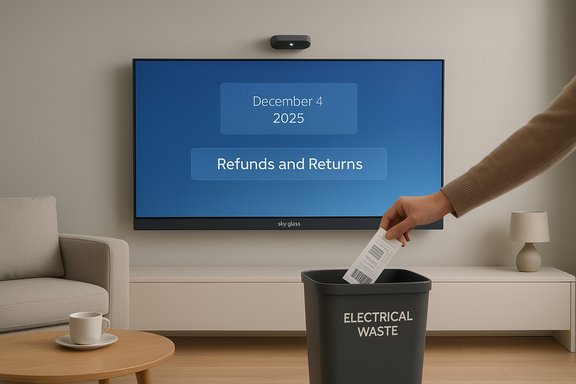
Sky has quietly decided to pull the plug on Sky Live: the Kinect-esque camera that turned Sky Glass into a motion-tracking fitness coach, a motion-controlled games console, a Zoom-capable TV and a “watch together” social screen will stop functioning on 4 December 2025, and Sky says anyone who bought one — either outright or on monthly payments — will receive a refund. The company is also offering purchasers a complimentary 12‑month Mvmnt subscription in the app’s non‑motion‑tracking form, and is giving clear return and recycling options so hardware doesn’t become landfill. This is a clean, pragmatic shutdown — and a useful case study in why hardware‑exclusive add‑ons struggle in a streaming-first TV market.
Sky Live shipped in mid‑2023 as a companion camera for the Sky Glass television line. The device was pitched as a small, magnetically mounted camera that converted an otherwise passive 4K TV into an interactive hub capable of:
Sky’s official reasoning for the shutdown frames the decision as a strategic refocus: the business is shifting investment toward “faster, simpler products, unbeatable content and brilliant service,” and the company says it learned valuable lessons from the Sky Live project. Customers who purchased the device will be refunded for their payments and can either return the camera to Sky with a prepaid label or bring it to an electrical recycling centre.
In practical terms:
Recommended steps before sending the camera back or recycling it:
Sky’s response to this failure is notable for its responsibility: refunding customers, offering transitional subscription access, and providing returns and recycling pathways. That’s damage control done well. For consumers, the Sky Live story is a reminder to assess the long‑term viability of device ecosystems before spending on specialist hardware. For the industry, it’s another signal that companies should be cautious when betting heavily on single‑device peripherals without a clear path to broad adoption.
The shutdown date — 4 December 2025 — is the important deadline. Owners should act now to claim refunds, return hardware and protect their privacy. The era of motion‑tracked TVs wasn’t killed by a single corporate decision, but Sky Live’s retirement is a pragmatic step back to focus on core strengths: content, simpler hardware, and services that reach more customers.
Source: TechRadar https://www.techradar.com/televisio...and-sky-is-throwing-in-an-extra-subscription/
 Background / Overview
Sky Live shipped in mid‑2023 as a companion camera for the Sky Glass television line. The device was pitched as a small, magnetically mounted camera that converted an otherwise passive 4K TV into an interactive hub capable of:- motion‑tracked workouts powered by the Mvmnt app, with real‑time form feedback
- motion and gesture‑based gaming experiences (a modern echo of Wii‑style interaction)
- large‑screen video calls with auto‑framing and a built‑in mic
- synchronized “watch together” viewing between households
Sky’s official reasoning for the shutdown frames the decision as a strategic refocus: the business is shifting investment toward “faster, simpler products, unbeatable content and brilliant service,” and the company says it learned valuable lessons from the Sky Live project. Customers who purchased the device will be refunded for their payments and can either return the camera to Sky with a prepaid label or bring it to an electrical recycling centre.
What’s actually ending on 4 December 2025?
The service and the device
Sky Live’s functionality depends on both the camera hardware and backend services that process tracking and power interactive experiences. When Sky deactivates Sky Live on 4 December 2025, the camera will cease to deliver motion‑tracking, hands‑free video‑call routing and any features that depend on real‑time camera data being processed by Sky’s services.In practical terms:
- Motion tracking in the Mvmnt app (the form‑correction, rep counting and pose analysis) will stop working for Sky Live owners.
- Motion‑controlled games and other gesture interfaces that depend on the device will no longer function.
- Auto‑framing video calls and any “Watch Together” live synchronized sessions using the Sky Live camera will be disabled.
- Any app functionality that Sky has explicitly decoupled from the camera (for example, video playback or non‑tracking versions of fitness content) may continue to function, depending on Sky’s backend decisions.
Return and recycling options
Sky is providing a prepaid returns label for customers who want to send the device back directly. Alternatively, Sky Live can be dropped at a local electrical recycling centre. Sky’s messaging explicitly tells customers to recycle rather than simply throwing the device away, which reduces the environmental harm of orphaned cameras and electronics.Technical recap — what Sky Live actually delivered (verified specifications)
Sky Live was designed as a high‑resolution camera peripheral for a TV, not as a simple webcam. Important, verifiable specifications and product details included:- 12MP RGB camera with HDR capabilities
- Wide field of view (roughly 100–110° horizontal)
- 4K video support for video calls and capture
- Auto‑framing and real‑time body tracking, with the Mvmnt app tracking multiple body points for exercise feedback
- Physical privacy button and LED indicator that shows when the camera and microphone are active
- Magnetic mount and a single cable connection to Sky Glass for power/data
Why this shutdown makes business sense (and what it reveals about product strategy)
There are three interlocking commercial realities that likely pushed Sky to end Sky Live:- Hardware exclusivity reduces reach. Sky Live worked only with Sky Glass TVs. That immediately reduced the potential install base compared with software‑only fitness platforms or mobile‑first apps. Selling a separate camera that only works with a part‑installed base of Sky Glass owners is a tough position to scale from.
- High unit price and subscription complexity. At roughly £290 upfront (or an additional monthly payment), Sky Live was a premium add‑on. Bundling it with the already premium Sky Glass ecosystem meant the cost of entry was high. The combination of hardware and ongoing subscription expectations creates friction in adoption.
- Niche use cases vs. mass market moves. The most popular Sky Live feature, according to Sky itself, was gaming — a proof that motion control had an audience — but that audience was small compared with mainstream streaming viewers who prioritize picture quality, content selection, and ease of use. Sky’s stated pivot to “faster, simpler products” suggests a strategic preference for broad reach features rather than experimental hardware add‑ons.
The customer protections: refunds and transitions
From an ownership perspective, this shutdown is unusual for being relatively customer‑friendly:- Sky says it will refund all customers who purchased Sky Live — both those who bought outright and those on instalments. That means you should expect money back for either the full device price or for the sums you’ve paid so far.
- If you’re on a monthly payment plan for Sky Live, Sky should stop future charges once the shutdown has been announced and processed.
- Sky is adding value by offering a 12‑month Mvmnt subscription in the app’s non‑motion‑tracking mode — i.e., you can still stream classes on the TV without body‑tracking corrections for a year at no charge.
- Check your Sky account and email for the official refund timeline and return instructions.
- Save any confirmation numbers and return label emails.
- If you need proof of the device return, photograph the package and the dispatch receipt; keep all tracking numbers until your refund posts.
- Expect the refund to take some processing time; if it doesn’t arrive within the window Sky specifies, escalate via official support channels.
Privacy, data and recycling: what owners should do now
Cameras are more sensitive than most consumer gadgets because they can capture imagery and audio. Even though Sky’s device had a privacy button and an LED indicator, owners should treat an end‑of‑service event like this as an opportunity to tidy up their digital footprint.Recommended steps before sending the camera back or recycling it:
- Factory‑reset the Sky Live device and the Sky Glass TV if the camera was paired. A reset removes device pairings and clears local caches that might contain temporary images or data.
- Sign out and unlink any accounts used explicitly with Sky Live (for example, Mvmnt profiles or any linked video‑call accounts).
- Unregister the device from your Sky account if there’s a device list in My Sky.
- Physically disable the camera if you’re keeping the device temporarily — cover the lens and turn off the microphone from the device or TV settings until return.
- Document the return with photographs or tracking receipts. Keep proof of shipping until you see the refund.
Risks and downsides of the shutdown
While Sky’s refund approach reduces financial pain for buyers, the shutdown exposes several risks and trade‑offs:- Feature loss for remaining hardware owners. Sky Live owners will see certain promises of interactivity evaporate — and there’s no easy aftermarket fix for a device that loses its cloud services. Local hacks or community firmware are technically possible, but not realistic for most users and they come with security and warranty risks.
- Data‑retention and transparency questions. Sky has stated video/audio data captured by Sky Live only left the device in real time for service use, but device shutdowns often raise questions about whether any historical data is retained server‑side. Owners should be explicit in requesting details from Sky if they’re concerned about what happened to any cloud‑stored content.
- Environmental cost. Even with a prepaid return label, mass hardware turnover creates e‑waste. The best outcomes are returned units that are refurbished or properly recycled; abandoned devices become a pollution and privacy hazard.
- Ecosystem trust. Customers invest in hardware and the added services that make hardware valuable. When vendors discontinue hardware in its early life, it erodes trust for future purchases of experimental peripherals.
Lessons for product builders and consumers
Sky Live’s arc — bold product launch, limited mainstream uptake, and a pragmatic shutdown with refunds — contains several lessons:- For vendors: Experimental hardware works best when either tightly integrated into a widely distributed base (cheap, bundled, or built into the TV at manufacture) or when it solves a high‑frequency, high‑value problem that users will pay for repeatedly. Sky Live was interesting and impressive, but niche.
- For consumers: Purchasing add‑on hardware for narrow features (motion‑tracking workouts, gesture games) should come with an understanding that these features can be retired. Consider whether the device is something you need long term or whether short‑term novelty is worth the price.
- For regulators and consumer advocates: The way Sky handled refunds is a good reference point: clear reimbursements for bought hardware and prepaid returns are responsible outcomes for a voluntary product shutdown.
Quick checklist — what Sky Live owners should do today
- Check email and the Sky account dashboard for an official shutdown notification and refund timing.
- Save any communications and take screenshots of order pages and payments.
- Stop Sky Live monthly payments (Sky should stop them automatically; verify through account billing).
- Back up or remove any content or profiles associated with Mvmnt or video‑call apps.
- Factory‑reset/unpair the camera from Sky Glass.
- Use the prepaid returns label Sky supplies or take the camera to a certified e‑waste recycler.
- Keep the return tracking and monitor your bank account for the refund.
Final analysis: a tidy shutdown that still points to larger truths
Sky Live will be remembered as an ambitious experiment: a capable consumer camera that put body tracking, social calls and motion gaming on the TV. The product showcased what a smart TV can do when given the right sensors and services. But it also illustrates a durable commercial truth — even a technically compelling hardware add‑on must overcome distribution, price sensitivity and platform restrictions to build scale.Sky’s response to this failure is notable for its responsibility: refunding customers, offering transitional subscription access, and providing returns and recycling pathways. That’s damage control done well. For consumers, the Sky Live story is a reminder to assess the long‑term viability of device ecosystems before spending on specialist hardware. For the industry, it’s another signal that companies should be cautious when betting heavily on single‑device peripherals without a clear path to broad adoption.
The shutdown date — 4 December 2025 — is the important deadline. Owners should act now to claim refunds, return hardware and protect their privacy. The era of motion‑tracked TVs wasn’t killed by a single corporate decision, but Sky Live’s retirement is a pragmatic step back to focus on core strengths: content, simpler hardware, and services that reach more customers.
Source: TechRadar https://www.techradar.com/televisio...and-sky-is-throwing-in-an-extra-subscription/
