

Valve’s new Steam Machine promises console‑style convenience with PC performance, but the one‑line truth for multiplayer fans is blunt: the Steam Machine will inherit the Steam Deck’s anti‑cheat problem unless publishers, anti‑cheat vendors and Valve change course — and right now the technical and business incentives make that unlikely to disappear soon.
The modern SteamOS ecosystem is built on two complementary pillars: the Linux kernel that underpins the OS, and Proton, Valve’s compatibility layer that translates Windows APIs (including DirectX) into something Linux understands. That architecture has delivered astonishing compatibility gains: most single‑player and many multiplayer titles now run on Proton with little or no tinkering. But there is a clear dividing line — kernel‑level anti‑cheat systems that require direct access to Windows internals simply don’t translate into the Linux kernel space the way graphics calls do. At the same time, a growing number of high‑profile multiplayer releases are doubling down on kernel‑level enforcement and even firmware attestation (TPM 2.0 + Secure Boot) as part of their anti‑cheat posture. Those moves materially narrow the set of games that can be made to run on SteamOS without publishers explicitly shipping Linux‑compatible anti‑cheat modules. Activision’s Ricochet, Riot’s Vanguard and EA’s Javelin are prominent examples that either require Windows kernel access or depend on Secure Boot/TPM attestation, and they form the core of the problem for Steam‑first hardware.
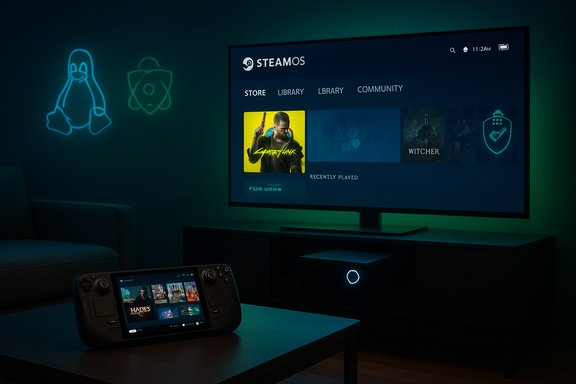
Source: Windows Central The Steam Machine will face the same anti-cheat woes as the Steam Deck — but will it ever get better?
 Background
The modern SteamOS ecosystem is built on two complementary pillars: the Linux kernel that underpins the OS, and Proton, Valve’s compatibility layer that translates Windows APIs (including DirectX) into something Linux understands. That architecture has delivered astonishing compatibility gains: most single‑player and many multiplayer titles now run on Proton with little or no tinkering. But there is a clear dividing line — kernel‑level anti‑cheat systems that require direct access to Windows internals simply don’t translate into the Linux kernel space the way graphics calls do. At the same time, a growing number of high‑profile multiplayer releases are doubling down on kernel‑level enforcement and even firmware attestation (TPM 2.0 + Secure Boot) as part of their anti‑cheat posture. Those moves materially narrow the set of games that can be made to run on SteamOS without publishers explicitly shipping Linux‑compatible anti‑cheat modules. Activision’s Ricochet, Riot’s Vanguard and EA’s Javelin are prominent examples that either require Windows kernel access or depend on Secure Boot/TPM attestation, and they form the core of the problem for Steam‑first hardware. Why kernel‑level anti‑cheat is a hard boundary
The kernel is not an API you can simply translate
The operating system kernel is the trusted, privileged core that controls hardware, memory isolation, driver models and process privileges. Windows and Linux implement different kernel architectures, driver models, signing and boot chains. An anti‑cheat solution that loads a Windows kernel driver to inspect memory, intercept drivers or check kernel objects assumes Windows semantics that do not exist on Linux. Proton can translate user‑space API calls (DirectX → Vulkan), but it does not — and cannot sensibly — replicate Windows kernel internals on top of the Linux kernel. This isn’t a missing feature; it is a fundamental architectural mismatch.What Proton can and cannot do
Proton excels at:- Translating DirectX calls to Vulkan.
- Running Windows user‑mode binaries via Wine‑derived plumbing.
- Packaging a runnable experience for many Windows games on Linux.
- Emulate or host Windows kernel drivers.
- Satisfy anti‑cheat code that expects Windows kernel hooks, signed drivers, or Windows boot‑chain attestation.
The current anti‑cheat landscape and Valve’s playbook
Two clear camps have emerged
- Anti‑cheat vendors that built Linux/Proton‑friendly modules (Easy Anti‑Cheat via Epic Online Services, and BattlEye) have enabled many multiplayer titles to be playable under Proton — but only when game developers opt in and ship the Linux/patched depot. Valve’s work here matters: Proton added support paths to make EAC and BattlEye usable on SteamOS, but developer opt‑in is required.
- Vendors that require Windows kernel drivers and/or platform attestation (RICOCHET, Vanguard, Javelin) remain effectively Windows‑only. These systems commonly rely on kernel drivers and may integrate Secure Boot/TPM checks as part of a comprehensive integrity model; that dependence is what prevents smooth cross‑platform play on SteamOS. Activision’s Ricochet updates explicitly list TPM 2.0 and Secure Boot as required components for Black Ops 7’s PC launch, and EA’s Javelin took a similar approach for Battlefield, leading publishers to exclude Steam Deck from their official support lists.
Developer discretion is the gating factor
Even when EAC or BattlEye have Linux modules available, game studios must choose to include and distribute those modules. Enabling Proton‑compatible anti‑cheat is opt‑in: developers need to enable Linux support in the anti‑cheat dashboard, add the Linux library to the game depot and publish the updated build. If a studio decides not to support Linux — for policy, QA, legal or business reasons — the game remains blocked on SteamOS even if the technical path exists. Destiny 2’s case (Bungie using BattlEye but not enabling Linux support) is a practical example of policy blocking playability.Practical reality for prospective Steam Machine buyers
If you’re deciding whether the Steam Machine is a safe bet for your game library, the compatibility checklist is simple and practical.- Use Steam’s compatibility rating (Playable / Verified / Unsupported) in the Steam client to see a game’s SteamOS status. This is Valve’s first‑party signal for Steam Machine readiness.
- Check ProtonDB for community testing notes and practical tweaks. ProtonDB provides user‑reported success levels and the exact steps players used to get titles working under Proton. It does not guarantee multiplayer fairness or anti‑cheat compliance, but it’s invaluable for troubleshooting.
- Query AreWeAntiCheatYet? to confirm a game’s anti‑cheat vendor status and whether a Linux module exists. This resource offers a quick anti‑cheat compatibility snapshot that’s especially useful for multiplayer titles.
- If you play primarily offline or single‑player games, SteamOS + Proton will handle most of your catalog. If you rely on modern competitive multiplayer (Valorant, Call of Duty, Battlefield, some EA titles), be prepared to either run Windows or use cloud/console alternatives.
Strengths of Valve’s approach — and why SteamOS still matters
Valve’s strategy has clear benefits for consumers and ecosystem diversity.- Proton has lowered the barrier to entry for Linux gaming, enabling a vast portion of the Steam catalog to run on SteamOS without developers rewriting binaries. The result is vastly expanded choice for handhelds and living‑room PCs that ship with SteamOS.
- Valve’s partnerships and developer documentation have reduced friction for anti‑cheat vendors to support Proton where feasible. BattlEye and Easy Anti‑Cheat have publicized support paths and Valve has automated parts of the process for developers. That collaboration made many previously incompatible titles playable on the Steam Deck and creates a pathway for the Steam Machine.
- For single‑player, indie and casual multiplayer titles that do not rely on kernel‑level enforcement, SteamOS is now a genuinely practical alternative to Windows — with the benefit of open‑source tooling, predictable update behavior and Valve’s curated compatibility program.
Critical risks and unresolved problems
1. Fragmentation and exclusion
Requiring kernel‑level anti‑cheat or firmware attestation fragments the player base. SteamOS and Linux users, Steam Deck owners, and many dual‑boot setups can find themselves locked out of major releases. This isn’t hypothetical — publishers have publicly excluded the Steam Deck for certain titles because their anti‑cheat depends on Windows security primitives. The net result is a bifurcated ecosystem where a growing subset of multiplayer AAA titles favors Windows distribution exclusively.2. Privacy, telemetry and trust
TPM and Secure Boot provide attestation that a machine booted into a known, signed state. While that model improves integrity signals for anti‑cheat, it also concentrates trust and sensitive attestation in the hands of private vendors. Without transparent telemetry policies and independent audits, users have legitimate concerns about what is measured, who controls the verification logic, and how long attestation proofs are retained. These are not academic: policy drift from “anti‑cheat” to “platform gating” is a real community worry.3. System stability and kernel privilege risk
Kernel‑level drivers operate with the highest privileges. Historically, kernel anti‑cheat modules have caused blue screens, driver conflicts and platform instability on fringe configurations. Those incidents generate outsized backlash because affected players often lose trust in the vendor and publisher. Robust QA across thousands of hardware permutations is costly and difficult.4. Legal and support overhead for developers
Shipping a Linux anti‑cheat module isn’t just a porting task; it’s additional QA, patching, and support. Developers must commit engineering and QA resources to a separate runtime, manage depot content, and support both the native Windows and Proton/Linus paths. For publishers focused on a single‑platform largest reach, the incremental cost can be decisive — and that pressure reduces the chance that every major title will ship with SteamOS‑friendly anti‑cheat.What would need to change for things to get better?
There are three plausible paths that could materially improve the Steam Machine / SteamOS multiplayer picture — but each requires coordination and tradeoffs.Path A: Major anti‑cheat vendors commit to native Linux kernel modules
If Riot, Activision and EA were to invest in robust Linux kernel components (or agree to alternative, equally strong user‑space attestation models), major multiplayer titles could run on SteamOS without shelving their integrity goals. That would be the cleanest technical outcome, but it demands a substantial engineering and QA commitment from privately held vendors — and some are philosophically resistant to exposing deep hooks outside the Windows ecosystem. Valve’s collaboration with some vendors shows it is technically possible, but the vendor economic incentives are not yet aligned.Path B: Remote attestation and cross‑platform trust standards
Publishers increasingly use TPM + Secure Boot with server‑side attestation to verify boot state. If a cross‑platform, standardized remote attestation API emerged — one that both Windows and SteamOS could implement and that anti‑cheat vendors trusted — then some integrity checks could be satisfied without requiring Windows kernel drivers. That requires industry standardization (or at least multi‑vendor cooperation) on attestation formats, proof semantics, and privacy safeguards. Activision’s move toward remote attestation in its RICOCHET rollout demonstrates the direction, but Apple‑style walled gardens or vendor lock‑in risks must be managed.Path C: Windows on handhelds as the pragmatic route
Many hardware vendors are shipping powerful Windows handhelds that run the standard anti‑cheat stack and enable full support for high‑profile online titles. For players who want day‑one access to the latest competitive games, a Windows handheld or a Windows PC remains the pragmatic choice. The Steam Machine could meet the needs of a broad audience, but for competitive multiplayer enthusiasts, Windows remains the default. This market segmentation is likely to persist unless publishers change policy.Recommendations — what Valve, vendors and players should do
For Valve
- Continue and deepen engineering support and documentation for EAC/BattlEye integration into Proton to lower developer friction. Publicize success stories and the concrete process for ports to reduce perception friction.
- Surface compatibility metadata more prominently for Steam Machine buyers: parity between Steam Deck and Steam Machine compatibility pages will reduce surprise purchases and refund burden.
- Advocate for standardization of attestation interfaces across platforms to reduce the need for Windows‑specific kernels.
For publishers and anti‑cheat vendors
- Where feasible, ship Linux‑compatible anti‑cheat modules and make Proton support opt‑out rather than opt‑in for multi‑platform titles — doing so will broaden market access at modest incremental cost for large publishers.
- Publish clearer telemetry, data‑retention and privacy rules tied to attestation to build user trust.
For players and buyers
- Verify the titles you care about via Steam compatibility status and community reports (ProtonDB, AreWeAntiCheatYet?.
- For competitive AAA multiplayer, plan to use a Windows machine or a Windows handheld if you want seamless day‑one access.
- If you own a Steam Machine or Deck, maintain realistic expectations: the majority of your library will work, but some marquee multiplayer titles may not.
A sober outlook: will it ever get better?
Yes — but slowly, unevenly, and only where the money and incentives align. Technical solutions exist: Proton plus vendor‑supplied Linux modules already enable many anti‑cheat systems. The friction is neither purely technical nor purely political — it’s a mix of QA cost, liability and product decisions.- If anti‑cheat vendors and publishers see meaningful market demand and negligible legal/regulatory friction to ship Linux modules, support will expand. Valve’s work and the existence of working integrations (EAC/BattlEye) prove the technical feasibility.
- If publishers choose the highest‑confidence route (kernel drivers + Secure Boot + TPM + remote attestation), SteamOS will remain a second‑tier platform for competitive multiplayer until those vendors also commit to Linux attestation models. Activision’s and EA’s recent TPM/Secure Boot requirements show the direction of travel for many large competitive titles.
- User demand, legal pressure, or a major vendor pivot could accelerate change. But absent a business incentive that outweighs the porting and QA costs for anti‑cheat vendors and publishers, the status quo — good compatibility for most titles, persistent gaps for kernel‑protected multiplayer — will remain the default for the Steam Machine era.
Conclusion
The Steam Machine will be a compelling living‑room PC for a large swath of the Steam catalog. Valve’s engineering work with Proton and its coordination with vendors like Epic (Easy Anti‑Cheat) and BattlEye has closed many gaps. But for the marquee, kernel‑protected multiplayer experiences that define competitive ecosystems, the Steam Machine will face the same anti‑cheat woes that dogged the Steam Deck: a structural incompatibility between Windows kernel‑level enforcement and Linux‑based SteamOS unless publishers and anti‑cheat vendors actively choose to bridge the divide. That bridge is technically possible and already exists in places — but turning it into universal practice requires economic incentives, industry standards for attestation, and heavier QA commitments from vendors and studios. Until those align, the practical advice for multiplayer fans is straightforward: check compatibility, plan for Windows where necessary, and treat the Steam Machine as an excellent all‑round device that nonetheless comes with a known and unavoidable caveat for some online titles.Source: Windows Central The Steam Machine will face the same anti-cheat woes as the Steam Deck — but will it ever get better?
