

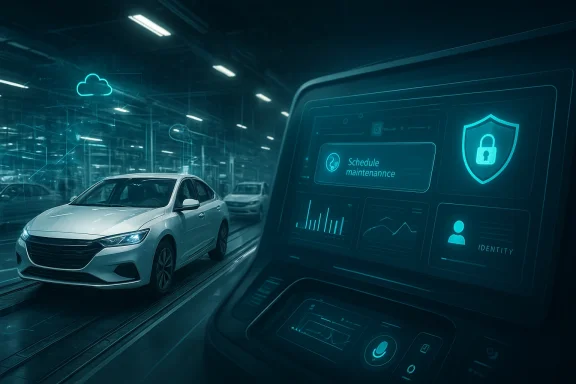
Stellantis is making a deliberate bet that software, data, and AI will now shape the car company as much as engines and manufacturing ever did. Its five-year strategic collaboration with Microsoft, announced on April 16, 2026, is framed as a broad digital transformation push spanning employee productivity, cybersecurity, customer insights, and connected-vehicle experiences. The signal is bigger than the press release language: Stellantis wants to turn Microsoft’s cloud and AI stack into a practical operating layer for how it builds, sells, and supports vehicles. That makes this deal less about branding and more about whether an automaker can convert digital ambition into measurable business advantage.
Stellantis is one of the world’s largest automotive groups, and that scale makes every software decision strategically important. In an industry where profit margins are under pressure and software-defined vehicles are becoming the new competitive battleground, partnerships are no longer just procurement exercises. They are architecture decisions, and this agreement suggests Stellantis believes Microsoft can help anchor that architecture. The collaboration appears aimed at modernizing both internal operations and customer-facing services, which is why it lands as a platform story rather than a simple enterprise IT update.
The timing matters. Automakers are under pressure to do three difficult things at once: reduce complexity, speed up product cycles, and make software feel native to the customer experience. That means moving beyond disconnected pilot projects and toward systems that can support real operational scale. Stellantis is trying to show that AI can be embedded across the company, not isolated inside a lab or a demo environment.
This is also part of a broader Microsoft pattern. Across industries, Microsoft has been positioning its cloud, collaboration, and AI tools as the backbone of digitally transformed workflows, especially where governance and enterprise trust matter. In that context, Stellantis is not an isolated case. It is another example of Microsoft pushing deeper into vertical workflows where the prize is not just software adoption, but long-term platform dependency.
For Stellantis, the upside is obvious but not guaranteed. The company can potentially gain faster internal decision-making, better cybersecurity alignment, and richer vehicle-related services if the collaboration is executed well. The risk is equally obvious: big transformation stories can stall if they do not translate into everyday operational gains. That tension is what makes this deal worth watching.
The announcement also hints at a shift from isolated automation to more agentic operations. In other words, the goal is not simply to automate a task here or there, but to make systems more context-aware, more connected, and more useful across teams. That is a harder challenge than adding a chatbot to a workflow, but it is also where the strategic value is likely to emerge.
From a market perspective, this deal reinforces the idea that the future of automotive software is increasingly shaped by the hyperscalers. Cloud providers are no longer just hosting infrastructure; they are becoming the default environment for AI-enabled enterprise operations. That gives Microsoft not only a foothold in Stellantis, but a stronger claim to relevance in connected mobility more broadly.
Microsoft has been building toward this moment by embedding AI across its enterprise portfolio. The company has increasingly framed Copilot, Azure, and adjacent services as a managed environment for business transformation, where productivity, governance, and security are designed to work together. That ecosystem logic is important because it gives Microsoft a way to present AI as a business platform rather than a novelty feature. Stellantis becomes a showcase for that pitch.
The automotive sector is a particularly revealing test case because it combines high complexity with high public visibility. It is one thing to improve document workflows in a back-office function. It is another thing to support connected vehicles, customer services, and cyber-sensitive operational systems at global scale. That makes the Stellantis-Microsoft collaboration a useful indicator of how far enterprise AI has moved beyond experimentation.
The collaboration also arrives at a moment when many companies are becoming more selective about AI investments. The hype cycle has made buyers skeptical, and for good reason. Enterprises increasingly want proof of time savings, better quality, lower cost, or clearer governance before they expand AI programs. In that environment, a five-year collaboration only matters if it produces tangible operational improvements.
That matters because digital transformation often fails in the middle layer: the part where executives approve the strategy, but employees still have to live with the workflow. If Microsoft tools become the default layer for communication, content, and task assistance, Stellantis may be able to reduce friction in routine work. The real prize is not flashy AI output; it is fewer delays and less cognitive overhead.
There is also a governance angle. When a large organization standardizes on a major platform vendor, it usually gains better control over identity, access, and auditability. That is especially relevant in a company with global operations and sensitive engineering data. The same platform that improves productivity can also improve control, which is why these deals are often as much about risk management as they are about efficiency.
The security story also intersects with customer trust. As vehicles become more connected, the line between digital service and physical product gets thinner. That means security failures can become reputational failures very quickly. By aligning with Microsoft, Stellantis appears to be signaling that it wants enterprise-grade controls around the systems that support modern mobility.
Still, trust is not automatic. A major platform partner can improve the security baseline, but it can also increase exposure if the dependency becomes too concentrated. The stronger the integration, the more important it is to maintain internal oversight, segmentation, and contingency planning. That is especially true when AI features begin to touch sensitive workflows or customer data.
This is where the deal becomes commercially interesting. If Stellantis can turn vehicle data into better service, more relevant recommendations, or a more seamless ownership experience, then digital transformation stops being an internal cost center and starts becoming a revenue enabler. That is the difference between modernization for its own sake and modernization that moves the business.
However, connected-car value is hard to monetize cleanly. Customers may appreciate convenience, but they are also wary of privacy tradeoffs, subscription fatigue, and overcomplicated software layers. The challenge is to create genuine usefulness without making the vehicle feel like a rolling software sales platform. That balance will matter as much as the underlying technology.
The deal also fits Microsoft’s broader push to make AI feel enterprise-native. Rather than relying solely on consumer excitement, the company has been building a model where AI is distributed through the tools businesses already use. That approach may not always generate the loudest headlines, but it can be highly durable if it lands in daily workflows and long-term contracts.
There is also a market signaling effect. Every marquee partnership helps Microsoft reinforce the impression that its cloud and AI stack is the default choice for companies looking to modernize at scale. In a competitive environment where rivals are also pushing AI narratives, flagship vertical wins matter because they show practical relevance, not just technical capability.
For automakers, the implication is that platform alliances may matter more than individual software bets. If Stellantis can move faster by anchoring itself to Microsoft’s ecosystem, others will be pressured to make similar moves or risk looking fragmented. That can accelerate consolidation around a few major cloud and AI partners, especially among companies that already live inside the Microsoft stack.
The competitive effect extends beyond automotive. Once a major industry partner demonstrates a credible AI transformation model, other sectors tend to copy the pattern. That is how ecosystems expand: one flagship use case becomes a template, then a procurement preference, then a market expectation. Microsoft knows that, and Stellantis may benefit from being an early visible example.
For consumers, the impact is more indirect but potentially more tangible. Better connected services, more responsive support, and improved in-car experiences can make ownership feel easier and more modern. Yet consumers also judge these systems more harshly when they are slow, confusing, or intrusive. Automotive software has very little room for error because it lives inside a physical product people rely on every day.
The real challenge is alignment. Enterprise value and consumer value do not always move in lockstep. A system can be efficient for the company but annoying for the driver, or elegant for the customer but burdensome for operations. Stellantis and Microsoft will need to balance both sides carefully if they want the partnership to scale beyond an internal transformation narrative.
Another concern is dependence. When a company ties important digital functions tightly to one ecosystem, it can gain speed but lose optionality. That tradeoff may be acceptable, but it should be explicit. In automotive, where long timelines and high capital intensity already constrain flexibility, architectural lock-in deserves serious scrutiny.
There is also a governance risk around AI itself. As systems become more capable, they also become more complex to supervise. If AI tools are used in customer support, operations, or internal decision-making, Stellantis will need clear rules for quality, accountability, and escalation. The more valuable the AI layer becomes, the more damaging mistakes can be.
Watch for signs that the agreement becomes more than a headline. The most meaningful indicators will be concrete use cases, region-by-region rollouts, and evidence that employees actually rely on the new systems in daily work. If those pieces start to line up, the deal could become a model for how industrial companies adopt AI without turning it into a science project.
Source: SSBCrack Stellantis and Microsoft Announce Five-Year Strategic Collaboration to Accelerate Digital Transformation - SSBCrack News
 Overview
Stellantis is one of the world’s largest automotive groups, and that scale makes every software decision strategically important. In an industry where profit margins are under pressure and software-defined vehicles are becoming the new competitive battleground, partnerships are no longer just procurement exercises. They are architecture decisions, and this agreement suggests Stellantis believes Microsoft can help anchor that architecture. The collaboration appears aimed at modernizing both internal operations and customer-facing services, which is why it lands as a platform story rather than a simple enterprise IT update.The timing matters. Automakers are under pressure to do three difficult things at once: reduce complexity, speed up product cycles, and make software feel native to the customer experience. That means moving beyond disconnected pilot projects and toward systems that can support real operational scale. Stellantis is trying to show that AI can be embedded across the company, not isolated inside a lab or a demo environment.
This is also part of a broader Microsoft pattern. Across industries, Microsoft has been positioning its cloud, collaboration, and AI tools as the backbone of digitally transformed workflows, especially where governance and enterprise trust matter. In that context, Stellantis is not an isolated case. It is another example of Microsoft pushing deeper into vertical workflows where the prize is not just software adoption, but long-term platform dependency.
For Stellantis, the upside is obvious but not guaranteed. The company can potentially gain faster internal decision-making, better cybersecurity alignment, and richer vehicle-related services if the collaboration is executed well. The risk is equally obvious: big transformation stories can stall if they do not translate into everyday operational gains. That tension is what makes this deal worth watching.
What the Deal Signals
At the highest level, the partnership says Stellantis is treating AI as infrastructure, not decoration. That matters because automotive firms have often been tempted to frame digital projects as customer-experience enhancements when the more durable value lies in back-office productivity, service efficiency, and platform integration. Microsoft’s involvement suggests Stellantis wants a more unified model that connects work tools, cloud data, and vehicle-related intelligence into one strategic stack.The announcement also hints at a shift from isolated automation to more agentic operations. In other words, the goal is not simply to automate a task here or there, but to make systems more context-aware, more connected, and more useful across teams. That is a harder challenge than adding a chatbot to a workflow, but it is also where the strategic value is likely to emerge.
From a market perspective, this deal reinforces the idea that the future of automotive software is increasingly shaped by the hyperscalers. Cloud providers are no longer just hosting infrastructure; they are becoming the default environment for AI-enabled enterprise operations. That gives Microsoft not only a foothold in Stellantis, but a stronger claim to relevance in connected mobility more broadly.
Why this matters now
The automotive industry has spent years talking about software-defined vehicles, but the organizational side of that transition is often overlooked. A company cannot build a modern digital car experience on top of fragmented internal systems and slow, manual decision loops. Stellantis appears to be betting that a tighter Microsoft relationship can reduce that friction.- It could shorten the distance between data and action.
- It may improve employee productivity across distributed teams.
- It creates a more credible AI story for enterprise stakeholders.
- It strengthens Stellantis’ ability to standardize digital workflows.
- It gives Microsoft another flagship vertical use case.
Background
The car industry has been moving toward software-defined vehicles for years, but the transition has never been just about code in the car. It also requires a software-defined company behind the car. That means cloud infrastructure, data governance, collaboration tooling, security, and AI systems that support everything from engineering to customer support. Stellantis’ announcement should be read against that broader shift, not just as a one-off partnership headline.Microsoft has been building toward this moment by embedding AI across its enterprise portfolio. The company has increasingly framed Copilot, Azure, and adjacent services as a managed environment for business transformation, where productivity, governance, and security are designed to work together. That ecosystem logic is important because it gives Microsoft a way to present AI as a business platform rather than a novelty feature. Stellantis becomes a showcase for that pitch.
The automotive sector is a particularly revealing test case because it combines high complexity with high public visibility. It is one thing to improve document workflows in a back-office function. It is another thing to support connected vehicles, customer services, and cyber-sensitive operational systems at global scale. That makes the Stellantis-Microsoft collaboration a useful indicator of how far enterprise AI has moved beyond experimentation.
The collaboration also arrives at a moment when many companies are becoming more selective about AI investments. The hype cycle has made buyers skeptical, and for good reason. Enterprises increasingly want proof of time savings, better quality, lower cost, or clearer governance before they expand AI programs. In that environment, a five-year collaboration only matters if it produces tangible operational improvements.
The strategic backdrop
A few trends make this announcement especially relevant:- Automotive software is becoming a core competitive differentiator.
- Enterprise buyers want AI that plugs into existing ecosystems.
- Cybersecurity is now inseparable from digital transformation.
- Cloud scale matters more when AI features must run globally.
- Platform partners increasingly shape vertical innovation.
Employee Productivity and Internal Operations
One likely area of focus is internal productivity. For a global automaker, even modest gains in scheduling, collaboration, knowledge retrieval, or reporting can compound across thousands of employees. Microsoft’s suite of productivity and collaboration tools gives Stellantis a path to standardize workflows without forcing teams into a patchwork of disconnected point solutions.That matters because digital transformation often fails in the middle layer: the part where executives approve the strategy, but employees still have to live with the workflow. If Microsoft tools become the default layer for communication, content, and task assistance, Stellantis may be able to reduce friction in routine work. The real prize is not flashy AI output; it is fewer delays and less cognitive overhead.
There is also a governance angle. When a large organization standardizes on a major platform vendor, it usually gains better control over identity, access, and auditability. That is especially relevant in a company with global operations and sensitive engineering data. The same platform that improves productivity can also improve control, which is why these deals are often as much about risk management as they are about efficiency.
Practical productivity gains
The most plausible short-term benefits are not glamorous, but they are valuable:- Faster access to organizational knowledge.
- More consistent document and meeting workflows.
- Better collaboration across regions and functions.
- Less context switching between systems.
- Improved visibility into recurring operational issues.
Cybersecurity and Trust
Cybersecurity is likely one of the most important pillars of the collaboration, even if it does not attract the most attention in public summaries. Automakers sit on sensitive data, connected systems, and increasingly software-heavy product lines, which makes security a board-level issue rather than an IT department concern. A cloud partner with a deep enterprise security posture can be attractive if it helps unify defense, monitoring, and access control.The security story also intersects with customer trust. As vehicles become more connected, the line between digital service and physical product gets thinner. That means security failures can become reputational failures very quickly. By aligning with Microsoft, Stellantis appears to be signaling that it wants enterprise-grade controls around the systems that support modern mobility.
Still, trust is not automatic. A major platform partner can improve the security baseline, but it can also increase exposure if the dependency becomes too concentrated. The stronger the integration, the more important it is to maintain internal oversight, segmentation, and contingency planning. That is especially true when AI features begin to touch sensitive workflows or customer data.
Security priorities to watch
- Identity and access governance across global teams.
- Protection of connected-vehicle data pipelines.
- Detection and response capabilities for operational systems.
- Compliance alignment across regions and jurisdictions.
- Guardrails for AI tools handling sensitive information.
Connected Cars and Customer Experience
The customer-facing side of the collaboration may be the most visible over time. Modern car buyers increasingly expect their vehicle experience to be connected, personalized, and updated through software rather than fixed at the point of sale. Microsoft’s cloud and AI capabilities could help Stellantis support richer customer insights, smarter service interactions, and more adaptive in-car experiences.This is where the deal becomes commercially interesting. If Stellantis can turn vehicle data into better service, more relevant recommendations, or a more seamless ownership experience, then digital transformation stops being an internal cost center and starts becoming a revenue enabler. That is the difference between modernization for its own sake and modernization that moves the business.
However, connected-car value is hard to monetize cleanly. Customers may appreciate convenience, but they are also wary of privacy tradeoffs, subscription fatigue, and overcomplicated software layers. The challenge is to create genuine usefulness without making the vehicle feel like a rolling software sales platform. That balance will matter as much as the underlying technology.
Customer-facing use cases
Potential high-value areas include:- Smarter service and maintenance experiences.
- More personalized ownership support.
- Better utilization of connected-vehicle telemetry.
- Faster issue resolution through AI-assisted support.
- More adaptive in-car digital services.
Microsoft’s Strategic Gain
For Microsoft, this collaboration is another proof point that its platform strategy works best when it is embedded in major vertical workflows. Automotive is a high-value sector because it combines scale, complexity, and long product cycles. If Microsoft can establish itself as a trusted AI and cloud partner here, it strengthens the argument that its stack is suitable for mission-critical industrial environments.The deal also fits Microsoft’s broader push to make AI feel enterprise-native. Rather than relying solely on consumer excitement, the company has been building a model where AI is distributed through the tools businesses already use. That approach may not always generate the loudest headlines, but it can be highly durable if it lands in daily workflows and long-term contracts.
There is also a market signaling effect. Every marquee partnership helps Microsoft reinforce the impression that its cloud and AI stack is the default choice for companies looking to modernize at scale. In a competitive environment where rivals are also pushing AI narratives, flagship vertical wins matter because they show practical relevance, not just technical capability.
Why Microsoft wins here
- It gains another high-profile industrial reference.
- It deepens its role in mobility and connected services.
- It strengthens the case for Azure as a vertical platform.
- It expands the relevance of its AI and productivity ecosystem.
- It reinforces enterprise trust as a competitive asset.
Competitive Implications
The Stellantis deal should make rivals pay attention because it raises the bar for what a modern automotive partnership looks like. Competitors are no longer just judged on vehicle features or manufacturing efficiency. They are judged on how well they can orchestrate data, AI, and customer experience across the full lifecycle of the product. That changes the competitive battlefield.For automakers, the implication is that platform alliances may matter more than individual software bets. If Stellantis can move faster by anchoring itself to Microsoft’s ecosystem, others will be pressured to make similar moves or risk looking fragmented. That can accelerate consolidation around a few major cloud and AI partners, especially among companies that already live inside the Microsoft stack.
The competitive effect extends beyond automotive. Once a major industry partner demonstrates a credible AI transformation model, other sectors tend to copy the pattern. That is how ecosystems expand: one flagship use case becomes a template, then a procurement preference, then a market expectation. Microsoft knows that, and Stellantis may benefit from being an early visible example.
What rivals may do next
- Deepen their own hyperscaler partnerships.
- Accelerate AI-driven customer experience programs.
- Repackage legacy digital initiatives as platform transformations.
- Invest more heavily in connected-service ecosystems.
- Emphasize security and governance as differentiators.
Enterprise vs Consumer Impact
For enterprise stakeholders, the collaboration is about efficiency, governance, and scale. Executives will care about whether the deal improves productivity, accelerates decisions, and reduces operational risk. IT teams will focus on identity, security, interoperability, and the cost of maintaining a more unified platform. Those are the metrics that will determine whether the collaboration becomes an enterprise success story.For consumers, the impact is more indirect but potentially more tangible. Better connected services, more responsive support, and improved in-car experiences can make ownership feel easier and more modern. Yet consumers also judge these systems more harshly when they are slow, confusing, or intrusive. Automotive software has very little room for error because it lives inside a physical product people rely on every day.
The real challenge is alignment. Enterprise value and consumer value do not always move in lockstep. A system can be efficient for the company but annoying for the driver, or elegant for the customer but burdensome for operations. Stellantis and Microsoft will need to balance both sides carefully if they want the partnership to scale beyond an internal transformation narrative.
The split in priorities
- Enterprises want control and measurable ROI.
- Consumers want simplicity and reliability.
- Enterprises tolerate complexity if the payoff is clear.
- Consumers abandon features that feel like friction.
- Both sides punish poor execution quickly.
Risks and Concerns
The biggest risk is expectation inflation. A five-year strategic collaboration sounds transformational, but transformation announcements often outrun the actual operational maturity behind them. If the visible wins arrive slowly, market enthusiasm can fade before the benefits are fully realized.Another concern is dependence. When a company ties important digital functions tightly to one ecosystem, it can gain speed but lose optionality. That tradeoff may be acceptable, but it should be explicit. In automotive, where long timelines and high capital intensity already constrain flexibility, architectural lock-in deserves serious scrutiny.
There is also a governance risk around AI itself. As systems become more capable, they also become more complex to supervise. If AI tools are used in customer support, operations, or internal decision-making, Stellantis will need clear rules for quality, accountability, and escalation. The more valuable the AI layer becomes, the more damaging mistakes can be.
Key concerns
- Overpromising before measurable results appear.
- Overreliance on a single cloud and AI ecosystem.
- Integration complexity across global operations.
- Privacy and data-governance challenges in connected services.
- Potential mismatch between internal efficiency and customer experience.
- Slow ROI if adoption lags among employees or dealers.
Strengths and Opportunities
The collaboration has real strategic strengths, and they matter because they are grounded in platform fit rather than vague innovation language. Stellantis gets access to Microsoft’s enterprise cloud, AI, and productivity ecosystem, while Microsoft gains a stronger foothold in a sector where software and connectivity are becoming increasingly central. That combination creates a credible foundation for long-term value if execution stays disciplined.- Strong alignment between digital transformation and automotive modernization.
- Potential for measurable productivity gains across global operations.
- Better security and identity controls through a major enterprise platform.
- Improved customer experiences via connected-vehicle services.
- More scalable AI deployment than ad hoc tool adoption.
- Stronger market positioning for both companies in vertical AI.
- A template other industrial firms may try to emulate.
Looking Ahead
The most important question now is not whether the partnership is ambitious. It is whether Stellantis can convert ambition into a visible operating advantage within the next stages of deployment. The market will want evidence that the collaboration improves internal workflows, strengthens security, and produces a better digital experience for customers and dealers.Watch for signs that the agreement becomes more than a headline. The most meaningful indicators will be concrete use cases, region-by-region rollouts, and evidence that employees actually rely on the new systems in daily work. If those pieces start to line up, the deal could become a model for how industrial companies adopt AI without turning it into a science project.
- Expanded use of Microsoft tools across Stellantis business functions.
- More detail on connected-vehicle and customer-service applications.
- Security and governance updates tied to the partnership.
- Any measurable productivity or support-efficiency gains.
- Signs that rivals respond with similar platform alliances.
Source: SSBCrack Stellantis and Microsoft Announce Five-Year Strategic Collaboration to Accelerate Digital Transformation - SSBCrack News
Last edited:
