

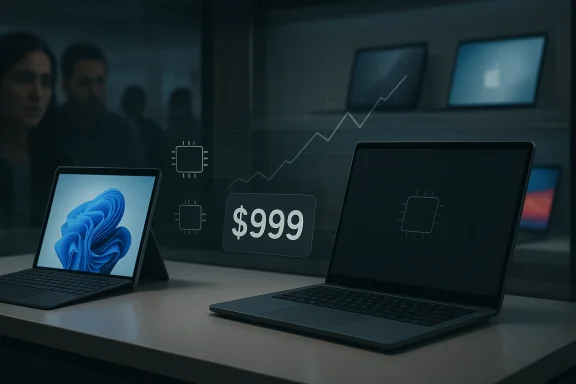
Microsoft’s Surface lineup is heading into another awkward moment, and this time the problem is not just pricing but direction. Current-gen Surface hardware has seen price increases at the same time that Microsoft is preparing the Surface Pro 12 and Surface Laptop 8, a combination that makes the next refresh look less like a reset and more like a squeeze on buyers already looking for value. The broader backdrop is even harsher: memory and platform-cost pressure are making Windows PCs more expensive across the board, and the Surface brand risks becoming the clearest example of that trend rather than the exception
Surface has always occupied an unusual place in Microsoft’s portfolio. It is not simply a PC line, and it is not quite a pure reference design either. It is Microsoft’s way of showing the Windows ecosystem what a premium Windows device can look and feel like, which means Surface has to do two jobs at once: generate revenue and set expectations for everyone else. That makes it more visible than most OEM hardware, but also more vulnerable when the company’s strategy shifts.
For years, the Surface brand lived on the promise of thoughtful industrial design, strong pen and touch support, and a software-hardware story that could justify premium pricing. That story worked best when Microsoft could offer clear differentiation: detachable tablets, thin ultraportables, and enterprise-ready devices that felt more polished than commodity laptops. But the market has changed. Buyers now expect OLED displays, long battery life, strong AI claims, and better value all at once, while Windows remains under pressure to prove it can feel efficient on thinner margins and lower memory configurations.
The timing of the latest Surface price hikes is especially awkward because Microsoft is also trying to improve Windows 11 itself. That work matters, but it does not solve the product-level problem that a more expensive laptop still has to look compelling on the shelf. A leaner operating system may help the user experience, yet it does not automatically make a stripped-down Surface feel like a better buy if the hardware spec sheet is less ambitious than rivals.
There is also a competitive shadow hanging over the whole discussion. Apple’s lower-cost Mac strategy has given budget-conscious buyers a clearer alternative, while Windows OEMs are dealing with rising component costs and tighter margins. That combination shifts the burden onto Microsoft to justify why Surface should cost more, or at least why it should cost more without looking like less machine.
In that sense, Surface is not just another laptop line. It is a symbolic product category, and symbolic products are punished hardest when they appear to lose ambition. If Microsoft wants Surface to matter in 2026, it cannot simply be “fine.” It has to be worth noticing. That is a much harder standard to meet in a year when buyers are already feeling defensive about upgrades.
The danger is not just sticker shock. It is that the higher price lands alongside a sense that the next wave of Surface PCs may be more restrained than enthusiast buyers hoped. If the Surface Pro 12 and Surface Laptop 8 arrive without the most premium chip options, and if accessories and configuration choices remain costly, Microsoft could end up charging more for a package that feels less exciting than the one before it. That is the opposite of what a flagship should do.
The current market makes that harder because buyers are increasingly alert to total cost, not just headline spec. They notice RAM, storage, keyboard cost, pen cost, and whether a device feels complete out of the box. They also notice when “entry-level” is really entry-level only on paper. That is especially important for Surface, which often asks users to pay extra for the fuller experience.
That shift may be understandable, but it creates an identity crisis. If Surface is no longer the place where Microsoft shows off the best chips, the most interesting configurations, or the most forward-leaning hardware ideas, then what exactly is the line for? A premium product can survive conservatism if it still feels uniquely polished. It cannot survive looking timid.
If the Surface Pro 12 and Surface Laptop 8 are simply thinner, pricier, and more limited, Microsoft risks landing in an awkward middle zone. They would be expensive enough to annoy shoppers but not distinctive enough to excite them. That is the sort of product positioning that leads to muted launch coverage, weak retail momentum, and the dreaded “wait for the next one” reaction.
This is where Microsoft’s internal tension becomes visible. On one hand, the company is trying to restore trust in Windows by reducing noise and improving core usability. On the other hand, its own premium hardware line seems to be drifting toward more cautious, less ambitious hardware decisions. Those messages do not naturally harmonize. Buyers want to see the company’s software and hardware stories pulling in the same direction.
For Surface, the problem is that Microsoft may be leaning too hard on the promise of optimization while offering less hardware drama. If that happens, the company ends up asking buyers to celebrate invisible improvements while paying visible premium prices. That is a difficult sell, especially in a market where Apple can point to simpler configurations and a clearer value narrative.
Microsoft reportedly has a mixed hand here. The Surface Pro 12 and Surface Laptop 8 are expected soon, but the current chatter suggests fewer top-end options than many buyers would like. That matters because premium laptop shoppers use chip tier, thermal behavior, and battery life as shorthand for whether a device is actually worth the money. If Microsoft underplays those elements, it invites direct comparison with better-equipped rivals.
When those premium options disappear or remain absent, the device can start to feel like a compromise. That is especially dangerous for Surface, because its audience is not only casual consumers but also professionals who expect a certain level of polish. In that world, “good enough” is rarely a compliment. It sounds like a budget excuse.
That divide matters because Microsoft has often tried to serve both groups with one product narrative. In a better market, that can work. In a squeezed market, it tends to expose every weakness. The device either feels too expensive for consumers or too undifferentiated for enterprise procurement teams looking for compelling fleet value.
But consumers are different. They compare design, performance, price, and emotional pull. They want a device that feels like a leap, not a line item. If Microsoft’s own hardware feels flat while Apple is offering a more coherent value ladder, the consumer market will punish Surface faster than enterprise will.
This matters because Apple has an easier time converting quality into perceived value. Its hardware-software integration helps make modest configurations feel competent, and that makes pricing easier to defend. Surface can absolutely compete on flexibility, compatibility, and Windows familiarity, but it cannot rely on those strengths alone if the hardware story looks trimmed down.
That creates indirect pressure on Microsoft’s partners too. If Surface looks expensive and ordinary, OEMs have to work harder to justify their own premium Windows machines. If Surface looks expensive and underpowered, the broader category risks a credibility problem. In other words, Microsoft’s hardware choices ripple outward through the entire ecosystem.
A second risk is that Microsoft’s Windows improvements and Surface’s pricing strategy begin to feel disconnected. Efficiency work in the operating system is useful, but if it arrives alongside more cautious hardware, users may interpret the whole moment as retrenchment. That would be a problem for both consumer enthusiasm and ecosystem morale.
The next few months will also test how much Microsoft believes in premium Windows hardware as a concept. A serious Surface line should do more than follow the market. It should help define it. If the company is content to play defense, then Surface will increasingly look like a luxury badge attached to a narrowing idea of what Windows hardware can be. That would be a strategic retreat, even if the spreadsheets look acceptable.
Source: Windows Central Surface is getting more expensive while doing less
 Background
Surface has always occupied an unusual place in Microsoft’s portfolio. It is not simply a PC line, and it is not quite a pure reference design either. It is Microsoft’s way of showing the Windows ecosystem what a premium Windows device can look and feel like, which means Surface has to do two jobs at once: generate revenue and set expectations for everyone else. That makes it more visible than most OEM hardware, but also more vulnerable when the company’s strategy shifts.For years, the Surface brand lived on the promise of thoughtful industrial design, strong pen and touch support, and a software-hardware story that could justify premium pricing. That story worked best when Microsoft could offer clear differentiation: detachable tablets, thin ultraportables, and enterprise-ready devices that felt more polished than commodity laptops. But the market has changed. Buyers now expect OLED displays, long battery life, strong AI claims, and better value all at once, while Windows remains under pressure to prove it can feel efficient on thinner margins and lower memory configurations.
The timing of the latest Surface price hikes is especially awkward because Microsoft is also trying to improve Windows 11 itself. That work matters, but it does not solve the product-level problem that a more expensive laptop still has to look compelling on the shelf. A leaner operating system may help the user experience, yet it does not automatically make a stripped-down Surface feel like a better buy if the hardware spec sheet is less ambitious than rivals.
There is also a competitive shadow hanging over the whole discussion. Apple’s lower-cost Mac strategy has given budget-conscious buyers a clearer alternative, while Windows OEMs are dealing with rising component costs and tighter margins. That combination shifts the burden onto Microsoft to justify why Surface should cost more, or at least why it should cost more without looking like less machine.
In that sense, Surface is not just another laptop line. It is a symbolic product category, and symbolic products are punished hardest when they appear to lose ambition. If Microsoft wants Surface to matter in 2026, it cannot simply be “fine.” It has to be worth noticing. That is a much harder standard to meet in a year when buyers are already feeling defensive about upgrades.
The Price Problem
The most immediate issue is simple: Surface hardware is getting more expensive while the perceived value story is getting thinner. Microsoft’s reported increases on current-generation devices create a nasty comparison effect, because buyers are not evaluating Surface in isolation. They are comparing it against other Windows laptops, against Apple’s entry-level Mac strategy, and against the expectation that next-gen Surface devices should improve value rather than merely reshuffle it.The danger is not just sticker shock. It is that the higher price lands alongside a sense that the next wave of Surface PCs may be more restrained than enthusiast buyers hoped. If the Surface Pro 12 and Surface Laptop 8 arrive without the most premium chip options, and if accessories and configuration choices remain costly, Microsoft could end up charging more for a package that feels less exciting than the one before it. That is the opposite of what a flagship should do.
Why pricing hits Surface harder than generic OEM laptops
Surface has always carried a premium tax because it is a direct Microsoft-branded product. That works when the product feels like a showcase, but it backfires when the line looks constrained. A generic Windows laptop can survive a “good enough” reputation more easily because it competes on promo price and retailer discounts. Surface, by contrast, must defend its premium identity every time prices rise.The current market makes that harder because buyers are increasingly alert to total cost, not just headline spec. They notice RAM, storage, keyboard cost, pen cost, and whether a device feels complete out of the box. They also notice when “entry-level” is really entry-level only on paper. That is especially important for Surface, which often asks users to pay extra for the fuller experience.
- Price hikes amplify every compromise.
- Premium branding raises expectations faster than commodity branding.
- Accessory add-ons can make the real price look worse.
- Lower chip ambition weakens the justification for higher cost.
- Buyers compare Surface to Apple as much as to other Windows machines.
- The value story must be obvious, not implied.
Hardware Ambition and Product Identity
Surface has historically sold the idea that Microsoft understands premium PC design better than most OEMs. That reputation was built on a combination of sleek hardware, strong input design, and a sense that Microsoft was willing to take risks on form factor. But the next Surface generation appears to be arriving at a moment when the company is less interested in bold experiments and more interested in trimming the product to fit the market reality.That shift may be understandable, but it creates an identity crisis. If Surface is no longer the place where Microsoft shows off the best chips, the most interesting configurations, or the most forward-leaning hardware ideas, then what exactly is the line for? A premium product can survive conservatism if it still feels uniquely polished. It cannot survive looking timid.
The risk of a “safe” Surface
A safe Surface is not automatically a bad device. In fact, many enterprise buyers prefer predictable designs and stable support cycles. The issue is that consumer perception is shaped by ambition, not just reliability. Surface has always needed at least one headline feature to make the story feel alive, whether that was a form factor, a display advantage, or a hardware-led performance leap.If the Surface Pro 12 and Surface Laptop 8 are simply thinner, pricier, and more limited, Microsoft risks landing in an awkward middle zone. They would be expensive enough to annoy shoppers but not distinctive enough to excite them. That is the sort of product positioning that leads to muted launch coverage, weak retail momentum, and the dreaded “wait for the next one” reaction.
- A conservative Surface may appeal to IT buyers.
- It may frustrate enthusiast buyers looking for a showcase.
- It can blur the line between Microsoft hardware and partner laptops.
- It risks weakening the brand’s premium halo.
- It may not generate enough excitement to offset higher pricing.
- It could make Surface look like a design exercise rather than a category leader.
Windows 11, Efficiency, and the Platform Problem
Surface cannot be discussed separately from Windows 11, because the two reinforce each other. Microsoft’s effort to make Windows more efficient, less bloated, and more responsive is strategically important, especially as RAM and component costs rise. But the platform story cuts both ways: if Windows becomes lighter, that may help cheaper devices feel better, yet it also raises the question of why Surface itself is not moving more aggressively to benefit from that change.This is where Microsoft’s internal tension becomes visible. On one hand, the company is trying to restore trust in Windows by reducing noise and improving core usability. On the other hand, its own premium hardware line seems to be drifting toward more cautious, less ambitious hardware decisions. Those messages do not naturally harmonize. Buyers want to see the company’s software and hardware stories pulling in the same direction.
Efficiency is good, but it is not a substitute for aspiration
A leaner Windows 11 can absolutely improve the day-to-day experience on modest hardware. That matters for consumers, schools, and enterprise fleets. It can also make OEMs more comfortable shipping 8GB systems that do not feel immediately compromised. But efficiency is a floor, not a ceiling. No one gets excited about a laptop because it wastes less memory at idle.For Surface, the problem is that Microsoft may be leaning too hard on the promise of optimization while offering less hardware drama. If that happens, the company ends up asking buyers to celebrate invisible improvements while paying visible premium prices. That is a difficult sell, especially in a market where Apple can point to simpler configurations and a clearer value narrative.
- Better Windows efficiency helps everyone, but it does not create brand excitement by itself.
- Surface still needs a hardware narrative that feels special.
- Buyers respond to visible gains in battery life, speed, and display quality.
- “Less bloated” is a repair strategy, not a launch strategy.
- If Windows gets better but Surface gets less daring, the product story fractures.
- Microsoft needs software quality and hardware ambition to rise together.
The Missing Flash and the Chip Strategy
One of the more worrying signals is the possibility that the next Surface Laptop may lack flash in the figurative sense: no standout hardware flourish, no big chip flex, no obvious headline reason to upgrade. If that reading proves accurate, then the product’s launch risk rises sharply. Consumers are increasingly willing to forgive conservative industrial design, but they still expect core hardware to be competitive.Microsoft reportedly has a mixed hand here. The Surface Pro 12 and Surface Laptop 8 are expected soon, but the current chatter suggests fewer top-end options than many buyers would like. That matters because premium laptop shoppers use chip tier, thermal behavior, and battery life as shorthand for whether a device is actually worth the money. If Microsoft underplays those elements, it invites direct comparison with better-equipped rivals.
Why premium chips still matter in premium devices
Even if most users never fully load a CPU, premium chip options do something important: they signal confidence. They tell the buyer that the manufacturer has built the machine to handle more than lightweight browsing and email. They also provide a safety margin that can make the laptop feel fresher for longer, especially if Windows and AI features continue to expand their appetite for resources.When those premium options disappear or remain absent, the device can start to feel like a compromise. That is especially dangerous for Surface, because its audience is not only casual consumers but also professionals who expect a certain level of polish. In that world, “good enough” is rarely a compliment. It sounds like a budget excuse.
- Chip strategy shapes perceived product class.
- Thermals and battery life are part of the value equation.
- Premium buyers expect headroom, not just adequacy.
- Missing high-end options make a flagship look incomplete.
- AI-era workloads make conservative configs feel shorter-lived.
- Competitors can use stronger specs to undercut Microsoft’s story.
Enterprise Buyers vs. Consumer Buyers
Surface’s future cannot be judged by consumer sentiment alone. Enterprise customers care about support, predictability, fleet management, and total cost of ownership. From that angle, a calmer, more conservative Surface lineup could still be attractive if it integrates well with Microsoft’s broader Windows and management story. But consumer buyers are far less forgiving, and they are the audience most likely to react emotionally to price increases.That divide matters because Microsoft has often tried to serve both groups with one product narrative. In a better market, that can work. In a squeezed market, it tends to expose every weakness. The device either feels too expensive for consumers or too undifferentiated for enterprise procurement teams looking for compelling fleet value.
What enterprises want from Surface
Enterprise IT usually wants straightforward procurement, predictable support windows, and hardware that behaves well in large deployments. If Windows 11 keeps getting more efficient and if Surface hardware remains stable and standardized, Microsoft can still make a decent case to IT departments. In that world, the appeal is not excitement. It is manageability.But consumers are different. They compare design, performance, price, and emotional pull. They want a device that feels like a leap, not a line item. If Microsoft’s own hardware feels flat while Apple is offering a more coherent value ladder, the consumer market will punish Surface faster than enterprise will.
- Enterprise wants consistency and support.
- Consumers want visible value and excitement.
- Higher prices are easier to justify in managed fleets than in retail.
- Surface needs different messages for each audience, even if the hardware is shared.
- A bland consumer launch can still be a solid enterprise product.
- A premium price without a premium story hurts both segments, just in different ways.
Competitive Pressure from Apple and the Broader PC Market
Any discussion of Surface pricing has to include Apple, because Apple now occupies more of the value conversation than it used to. The lower-cost MacBook Neo has changed the frame, especially for buyers who once defaulted to Windows simply because Macs were too expensive. That means Surface is not just competing on Windows merit anymore; it is also being measured against a more compelling Apple entry point.This matters because Apple has an easier time converting quality into perceived value. Its hardware-software integration helps make modest configurations feel competent, and that makes pricing easier to defend. Surface can absolutely compete on flexibility, compatibility, and Windows familiarity, but it cannot rely on those strengths alone if the hardware story looks trimmed down.
Why Apple’s pricing posture changes the game
A cheaper Mac does not make Windows obsolete, but it does raise the bar. Windows buyers now have to ask whether the extra compatibility and app flexibility are worth the premium, especially if the Surface line itself is not pulling away on design or performance. The old “Macs are too expensive” reflex is weaker than it used to be.That creates indirect pressure on Microsoft’s partners too. If Surface looks expensive and ordinary, OEMs have to work harder to justify their own premium Windows machines. If Surface looks expensive and underpowered, the broader category risks a credibility problem. In other words, Microsoft’s hardware choices ripple outward through the entire ecosystem.
- Apple now gives budget-conscious buyers a real alternative.
- Surface must sell Windows advantages more explicitly.
- Premium Windows pricing becomes harder to justify when Apple is cheaper.
- OEMs feel the pressure when Microsoft’s flagship looks weak.
- Buyers compare ecosystems as much as specifications.
- A clearer Apple value proposition increases scrutiny on Surface.
Strengths and Opportunities
Despite all the frustration, Surface is not doomed. Microsoft still has a recognizable premium brand, strong software integration, and a loyal base of users who care about Windows-first hardware. If the company uses the next refresh to sharpen the product story instead of merely preserving margins, it can still recover some momentum. The opportunity is real, but it requires discipline and a willingness to make at least one part of the hardware story feel meaningful.- Surface still has strong brand recognition.
- Microsoft can pair hardware with a more efficient Windows 11.
- Enterprise buyers may value consistency over novelty.
- A polished Windows-first laptop still has a market.
- Better battery life and thermals could offset some pricing pain.
- Strong accessory and input support remains a Surface advantage.
- There is room for Microsoft to reclaim a premium narrative if it shows restraint in the right places.
Risks and Concerns
The largest risk is perception decay. If buyers conclude that Surface costs more while delivering less ambition, Microsoft could damage one of its few true hardware prestige brands. That would be painful not just commercially but strategically, because Surface has always served as a proof point for what Windows can be when Microsoft controls the full stack.A second risk is that Microsoft’s Windows improvements and Surface’s pricing strategy begin to feel disconnected. Efficiency work in the operating system is useful, but if it arrives alongside more cautious hardware, users may interpret the whole moment as retrenchment. That would be a problem for both consumer enthusiasm and ecosystem morale.
- Consumers may see higher prices as a tax, not a premium.
- Lower ambition can make Surface feel obsolete faster.
- Apple’s value story is getting stronger, not weaker.
- OEM partners may struggle to explain Surface’s position.
- Enterprise buyers may wait for a clearer roadmap.
- The Surface brand could lose the sense of being Microsoft’s showcase product.
- Pricing frustration can spill over into broader Windows sentiment.
Looking Ahead
What happens next will depend on whether Microsoft has something more substantial hidden in the Surface pipeline than the current chatter suggests. If the Surface Pro 12 and Surface Laptop 8 arrive with sensible upgrades, better battery efficiency, and a convincing explanation for their pricing, the brand can still hold its ground. If not, the narrative will harden quickly: Surface is getting more expensive while doing less.The next few months will also test how much Microsoft believes in premium Windows hardware as a concept. A serious Surface line should do more than follow the market. It should help define it. If the company is content to play defense, then Surface will increasingly look like a luxury badge attached to a narrowing idea of what Windows hardware can be. That would be a strategic retreat, even if the spreadsheets look acceptable.
- Watch whether Microsoft restores any premium chip options.
- Watch how much accessories add to the real purchase price.
- Watch whether Windows efficiency gains show up in real devices.
- Watch Apple’s pricing pressure on the Windows value segment.
- Watch whether OEMs follow Microsoft’s lead or quietly diverge.
- Watch for any signal that Surface is being repositioned, not just refreshed.
Source: Windows Central Surface is getting more expensive while doing less
