

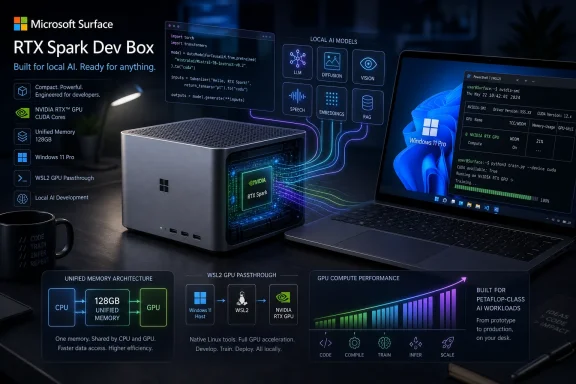
Microsoft introduced Surface RTX Spark Dev Box on June 2, 2026, as a compact Windows 11 Pro developer desktop built with Nvidia’s RTX Spark superchip, 128GB of unified memory, and a Surface-designed chassis aimed at local AI development. It arrives as the Windows-on-Arm ecosystem is still carrying the bruise from Qualcomm’s canceled Snapdragon Dev Kit for Windows. The important story is not that Microsoft has made another small box. It is that Microsoft has decided the next serious Windows Arm development machine needs Nvidia’s AI stack, Surface hardware discipline, and a much clearer reason to exist.
For most consumers, Windows on Arm has been sold with a simple pitch: thinner laptops, longer battery life, quieter fans, and enough performance to make x86 emulation less painful than it used to be. That story made sense for Copilot+ PCs, and Qualcomm’s Snapdragon X chips gave Microsoft its first credible consumer Windows Arm push in years. But developers do not buy platforms because a keynote slide says the battery lasts all day.
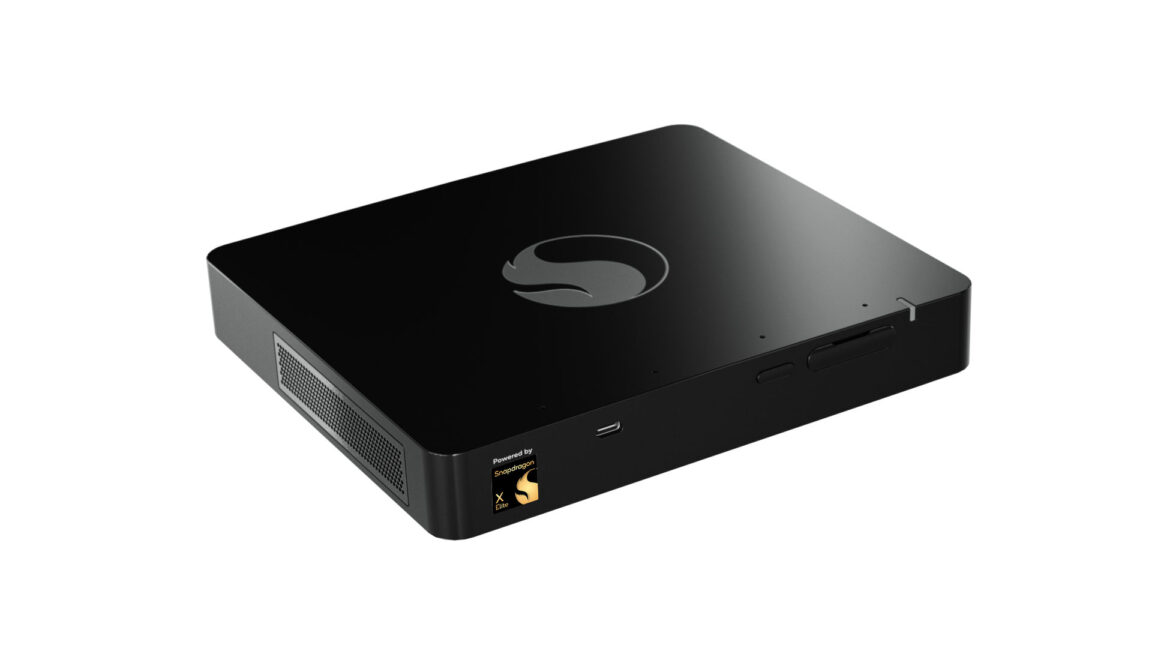
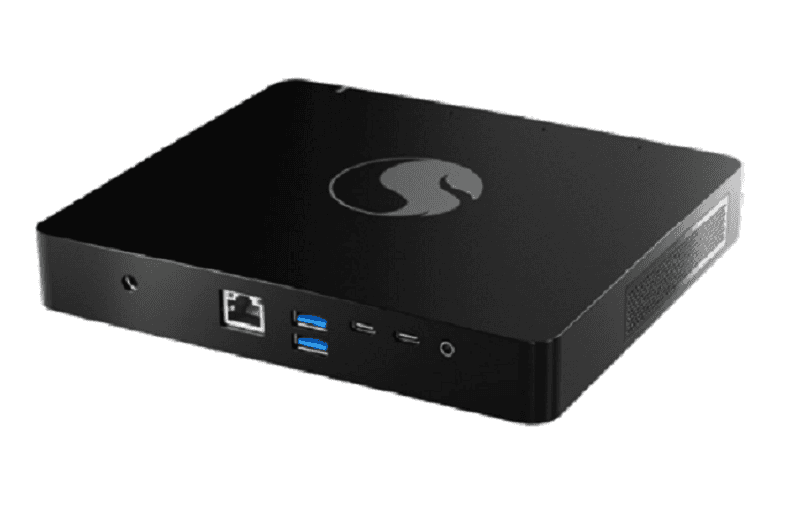
Developers buy platforms when they can test real workloads, reproduce customer bugs, compile without waiting forever, and trust that the hardware under the desk will still be supported six months later. That is where Qualcomm’s 2024 Snapdragon Dev Kit was supposed to matter. It promised a compact, relatively affordable Snapdragon X Elite desktop for app makers trying to get ahead of the Copilot+ PC wave.
Then Qualcomm canceled it. The company said the product had not met its standards, refunded preorders, and left a strange half-presence in the ecosystem: some units had reportedly shipped, but the official developer platform no longer existed as a dependable thing one could simply order and build around. For an ecosystem that already had to persuade developers to recompile, test, and optimize for Arm, that was not a footnote. It was a credibility problem.
Surface RTX Spark Dev Box is Microsoft’s answer, but it is not a like-for-like replacement. Qualcomm’s dev kit was about getting Snapdragon X Elite hardware onto developers’ desks. Microsoft’s new box is about making Windows on Arm part of the local AI workstation story. That shift matters because it changes the question from “Can Windows Arm run my existing app?” to “Can Windows Arm become the machine where new AI-native Windows software is built?”
A dev kit that never becomes broadly available sends the opposite signal. It says the ecosystem is still improvising. It also forces developers back to laptops, retail availability quirks, and workarounds that may be acceptable for enthusiasts but are less attractive for teams managing build systems, test labs, and compatibility matrices.
Microsoft has been here before. Windows on Arm has spent years trapped between technical possibility and market hesitation. The operating system improved, emulation improved, native apps improved, and yet the platform kept struggling with the same chicken-and-egg problem: developers wait for users, users wait for apps, and hardware partners wait for signs that both are arriving.
The Surface RTX Spark Dev Box tries to attack that loop from a different angle. Instead of saying, “Please port your app because Arm laptops are coming,” Microsoft is saying, “Here is a local AI development machine that happens to be Arm, ships with the Windows developer stack, and gives you CUDA.” That is a more compelling bargain for a certain class of developer, because the reward is not ideological support for Windows Arm. The reward is access to a practical local AI workstation.
Nvidia’s RTX Spark platform brings that gravitational pull into the Windows Arm conversation. Microsoft says the Dev Box uses an Nvidia RTX Spark superchip pairing a Blackwell RTX GPU with a Grace CPU, delivering up to 1 petaflop of FP4 AI compute and 128GB of unified memory. Nvidia’s broader Spark positioning emphasizes local prototyping, fine-tuning, inference, and agentic AI workflows in small desktops and laptops.
Those numbers need context. “Up to” performance claims are vendor claims, FP4 is not a universal measure of all workloads, and real-world AI development is usually constrained by memory behavior, framework support, thermals, storage, and software maturity as much as by headline compute. But the pitch is still more concrete than the vague AI PC language that has surrounded much of the Windows hardware market.
The unified-memory design is central to that pitch. A conventional desktop with a discrete GPU can offer tremendous performance, but it also creates hard boundaries between system RAM and VRAM. For large models and experimental workflows, those boundaries become planning constraints. A 128GB unified pool does not magically make every model fast, but it changes what can be loaded, tested, and iterated locally without immediately renting cloud GPUs.
That matters because developer hardware fails in boring ways. Ports matter. Thermals matter. Firmware updates matter. Whether the machine throttles after an hour matters. Whether the vendor still acknowledges the device after launch matters. Qualcomm’s canceled dev kit made those mundane issues feel strategic, because Windows on Arm could not afford to look casual about the machines developers were supposed to trust.
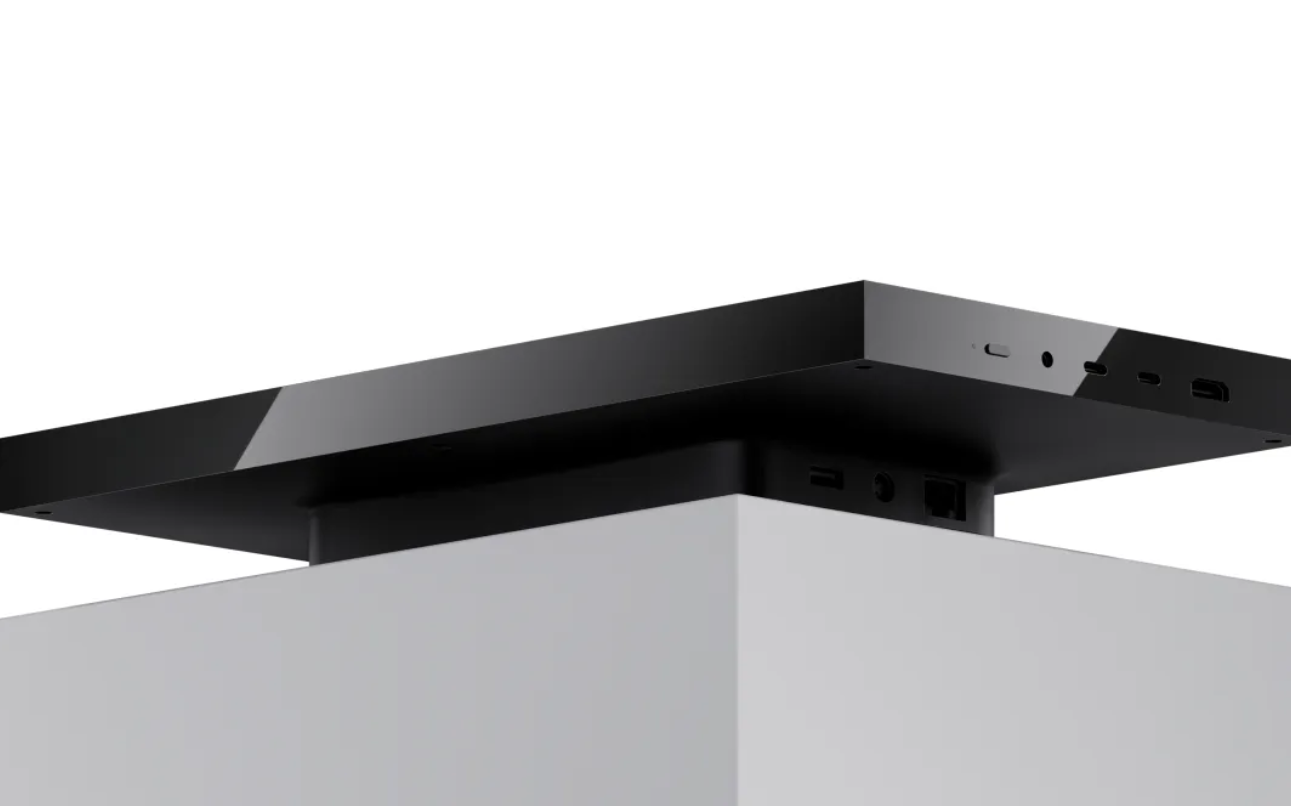
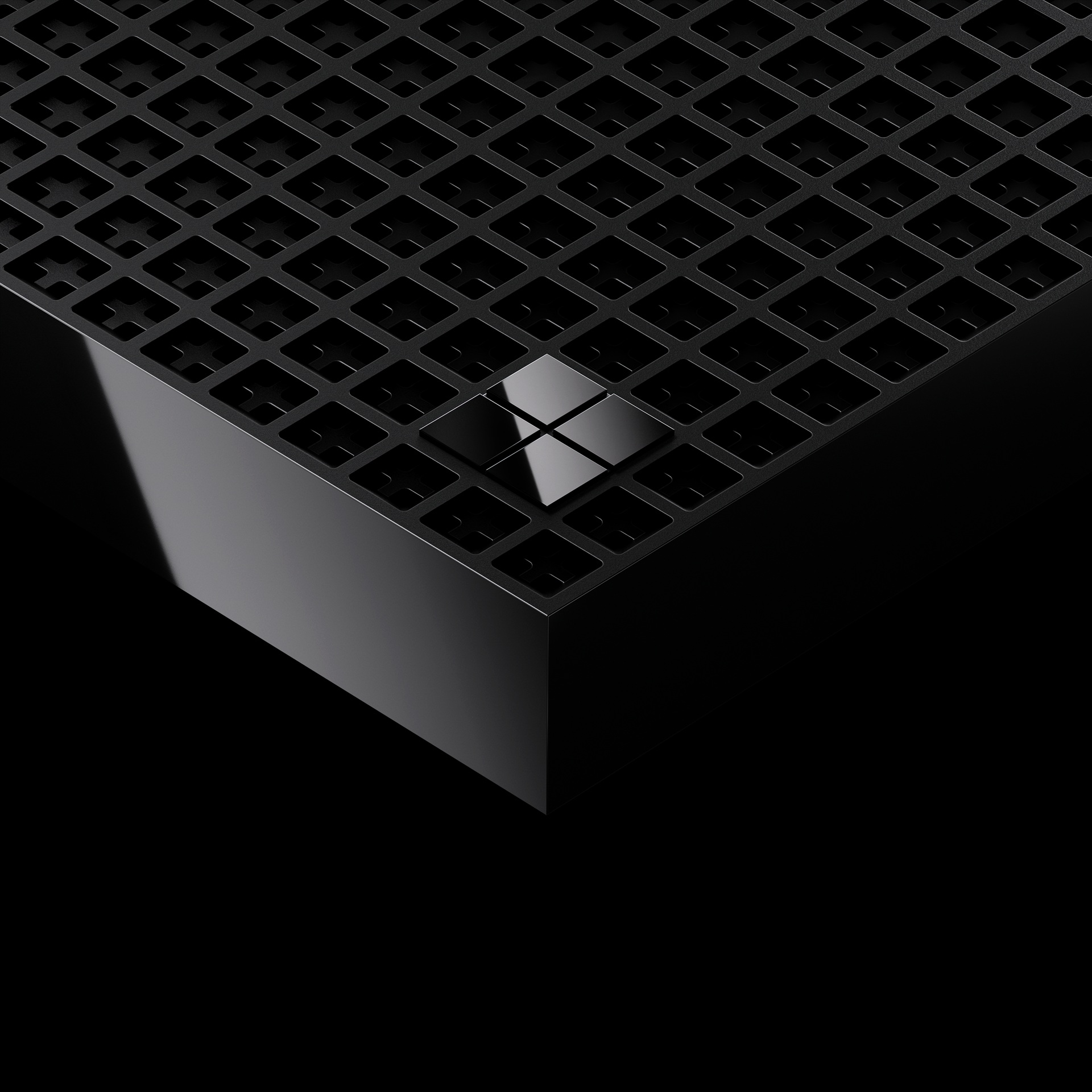
Microsoft’s design language also seems intentionally familiar. The compact block, aluminum construction, and vented top inevitably invite comparisons to Xbox Series X and earlier Surface desktop-adjacent experiments. That is not accidental in spirit, even if the product category is different. Microsoft wants the box to look less like a prototype and more like a durable appliance for people who leave jobs running overnight.
The risk is that Surface polish can become a substitute for openness. Developers do not just need a beautiful chassis; they need predictable support, transparent firmware behavior, useful diagnostics, and a path for tooling updates that does not vanish after the launch window. Microsoft has often been better at making desirable hardware than at explaining long-term developer device strategy. This box will test whether Surface can be more than an attractive wrapper around Nvidia silicon.
That is not glamorous. It is also exactly the kind of work platform vendors routinely underestimate. Developers are allergic to ceremony. A machine that requires a day of driver hunting, shell configuration, preview builds, SDK confusion, and manual CUDA plumbing has already lost part of its audience before the first benchmark runs.
Microsoft is effectively admitting that the Windows developer experience has too often been assembled rather than delivered. Windows is powerful, flexible, and still indispensable in many organizations, but it has historically made developers stitch together their own environment from a pile of installers, package managers, terminals, subsystem settings, and vendor utilities. The Dev Box says the default experience should be a development environment, not a consumer desktop with developer features hidden behind switches.
There is also a competitive subtext. Apple’s developer machines win loyalty not only because of silicon efficiency, but because the hardware, operating system, toolchain, and power-management story feel like parts of a single argument. Microsoft cannot copy macOS, and Windows serves a much broader hardware world. But with Surface RTX Spark Dev Box, it can at least build one machine where the whole stack is curated.
A local AI box changes that rhythm. It lets developers iterate privately, test agent pipelines without metering anxiety, and keep some proprietary data closer to home. For enterprises, that does not eliminate cloud governance, but it can reduce the number of early-stage experiments that need to touch shared infrastructure.
This is where the Surface RTX Spark Dev Box becomes more interesting than a normal mini PC. Microsoft is tying it to AI Toolkit for VS Code, Windows ML with TensorRT, Windows Copilot Runtime, Microsoft Foundry, GitHub Copilot, WSL, and CUDA. In other words, the box is not just hardware. It is a funnel into Microsoft’s developer and AI platform.
That funnel cuts both ways. For Microsoft, it is a way to keep AI developers inside Windows instead of watching them default to Linux workstations, MacBook Pros, or cloud notebooks. For developers, it could be a productive integrated environment — if the integration is real, current, and not just a launch-day alignment of brand names.
The Surface RTX Spark Dev Box may actually sharpen the issue. If Microsoft and Nvidia want developers to use this as a serious Windows machine, not just an AI appliance with a Windows logo, then the broader Windows application universe has to behave. Claims that Windows apps will run well on new Arm hardware will be tested not in demos, but in the ugly edges: installers, plug-ins, debuggers, virtualization tools, license managers, older games, specialized drivers, and enterprise security agents.
That is why the Qualcomm cancellation still shadows the announcement. The Snapdragon Dev Kit’s failure was not only a supply-chain or quality-control embarrassment. It interrupted the ecosystem’s ability to test the messy middle of Windows Arm compatibility at scale. A new Nvidia-powered box can restart that work, but it changes the target hardware profile in the process.
For developers targeting mainstream Snapdragon laptops, the Surface RTX Spark Dev Box may not be a perfect proxy. Its GPU, memory architecture, thermal envelope, and AI focus are different. That does not make it useless; it makes it a different kind of development machine. Microsoft should be careful not to imply that one high-end AI box solves all Windows Arm testing needs.
That is a healthier map than pretending one chip vendor can satisfy every Windows use case. It also reflects the reality that the PC market is fragmenting again. The old Wintel default is no longer the only center of gravity, but the replacement is not a single new monoculture. It is a portfolio of architectures, accelerators, and workload-specific machines.
The challenge is messaging. Microsoft spent years teaching users that a Windows PC was a Windows PC, and that the underlying architecture was mostly invisible. Windows on Arm complicates that promise. AI accelerators complicate it further. A developer buying hardware now has to think about x86 compatibility, Arm native performance, NPU support, CUDA, memory topology, Linux subsystem behavior, model size, and management tooling.
That complexity is manageable for enthusiasts and IT pros, but it is not self-explanatory. If Microsoft wants this strategy to work, it needs to be unusually clear about which machine is for which job. A Surface RTX Spark Dev Box should not be marketed as a universal desktop. It should be marketed as a local AI development workstation for Windows developers who specifically benefit from Nvidia acceleration and high unified memory.
The security framing also fits the local AI pitch. If teams are experimenting with proprietary code, customer data, internal documents, or unreleased models, keeping more work local can be attractive. But local hardware is not automatically safer than cloud infrastructure. It simply moves the security boundary. Devices still need identity controls, update discipline, endpoint protection, physical security, and policies around what models and datasets can be stored locally.
There is also the question of cost. Microsoft has not disclosed pricing, and that omission is not trivial. A machine with 128GB of unified memory, Nvidia’s newest AI silicon, Surface industrial design, and enterprise management hooks is unlikely to be impulse-buy cheap. If it lands too high, it becomes a boutique device for AI teams and executive demos. If it lands aggressively, it could become the default Windows AI dev box in organizations that have been waiting for a supported alternative to Linux workstations.
Availability is another constraint. Microsoft says the device will be available later this year in the United States exclusively through Microsoft’s online store. That sounds clean for launch, but enterprises will want predictable volume purchasing, support channels, replacement logistics, and regional plans. Developer enthusiasm can be created with a good announcement. IT adoption requires a supply chain.
The Dev Box is part of a broader swing back toward the workstation. Not the beige tower of the 1990s, and not the gamer rig with a glowing GPU, but a compact, managed, AI-capable appliance that sits near the developer and handles the middle tier of work. The biggest models and production training runs still go elsewhere. But a large amount of useful experimentation can happen before the cloud meter starts running.
This could alter how Windows participates in AI development. Windows has often been the client OS around AI rather than the place where the deepest AI work happens. Linux dominates much of the server-side AI stack, and macOS has won a loyal segment of local development because Apple Silicon offers a coherent memory and power story. Microsoft wants Windows to be credible again at the desk where models are tested, agents are built, and prototypes become products.
Nvidia makes that ambition more plausible. But Nvidia also brings its own center of gravity. Developers may see the Dev Box less as a Microsoft machine than as the most convenient Windows vessel for CUDA on Arm. That is not a bad outcome for Microsoft, as long as Windows remains essential to the workflow rather than incidental to the hardware.
Microsoft’s advantage with Surface RTX Spark Dev Box is that it controls more of the experience. It can align hardware, Windows, WSL, developer tools, identity, management, and support under one roof. Nvidia controls the AI acceleration story, but Microsoft controls the platform packaging. That gives this device a better chance of feeling finished.
The disadvantage is expectation. A Surface-branded developer machine will be judged more harshly than a reference kit. If it is expensive, noisy, hard to buy, thermally constrained, or slow to receive fixes, the disappointment will land directly on Microsoft. The company cannot blame an ecosystem partner for the experience of a Surface product.
That is why the Dev Box’s real benchmark will not be a single model demo. It will be whether developers leave it running for months, whether teams standardize on it, whether Windows Arm bugs get found and fixed faster because it exists, and whether Microsoft keeps updating the image as frameworks, drivers, and AI tools move at their usual reckless pace.
 Microsoft Stops Pretending Windows on Arm Is Just About Battery Life
For most consumers, Windows on Arm has been sold with a simple pitch: thinner laptops, longer battery life, quieter fans, and enough performance to make x86 emulation less painful than it used to be. That story made sense for Copilot+ PCs, and Qualcomm’s Snapdragon X chips gave Microsoft its first credible consumer Windows Arm push in years. But developers do not buy platforms because a keynote slide says the battery lasts all day.Developers buy platforms when they can test real workloads, reproduce customer bugs, compile without waiting forever, and trust that the hardware under the desk will still be supported six months later. That is where Qualcomm’s 2024 Snapdragon Dev Kit was supposed to matter. It promised a compact, relatively affordable Snapdragon X Elite desktop for app makers trying to get ahead of the Copilot+ PC wave.
Then Qualcomm canceled it. The company said the product had not met its standards, refunded preorders, and left a strange half-presence in the ecosystem: some units had reportedly shipped, but the official developer platform no longer existed as a dependable thing one could simply order and build around. For an ecosystem that already had to persuade developers to recompile, test, and optimize for Arm, that was not a footnote. It was a credibility problem.
Surface RTX Spark Dev Box is Microsoft’s answer, but it is not a like-for-like replacement. Qualcomm’s dev kit was about getting Snapdragon X Elite hardware onto developers’ desks. Microsoft’s new box is about making Windows on Arm part of the local AI workstation story. That shift matters because it changes the question from “Can Windows Arm run my existing app?” to “Can Windows Arm become the machine where new AI-native Windows software is built?”
Qualcomm Left a Hardware Hole, But the Software Hole Was Bigger
The easy version of the story is that Qualcomm stumbled and Microsoft stepped in. That is true, but incomplete. The Snapdragon Dev Kit’s cancellation hurt because developer kits are symbolic objects as much as practical ones. They tell software makers that the platform owner understands their needs well enough to produce a boring, reliable machine that can sit on a desk and take abuse.A dev kit that never becomes broadly available sends the opposite signal. It says the ecosystem is still improvising. It also forces developers back to laptops, retail availability quirks, and workarounds that may be acceptable for enthusiasts but are less attractive for teams managing build systems, test labs, and compatibility matrices.
Microsoft has been here before. Windows on Arm has spent years trapped between technical possibility and market hesitation. The operating system improved, emulation improved, native apps improved, and yet the platform kept struggling with the same chicken-and-egg problem: developers wait for users, users wait for apps, and hardware partners wait for signs that both are arriving.
The Surface RTX Spark Dev Box tries to attack that loop from a different angle. Instead of saying, “Please port your app because Arm laptops are coming,” Microsoft is saying, “Here is a local AI development machine that happens to be Arm, ships with the Windows developer stack, and gives you CUDA.” That is a more compelling bargain for a certain class of developer, because the reward is not ideological support for Windows Arm. The reward is access to a practical local AI workstation.
Nvidia Gives Windows Arm the Ingredient Qualcomm Could Not
The decisive difference is CUDA. Qualcomm can talk about NPUs, TOPS, efficiency, and on-device AI until the conference lights dim, but much of the AI development world still revolves around Nvidia’s tooling. CUDA is not merely a feature. It is the installed base, the habit, the documentation trail, the Stack Overflow answer, the framework assumption, and the thing many developers quietly mean when they say they need GPU acceleration.Nvidia’s RTX Spark platform brings that gravitational pull into the Windows Arm conversation. Microsoft says the Dev Box uses an Nvidia RTX Spark superchip pairing a Blackwell RTX GPU with a Grace CPU, delivering up to 1 petaflop of FP4 AI compute and 128GB of unified memory. Nvidia’s broader Spark positioning emphasizes local prototyping, fine-tuning, inference, and agentic AI workflows in small desktops and laptops.
Those numbers need context. “Up to” performance claims are vendor claims, FP4 is not a universal measure of all workloads, and real-world AI development is usually constrained by memory behavior, framework support, thermals, storage, and software maturity as much as by headline compute. But the pitch is still more concrete than the vague AI PC language that has surrounded much of the Windows hardware market.
The unified-memory design is central to that pitch. A conventional desktop with a discrete GPU can offer tremendous performance, but it also creates hard boundaries between system RAM and VRAM. For large models and experimental workflows, those boundaries become planning constraints. A 128GB unified pool does not magically make every model fast, but it changes what can be loaded, tested, and iterated locally without immediately renting cloud GPUs.
Surface Hardware Turns the Dev Kit Into a Promise
The Surface branding is doing real work here. Microsoft is not presenting this as a generic reference board or a partner experiment. It is presenting it as a Surface device, with a compact aluminum chassis engineered to double as a heatsink and an explicit focus on sustained workloads such as long-running training jobs, large-model inference, and complex agentic pipelines.That matters because developer hardware fails in boring ways. Ports matter. Thermals matter. Firmware updates matter. Whether the machine throttles after an hour matters. Whether the vendor still acknowledges the device after launch matters. Qualcomm’s canceled dev kit made those mundane issues feel strategic, because Windows on Arm could not afford to look casual about the machines developers were supposed to trust.
Microsoft’s design language also seems intentionally familiar. The compact block, aluminum construction, and vented top inevitably invite comparisons to Xbox Series X and earlier Surface desktop-adjacent experiments. That is not accidental in spirit, even if the product category is different. Microsoft wants the box to look less like a prototype and more like a durable appliance for people who leave jobs running overnight.
The risk is that Surface polish can become a substitute for openness. Developers do not just need a beautiful chassis; they need predictable support, transparent firmware behavior, useful diagnostics, and a path for tooling updates that does not vanish after the launch window. Microsoft has often been better at making desirable hardware than at explaining long-term developer device strategy. This box will test whether Surface can be more than an attractive wrapper around Nvidia silicon.
The Preconfigured Image Is the Quietest Admission
The most revealing part of Microsoft’s announcement may not be the chip. It may be the software image. Surface RTX Spark Dev Box ships with Windows 11 Pro preconfigured for developers, with Developer Mode enabled, PowerShell 7 as the default shell, WSL 2 configured with GPU passthrough and CUDA support, and common tools such as VS Code, GitHub Copilot, Git, Python, and Node.js already installed.That is not glamorous. It is also exactly the kind of work platform vendors routinely underestimate. Developers are allergic to ceremony. A machine that requires a day of driver hunting, shell configuration, preview builds, SDK confusion, and manual CUDA plumbing has already lost part of its audience before the first benchmark runs.
Microsoft is effectively admitting that the Windows developer experience has too often been assembled rather than delivered. Windows is powerful, flexible, and still indispensable in many organizations, but it has historically made developers stitch together their own environment from a pile of installers, package managers, terminals, subsystem settings, and vendor utilities. The Dev Box says the default experience should be a development environment, not a consumer desktop with developer features hidden behind switches.
There is also a competitive subtext. Apple’s developer machines win loyalty not only because of silicon efficiency, but because the hardware, operating system, toolchain, and power-management story feel like parts of a single argument. Microsoft cannot copy macOS, and Windows serves a much broader hardware world. But with Surface RTX Spark Dev Box, it can at least build one machine where the whole stack is curated.
Local AI Is the New Workstation War
Microsoft’s positioning is blunt: developers should be able to prototype, fine-tune, and run capable models locally, then use the cloud when the work demands it. That is both a technical claim and a cost argument. Cloud GPUs are flexible, but they are not psychologically free. Every experiment becomes a small budget decision, every idle instance a minor sin, and every sensitive dataset a governance conversation.A local AI box changes that rhythm. It lets developers iterate privately, test agent pipelines without metering anxiety, and keep some proprietary data closer to home. For enterprises, that does not eliminate cloud governance, but it can reduce the number of early-stage experiments that need to touch shared infrastructure.
This is where the Surface RTX Spark Dev Box becomes more interesting than a normal mini PC. Microsoft is tying it to AI Toolkit for VS Code, Windows ML with TensorRT, Windows Copilot Runtime, Microsoft Foundry, GitHub Copilot, WSL, and CUDA. In other words, the box is not just hardware. It is a funnel into Microsoft’s developer and AI platform.
That funnel cuts both ways. For Microsoft, it is a way to keep AI developers inside Windows instead of watching them default to Linux workstations, MacBook Pros, or cloud notebooks. For developers, it could be a productive integrated environment — if the integration is real, current, and not just a launch-day alignment of brand names.
The Arm Question Has Not Gone Away
Nvidia’s presence does not erase the old Windows Arm problem. Compatibility still matters. Native Arm builds still matter. Emulation still matters. Driver support still matters. Developers who live in niche toolchains, obscure USB hardware, legacy enterprise utilities, or custom kernel-adjacent workflows will not be reassured by AI performance claims alone.The Surface RTX Spark Dev Box may actually sharpen the issue. If Microsoft and Nvidia want developers to use this as a serious Windows machine, not just an AI appliance with a Windows logo, then the broader Windows application universe has to behave. Claims that Windows apps will run well on new Arm hardware will be tested not in demos, but in the ugly edges: installers, plug-ins, debuggers, virtualization tools, license managers, older games, specialized drivers, and enterprise security agents.
That is why the Qualcomm cancellation still shadows the announcement. The Snapdragon Dev Kit’s failure was not only a supply-chain or quality-control embarrassment. It interrupted the ecosystem’s ability to test the messy middle of Windows Arm compatibility at scale. A new Nvidia-powered box can restart that work, but it changes the target hardware profile in the process.
For developers targeting mainstream Snapdragon laptops, the Surface RTX Spark Dev Box may not be a perfect proxy. Its GPU, memory architecture, thermal envelope, and AI focus are different. That does not make it useless; it makes it a different kind of development machine. Microsoft should be careful not to imply that one high-end AI box solves all Windows Arm testing needs.
Three Silicon Stories Are Better Than One, If Microsoft Can Explain Them
Microsoft now appears to be building a more explicit three-lane Windows hardware strategy. Qualcomm remains the efficiency and battery-life story. Intel and AMD remain the compatibility, enterprise familiarity, and traditional PC performance story. Nvidia’s RTX Spark becomes the local AI, CUDA, and developer workstation story.That is a healthier map than pretending one chip vendor can satisfy every Windows use case. It also reflects the reality that the PC market is fragmenting again. The old Wintel default is no longer the only center of gravity, but the replacement is not a single new monoculture. It is a portfolio of architectures, accelerators, and workload-specific machines.
The challenge is messaging. Microsoft spent years teaching users that a Windows PC was a Windows PC, and that the underlying architecture was mostly invisible. Windows on Arm complicates that promise. AI accelerators complicate it further. A developer buying hardware now has to think about x86 compatibility, Arm native performance, NPU support, CUDA, memory topology, Linux subsystem behavior, model size, and management tooling.
That complexity is manageable for enthusiasts and IT pros, but it is not self-explanatory. If Microsoft wants this strategy to work, it needs to be unusually clear about which machine is for which job. A Surface RTX Spark Dev Box should not be marketed as a universal desktop. It should be marketed as a local AI development workstation for Windows developers who specifically benefit from Nvidia acceleration and high unified memory.
Enterprise IT Will Ask the Boring Questions First
For organizations, the Dev Box’s most important features may be the least flashy ones. Microsoft says it supports Secured-core PC architecture, BitLocker, Microsoft Defender, Entra ID, and Intune. That is the language procurement teams understand, because a machine that cannot be enrolled, governed, encrypted, patched, and audited is a lab toy no matter how impressive its AI demos look.The security framing also fits the local AI pitch. If teams are experimenting with proprietary code, customer data, internal documents, or unreleased models, keeping more work local can be attractive. But local hardware is not automatically safer than cloud infrastructure. It simply moves the security boundary. Devices still need identity controls, update discipline, endpoint protection, physical security, and policies around what models and datasets can be stored locally.
There is also the question of cost. Microsoft has not disclosed pricing, and that omission is not trivial. A machine with 128GB of unified memory, Nvidia’s newest AI silicon, Surface industrial design, and enterprise management hooks is unlikely to be impulse-buy cheap. If it lands too high, it becomes a boutique device for AI teams and executive demos. If it lands aggressively, it could become the default Windows AI dev box in organizations that have been waiting for a supported alternative to Linux workstations.
Availability is another constraint. Microsoft says the device will be available later this year in the United States exclusively through Microsoft’s online store. That sounds clean for launch, but enterprises will want predictable volume purchasing, support channels, replacement logistics, and regional plans. Developer enthusiasm can be created with a good announcement. IT adoption requires a supply chain.
The Dev Box Is a Bet Against Cloud-Only AI Development
The timing is telling. For the last few years, the default assumption in serious AI work has been that meaningful compute lives in the cloud or in a specialized lab. Local machines were for editing code, running smaller tests, and connecting to remote resources. Microsoft and Nvidia are pushing back against that assumption, not because the cloud is going away, but because developers hate waiting on centralized resources for every iteration.The Dev Box is part of a broader swing back toward the workstation. Not the beige tower of the 1990s, and not the gamer rig with a glowing GPU, but a compact, managed, AI-capable appliance that sits near the developer and handles the middle tier of work. The biggest models and production training runs still go elsewhere. But a large amount of useful experimentation can happen before the cloud meter starts running.
This could alter how Windows participates in AI development. Windows has often been the client OS around AI rather than the place where the deepest AI work happens. Linux dominates much of the server-side AI stack, and macOS has won a loyal segment of local development because Apple Silicon offers a coherent memory and power story. Microsoft wants Windows to be credible again at the desk where models are tested, agents are built, and prototypes become products.
Nvidia makes that ambition more plausible. But Nvidia also brings its own center of gravity. Developers may see the Dev Box less as a Microsoft machine than as the most convenient Windows vessel for CUDA on Arm. That is not a bad outcome for Microsoft, as long as Windows remains essential to the workflow rather than incidental to the hardware.
The Lesson From Qualcomm Is That Developers Remember
The Snapdragon Dev Kit saga will not define Windows on Arm forever, but it will linger because developers have long memories for platform pain. When a company asks them to port, test, optimize, and evangelize, it is also asking them to spend political capital inside their own teams. If the platform owner then cancels the hardware runway, that trust is expensive to rebuild.Microsoft’s advantage with Surface RTX Spark Dev Box is that it controls more of the experience. It can align hardware, Windows, WSL, developer tools, identity, management, and support under one roof. Nvidia controls the AI acceleration story, but Microsoft controls the platform packaging. That gives this device a better chance of feeling finished.
The disadvantage is expectation. A Surface-branded developer machine will be judged more harshly than a reference kit. If it is expensive, noisy, hard to buy, thermally constrained, or slow to receive fixes, the disappointment will land directly on Microsoft. The company cannot blame an ecosystem partner for the experience of a Surface product.
That is why the Dev Box’s real benchmark will not be a single model demo. It will be whether developers leave it running for months, whether teams standardize on it, whether Windows Arm bugs get found and fixed faster because it exists, and whether Microsoft keeps updating the image as frameworks, drivers, and AI tools move at their usual reckless pace.
The Small Box Carries a Large Windows Bet
The concrete takeaways are less about one new Surface device than about where Microsoft now thinks Windows development is headed. The company is not merely replacing Qualcomm’s canceled hardware; it is trying to redefine the Windows Arm developer machine around local AI, Nvidia acceleration, and a curated software stack.- Surface RTX Spark Dev Box is a compact Windows 11 Pro developer desktop announced on June 2, 2026, with Nvidia RTX Spark silicon and 128GB of unified memory.
- Microsoft is positioning the machine for local AI prototyping, fine-tuning, inference, and agentic workflows rather than as a general-purpose Snapdragon Dev Kit replacement.
- The inclusion of native CUDA support through Nvidia’s platform gives the device a stronger AI developer story than earlier Windows Arm development hardware.
- The preconfigured Windows image, WSL 2 GPU passthrough, PowerShell 7 default, and bundled developer tools suggest Microsoft is trying to reduce setup friction rather than simply ship hardware.
- Qualcomm’s canceled Snapdragon Dev Kit remains the cautionary backdrop, because developer ecosystems depend on reliable, available machines as much as on promising silicon.
- Pricing, real-world thermals, enterprise availability, and long-term update support will determine whether this becomes a standard developer workstation or a polished niche device.
References
- Primary source: Gadget Review
Published: Tue, 02 Jun 2026 17:37:42 GMT
Microsoft's Surface RTX Spark Dev Box Fills Qualcomm's Windows Arm Void
Microsoft's Surface RTX Spark Dev Box offers Windows developers reliable Arm hardware with 128GB unified memory and CUDA support after Qualcomm's cancellation. www.gadgetreview.com
- Related coverage: tomshardware.com

Microsoft Surface Laptop Ultra weilds Nvidia's RTX Spark superchip with 128GB of RAM, 20 Arm CPU cores, and a Blackwell GPU — 15-inch mini-LED PixelSense Ultra display rounds out the powerful package
Microsoft + Nvidia = Mivida?www.tomshardware.com
- Related coverage: windowscentral.com
NVIDIA promises its upcoming RTX Spark chips will be compatible with every Windows app ever made
In an attempt to quell people's concerns around app compatibility with Windows on Arm, NVIDIA's CEO says that its new RTX Spark chips won't have any app compatibility problems. www.windowscentral.com
- Related coverage: axios.com

Microsoft debuts Nvidia-powered Microsoft Surface Ultra laptop
Microsoft is trying again to redefine the PC for the AI era.www.axios.com
- Related coverage: pcgamer.com
- Related coverage: qualcomm.com
- Official source: blogs.windows.com
Building the next generation of devices for developers: Surface RTX Spark Dev Box
Software developers are some of the most ambitious makers we serve. They push devices harder, ask more of their tools and expect their environment to help define the pace of modern software creation. Development today means longer runnin blogs.windows.com
- Related coverage: pcworld.com

Qualcomm cancels its Snapdragon dev kit mini PC, offers refunds
After a long delay, the Snapdragon X Elite mini PC officially won't be shipping. Those who paid for it will be refunded. www.pcworld.com
- Related coverage: howtogeek.com

Qualcomm Cancelled Its Tiny ARM Snapdragon PC
The Snapdragon Dev Kit was intended to be a reference platform for ARM Windows 11. www.howtogeek.com
- Related coverage: arstechnica.com
Qualcomm cancels Windows dev kit PC for “comprehensively” failing to meet standards
Snapdragon Dev Kit was supposed to ship in June but was repeatedly delayed. arstechnica.com
- Related coverage: techfoogle.com

Qualcomm Cancels Snapdragon Dev Kit Out Of The Blue - Refund Process Explained - TechFoogle
In a surprising and abrupt decision, Qualcomm recently announced the cancellation of its much-anticipated Snapdragon Dev Kit. This move has caught developers www.techfoogle.com
- Related coverage: nvidia.com

NVIDIA DGX Spark: AI Supercomputer on Your Desk
Run autonomous AI agents from your desktop.www.nvidia.com - Related coverage: techzine.eu
Qualcomm cancels Windows devkit PC
Qualcomm has immediately discontinued its Snapdragon X Elite SoC-based "low-cost" Windows Copilot+ mini-PC, which was launched in May this year. According www.techzine.eu
- Related coverage: windowslatest.com
NVIDIA reveals if RTX Spark (N1X) can run all your Windows 11 apps
Jensen Huang says Microsoft and NVIDIA have worked closely to make sure Windows apps run properly on N1X-powered PCs. www.windowslatest.com
- Related coverage: engadget.com

Microsoft's Surface RTX Spark Dev Box will handle tougher AI workloads - Engadget
Microsoft is making a Surface AI dev desktop for people who don't want a laptop. www.engadget.com
- Related coverage: techradar.com
- Related coverage: amax.com
