TCL at CES 2026: AI-First Smart Terminals Powered by Microsoft Cloud

  • Thread Author
TCL’s CES 2026 showcase made one thing plain: the company is moving beyond displays and into an AI-first strategy for smart terminals, pairing hardware innovations with Microsoft cloud and generative-AI services to push multimodal, cross-device experiences into consumer and commercial products.

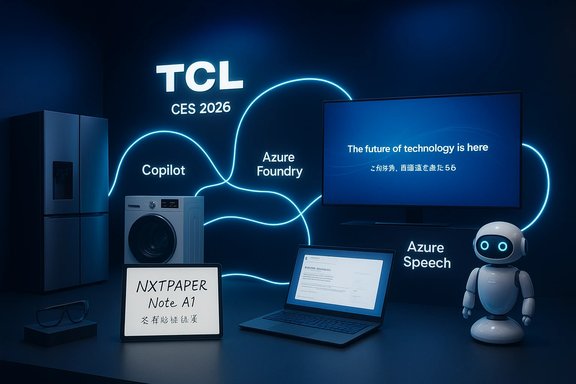
TCL CES 2026 booth with glowing blue circuits featuring appliances, laptop, TV, and a friendly robot.Background / Overview​

At CES 2026 (January 6–9, Las Vegas), TCL presented a broad portfolio of AI-infused devices: smart displays and TVs, mobile phones and tablets with NXTPAPER screens, wearables, AR glasses, and a range of smart home appliances. The company emphasized integration with Microsoft technologies — notably Azure Speech, Azure OpenAI capabilities in Microsoft Foundry, and Copilot-enabled features — positioning those services as the cloud backbone for speech recognition, realtime translation/subtitles, creative assistants, and cross-device workflows. TCL says these capabilities will be progressively rolled out across regions in 2026, subject to regional availability and further announcements. This article verifies the major technical claims where public documentation exists, cross-references independent reporting, and lays out practical implications and risks for consumers, enterprise buyers, and Windows-focused users.

What TCL showed at CES 2026​

Key product highlights​

  • NXTPAPER family expansion — phones and an 11–12" note tablet (Note A1 NXTPAPER) that couples a paper-like display with AI-assisted handwriting, speech recognition, translation, and content generation tools designed for pen + voice workflows. Independent coverage of NXTPAPER devices at CES and subsequent hands‑on reporting confirm TCL’s focus on the enote/tablet category and its price/availability windows.
  • AI-enabled TVs and displays that fold AI into picture/sound tuning and content discovery, with features positioned to work across TCL’s TV lines and the broader Human-Vehicle-Home ecosystem.
  • Smart home appliances (refrigerators, AC, washers/dryers) that use AI for predictive scheduling, recipe and inventory suggestions, energy optimization, and richer remote control.
  • Early AR / wearable concepts and companion robotics that point toward multimodal interaction across voice, image and video.

Partnership with Microsoft — what TCL claims​

TCL’s statements and press materials frame Microsoft as a principal AI partner: Microsoft Foundry (Azure OpenAI/Foundry Models), Azure Speech, and Copilot are named repeatedly as the engines powering speech recognition, realtime subtitles, cross-language translation, generative assistants, and agent-based workflows in multi-device contexts. TCL says some Microsoft Foundry features will be rolled out regionally across 2026, with details to follow via official channels. Those vendor claims are consistent with the types of services Microsoft documents for Azure AI Foundry and Azure OpenAI Realtime APIs.

Verifying the technical claims​

Microsoft Foundry / Azure OpenAI realtime capabilities: verified​

Microsoft’s documentation confirms that the Azure OpenAI / Microsoft Foundry stack supports realtime speech-in / speech-out interactions and that the Realtime API is optimized for WebRTC-based low-latency audio/video streaming. The platform publishes realtime model SKUs (gpt-realtime, gpt-realtime-mini, and gpt-4o realtime variants) and guidance for building ephemeral-token session flows appropriate for devices and kiosks that stream audio/video to cloud models. This validates the technical feasibility of TCL’s claim to leverage Azure realtime models for speech recognition, translation, and agent workflows. Key platform facts verified from Microsoft docs:
  • The Realtime API and WebRTC are recommended for low-latency audio/video applications (speech-in / speech-out).
  • Microsoft lists supported realtime model names and region availability for deterministic deployment planning.
  • The platform supports ephemeral tokens and session flows intended for device-initiated realtime connections.
These platform-level facts match the architecture TCL cited in its CES messaging, making the vendor’s high-level claims technically plausible in the near term.

Device claims and availability: corroborated but with caveats​

Third-party coverage of TCL’s NXTPAPER and related devices confirms product focus and early pricing/availability windows. The Verge’s hands-on reporting and follow-up coverage confirm TCL’s Note A1 NXTPAPER positioning as a pen-centric tablet with Microsoft-powered AI features pre-bundled on certain models — including speech recognition, translation, and content-assist tools — though some device OS choices and app availability differ by region and SKU. TCL’s corporate site and PR releases provide the vendor’s product specs and CES booth plans. Together these sources corroborate the core product claims while leaving some region-by-region details open until TCL’s formal rollout schedules are published.

Privacy, security and compliance: Microsoft’s promises and practical implications​

Microsoft’s public statements and product documentation emphasize data-protection commitments for Copilot and Azure OpenAI (for example, that customer prompts and outputs are not used to train foundation models without customer consent, regional data controls, and enterprise-grade compliance tooling). These are Microsoft’s formal positions and form an essential baseline for any OEM partnership using Azure services. However, those contractual and technical safeguards shift responsibility to the OEM and the specific implementation: how much processing occurs on-device vs cloud, what telemetry is transmitted, whether ephemeral tokens and secure session orchestration are used properly, and what local-data fallbacks exist in case of connectivity issues. These are implementation-level details TCL must publish for full verification.

Strengths and notable opportunities​

1. Ecosystem leverage: Microsoft + TCL hardware is a force multiplier​

TCL pairing hardware innovation (NXTPAPER displays, mini‑LED/SQD advances, smart appliances) with Microsoft’s realtime AI platform is strategically sensible. Azure Foundry’s realtime stack allows manufacturers to deliver low-latency, multimodal services — live transcription, translation and spoken conversational agents — without every OEM building their own LLM infrastructure. For Windows users and enterprises already invested in Microsoft ecosystems, the potential for cross-device Copilot continuity (phone/tablet/TV/PC) is compelling.

2. Multimodal input and natural workflows​

Devices like the Note A1 NXTPAPER that blend handwriting, pen input, and voice play to a strong user need: integrated productivity that doesn't force users to choose between typing, pen, or speech. For productivity scenarios—note-taking, meeting capture, language learning—this is a genuine UX advance if the recognition and generation quality is high and latency is low. Independent reporting confirms TCL’s design direction on NXTPAPER devices.

3. Potential for richer smart home experiences​

TCL’s portfolio approach—bringing AI into refrigerators, HVAC, washers/dryers, and displays—creates cross-device services that can be more valuable than isolated features (for example, a recipe suggested by the fridge that appears on the TV with step-by-step voice prompts). When done right, these scenarios can increase product stickiness and deliver measurable convenience.

Risks, unknowns, and critical caveats​

1. Region-by-region rollouts and latency constraints​

TCL’s materials state that Microsoft Foundry and certain Azure services will be progressively rolled out across regions in 2026. That wording is intentionally cautious. Realtime model availability and latency depend on Azure regional presence (cloud region proximity matters for WebRTC/Realtime) and regulatory data controls. Customers in regions where realtime endpoints or Foundry models are not yet available will see degraded experiences or delayed functionality. Treat rollout timing as vendor‑announced and subject to change.

2. Cloud dependency vs. on-device inference trade-offs​

There’s a clear industry trade-off between running models in the cloud (better model quality, easier updates) and running them locally (lower latency, better privacy). TCL’s announcements suggest a hybrid approach—some on-device features plus cloud-powered multimodal capabilities. The precise split matters: over-reliance on cloud agents raises latency & availability issues and increases recurring costs; over-reliance on small local models risks limited capability. Independent coverage of the broader CES device ecosystem highlights the same trade-offs across OEMs.

3. Privacy and governance are implementation-dependent​

Microsoft’s enterprise commitments are strong on paper—customer prompts and outputs aren’t used to train Microsoft’s foundation models without consent, and Azure has compliance tooling. But those protections depend on how TCL’s devices are configured and on contractual terms for consumer services (telemetry opt-in, retention windows, local data controls, firmware update cadence). The U.S. House’s prior moves to restrict Copilot usage for staff underscore how public-sector risk perceptions can influence adoption—high-profile cautionary examples matter when devices target mixed consumer and commercial markets. Customers should demand clear, device-level privacy disclosures before adopting AI features.

4. Security and supply-chain risk​

Any platform that connects home devices to cloud AI services increases attack surface: firmware update integrity, secure key management for ephemeral tokens, and robust authentication are essential. OEMs must publish (and enforce) secure update processes and demonstrate long-term support commitments. Inadequate security or short support windows can expose households and enterprises to elevated risk.

5. Feature fragmentation and consumer confusion​

An industry fragmented by region-specific AI rollouts, differing licensing arrangements, and OEM-specific feature sets could confuse buyers. Consumers may struggle to know whether a model bought in the U.S. will support the same speech or translation features in Europe or Asia at the same time. TCL’s “progressive rollout” language signals this will be an ongoing issue in 2026.

What to watch for — a practical checklist​

  • Device-level privacy settings and telemetry opt-ins: Verify what’s sent to the cloud, how long it’s retained, and how you can delete it.
  • On-device vs. cloud feature maps: TCL should publish a clear table of which features run locally and which require Azure Foundry realtime endpoints.
  • Regional availability guarantees: Expect staggered rollouts; confirm availability for your country before assuming Copilot-powered features will work.
  • Firmware and security update cadence: Long-term support commitment is essential for IoT devices that may remain in homes for years.
  • Cost and subscription model: Some realtime or advanced capabilities may require recurring cloud subscriptions; check lifecycle costs.

Guidance for WindowsForum readers — consumers and IT buyers​

  • Consumers: If you value paper-like note-taking plus occasional AI assistance (summaries, translation), NXTPAPER devices look promising. However, wait for region-specific hands-on reviews and independent benchmarks on speech/recognition accuracy and battery life for persistent AI tasks.
  • Power users and creators: If the TCL + Microsoft combo can deliver fast, low-latency text/voice generation and reliable cloud-backed productivity features that integrate with Windows 11/Office workflows, the value proposition is attractive — especially for users who already adopt Microsoft Copilot in the PC ecosystem. Confirm that cross-device continuity (phone → PC → TV) is supported for the apps and services you use.
  • Enterprise / IT buyers: Evaluate regulatory constraints (data residency, sector-specific rules), insist on contractual privacy guarantees, and run pilot projects to measure latency and service stability under realistic network conditions. Don’t assume consumer product claims map to enterprise-grade guarantees without explicit contractual terms.

Competitive context and market implications​

TCL’s CES 2026 messaging sits squarely in a broader industry narrative: OEMs are racing to embed generative AI into every endpoint, and Microsoft is positioning Azure Foundry / Copilot as the connective tissue. Competitors like Samsung, LG, and Lenovo have been moving similar strategies—integrating Copilot or Copilot-like assistants into large displays, PCs, and mobile devices—so TCL’s advantage will depend on execution, regional availability, and how well it differentiates its hardware (display tech, battery life, NXTPAPER ergonomics). Independent coverage of the industry shows the same silicon/OS trade-offs: on-device NPUs (Intel Panther Lake, Qualcomm Snapdragon X2 family, AMD Ryzen AI) are being marketed to reduce cloud dependence, but cloud services still play a crucial role for high-capability models.

Recommendations for TCL (and OEMs following this model)​

  • Publish a clear, public matrix listing which AI features are local vs cloud, the Azure service endpoints required, and the supported regions.
  • Provide explicit privacy defaults that favor minimal telemetry by default and make it easy for users to opt in to cloud features.
  • Offer an offline-fallback mode for core capabilities (basic transcription, cached translations) to preserve functionality during network outages.
  • Commit to a transparent firmware-update cadence and long-term security support for smart appliances and displays.
  • Work with independent labs and media to publish objective benchmarks on speech-recognition accuracy, latency, and energy use for always-on AI features.

Final assessment​

TCL’s CES 2026 presentation is a credible step toward mainstreaming AI-powered smart terminals by pairing distinctive hardware (NXTPAPER displays, SQD-Mini LED, modular appliances) with Microsoft’s realtime cloud AI stack. Platform-level capabilities required to deliver what TCL demos do exist: Microsoft Foundry / Azure OpenAI Realtime supports low-latency speech and multimodal interactions, and Microsoft’s enterprise privacy commitments provide a framework for responsible use — but the value and safety of TCL’s deployed experiences will depend on implementation details, regional availability, and the company’s privacy/security posture. For early adopters and Windows-centric users, TCL’s approach is promising: it creates a potential continuity path from PC to tablet to living-room display powered by Copilot-style assistance. For cautious buyers, the sensible move is to wait for hands-on reviews that measure recognition quality, latency, battery impact, and real-world privacy behavior in your region. TCL has signaled its intent and technical route; the industry should now demand the operational transparency that turns those intentions into trustworthy products.

Conclusion
CES 2026 has made one thing clear: AI is no longer a single feature on a spec sheet but the substrate connecting devices, displays, and services. TCL’s Microsoft-backed smart terminals are a credible entry into that world — technically supported by Azure Foundry and Copilot capabilities and confirmed by independent device coverage — yet the ultimate test will be regional rollout fidelity, security and privacy implementation, and whether the hybrid cloud/local balance delivers measurable, reliable benefits to everyday users.

Source: The Globe and Mail AI-Driven Future Innovation Experience -- TCL Showcases Microsoft AI-Powered Smart Terminals at CES 2026
 

TCL’s CES 2026 showcase reframed the company from “display maker” toward an AI-first smart‑terminals vendor, announcing a broad lineup of devices—smart TVs, NXTPAPER phones and tablets, wearables, AR glasses, and smart appliances—tied together by Microsoft cloud AI services such as Azure Speech, Azure OpenAI (in Microsoft Foundry), and Copilot-enabled features. The company described these integrations as the connective tissue for speech recognition, real‑time subtitles, cross‑language translation, personalized recommendations, and multimodal creative assistants, and said the Foundry/Azure features will roll out regionally through 2026.

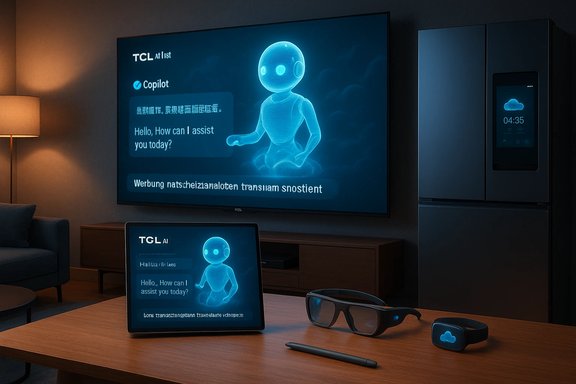
A modern living room showing a blue holographic assistant on TV and tablet.Background / Overview​

CES 2026 arrived with one clear industry signal: vendors are turning AI from a marketing angle into the operating layer across device categories. TCL’s approach is notable because it pairs proprietary hardware advances—NXTPAPER displays and SQD‑Mini LED TV panels—with Microsoft’s realtime AI and Copilot ecosystem. That combination promises new cross‑device workflows (pen + voice + cloud agents), but it also brings the usual tradeoffs of cloud‑dependent AI: latency, data handling and regional availability constraints that matter for buyers and IT teams. TCL’s messaging at CES emphasized three strategic threads:
  • Move beyond single‑device features to “smart terminal” scenarios spanning home, mobile and commercial environments.
  • Leverage Microsoft Azure OpenAI / Foundry realtime models and Azure Speech for low‑latency multimodal services.
  • Package hardware differentiation (paper‑like displays, high‑end mini‑LED TVs, AR glasses) with AI features to create stickier, experience‑led product tiers.

What TCL showed at CES 2026​

Flagship displays and TV lineups​

TCL unveiled a new premium SQD‑Mini LED family (including the X11L and other high‑end models) that pair advanced backlighting, high peak brightness and the company’s TSR AI Processor for dynamic picture tuning. These TVs are positioned to integrate AI‑based content discovery, picture and sound optimization, and cross‑device Copilot features. Early coverage and hands‑on reporting highlight the company’s emphasis on visual fidelity as well as an AI layer to enhance viewing and discovery.

NXTPAPER phones and tablets (Note A1 NXTPAPER)​

TCL expanded its NXTPAPER family with new phones and the Note A1 NXTPAPER e‑note/tablet. The Note A1 is marketed as an 11–11.5" paper‑like e‑note that blends handwriting-first workflows with embedded AI tools—real‑time transcription, on‑device handwriting recognition, translation, and creative writing assistants. TCL’s product pages and PR releases explicitly mention a bundled stylus, haptic feedback, and AI features designed to support a “write, speak and understand” flow. Independent press reports confirm both the device positioning and TCL’s emphasis on a focused, productivity‑first experience for the NXTPAPER line.

Wearables, AR glasses and appliances​

Beyond displays and NXTPAPER devices, TCL demonstrated AR glasses (with HDR10 capabilities), wearables and a set of smart home appliances that use AI for predictive scheduling, recipe and inventory suggestions, energy optimization and more connected services. The narrative centered on cross‑domain continuity: the same Copilot‑style assistants and Azure services stitched into TVs, phones, glasses and appliances to create unified multi‑scenario experiences.

Microsoft integrations called out​

TCL repeatedly named Microsoft Foundry (Azure OpenAI / Foundry Models), Azure Speech and Copilot features as the cloud backbone for its realtime speech‑in/speech‑out and generative assistant capabilities. TCL said rollout would be progressive across regions in 2026 and subject to local announcements. Those public claims align with the technical capabilities Microsoft documents for the Azure Realtime API and Foundry model catalog.

Verifying the technical claims: what’s credible and what needs caution​

Azure OpenAI / Realtime is built for low‑latency multimodal interactions​

Microsoft’s Azure OpenAI Realtime API supports WebRTC and other transports for sub‑second audio/video streaming to realtime model SKUs (gpt‑realtime, gpt‑realtime‑mini, gpt‑4o realtime previews, etc.. Microsoft explicitly recommends WebRTC for low‑latency audio/video because it handles codecs, jitter and packet loss—features that matter in consumer devices streaming microphone audio and camera video for live transcription or translation. The platform also supports ephemeral API keys and session orchestration patterns that match what an OEM would need to securely authorize device sessions. These platform facts validate the technical feasibility of TCL’s demo claims at a high level. Key platform details worth noting:
  • Supported realtime model SKUs and the recommendation to use WebRTC for real‑time audio/video.
  • Ephemeral API key flows for secure client sessions and server‑side token minting.
  • Region constraints: realtime model deployments and WebRTC endpoints are currently tied to specific Azure regions (for example, East US 2 and Sweden Central are listed among supported regions), which affects latency and regulatory compliance for global rollouts.

Microsoft’s consumer privacy posture on Copilot​

Microsoft’s public Copilot and privacy documentation states that consumer prompts and outputs are not used to train generative models without customer consent; it provides opt‑out controls and describes de‑identification steps and limits on data types used for model training. That public commitment establishes a base for trust in OEM deployments that rely on Microsoft cloud services—but it does not absolve the OEM from disclosing what device telemetry, local storage and cloud‑side logging are implemented. In short: Microsoft’s high‑level promises matter, but the OEM’s implementation details are the operational reality customers must evaluate.

What remains vendor‑specific and unverified​

  • Which AI features run entirely on device versus which ones stream to Azure Foundry? TCL’s press materials describe a hybrid approach without a public matrix specifying per‑feature locality. That matrix is material to latency, privacy and recurring costs.
  • Regional availability of realtime endpoints: TCL stated progressive regional rollouts in 2026; the actual experience will depend on whether Azure realtime endpoints and Foundry model SKUs are deployed in or near the customer’s region. This influences latency, cost and compliance.
  • Battery and thermal impacts: continuous microphone streaming, transcription and realtime generation can be battery‑intensive on portable NXTPAPER devices. TCL’s spec sheets list battery capacities, but independent benchmarks on battery drain for persistent AI features are not yet published.
  • Acoustic and sensors performance in real environments: vendor demos are controlled; independent hands‑on reviews and lab tests are needed to validate performance under noisy, crowded or low‑connectivity conditions.

Notable strengths and user value propositions​

1. Ecosystem leverage and potential continuity with Windows​

Pairing TCL hardware with Microsoft’s Copilot and Azure Foundry can create smoother cross‑device workflows—for example, a meeting transcript on Note A1 that follows you to a PC Copilot session and then appears on a living‑room TV for family review. For Windows users and enterprises already invested in Microsoft 365 and Azure, this creates an appealing path to seamless multi‑device context continuity. The partnership reduces friction for integration and can transfer corporate security and identity constructs from office devices to living‑room displays.

2. Hardware differentiation that matters to specific users​

  • NXTPAPER technology offers a genuinely different ergonomic proposition for note‑takers and readers who prioritize low‑eye‑strain, e‑ink‑like surfaces with added color and refresh rates. This is not purely cosmetic; it targets a real user need for focused, distraction‑free workflows.
  • SQD‑Mini LED TVs at TCL’s price points push high brightness and wide color gamut, which matter to home‑cinema and gaming audiences. Hardware advantages give a stronger foundation for meaningful, perceptible AI features (e.g., content‑aware HDR tuning).

3. Multimodal UX innovations​

Devices that combine pen input, voice, and cloud assistants address real productivity scenarios—meeting capture, language learning, rapid drafting and translation. If the recognition and generation quality are high and latency is low, these multimodal flows can genuinely shorten workflow loops and improve creativity.

Risks, tradeoffs and implementation concerns​

Cloud dependency and latency​

Heavy reliance on cloud realtime models exposes device experiences to network quality and geographic latency. Realtime WebRTC sessions to Azure endpoints perform best when region proximity is good; where Azure realtime endpoints are not present locally, latency can materially degrade the experience. For persistent "always‑on" listening or continuous translation, this is a critical risk vector.

Privacy and telemetry transparency​

While Microsoft publishes consumer‑focused privacy safeguards (including opt‑out options for model training), the final privacy posture depends on what TCL transmits, stores or shares. Key questions that remain unanswered in TCL’s public materials:
  • What specific telemetry is sent to Microsoft services vs. TCL backend services?
  • Are speech transcripts cached locally, and for how long?
  • Is on‑device processing available as an opt‑in offline fallback?

Cost model and recurring fees​

Advanced realtime and generative capabilities typically come with cloud compute charges. Device makers sometimes bake those charges into subscription models or premium tiers. Buyers should expect potential recurring costs for sustained, high‑capability features (e.g., prolonged realtime translation or a Copilot agent that performs multi‑step tasks). TCL’s materials mention ecosystem integration but do not provide a lifecycle cost model.

Long‑term support and security updates​

Smart appliances and long‑lived home devices are often kept for years, yet their AI features may require continuous cloud and firmware support. The industry needs consistent security update cadences and clear commitments about how long devices will receive AI feature updates and security patches. TCL has not published a global, device‑by‑device support timeline tied to AI feature availability. This creates upgrade and obsolescence risks for buyers.

Practical guidance for buyers and IT decision makers​

For consumers (everyday buyers)​

  • Confirm regional availability: check whether the specific Copilot/Foundry features you expect are enabled in your country/region and whether cloud endpoints are nearby to ensure low latency.
  • Read the privacy defaults: verify what telemetry and transcripts are shared by default and how to opt out of cloud processing if you prefer local-only functionality.
  • Test battery impact: where possible, trial persistent‑AI features (meeting capture, live translation) and measure real-world battery life and heat under continuous use.

For power users and creators​

  • Map workflows: decide which tasks truly benefit from cloud‑powered Copilot assistance and which should remain local.
  • Verify interoperability: confirm how TCL devices integrate with your Windows PC and Microsoft 365 workflows (file sync, meeting capture, Copilot continuity).
  • Watch for SDKs and developer access: if you build workflows, check whether TCL exposes APIs or whether Microsoft Foundry agent capabilities are extendable to your data sources.

For enterprise and IT buyers​

  • Treat TCL devices as endpoints that may access enterprise data; insist on contractual guarantees around data residency, audit logging and incident response.
  • Pilot deployments under realistic network conditions to measure latency and reliability before committing to wide deployment.
  • Demand a public matrix from TCL indicating which AI features are local vs cloud, required endpoints, data flows and a firmware/support cadence. This reduces procurement risk and accelerates compliance reviews.

Recommendations TCL (and other OEMs) should publish publicly​

  • A per‑feature “local vs cloud” table that lists where each AI capability executes and the Azure endpoints required.
  • A transparent privacy and telemetry specification with defaults that favor minimal data collection.
  • A global rollout timetable aligned to Azure’s realtime model region availability and clear guidance about degraded behaviors where endpoints are absent.
  • Battery and performance benchmarks for common real‑world AI routines (e.g., continuous transcription for 1 hour, meeting summary generation).
  • A firmware update and long‑term support policy specifying security patch cadence and AI feature updates.
These actions would materially increase buyer confidence and reduce the adoption friction for users concerned about privacy, latency and cost.

Competitive context and market implications​

TCL’s strategy—deploy hardware differentiation plus Microsoft cloud AI—places it squarely in the mainstream OEM playbook for 2026. Competitors such as Samsung, LG, Lenovo and others are also integrating Copilot or Copilot‑style assistants into displays, PCs and appliances. TCL’s ability to differentiate will come down to three things:
  • Execution: real‑world recognition accuracy, latency, and battery characteristics.
  • Clarity: transparency about privacy, on‑device vs cloud split and support timelines.
  • Price and subscription strategy: whether the value of Copilot connections is delivered without excessive recurring fees.
For Windows enthusiasts, the biggest upside is continuity: devices that integrate into Microsoft’s Copilot ecosystem can behave as extensions of a user’s PC and Microsoft 365 workflows. For cautious buyers, the prudent course is to wait for independent hands‑on reviews and third‑party benchmarks before treating AI features as reasons alone to buy.

Short checklist: What to ask before buying a TCL AI‑enabled device​

  • Which AI features are enabled in my country and when will they arrive?
  • Which features process data locally and which stream to Microsoft Foundry/Azure?
  • What are the default privacy settings and how do I opt out of cloud training or telemetry?
  • Will major AI features continue to work offline or in degraded network conditions?
  • What is TCL’s firmware and security update policy length for this device?
  • Are there subscription costs for advanced Copilot features, and what are the long‑term operating costs?

Final assessment: credible progress, conditional value​

TCL’s CES 2026 presentation is a credible and strategically sensible step toward mainstreaming AI‑powered smart terminals. The combination of NXTPAPER hardware and Microsoft’s Azure OpenAI / Foundry realtime stack is technically plausible—Microsoft’s Realtime API explicitly supports WebRTC, ephemeral authentication and real‑time model SKUs needed for the speech, translation and agent scenarios TCL demonstrated. Those platform capabilities make the demos achievable in principle. However, the user‑facing value of those features will depend entirely on three execution factors:
  • Regional rollout fidelity — are realtime endpoints and Foundry models available where the customer lives?
  • Transparency and privacy — will TCL document exactly what data is transmitted, stored and for how long?
  • Performance under real conditions — do recognition accuracy, latency and battery life meet expectations outside of controlled demos?
For WindowsForum readers and buyers who prize cross‑device continuity with Microsoft services, TCL’s AI strategy is worth watching; it can provide tangible productivity gains when Microsoft Copilot and Azure Foundry features are available and well‑implemented. For more cautious adopters, the sensible path is to wait for independent reviews and for TCL to publish the operational transparency that converts promising demos into trustworthy, everyday experiences.
TCL’s CES push makes one thing clear: AI is no longer a checkbox feature—it's now the substrate vendors expect to weave into displays, tablets, appliances and connected devices. The TCL + Microsoft approach could make Copilot‑style assistance genuinely ubiquitous across living rooms, desks and pockets, but the industry must now demand the transparency and regional readiness that turn CES demos into reliable consumer realities.

Source: Laotian Times AI-Driven Future Innovation Experience - TCL Showcases Microsoft AI-Powered Smart Terminals at CES 2026 - Laotian Times
 

TCL’s CES 2026 showcase moved the company decisively from a “display maker” to an AI-first smart‑terminals vendor, unveiling a broad lineup of smart TVs, NXTPAPER phones and tablets, wearables, AR glasses and smart appliances that the company says will leverage Microsoft cloud AI — notably Azure Speech, Azure OpenAI via Microsoft Foundry, and Copilot-enabled features — to deliver multimodal, cross‑device experiences.

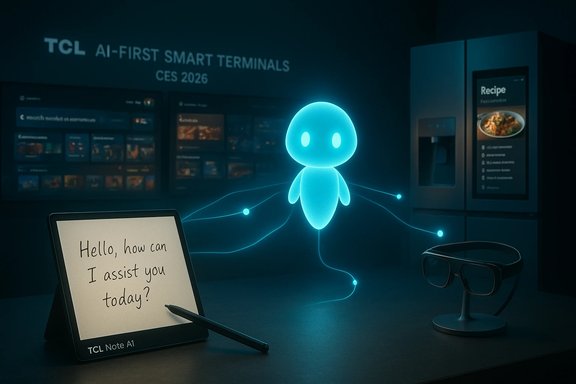
A glowing blue AI assistant hovers near a TCL tablet, asking, 'Hello, how can I assist you today?'Background / Overview​

CES 2026 made one thing clear: vendors are embedding generative and realtime AI not as marketing flourishes but as the connective layer between devices and services. TCL’s pitch at the show emphasized three strategic threads: hardware differentiation (NXTPAPER paper‑like displays, SQD‑Mini LED TVs), ecosystem partnerships (Microsoft Foundry / Azure services), and multi‑scenario “smart terminal” experiences spanning home, mobile and commercial environments.
TCL’s public materials describe a progressive rollout of Microsoft Foundry and Azure Speech capabilities across regions in 2026; the phrasing is intentionally cautious and leaves technical and regional details to later announcements. That caveat matters: the difference between a smooth, low‑latency Copilot experience and a degraded demo often comes down to regional cloud endpoints, network proximity, and implementation choices.

What TCL Showed at CES 2026​

Flagship displays and TV lineups​

TCL showcased an expanded SQD‑Mini LED TV family and higher‑end displays that pair advanced backlighting and peak‑brightness tuning with a bespoke TSR AI Processor for dynamic picture optimization. These TVs are positioned to surface AI‑driven content discovery, personalized recommendations, and cross‑device Copilot features that bridge living‑room experiences with mobile and productivity workflows. TCL framed these sets as part of a broader “Human‑Vehicle‑Home” continuity vision rather than isolated AV upgrades.

NXTPAPER family: Note A1 and phones​

Arguably the most tangible product for productivity‑minded users is the TCL Note A1 NXTPAPER — an 11–11.5" paper‑like tablet designed for handwriting‑first workflows with an included stylus and haptic feedback. TCL demonstrated integrated AI features such as real‑time speech recognition, live translation/subtitles, handwriting recognition, and content‑generation assistants that let users mix pen, voice and typed input in a single “write, speak and understand” flow. Independent hands‑on reporting at CES confirms the Note A1’s pen‑centric positioning, potential for lightweight e‑note use, and bundled Microsoft‑powered features on specific SKUs. TCL also expanded NXTPAPER into smartphones (NXTPAPER 70 series), positioning the screen tech as an eye‑friendly alternative for extended reading and note capture. Early coverage details multiple viewing modes and an emphasis on power efficiency and readability for long sessions.

Wearables, AR glasses and smart appliances​

TCL presented AR glasses with HDR10 support, new wearables, and a lineup of smart home appliances that use predictive AI for scheduling, recipe suggestions and energy optimization. The unifying narrative was cross‑domain continuity: the same Copilot‑style assistants and Azure services stitched into TVs, mobile devices, glasses and appliances to create unified multi‑scenario experiences. Actual hardware availability, price and precise AI feature splits vary by product and SKU.

The Microsoft tie‑in: Foundry, Azure Speech and Copilot​

TCL repeatedly named Microsoft Foundry (Azure OpenAI/Foundry Models), Azure Speech and Copilot as cornerstone partners in its AI stack, describing these services as the engines for realtime speech‑in/out, translation, creative assistance, and agent‑based workflows. TCL stated that Foundry/Azure features will roll out progressively regionally through 2026; the company did not publish a per‑feature locality matrix at CES.

Verifying the Technical Claims: What’s Credible and What Needs Scrutiny​

TCL’s demos rely on platform capabilities Microsoft documents publicly. Two technical pillars are especially relevant: Azure OpenAI Realtime (found in Microsoft Foundry) and Azure Speech.
  • Microsoft’s Azure OpenAI Realtime APIs support WebRTC‑based low‑latency audio/video streaming and publish realtime model SKUs (gpt‑realtime, gpt‑realtime‑mini and gpt‑4o realtime previews). The platform also documents ephemeral API keys and session orchestration patterns designed for devices that need to establish secure, short‑lived realtime sessions to cloud models. These platform features validate the technical feasibility of TCL’s speech‑recognition, live translation and conversational agent demos at a high level.
  • Microsoft’s documentation lists specific supported WebRTC regions (for example, eastus2 and swedencentral for realtime endpoints at present) and instructs developers to match WebRTC URLs to the region where the Azure OpenAI resource is deployed. That regional mapping is material: user‑facing latency, performance and legal compliance will vary depending on whether a local realtime endpoint exists.
These platform facts make TCL’s broad claims technically plausible. However, there are meaningful implementation details TCL did not disclose at CES that determine real‑world value:
  • Which features run entirely on‑device versus which stream to Microsoft Foundry? TCL’s PR and booth messaging imply a hybrid approach, but the vendor has not published a per‑feature matrix specifying locality, telemetry flows, or fallback behavior. That opaque split matters for latency, privacy and battery life.
  • Endpoint availability and latency. Realtime model availability is tied to specific Azure regions today. Where those endpoints are absent or distant, users will face higher latency and potentially degraded subtitle/translation quality. Microsoft’s docs recommend WebRTC for low‑latency scenarios and call out region constraints explicitly.
  • Ephemeral tokens and session orchestration. Microsoft recommends issuing ephemeral API keys from a secure backend to avoid embedding long‑lived keys on devices. OEMs must correctly implement server‑side token minting and session control to maintain security and reduce risk of credential leakage. Microsoft’s guidance and community threads underscore the need for careful token workflows.

User Experience: Multimodal Interaction and Cross‑Device Workflows​

At the heart of TCL’s pitch is multimodal interaction — blending handwriting, voice, image and video into a fluid user journey. Devices like the Note A1 NXTPAPER epitomize a pen‑first productivity intent: capture notes in handwriting, transcribe and translate in realtime, and layer generative summaries or creative prompts — all while syncing across phone, tablet and TV. Independent reviews describe the Note A1 as a focused e‑note with limited built‑in apps (sometimes a stripped Android experience), but they confirm the design intent and bundled Microsoft features on certain SKUs. This approach has concrete upside for several user groups:
  • Creators and students gain a natural capture surface for lectures and brainstorming: write on the NXTPAPER, record voice, get live transcripts and automatic summaries.
  • Multilingual households and remote teams benefit from live subtitles and cross‑language captions on TVs or during shared media playback.
  • Smart home users can receive contextual prompts (e.g., a fridge‑suggested recipe appearing as step‑by‑step instructions on the TV with voice guidance from a Copilot‑style agent).
However, the user experience will be highly sensitive to latency, recognition accuracy and battery life for portable devices. Long‑running microphone streams and realtime generation consume power; TCL must balance cloud calls with effective local fallbacks and caching to make these features consistently usable.

Privacy, Security and Compliance: Promises vs. Operational Reality​

TCL emphasized security and compliance in its messaging and cited Microsoft Copilot‑enabled safeguards as part of its approach. Microsoft’s published privacy posture for Copilot and Azure OpenAI includes commitments such as not using customer prompts and outputs to train foundation models without consent and providing enterprise tooling for data governance. Those are important baseline assurances. But two important caveats must be foregrounded:
  • OEM responsibility is real. Microsoft’s contractual and platform controls create a safe framework, but the OEM implementation — what data the device collects, whether raw audio or intermediate transcripts are persisted locally or sent to the cloud, and how telemetry is logged — determines the operational privacy posture. TCL must publish clear, per‑feature documentation describing telemetry, retention, regional data flows and opt‑out controls.
  • Regulatory and data‑residency constraints. For enterprise or regulated users, the geography of Azure realtime endpoints and the data‑resident policies TCL supports are material procurement considerations. Where local Azure Foundry regions are absent, organizations must weigh latency and compliance tradeoffs. Microsoft’s documentation lists supported realtime regions and emphasizes matching resources to endpoints.
Practical expectations for users and IT buyers:
  • Demand transparency. A per‑feature “local vs cloud” table, default privacy settings favoring minimal telemetry, and a clear opt‑in for cloud training are minimum asks.
  • Insist on firmware and AI‑feature update commitments. Long‑lived smart appliances require a documented security patch cadence and clarity on how AI‑feature updates will be delivered and supported.
  • Require contractual guarantees for enterprise deployments. Data residency, audit logging, incident response SLAs and demonstration tests under realistic network conditions should be part of procurement for business use.

Execution Risks and Unknowns​

TCL’s CES demos were credible on stage, but several execution risks remain:
  • Regional rollout timing is uncertain. TCL’s messaging states a “progressive” rollout in 2026; the actual user experience will hinge on Azure realtime endpoint availability in a customer’s region. Where endpoints are lacking, features may be limited or latency‑heavy.
  • Battery impact and thermal constraints on portable NXTPAPER devices. Continuous speech streaming and live generation are power‑intensive; independent benchmarks on battery drain during persistent AI tasks are not yet available. TCL lists battery capacities, but real‑world longevity depends on software‑level optimizations and fallback modes.
  • Subscription and lifecycle costs. Realtime and high‑capability cloud features often carry incremental costs. TCL has not clarified whether advanced Copilot connectivity will require ongoing subscriptions or whether basic transcription/translation modes will remain free. Buyers should budget for potential recurring fees.
  • On‑device vs cloud model quality tradeoffs. Local NPUs can deliver fast, private inference for constrained tasks, but the highest‑fidelity generative and multimodal experiences often rely on cloud models. TCL’s value proposition depends on striking the right hybrid balance. Industry trends show OEMs bridging both approaches, but the balance affects privacy, latency and capability.
When a vendor demonstrates Copilot‑style continuity across TV, tablet and phone, the devil is always in the implementation details: per‑feature locality, data retention, and latency optimizations.

Market Context and Competitive Implications​

TCL’s Microsoft partnership places it squarely in a mainstream OEM playbook for 2026: combine hardware differentiation with cloud AI partnerships. Competitors such as Samsung, LG, Lenovo and others are pursuing similar Copilot integrations across displays, PCs and home devices, so TCL’s differentiation will largely hinge on:
  • Execution quality — how well speech recognition, translation and continuity actually perform in daily life.
  • Transparency — whether TCL publishes clear locality, telemetry and support matrices.
  • Pricing and subscription strategy — whether the Copilot connection is a one‑time value add or a recurring revenue vector.
For Windows‑centric users, the upside is continuity: devices that integrate with Microsoft Copilot and Azure can behave as extensions of a user’s PC and Microsoft 365 workflows. For cautious buyers, the sensible path is to wait for independent hands‑on reviews and third‑party benchmarks before letting AI features drive buying decisions.

Practical Buying Guidance: A Short Checklist​

  • Which AI features will be active in your country and when? Confirm rollout timelines for your region.
  • Which capabilities run locally and which stream to Azure Foundry? Ask for a per‑feature locality matrix.
  • What are the default privacy settings and opt‑out mechanisms for telemetry and cloud training? Ensure defaults favor minimal data collection.
  • Will core AI features work offline or in degraded network conditions? Request an offline fallback or cached mode for transcription/translation.
  • What is TCL’s firmware and long‑term security update policy for this product class? Seek explicit patch cadence and support-length commitments.

Strategic Recommendations for TCL and OEMs​

  • Publish a transparent, per‑feature “local vs cloud” table that lists the Azure endpoints required and the regions supported.
  • Default to privacy‑friendly settings and require explicit opt‑in for cloud training or telemetry sharing.
  • Provide offline fallbacks for critical features (basic transcription, cached translations) to preserve usability during outages.
  • Publish independent benchmarks on recognition accuracy, latency and battery impact for persistent AI features.
  • Commit publicly to a firmware/security update cadence and a multi‑year support window for smart appliances and displays.
These steps would materially increase buyer confidence and accelerate adoption among both consumers and enterprise customers.

Cross‑Source Validation and Final Assessment​

Multiple independent sources and platform documentation corroborate the core plausibility of TCL’s CES claims:
  • TCL’s corporate press materials and PR announcements outline the product lineup and Microsoft partnership framing.
  • Microsoft’s Azure OpenAI / Foundry Realtime documentation details the WebRTC‑based realtime model SKUs, ephemeral key workflows and region mappings that underpin TCL’s demos.
  • Independent hands‑on reporting (e.g., The Verge and AndroidCentral coverage) confirms the NXTPAPER Note A1’s positioning as a pen‑first, productivity‑oriented device with bundled Microsoft features on select SKUs.
Taken together, these sources show that TCL’s demos are technically achievable with Microsoft’s realtime stack and that the vendor’s UX direction (multimodal, pen + voice + cloud) addresses real user needs. However, the actual consumer experience will depend on execution: regional Azure endpoint availability, precise on‑device vs cloud split, battery and thermal behavior, and transparent privacy/telemetry practices.
Where claims are not yet verifiable — notably the per‑feature locality, subscription pricing for advanced Copilot features, and the long‑term firmware/update commitments — buyers should treat TCL’s CES messaging as a credible intent statement rather than a fully specified product contract.

Conclusion​

TCL’s CES 2026 presentation marks a credible and strategically sensible leap toward mainstreaming AI‑powered smart terminals. By pairing hardware innovations — NXTPAPER displays, SQD‑Mini LED TVs and new appliance designs — with Microsoft’s realtime cloud AI and Copilot ecosystem, TCL has sketched a future where TV, tablet, phone and home appliances form a continuous, multimodal environment.
The promise is compelling: live transcription and translation across screens, pen‑plus‑voice productivity on NXTPAPER devices, and Copilot‑style assistants that move with users across rooms and tasks. The reality, however, will be decided by regional rollout fidelity, the clarity of TCL’s privacy and telemetry disclosures, the balance of local vs cloud inference, and honest benchmarking under real‑world conditions.
For Windows‑centric users and organizations invested in Microsoft ecosystems, TCL’s approach is worth watching; for the cautious and privacy‑aware, the prudent course is to wait for hands‑on reviews, independent benchmarks and TCL’s operational transparency before committing. The industry signal from CES is clear: AI is no longer an add‑on, it’s the substrate connecting devices — and OEMs must now prove they can deliver that substrate both powerfully and responsibly.
Source: The AI Journal AI-Driven Future Innovation Experience -- TCL Showcases Microsoft AI-Powered Smart Terminals at CES 2026 | The AI Journal
 

Back
Top