

The Alighieri Circle: Dante’s Bloodline turns one of the most enduring works in Western literature into something far more intimate and unsettling: a first-person psychological horror game about inherited duty, memory, and the fear of becoming trapped inside a family curse. Developed by ONE-O-ONE Games and published by Entalto Publishing, the game reimagines Dante Alighieri’s legacy as both a literal and emotional descent, with Gabriele Alighieri forced to confront a ritual that has burdened his bloodline for generations. The result is not a simple adaptation of The Divine Comedy, but a modern horror interpretation that uses Dante’s imagery to explore trauma, identity, and the cost of inherited responsibility. The demo is already available on Steam, and the game is slated for 2026 on Xbox Series X|S, PlayStation 5, and PC.
The reason this project has attracted attention is simple: Dante’s work has been adapted, referenced, and echoed so often that most game players already know at least the broad outline of its influence. The nine circles of Hell, the descent into punishment, and the idea of a guided passage through spiritual territory all trace directly back to Inferno and the wider arc of The Divine Comedy. Yet for all the obvious overlap between Dante and gaming, most interpretations have leaned toward spectacle, combat, or mythic scale. This new title instead appears to ask what happens when the poem becomes less an adventure map and more a psychological inheritance.
That distinction matters because it changes the emotional center of the story. Rather than treating Hell as a place to conquer, the game treats it as a destabilizing presence that leaks into the protagonist’s life. The premise, as presented on the official site and Steam page, suggests a cycle in which the barrier between reality and Hell weakens every 33 years, and an Alighieri must perform a ritual to keep catastrophe at bay. That cyclical structure is smart because it turns myth into obligation, and obligation into dread.
The choice to center the story on a descendant rather than Dante himself is the game’s most interesting creative move. It lets the developers sidestep the obvious trap of simply retelling Inferno scene by scene. Instead, they can build a story about legacy, regret, and family mythology, while still mining Dante’s visual language for eerie symbolism. That is a more contemporary and arguably more relatable form of horror, especially for players who are drawn to atmospheric narrative games over action-heavy fare.
There is also a broader industry context here. Narrative horror has been thriving for years in projects that favor exploration, environmental storytelling, and emotional pressure over direct combat. In that landscape, The Alighieri Circle fits neatly beside games that use haunted spaces and fractured memory to create fear. The difference is that this one carries a literary pedigree that gives it immediate recognition, but also a higher burden of expectation. A game inspired by Dante cannot merely be clever; it has to justify why the poem belongs in interactive form in the first place.
The challenge is that familiarity can become complacency. Too many games use Dante as a decorative reference rather than as a source of thematic tension. When Hell becomes merely a skin, the literary connection feels thin. The Alighieri Circle seems to be trying to avoid that by making Dante’s legacy itself the central horror, which is a more ambitious and much riskier approach.
A few takeaways stand out:
That emphasis on inheritance is what gives the game its emotional hook. Gabriele’s conflict is not only with Hell, but with the identity he has been handed. In literary terms, that is a neat inversion of Dante’s own journey: rather than a man seeking enlightenment through a cosmic order, we get a modern descendant trying to survive the consequences of a family mythology he never chose. That is the nightmare.
The setup also helps the game avoid some of the usual horror clichés. There is no need for a random haunted-house explanation when the house is part of a lineage of obligation. There is no need for a disposable “chosen one” trope when the character is explicitly trapped by bloodline. The horror becomes structural instead of incidental, which is often more effective and more memorable.
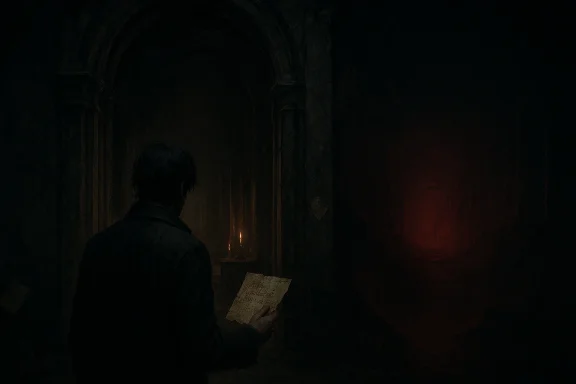
The preview’s emphasis on diary pages and collectibles suggests a classic narrative-horror loop: explore, uncover, recontextualize, repeat. That approach works when each new clue changes how players interpret the house and the family that lived there. If the writing is strong, the Villa may become the kind of space players think about long after they stop playing, because it will function as both geography and memory palace.
Still, the setting will need discipline. A grand manor can easily become familiar if its rooms are only there to hide keys and notes. For The Villa to succeed, it needs to feel like a living archive of guilt rather than a puzzle box wearing a Gothic coat. That is a fine line, but it is exactly the line this kind of game has to walk.
The idea of gathering lost pages of The Divine Comedy inside this warped space also works on a thematic level. The pages are both narrative fragments and symbolic repairs, meaning the player is reconstructing a text while also reconstructing a self. That dual function gives the collectible structure real weight, which is more satisfying than the usual scavenger-hunt model. Ideally, every page should feel like a revelation rather than a checklist item.
There is some risk here, of course. Surreal environments can become visually impressive while still feeling mechanically repetitive. The game will need to ensure that the distortion is not just cosmetic, but meaningful to movement, puzzle-solving, or perception. If the rules of The Dive shift in ways that reflect emotional pressure, the whole concept becomes stronger. If not, it may simply become a nice-looking dreamscape.
The early demo puzzle involving statuettes and a crypt portal is a good example of how this can work. It is a simple structure on the surface, but it also operates as a miniature lesson in how the game wants to be read: gather symbolic objects, assemble meaning, and unlock a path into a deeper layer of the story. That kind of puzzle design can feel elegant when it is tied to lore rather than presented as arbitrary logic.
A useful way to think about the design is this:
That matters because players are more visually literate than ever. A game that simply shouts “Hell” at the screen can feel juvenile, but one that layers symbols, architecture, and memory can feel genuinely oppressive. When every room seems to imply a story, the player starts to treat the whole environment as a puzzle of meaning. That is where this project has the potential to excel.
The key, again, will be restraint. Overstyling can dilute atmosphere just as quickly as underdesign can. If every surface is screaming for attention, nothing feels important. The art direction needs to be memorable, yes, but also disciplined enough to let silence and negative space do some of the work.
There is also a symbolic advantage to launching on Xbox. Microsoft’s ecosystem has been making room for more experimental, genre-driven projects, and a literary horror game fits that environment well. It gives Xbox another story to tell about being a home for unusual indies, not just big-budget service titles and action blockbusters. That is a useful brand signal, even if it is not the main reason the game exists.
The market challenge is that horror is crowded. To stand out, this game has to offer more than an interesting premise. It needs to deliver a coherent tone, memorable puzzles, and a narrative voice that feels intentional from beginning to end. The premise is strong enough to get attention; execution will determine whether it becomes a cult favorite or just another promising idea.
The demo also appears to support that focus by emphasizing exploration and story fragments rather than combat systems or resource management. That suggests the developers are leaning into a mood-driven experience where each discovery has narrative weight. If done well, that can make the game feel unusually cohesive, because the gameplay and themes are speaking the same language.
At a broader level, the title also reflects a trend in indie design toward high-concept reinterpretation. Many smaller studios now aim to stand out by combining recognizable cultural anchors with intimate storytelling. The Alighieri Circle is a strong example of that model: familiar enough to be legible, strange enough to feel new.
It will also be worth seeing how much the game deepens its use of Dante beyond surface-level references. The best adaptation would not simply quote The Divine Comedy, but would use its structure to explore the emotional consequences of inherited duty. If the game really commits to that idea, it could become one of those rare horror titles that sticks because it means something beyond its scares.
Source: Windows Central https://www.windowscentral.com/gaming/indies-idxbox/alighieri-circle-dantes-bloodline-preview/
 Overview
The reason this project has attracted attention is simple: Dante’s work has been adapted, referenced, and echoed so often that most game players already know at least the broad outline of its influence. The nine circles of Hell, the descent into punishment, and the idea of a guided passage through spiritual territory all trace directly back to Inferno and the wider arc of The Divine Comedy. Yet for all the obvious overlap between Dante and gaming, most interpretations have leaned toward spectacle, combat, or mythic scale. This new title instead appears to ask what happens when the poem becomes less an adventure map and more a psychological inheritance.That distinction matters because it changes the emotional center of the story. Rather than treating Hell as a place to conquer, the game treats it as a destabilizing presence that leaks into the protagonist’s life. The premise, as presented on the official site and Steam page, suggests a cycle in which the barrier between reality and Hell weakens every 33 years, and an Alighieri must perform a ritual to keep catastrophe at bay. That cyclical structure is smart because it turns myth into obligation, and obligation into dread.
The choice to center the story on a descendant rather than Dante himself is the game’s most interesting creative move. It lets the developers sidestep the obvious trap of simply retelling Inferno scene by scene. Instead, they can build a story about legacy, regret, and family mythology, while still mining Dante’s visual language for eerie symbolism. That is a more contemporary and arguably more relatable form of horror, especially for players who are drawn to atmospheric narrative games over action-heavy fare.
There is also a broader industry context here. Narrative horror has been thriving for years in projects that favor exploration, environmental storytelling, and emotional pressure over direct combat. In that landscape, The Alighieri Circle fits neatly beside games that use haunted spaces and fractured memory to create fear. The difference is that this one carries a literary pedigree that gives it immediate recognition, but also a higher burden of expectation. A game inspired by Dante cannot merely be clever; it has to justify why the poem belongs in interactive form in the first place.
Dante’s Legacy in Games
Dante has haunted video games for decades, but often in fragments rather than in full adaptation. Many players encounter his influence without realizing it. The nine circles structure has become a shorthand for descending into evil, and action franchises have borrowed Dante’s imagery to give their worlds a ready-made cosmology. That cultural seepage is part of what makes the new game interesting: it is not starting from obscurity, but from a literary work that already helped define how games imagine Hell.Why the source material still matters
What separates Dante from many other literary references in games is the architecture of the poem itself. The Divine Comedy is not just a story; it is an ordered worldview, with moral logic built into geography. That makes it unusually suitable for game design, where spaces, progression, and symbolic thresholds matter as much as dialogue. A developer can build puzzles, environments, and pacing around that structure without forcing the source material to behave like a traditional fantasy novel.The challenge is that familiarity can become complacency. Too many games use Dante as a decorative reference rather than as a source of thematic tension. When Hell becomes merely a skin, the literary connection feels thin. The Alighieri Circle seems to be trying to avoid that by making Dante’s legacy itself the central horror, which is a more ambitious and much riskier approach.
A few takeaways stand out:
- Dante’s influence in gaming is already deep and recognizable.
- The nine circles are now part of gaming’s shared visual language.
- A literal adaptation risks feeling derivative.
- A thematic reinterpretation can feel fresher and more unsettling.
- The strongest ideas in Dante are often moral, not just visual.
The Premise and the Bloodline Curse
The game’s setup is memorable because it gives the player a role that is both heroic and unwanted. Gabriele Alighieri is not presented as an action protagonist eager to save the day. He is an heir to a burden, someone returning to an ancestral home because history is pushing him there. That framing gives the story a tragic, almost anti-heroic quality, which is far more in keeping with psychological horror than with traditional adventure design.A ritual instead of a quest
The notion of a ritual recurring every 33 years is particularly effective. The number itself carries obvious symbolic weight, but more importantly, it creates a timeline that feels ceremonial and doomed. Rituals in horror work because they imply repetition without resolution, and repetition is one of the most powerful ways to suggest generational trauma. This is not a world in which problems are solved once and forgotten; it is a world in which the same problem returns in a new form.That emphasis on inheritance is what gives the game its emotional hook. Gabriele’s conflict is not only with Hell, but with the identity he has been handed. In literary terms, that is a neat inversion of Dante’s own journey: rather than a man seeking enlightenment through a cosmic order, we get a modern descendant trying to survive the consequences of a family mythology he never chose. That is the nightmare.
The setup also helps the game avoid some of the usual horror clichés. There is no need for a random haunted-house explanation when the house is part of a lineage of obligation. There is no need for a disposable “chosen one” trope when the character is explicitly trapped by bloodline. The horror becomes structural instead of incidental, which is often more effective and more memorable.
The Villa as a Psychological Space
One of the most promising elements in the preview material is the setting known as The Villa. The manor is not just a level to traverse; it is the physical embodiment of family memory, with hidden collectibles, diary pages, and spaces like the crypt contributing to the broader mystery. Games that use a single central location well often become more immersive than sprawling titles with less coherent design, and that seems to be the bet here.Environmental storytelling over spectacle
The decision to keep the manor free of roaming monsters is a strong creative choice. It means the environment itself has to carry the tension, and that usually leads to better pacing and more attentive exploration. Silent spaces can be more unsettling than busy ones because they force the player to sit with ambiguity. A room does not need a monster in it to feel dangerous if it feels like the room is watching back.The preview’s emphasis on diary pages and collectibles suggests a classic narrative-horror loop: explore, uncover, recontextualize, repeat. That approach works when each new clue changes how players interpret the house and the family that lived there. If the writing is strong, the Villa may become the kind of space players think about long after they stop playing, because it will function as both geography and memory palace.
Still, the setting will need discipline. A grand manor can easily become familiar if its rooms are only there to hide keys and notes. For The Villa to succeed, it needs to feel like a living archive of guilt rather than a puzzle box wearing a Gothic coat. That is a fine line, but it is exactly the line this kind of game has to walk.
The Dive and the Logic of Fear
If The Villa is the domestic face of the game, The Dive appears to be its more surreal and infernal counterpart. According to the preview, this space distorts Gabriele’s memories and fears into a blood-red, inky-black landscape that evokes Dante’s imagery without simply copying it. That sounds like the game’s boldest visual idea, because it translates internal conflict into an environment rather than a cutscene.Memory as a playable environment
This is where the game’s psychological angle can become something genuinely distinctive. Horror titles often talk about memory, but not all of them make memory feel playable. If The Dive rearranges spaces, symbols, and landmarks based on Gabriele’s emotional state, then the player is effectively navigating a mind under strain. That kind of design can make every step feel provisional, which is exactly what good psychological horror needs.The idea of gathering lost pages of The Divine Comedy inside this warped space also works on a thematic level. The pages are both narrative fragments and symbolic repairs, meaning the player is reconstructing a text while also reconstructing a self. That dual function gives the collectible structure real weight, which is more satisfying than the usual scavenger-hunt model. Ideally, every page should feel like a revelation rather than a checklist item.
There is some risk here, of course. Surreal environments can become visually impressive while still feeling mechanically repetitive. The game will need to ensure that the distortion is not just cosmetic, but meaningful to movement, puzzle-solving, or perception. If the rules of The Dive shift in ways that reflect emotional pressure, the whole concept becomes stronger. If not, it may simply become a nice-looking dreamscape.
Puzzles, Pacing, and the Absence of Combat
One of the most notable details in the preview is that the game forgoes combat in favor of exploration and esoteric puzzle-solving. That decision immediately places it in a different category from action-horror or survival horror, and it changes the player’s relationship to threat. Without combat, the tension comes from uncertainty, not empowerment.Why non-combat horror can be stronger
The absence of combat can be liberating when the atmosphere is strong enough to carry the experience. It prevents the game from falling back on routine encounters and forces the designers to think about pacing, observation, and discovery. In a story about inherited dread, that may be the right call because violence would distract from the emotional core. The fear should come from what the player learns, not from what they shoot.The early demo puzzle involving statuettes and a crypt portal is a good example of how this can work. It is a simple structure on the surface, but it also operates as a miniature lesson in how the game wants to be read: gather symbolic objects, assemble meaning, and unlock a path into a deeper layer of the story. That kind of puzzle design can feel elegant when it is tied to lore rather than presented as arbitrary logic.
The danger of over-intellectualizing the player
The downside is obvious. Puzzle-heavy horror can alienate players if the symbolism becomes too opaque or the solutions feel unfair. There is a difference between mystery and muddle, and The Alighieri Circle will need to stay on the right side of that line. A game can be literary without becoming exhausting, but that balance is hard to maintain.A useful way to think about the design is this:
- The player should understand the emotional stakes quickly.
- The puzzles should deepen the story, not delay it.
- The game should reward observation more than brute force.
- Each new area should reveal a new layer of the family’s history.
- The lack of combat should sharpen tension, not flatten momentum.
Visual Identity and Symbolic Design
The visual approach described in the preview leans heavily on contrast: surreal beauty, oppressive shadows, and symbolic imagery drawn from Dante’s 14th-century text. That is exactly the right kind of language for a project like this. When a game is built around literature, the art direction has to function like interpretation, not decoration.Old poetry, new nightmare
The strongest sign here is that the game appears to understand Dante’s visual legacy as something more than infernal fire and red skies. The classical and religious iconography associated with The Divine Comedy can be reworked into shapes, rooms, and color palettes that feel unsettling without becoming repetitive. In that sense, the game is not merely borrowing Dante’s imagery; it is translating it into interactive mood.That matters because players are more visually literate than ever. A game that simply shouts “Hell” at the screen can feel juvenile, but one that layers symbols, architecture, and memory can feel genuinely oppressive. When every room seems to imply a story, the player starts to treat the whole environment as a puzzle of meaning. That is where this project has the potential to excel.
The key, again, will be restraint. Overstyling can dilute atmosphere just as quickly as underdesign can. If every surface is screaming for attention, nothing feels important. The art direction needs to be memorable, yes, but also disciplined enough to let silence and negative space do some of the work.
Platform Strategy and Market Positioning
The fact that the game is coming to Xbox Series X|S, PlayStation 5, and Steam gives it a broad launch footprint for an indie horror title. That is significant because narrative horror often performs best when it reaches multiple audiences at once, especially players who might not normally seek out the genre on a specific platform. An Xbox release also places it in front of a community that has increasingly embraced atmospheric indies alongside larger first-party releases.Why cross-platform matters
Cross-platform availability is especially important for a game that leans on atmosphere rather than mechanical spectacle. Players who enjoy story-rich horror are often platform-flexible, and they tend to spread recommendations quickly when a game feels distinctive. If the demo converts well, the title could benefit from word of mouth in a way that pure marketing cannot manufacture.There is also a symbolic advantage to launching on Xbox. Microsoft’s ecosystem has been making room for more experimental, genre-driven projects, and a literary horror game fits that environment well. It gives Xbox another story to tell about being a home for unusual indies, not just big-budget service titles and action blockbusters. That is a useful brand signal, even if it is not the main reason the game exists.
The market challenge is that horror is crowded. To stand out, this game has to offer more than an interesting premise. It needs to deliver a coherent tone, memorable puzzles, and a narrative voice that feels intentional from beginning to end. The premise is strong enough to get attention; execution will determine whether it becomes a cult favorite or just another promising idea.
What Makes It Different
What separates The Alighieri Circle from more conventional horror titles is the way it ties its mechanics to legacy. The protagonist is not exploring a haunted place by accident. He is participating in a family duty that has been passed down like a wound, and that turns the story into a critique of inheritance as much as a ghost story. That is a compelling pivot because it makes the horror both personal and systemic.Psychological horror with literary structure
The literary structure gives the game a stronger conceptual backbone than most genre projects have. Instead of inventing a mythology from scratch, it borrows from one of the best-known frameworks in Western literature and then reinterprets it through family trauma. That is a much more interesting move than generic occult horror because it carries built-in resonance. The game is not just asking players to fear Hell; it is asking them to fear obligation, memory, and repetition.The demo also appears to support that focus by emphasizing exploration and story fragments rather than combat systems or resource management. That suggests the developers are leaning into a mood-driven experience where each discovery has narrative weight. If done well, that can make the game feel unusually cohesive, because the gameplay and themes are speaking the same language.
At a broader level, the title also reflects a trend in indie design toward high-concept reinterpretation. Many smaller studios now aim to stand out by combining recognizable cultural anchors with intimate storytelling. The Alighieri Circle is a strong example of that model: familiar enough to be legible, strange enough to feel new.
Strengths and Opportunities
The game has several clear advantages going for it, starting with a premise that is instantly legible and emotionally loaded. It also benefits from a setting that can carry atmosphere without relying on constant action, which is a real strength in psychological horror. Just as importantly, the Dante connection gives it a built-in identity that many indie games would envy. The opportunity here is not merely to entertain, but to create a memorable literary-horror crossover that could travel well through community discussion and demo buzz.- Strong source material with immediate recognition.
- A fresh protagonist angle through Gabriele’s inherited burden.
- Atmospheric exploration instead of predictable combat loops.
- A centralized manor setting that supports cohesive storytelling.
- Symbolic visual design with room for memorable art direction.
- Broad platform reach across Xbox, PS5, and Steam.
- Demo availability that can help build early momentum.
Risks and Concerns
The biggest risk is that the game’s ambition could outpace its mechanics. A rich premise and striking art direction are not enough if the puzzle design feels opaque or if the narrative lands too heavily on symbolism without emotional payoff. There is also a danger that the literary references could become self-conscious, making the game feel more impressed with its own concept than invested in the player’s experience. Horror, especially psychological horror, works best when it remains human at the core.- Puzzle complexity could become frustrating rather than intriguing.
- Symbolism overload may make the story feel inaccessible.
- Limited combat means pacing has to be excellent throughout.
- Visual repetition could weaken the impact of the manor and The Dive.
- Narrative heaviness may alienate players looking for lighter horror.
- Expectation risk is high because Dante’s name carries serious literary weight.
- Indie scope constraints could limit environmental variety or polish.
Looking Ahead
The most important thing to watch is how the full game expands on the demo’s promise. If the opening hours are any indication, the developers are aiming for a carefully paced experience that uses space, memory, and ritual to build dread rather than relying on jump scares. That is encouraging, because games of this type live or die on consistency. One brilliant scene is not enough; the tone has to hold for the whole journey.It will also be worth seeing how much the game deepens its use of Dante beyond surface-level references. The best adaptation would not simply quote The Divine Comedy, but would use its structure to explore the emotional consequences of inherited duty. If the game really commits to that idea, it could become one of those rare horror titles that sticks because it means something beyond its scares.
- Watch for release-date updates as 2026 progresses.
- Watch for platform-specific performance and visuals.
- Watch for whether the demo’s puzzle design scales well into the full game.
- Watch for story depth beyond the initial family curse setup.
- Watch for how players respond to the game’s no-combat horror structure.
Source: Windows Central https://www.windowscentral.com/gaming/indies-idxbox/alighieri-circle-dantes-bloodline-preview/
