

Hideo Kojima’s own caveat—that his new horror project OD “might not work”—is the clearest, most Kojima-like thing to come out of the latest interviews: blunt, showy, and deliberately unsettling. The creator of Metal Gear and Death Stranding told ananweb (as translated and reported by multiple outlets) that OD is “something completely different” from a standard horror game and that he and his team *still don’t know if it will work out.” This admission reframes OD less as a polished product in waiting and more as a public experiment in game design—one explicitly built to test the edges of cloud technology, social systems, and cinematic storytelling.
Either path advances industry understanding, which is arguably the point. Kojima’s willingness to publish the experiment—and to say out loud that it may not work—is the most important part of the story. It reframes AAA development as a platform for genuine design research, not only engineered certainty.
This coverage has drawn on Kojima’s comments reported in contemporary interviews and industry reporting, trademark filings and reporting that tracked them, and Microsoft’s public positioning of cloud services as enablers for novel experiences. Where reporting is inferential—particularly the deeper technical claims about Azure’s role—the article flags those items as provisional until platform-level technical disclosures are published. Conclusion: OD is less a product announcement than a design manifesto. Kojima’s candor and the project’s cloud-and-social scaffolding make it one of the most interesting experiments in horror and cloud-native gaming right now. Whether it becomes a genre-defining success or a high-profile lesson in overreach, OD will shape conversations about what the cloud can—and should—do for interactive storytelling.
Source: spilled.gg Hideo Kojima admits his experimental horror game OD might not work
 Background
OD’s origins and the Microsoft partnership
OD was first teased during the Xbox-era showcases and made its high-profile reveal at The Game Awards, where Kojima and filmmaker Jordan Peele presented a cryptic teaser that leaned hard into cinematic production values and cast-driven marketing. The project is published by Xbox Game Studios and was announced as a title that will leverage Microsoft’s cloud technology—an intentional pivot away from purely local, console-bound design toward something that can only be realized with remote compute and networked systems. Early reporting framed the collaboration as an attempt to build a “new form of media” that blurs the line between film and game.Where Kojima sits in the industry right now
Kojima remains a designer with both Hollywood connections and an appetite for risk. He is actively producing multiple major projects: OD for Xbox, the PlayStation-tied espionage project codenamed Physint, and expanding Death Stranding into film and animation. That scope, plus Kojima’s public remarks about aging and creative priorities, has driven speculation that he’s treating OD as one of the last big design gambits he’ll stage before shifting more attention to cinema. Public coverage places Kojima’s birth date at August 24, 1963 (making him 62 as of late 2025), which helps explain the sense of purposeful urgency behind trying ambitious, high-risk ideas now.What Kojima actually said — and why it matters
“I don’t know if it will work out”
Kojima’s quote—reported across mainstream outlets—focuses on the structural ambition behind OD rather than on concrete mechanics or a release timeline. He framed OD as a game where “we’re trying to change the service model from the ground up,” and emphasized the experimental nature of the design. That level of candor is rare from studios pitching a prestige title and signals a deliberate tolerance for failure at the concept stage. Because Kojima is both a brand and a narrative auteur, the admission functions as a defense mechanism (preemptively owning risk) and as an invitation (asking players to imagine what could happen if it succeeds).The cloud-native angle: not just streaming
Public materials have repeatedly described OD as a cloud-enabled project: Kojima and Xbox have said the work uses Microsoft’s cloud to accomplish things “you can’t do on local hardware,” and teaser credits highlight advanced digitization technologies alongside cloud logos. Reporting from the time of OD’s announcement consistently emphasized that the partnership is intended to go beyond simple pixel streaming—Microsoft’s cloud is positioned as an architectural fabric for gameplay systems. However, the specific claim that OD “uses Microsoft Azure as a core component of its design, not just for streaming” is a practical interpretation of those statements rather than a line-by-line quote from Kojima or Microsoft; the original messaging referenced “cloud technology” and Xbox’s technical support rather than naming Azure in official press copy. Treat the claim as informed but partially inferential.Trademarks and design clues: Social Scream System and Social Stealth
What was filed
Kojima Productions registered a set of trademark filings that include the names “Social Scream System” and “Social Stealth” alongside an “OD” mark. The filings caught attention because they echo the earlier “Social Strand System” naming from Death Stranding—signaling Kojima’s reuse of a shorthand that links social, asynchronous mechanics with his design language. Reporting on the filings has been consistent across outlets that track IP registrations, with commentators noting the strong likelihood these trademarks denote planned in-game systems or service features.What those names imply
The names are suggestive rather than definitive. In broad strokes:- Social Scream System implies a mechanic where player reactions—audio, telemetry, or “scream-like” events—are captured, shared, or influence other players’ sessions.
- Social Stealth evokes an online stealth system that could use other players’ states, presence, or traces as part of the stealth challenge (not unlike Death Stranding’s Social Strand System, which used indirect, asynchronous cooperation).
Technical context: what Microsoft’s cloud can and can’t do for a horror game
Cloud strengths that make OD plausible
Microsoft Azure and the broader Microsoft Cloud offer capabilities particularly relevant to Kojima’s stated ambitions:- Global compute and low-latency networking that enable cross-region interaction or heavy server-side simulation.
- Scalable GPU-backed instances for AI-driven content, real-time compute (scene synthesis, procedural events), and advanced photogrammetry streaming.
- Integrated AI and analytics toolchains that can enable dynamic personalization or emergent social features at scale.
Key technical constraints to keep in mind
- Latency and reliability — Horror is often about timing and sensory fidelity. Cloud-based decision loops introduce latency and dependence on regional routing and player bandwidth.
- Cost — Sustained GPU compute and high egress bandwidth at scale are expensive; a design that leans heavily on real-time cloud compute requires a business model that covers ongoing run costs.
- Privacy and data-sharing — Systems that capture emotional reactions or audio snippets must contend with consent, storage, and potential misuse.
- Operational surface — Live ops, content moderation, and cross-region failover become as critical as the game’s creative direction—especially for social systems that persist across sessions.
Design possibilities: how “social horror” could work
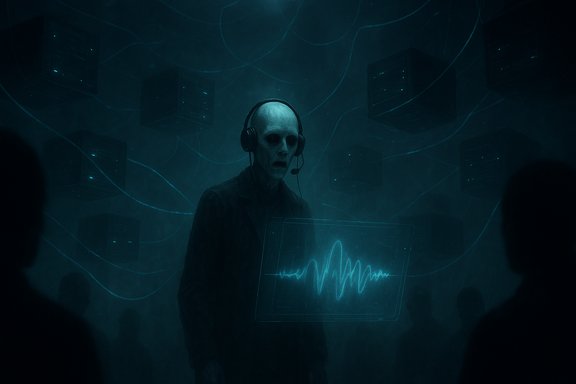
OD’s trademarks and Kojima’s comments tilt strongly toward social, networked mechanics as the core novelty. Here are plausible architectures and the player-facing experience they would create—each is speculative but grounded in what the public IP filings and cloud descriptions suggest.- Shared reaction feed: Players’ physiological or audio reactions—quiet panic spikes, voice-waves, or rapid button mashing—could be abstracted into signals that alter other players’ environments (e.g., your scream increases fear resonance in another player’s zone).
- Asynchronous haunt traces: Similar to Death Stranding’s asynchronous building and leaving-for-others ecology, OD could let players leave behind non-deterministic artifacts (a flickering light, a whisper recording) that influence how strangers experience the same space later.
- Federated social stealth: An online stealth system where the actions of other, unseen players shape patrol patterns or sensory torch ranges—forcing a player to hide not only from scripted AI but from remote player-generated state.
- Cloud-driven cinematic events: Server-side orchestration can trigger film-scale moments that are personalized by player data or community-wide signals (e.g., a global event unlocked when enough players record “fear thresholds” in a particular region).
Strengths: why OD could reshape horror design
- Scale the uncanny: Cloud systems and networked social features let designers create collective uncanny moments—events that feel greater than a single player’s experience because they are seeded or amplified by a community.
- Film-grade presentation with interactive depth: Kojima’s established approach to casting and cinematic craft—joined here with Jordan Peele and high-end actor scans—can raise horror’s production baseline while cloud systems allow for branching, personalized sequences.
- New emotional vectors: Traditional horror relies on lighting, sound, and surprise. Social mechanics add novel vectors: embarrassment, shared dread, and social contagion of fear—each capable of creating lasting, memetic player stories.
- Marketing and discovery: A game that literally uses the cloud as a design pillar is emblematic and pressworthy; if OD works, it becomes a showcase for what “cloud-native game design” can mean beyond streaming demo reels.
Risks: why the experiment could fail
- Fragile UX: Horror depends on precise timing. Any cloud-mediated jitter, dropped packets, or region-specific lag can shatter the illusion and leave players with a broken experience.
- Economic exposure: Sustained server budgets are recurrent expenses. If OD’s monetization or player-retention metrics don’t meet projections, the math becomes bleak.
- Privacy and moderation: Social systems built around reactions and player-shared media raise the specter of abuse or unwanted data capture—problems that demand robust legal, design, and moderation investments.
- Perception risk: Kojima’s admission that OD might not work is a double-edged sword: it allows creative latitude but may also undercut consumer confidence, making platform partners and investors jittery about deep-baked bets on new architectures.
- Platform politics: OD is published by Xbox Game Studios, and while it’s reported to have survived multiple rounds of Microsoft restructuring, the project exists inside a dynamic corporate environment where priorities can shift if fiscal signals change.
Business and industry implications
Microsoft’s role and the “showcase” function
For Microsoft, OD is more than a title: it’s a potential showcase that validates cloud features to developers and players. If OD demonstrates compelling cloud-native mechanics, Xbox can use it as a case study for Azure’s gaming capabilities. But the relationship is reciprocal: much of OD’s technical promise depends on Microsoft’s willingness to underwrite long-term service costs and to provide engineering collaboration at the systems level. That’s precisely what Xbox leadership has publicly signaled they intend to do—both on the visible side (tooling, Unreal work) and behind the scenes. Still, the details of how deep the engineering tie-ins are—whether Azure-hosted simulation, global orchestration, or only streaming—remain high-level in official communications.Survival during consolidation
OD weathered worries during multiple waves of Microsoft studio cuts and cancellations: reporting indicates Kojima’s project remained in development even as other, less-proven projects were shuttered. That persistence is a vote of confidence, but it’s conditional: projects that require unusual infrastructure or extended live ops are more exposed to budget tightening if ROIs slip. Public reporting reinforced both sides of this calculus: OD is active, but the corporate environment is not static.How to read Kojima’s frankness: strategy or performance?
Kojima’s “I don’t know if it will work” line functions at multiple narrative and strategic levels:- It’s creative honesty—a rare statement of exploratory design intent in a market that frequently sells certainty.
- It’s risk signaling—teasing that the project is experimental and, therefore, uncategorizable, which aligns with Kojima’s established personal brand.
- It’s a practical hedge—if OD fails commercially or critically, the public expectation has already been tempered by the admission.
What we still don’t know (and why that matters)
- The precise technical role of Azure (or any specific Microsoft cloud service) in OD’s runtime and design loop is not publicly documented in technical depth; public statements use the more generic term “cloud technology.” Until Microsoft or Kojima Productions disclose the architecture—what runs server-side, what is client-side, and what the failover modes look like—any claim that Azure is used “as a core component, not just for streaming” should be treated as plausible but not fully verified. Label this as partially unverifiable until technical publications or platform engineering writes appear.
- How Social Scream/System data will be handled: privacy, retention, and moderation policies are crucial and as-yet unannounced. If OD’s mechanics require audio capture or behavioral telemetry, the legal and UX scaffolding will be determinative of whether the idea can be shipped responsibly.
- Monetization and operational model: will OD be episodic, subscription-based, or a single-purchase title with persistent servers? Kojima’s earlier work and the presence of episodic storytelling talent suggest multiple forms are possible; the market economics will shape technical decisions (e.g., always-on servers vs. ephemeral instances).
Practical takeaways for developers and players
- For designers: OD is a reminder that cloud-native game design demands integrated game + ops + policy thinking. Social mechanics scale differently than single-player content; instrument your ideas and build rollback-safe systems.
- For players: Expect something that will attempt to feel like a shared cultural experience, not a purely solitary scare. That can be thrilling—but it may also require new social habits around consent and community conduct.
- For platform engineers: If OD’s ambition is real, it will be a stress test for hybrid cloud gameplay patterns: server-driven cinematic sequencing at low latency, region-aware orchestration, and heavy content egress management.
Final analysis — why OD matters regardless of outcome
OD is significant not because it is guaranteed to succeed, but because Hideo Kojima and a major cloud platform are publicly staging an experiment where game design itself is the variable under test. If OD succeeds, it will define a new category of horror that is social, cloud-augmented, and cinematic—an operational demonstration of what “cloud-native game design” can be. If it fails, the failure will still produce knowledge: hard-won lessons about latency trade-offs, privacy, monetization, and the limits of social mechanics in horror.Either path advances industry understanding, which is arguably the point. Kojima’s willingness to publish the experiment—and to say out loud that it may not work—is the most important part of the story. It reframes AAA development as a platform for genuine design research, not only engineered certainty.
This coverage has drawn on Kojima’s comments reported in contemporary interviews and industry reporting, trademark filings and reporting that tracked them, and Microsoft’s public positioning of cloud services as enablers for novel experiences. Where reporting is inferential—particularly the deeper technical claims about Azure’s role—the article flags those items as provisional until platform-level technical disclosures are published. Conclusion: OD is less a product announcement than a design manifesto. Kojima’s candor and the project’s cloud-and-social scaffolding make it one of the most interesting experiments in horror and cloud-native gaming right now. Whether it becomes a genre-defining success or a high-profile lesson in overreach, OD will shape conversations about what the cloud can—and should—do for interactive storytelling.
Source: spilled.gg Hideo Kojima admits his experimental horror game OD might not work
