

The rapid rise of generative AI as a first‑line resource for people seeking mental health guidance raises a deceptively simple — and critically important — question: when do people turn to AI for help, and how do human timetables and temporal rhythms change the calculus of safety, efficacy, and responsibility for AI mental‑health tools.
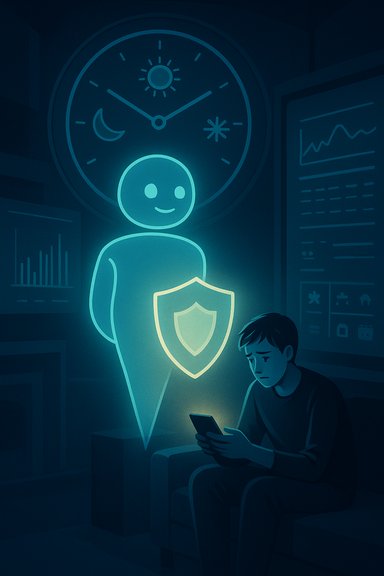
The notion that timing matters in mental health is not new. Clinical practice has long recognized daily and seasonal patterns in mood, sleep, and crises — the so‑called circadian and circannual rhythms — which influence when people feel worst and when they seek help. Large observational datasets and sleep science show that subjective wellbeing is typically higher in the morning and lower around midnight, and that suicidal behavior and ideation disproportionately occur during nocturnal hours. These patterns create predictable windows of increased vulnerability that overlap uneasily with the 24/7 availability of AI chatbots and conversational agents. At the same time, a rapidly expanding evidence base suggests that AI‑driven chatbots and conversational agents can provide small‑to‑moderate reductions in symptoms of depression, anxiety, and stress among adolescents and young adults — but those effects vary by design, user engagement, and deployment model. The clinical literature includes randomized trials of specific agents (for example, Woebot) as well as systematic reviews and meta‑analyses that show promise coupled with important caveats about safety, long‑term outcomes, and applicability. The Forbes analysis by Lance Eliot argues that fully understanding the rise of AI mental‑health use requires an explicit look at temporal rhythms — time‑of‑day, day‑of‑week, seasonal and holiday patterns — to anticipate usage spikes, optimize safety features, and inform policy. That argument is sensible and timely, but it is chiefly a call for a new class of empirical work rather than a report of settled facts. The piece highlights plausible examples such as the “Sunday scaries” and holiday‑related loneliness as candidate high‑risk windows where AI services should be especially vigilant.
The conversation about AI and mental health must move from abstract ethics and feature checklists to concrete temporal strategies: measure when people use these tools, identify the windows of greatest need and greatest risk, and operationalize time‑aware safeguards that combine machine intelligence with human care. Only then will the promise of AI as a scalable mental‑health adjunct be matched by the responsibility and reliability that vulnerable users require.
Source: Forbes https://www.forbes.com/sites/lancee...-comes-to-asking-ai-for-mental-health-advice/
 Background
The notion that timing matters in mental health is not new. Clinical practice has long recognized daily and seasonal patterns in mood, sleep, and crises — the so‑called circadian and circannual rhythms — which influence when people feel worst and when they seek help. Large observational datasets and sleep science show that subjective wellbeing is typically higher in the morning and lower around midnight, and that suicidal behavior and ideation disproportionately occur during nocturnal hours. These patterns create predictable windows of increased vulnerability that overlap uneasily with the 24/7 availability of AI chatbots and conversational agents. At the same time, a rapidly expanding evidence base suggests that AI‑driven chatbots and conversational agents can provide small‑to‑moderate reductions in symptoms of depression, anxiety, and stress among adolescents and young adults — but those effects vary by design, user engagement, and deployment model. The clinical literature includes randomized trials of specific agents (for example, Woebot) as well as systematic reviews and meta‑analyses that show promise coupled with important caveats about safety, long‑term outcomes, and applicability. The Forbes analysis by Lance Eliot argues that fully understanding the rise of AI mental‑health use requires an explicit look at temporal rhythms — time‑of‑day, day‑of‑week, seasonal and holiday patterns — to anticipate usage spikes, optimize safety features, and inform policy. That argument is sensible and timely, but it is chiefly a call for a new class of empirical work rather than a report of settled facts. The piece highlights plausible examples such as the “Sunday scaries” and holiday‑related loneliness as candidate high‑risk windows where AI services should be especially vigilant. Why timing matters: the science of temporal risk
Circadian rhythms, mood, and vulnerability
Human physiology and psychology operate on daily and seasonal cycles. Hormonal rhythms (for example, cortisol), sleep pressure, and social schedules jointly determine fluctuations in mood and cognitive resources across the day. Population‑scale analyses using survey data and ecological momentary assessments consistently find better subjective wellbeing in the morning and worse wellbeing late at night, with seasonal dips in wintertime. These temporal dynamics are not just academic: they map directly onto hours when people are more likely to ruminate, experience insomnia, or have suicidal ideation.Nighttime risk and crisis behavior
Multiple epidemiological studies show elevated rates of suicidal behavior and ideation after midnight and during late‑night wakefulness. Analyses that control for population wakefulness identify a multifold increase in risk during nocturnal hours compared with daytime periods. For clinicians, researchers, and technologists this is not a theoretical point: nighttime wakefulness compounds risk, and any 24/7 system — human or machine — must acknowledge that the hours of greatest demand can also be the hours of greatest danger.Usage timing shapes outcomes
Temporal patterns also influence how people use services. Youth and young adults often engage with digital tools at night and on weekends; clinicians see different symptom profiles depending on when contacts occur. For AI designers, those temporal patterns matter because user state (fatigue, intoxication, loneliness) and context (lack of social supports at 2 a.m. alter the likelihood that an automated response will be sufficient or that an escalation to emergency resources is necessary. The evidence base indicates that increased nocturnal use correlates with higher immediate risk and thus demands stronger safety interventions.What the evidence says about AI chatbots, mental health, and timing
Chatbot effectiveness: modest benefits, conditional success
A 2017 randomized controlled trial of a CBT‑based automated conversational agent (Woebot) reported significant short‑term reductions in depressive symptoms and high engagement among college students. More recently, a 2025 systematic review and meta‑analysis covering 31 randomized trials and nearly 30,000 participants concluded that AI chatbots show small‑to‑moderate overall effects for reducing mental distress in adolescents and young adults, with larger effects for depressive and anxiety symptoms and important heterogeneity across systems and study designs. These findings support the idea that digital conversational agents can be clinically useful — but they do not resolve safety, scalability, or timing concerns.Usage patterns and psychosocial harms at scale
A longitudinal randomized study and other experiments reveal that modality (text vs voice), conversation types, and especially heavy usage influence psychosocial outcomes. Heavy users of emotionally engaging chatbots showed increases in loneliness, dependence on the agent, and reduced socialization — outcomes that can offset short‑term symptom improvements and create new risks if left unaddressed. These effects appear to be dose‑dependent: initial engagement is often beneficial, but very high daily usage correlates with worse psychosocial outcomes. Timing and context (for example, using chatbots at night when supports are absent) likely modulate these risks.Safety frameworks and preemptive monitoring
AI safety research increasingly proposes simulation‑based testing and runtime monitors to assess how AI interacts with vulnerable users. Proposed architectures like EmoAgent simulate at‑risk user states to evaluate whether interactive agents might exacerbate symptoms and to test mitigation strategies. These technical proposals form the basis for temporal safety logic — for example, elevating detection thresholds and escalation protocols during nighttime hours or holidays when baseline risk is higher. However, these systems remain primarily research prototypes, not industry standards.Strengths of the Forbes argument
- The central insight is practical: timing shapes both demand for AI mental‑health services and risk profile of those interactions, so temporal analysis must inform design and policy. That focus redirects attention from static feature sets to dynamic, context‑aware safety.
- The article spotlights specific, actionable temporal windows — Sunday evenings, holidays, late nights — that clinicians already recognize as risky. This framing creates a clear mandate for AI providers to integrate temporal heuristics into monitoring and escalation policies.
- By calling for cross‑disciplinary attention (AI firms, regulators, clinicians, researchers), the piece points to the governance challenge rather than only vendor‑level fixes. This broad lens is essential because temporal risk mitigation implicates legal obligations, public‑health infrastructure, and clinical workflows.
Limitations and risks in the argument — what needs verification
- The Forbes column is primarily hypothesis‑generating rather than empirical: it suggests possible temporal rhythms in AI usage but does not present telemetry, behavioral analytics, or population‑scale logs to demonstrate that people do use AI for mental health more during Sunday nights, holidays, or other windows. This is a key evidence gap that must be filled with industry data or independent research. The claim is plausible, but currently speculative without usage monitoring data. Treat temporal pattern claims as hypotheses until verified by telemetry or representative studies.
- Aggregated efficacy findings for chatbots do not automatically translate to safety in high‑risk windows. Meta‑analyses show modest symptom reduction overall, but they also report heterogeneity and short follow‑up. There is limited randomized evidence specifically looking at effect moderation by time‑of‑day, intensity of use across circadian phases, or outcomes following late‑night interactions. These are research gaps, not faults of the Forbes piece, but they are essential to address before making strong operational decisions.
- Several high‑profile regulatory and legal responses (state bans, attorney‑general actions) show increasing policy friction. Policymakers are acting on harms reports and liability concerns even where the evidence base remains incomplete. That reactive posture underscores why empirical temporal analysis is urgently needed, but it also warns that policy responses may outpace best‑practice technical solutions.
Practical implications: design, policy, and clinical practice
For AI providers — engineering and product controls
AI firms that offer mental‑health capabilities should adopt time‑aware safety frameworks that operationalize the following principles:- Implement temporal telemetry: log anonymized usage timestamps, session durations, and partial‑anonymized mood indicators to analyze time‑of‑day and holiday spikes.
- Raise escalation sensitivity at known high‑risk windows (late night, public holidays, Sunday evenings) so that threshold models favor human escalation or routing to crisis lines.
- Provide explicit in‑session routing: when certain phrases, suicidal ideation, or severe symptoms are detected during nocturnal hours, automatically offer crisis resources, location‑specific emergency contacts, and a clear path to human support.
- Limit repetitive and emotionally reinforcing loops: detect and interrupt excessive nightly sessions that may reinforce dependence.
- Conduct regular safety audits with simulated vulnerable users across times of day and special calendar events (holidays), using adversarial testing frameworks.
For clinicians and health systems
- Incorporate digital interactions into risk assessments. When patients report regular nighttime AI use for emotional support, clinicians should ask about frequency, content, escalation pathways, and whether that use substitutes for human contact.
- Coordinate with digital providers to establish clinical escalation pathways: agreements that, under predefined criteria, enable rapid transfer to human clinicians or local crisis teams.
- Educate patients about benefits and limits of AI tools; recommend time‑bounded use and encourage daytime engagement with therapeutic supports when possible.
For policymakers and regulators
- Require transparency reporting on temporal usage patterns and safety incidents (anonymized) so regulators can detect systemic spikes in late‑night harm reports.
- Mandate baseline safety features for consumer‑facing mental‑health AI: crisis detection, automated routing to emergency services, and minimum documentation for high‑risk interactions.
- Support independent audits and data access for researchers to study temporal risk and effectiveness. Regulatory experimentation with carve‑outs for supervised hybrid models (human + AI) may balance innovation and safety.
Operationalizing temporal safeguards — a step‑by‑step blueprint
- Baseline analysis: collect 90 days of anonymized timestamped session data and compute hourly, daily, and seasonal usage rates while preserving privacy protections.
- Risk calibration: overlay clinical incident reports (self‑harm flags, crisis referrals) with temporal usage to identify high‑risk windows and user cohorts.
- Policy design: define escalation thresholds that adjust dynamically based on time (e.g., lower threshold for human escalation between 11 p.m. and 6 a.m..
- Simulation testing: use synthetic vulnerable‑user agents to simulate conversations at different times and measure deterioration metrics.
- Deployment controls: roll out time‑aware escalation in stages with monitoring, A/B testing, and clinician review.
- Continuous learning: update thresholds based on observed outcomes and external events (holiday seasons, large societal stressors).
Risks, unintended consequences, and ethical trade‑offs
- Over‑escalation and false positives: lowering thresholds at night will increase human referrals and emergency contacts, potentially straining crisis systems and creating false alarms. These capacity issues must be matched with investments in human services.
- Privacy and surveillance: collecting and analyzing temporal data raises privacy concerns. Anonymization, differential privacy, and strict access controls are essential to avoid reidentification, especially for vulnerable groups.
- Displacement and dependence: encouraging AI use for late‑night support could unintentionally normalize nocturnal reliance on machines rather than promoting daytime care and social supports. Evidence indicates heavy nocturnal usage correlates with increased dependence and loneliness; interventions should aim to reduce harmful dependence rather than merely detect it.
- Regulatory fragmentation: state bans and divergent requirements create a patchwork that complicates national product design. Coordinated policy frameworks and federal guidance would reduce friction and improve safety consistency.
Research agenda: what we need to know next
- Telemetry studies: industry‑academic partnerships to analyze timestamped logs and link them (with consent and privacy protections) to outcome measures and crisis events. That data will determine whether Sunday nights, holidays, or other windows are empirically significant for AI mental‑health use.
- Time‑of‑day RCTs: randomized trials comparing standard chatbot deployment versus time‑aware escalations (for example, heightened human contact during nights) to measure effects on safety and clinical outcomes.
- Longitudinal cohort studies: measure how usage timing affects long‑term trajectories (symptom remission, social functioning, dependence) across age groups.
- Simulation and red‑teaming: expanded use of virtual vulnerable users to probe models for harmful outputs under nocturnal or holiday contexts.
- Health services research: evaluate capacity implications of time‑aware escalations on crisis lines, emergency departments, and outpatient mental‑health services.
A balanced conclusion: opportunity, caution, and an operational imperative
The Forbes piece rightly reframes an underexplored axis of AI mental‑health use: time. Temporal rhythms — circadian cycles, day‑of‑week effects, holidays and seasonal shifts — shape when people feel vulnerable and when they will reach for 24/7 tools. That insight is simple in concept but complex in practice: existing evidence shows that AI chatbots can deliver modest benefits and that nocturnal hours are associated with higher risk, yet we lack industry‑wide, empirical telemetry that ties these two realities together at scale. Until such time‑aware data exist, strong engineering guardrails, collaborative policy approaches, and clinician engagement are the pragmatic path forward. Designing safer AI for mental health is not only about improving language models or training datasets; it is about aligning product behavior with human time. That requires logging and analyzing when users turn to machines, adjusting safety thresholds when people are most vulnerable, and ensuring human safety nets are available when AI reaches its limits. The potential to expand access and provide timely support is real; the obligation to prevent harm — especially during the darkest hours of the night — is equally real.The conversation about AI and mental health must move from abstract ethics and feature checklists to concrete temporal strategies: measure when people use these tools, identify the windows of greatest need and greatest risk, and operationalize time‑aware safeguards that combine machine intelligence with human care. Only then will the promise of AI as a scalable mental‑health adjunct be matched by the responsibility and reliability that vulnerable users require.
Source: Forbes https://www.forbes.com/sites/lancee...-comes-to-asking-ai-for-mental-health-advice/
