

Few phrases capture modern corporate power like “too big to fail,” and the companies on this short list are precisely the firms that, through size, reach, or infrastructure, now sit at the crossroads of commerce, technology, and public life—so entangled with national economies and everyday routines that their failure would ripple far beyond shareholders and boardrooms. The AOL feature that circulated this list—naming Amazon, JPMorgan Chase, Microsoft, Visa, Apple, Google (Alphabet), Walmart, Disney, Johnson & Johnson, and Tesla—gets the intuition right: these firms are systemic nodes. But the devil is in the details. This feature unpacks why each company makes the “too big to fail” conversation unavoidable, updates the key facts and figures where appropriate, assesses the real systemic risks they pose, and lays out the policy and business levers that can reduce the harm if one of them stumbles.
The phrase too big to fail migrated from banking into the broader corporate lexicon after the 2008 financial crisis. It describes firms whose collapse would cause disproportionate economic damage because of their scale, interconnectedness, and role in critical infrastructure: payments, data infrastructure, supply chains, healthcare distribution, and essential consumer services.
Globalization and digital transformation amplified those network effects. Large tech platforms now host vital public goods—cloud computing, search, mapping, payments and communications—while a small set of banks, insurers, and logistics operators sit at the center of billions of transactions. The result is systemic exposure: a single major failure could interrupt commerce, communications, health services, and transportation simultaneously.
This article revisits the ten companies named in the AOL feature, verifies key claims against current public figures, and provides a practical, risk-focused analysis for readers who want to understand why these firms carry outsized weight—and what policymakers, businesses, and customers should watch for.
Conclusion
The list of companies that may be “too big to fail” is less a list of inevitable bailouts than a map of where modern economies concentrate risk. Each company examined here—Amazon, JPMorgan Chase, Microsoft, Visa, Apple, Alphabet, Walmart, Disney, Johnson & Johnson, and Tesla—runs vital functions that millions of people and thousands of institutions rely on daily. That makes resilience a public good. Building that resilience will require cooperation across regulators, private firms, and civil society: clearer disclosure, meaningful redundancy, smarter standards, and credible contingency planning. Those steps won’t make these firms small, but they can make the world less fragile when the next major disruption arrives.
Source: AOL.com 10 Companies That Are Too Big to Fail
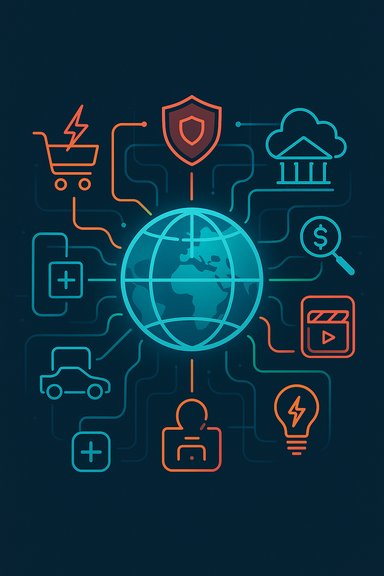 Background / Overview
The phrase too big to fail migrated from banking into the broader corporate lexicon after the 2008 financial crisis. It describes firms whose collapse would cause disproportionate economic damage because of their scale, interconnectedness, and role in critical infrastructure: payments, data infrastructure, supply chains, healthcare distribution, and essential consumer services.Globalization and digital transformation amplified those network effects. Large tech platforms now host vital public goods—cloud computing, search, mapping, payments and communications—while a small set of banks, insurers, and logistics operators sit at the center of billions of transactions. The result is systemic exposure: a single major failure could interrupt commerce, communications, health services, and transportation simultaneously.
This article revisits the ten companies named in the AOL feature, verifies key claims against current public figures, and provides a practical, risk-focused analysis for readers who want to understand why these firms carry outsized weight—and what policymakers, businesses, and customers should watch for.
Why “too big” is no longer just a banking phrase
The anatomy of systemic corporate risk
Systemic risk from a corporation typically arises from three, overlapping conditions:- Size and scale — balance-sheet heft, market capitalization, or sheer transaction volumes that make the entity a pillar of one or more sectors.
- Concentration of critical infrastructure — when one firm’s network or platform processes a meaningful share of an economy’s digital, financial, or physical flows.
- Interconnectedness — embeddedness in supply chains, financial markets, and public services that cause failures to propagate quickly.
The 10 companies — updated facts, systemic role, and risks
Each capsule below follows the same pattern: the company’s central role, verified recent figures where available, why that role creates systemic exposure, and practical mitigants.Amazon — the logistics and infrastructure backbone
- Why it matters: Amazon combines e-commerce, fulfillment, and the cloud via Amazon Web Services (AWS). AWS is one of the three global cloud infrastructure leaders and hosts critical services for streaming, government, and enterprise workloads.
- Key facts: AWS has consistently held roughly around 30% of global cloud infrastructure market share in recent quarters; that position translates to an annual revenue run-rate measured in the low hundreds of billions of dollars. Amazon’s retail and fulfillment networks became essential lifelines during the pandemic when consumers shifted heavily to online shopping.
- Systemic exposure: An outage or prolonged operational failure at AWS could disrupt services ranging from streaming and online retail checkouts to government and health IT systems. Similarly, a severe logistics disruption at Amazon’s fulfillment or last-mile operations would ripple through retailers that rely on its scale.
- Mitigants: Most large customers architect for multi-cloud resilience and geographic redundancy; regulators and industry groups increasingly push for clearer outage reporting and incident response standards.
JPMorgan Chase — the biggest bank by assets in the U.S.
- Why it matters: JPMorgan Chase is a cornerstone of global banking—deposit-taking, lending, trading, payments processing, and custody services.
- Key facts: JPMorgan’s total assets are in the trillions—reported at roughly $4.0 trillion on the consolidated balance sheet at the end of 2024—making it by far the largest U.S. bank by assets. Its counterparties and market plumbing connect it to almost every major financial market.
- Systemic exposure: A major failure would strain credit markets, derivatives clearing, mortgage servicing, and global payment rails; it could trigger liquidity squeezes and confidence shocks that propagate through the financial system.
- Mitigants: Post-2008 reforms dramatically increased capital, liquidity buffers, and stress testing. Still, firms this size remain sensitive to sharp market moves and operational disruptions—maintaining robust contingency funding and resolvability plans is essential.
Microsoft — enterprise software, cloud, and now AI
- Why it matters: Microsoft is both a consumer-facing vendor (Windows, Office) and a cloud/AI infrastructure leader (Azure). Recent investments and strategic deals have tied Microsoft to foundational AI platforms and enterprise security.
- Key facts: Microsoft’s cloud business (Azure and related intelligent cloud units) runs at an annual run-rate well into the tens of billions; the company has also invested heavily and retains a material stake and long-term commercial relationship with prominent AI developers.
- Systemic exposure: Azure hosts government infrastructure, enterprise systems, and critical SaaS platforms. An outage or persistent security breach could affect public sector services, healthcare IT, and corporate operations globally.
- Mitigants: Microsoft’s enterprise SLAs, multi-region deployments, and security investments are substantial. Yet the spread of AI services raises new regulatory and operational stakes—particularly around model governance and data flows.
Visa — the payment rails that keep commerce moving
- Why it matters: Visa operates one of the world’s largest payment processing networks; it is the highway over which card-based transactions travel.
- Key facts: Visa processes hundreds of billions of transactions per year; recent fiscal reports show processed transactions measured in the low- to mid-200 billions annually, with steady growth in payments volume.
- Systemic exposure: If Visa’s network were to fail or be severely degraded, retail and online commerce would face a near-instant halt in many geographies; businesses would suffer immediate cash-flow and settlement problems.
- Mitigants: Payments networks have significant redundancy and contingency arrangements; merchants increasingly support alternative rails and digital wallets, but dependency remains high—especially in countries where card networks dominate.
Apple — the platform for mobile commerce and computing
- Why it matters: Apple’s iPhone ecosystem is a major consumer platform, and its App Store and services (payments, identity, maps) power a huge digital economy of apps and subscriptions.
- Key facts: Apple’s market capitalization has approached the multiple-trillion-dollar mark in recent years—making it one of the world’s most valuable corporations. Its hardware, software, and services are tightly integrated.
- Systemic exposure: While Apple’s failure is improbable, large-scale outages (App Store, iCloud, payment systems) can affect millions; vendor lock-in in mobile can make recovery and migration costly for users and developers.
- Mitigants: Diversified device ecosystems and cross-platform services reduce single-vendor risk for some use cases, but Apple’s control over its hardware and app distribution remains a concentration point.
Google (Alphabet) — search, advertising, and information infrastructure
- Why it matters: Google search routes a vast share of internet traffic and acts as the default gateway for queries, maps, email, cloud services, and video (YouTube).
- Key facts: Google processes the overwhelming majority of global search queries—commonly reported at around 90% of global search engine market share—and operates one of the largest advertising and cloud platforms.
- Systemic exposure: Any major degradation in search or ad systems would impact news discovery, small-business marketing, navigation, and educational access. Algorithmic changes at Google also shape traffic flows across the web.
- Mitigants: The web has alternative search providers and decentralized content sources, but Google’s role in discoverability and advertising makes it uniquely influential; public scrutiny and regulatory interest in antitrust and content governance are ongoing.
Walmart — retail, jobs, and supply-chain muscle
- Why it matters: With hundreds of billions in annual sales and a workforce measured in the low millions, Walmart anchors domestic grocery supply and logistics in the U.S. and beyond.
- Key facts: Walmart’s global workforce numbers exceed two million employees, and its logistics operations are a backbone for fast-moving consumer goods distribution.
- Systemic exposure: Disruption to Walmart’s supply chain or distribution footprint—whether from a cyberattack, logistics failure, or major operational incident—would quickly affect food availability, supplier cash flows, and local labor markets.
- Mitigants: The retail sector is resilient and diversified, but Walmart’s size amplifies the impact when it changes procurement, pricing, or distribution strategies.
Disney — content, parks, and cultural infrastructure
- Why it matters: Disney combines media, streaming, parks, and consumer experiences, with a portfolio that includes marquee franchises and distribution platforms.
- Key facts: Disney’s pivot to streaming (Disney+) rapidly scaled the business—Disney+ reached the 100-million-paid-subscriber milestone in roughly 16 months after launch—and the company still generates major revenue from parks and studios.
- Systemic exposure: A major failure at Disney is unlikely to collapse the economy, but its content and distribution ecosystems are economically important to suppliers, theaters, talent markets, and advertising sectors; park closures can have significant regional economic impact.
- Mitigants: Disney’s business model is diversified across media and parks, and the company has leaned into subscription, advertising, and licensing revenue to reduce single-point risks.
Johnson & Johnson — medicine, devices, and global health logistics
- Why it matters: J&J is a diversified healthcare giant with pharmaceuticals, medical devices, and consumer health products. It played a major public role in the global COVID-19 vaccine rollout with its single-dose vaccine.
- Key facts: Johnson & Johnson’s portfolios span vaccines, oncology, cardiovascular devices, and widely distributed over-the-counter items—categories that make it an essential supplier in many health systems.
- Systemic exposure: Sudden interruptions in medical-device supply chains or pharmaceutical production can directly harm patient care. J&J’s scale in several critical segments means that manufacturing gaps or regulatory actions have broad consequences.
- Mitigants: The global pharmaceutical and device supply chain is deeply regulated with multiple producers for many products—but for certain specialized devices or therapies, substitution can be slow and costly.
Tesla — electric vehicles, energy, and charging infrastructure
- Why it matters: Tesla popularized EVs and built the largest proprietary fast-charging network (Superchargers) in North America, alongside solar and battery offerings. Its leadership also influences EV standards and OEM behavior.
- Key facts: Tesla operates tens of thousands of Supercharger ports globally—a figure that has exceeded 60,000 connectors in recent reporting—giving it the largest single fast-charging footprint in many markets.
- Systemic exposure: A failure of Tesla’s charging network would be localized in impact to EV users, but because its charging footprint is a backbone for long-distance EV travel and certain fleet operations, interruptions can be highly disruptive. Broader financial distress at Tesla could slow EV adoption if it affected battery production and charging rollout.
- Mitigants: Other charging networks (ChargePoint, Electrify America, EVgo) and cross-compatibility initiatives are reducing single-network dependency; the migration to shared connector standards is also opening Tesla’s network to more vehicles.
Cross-cutting strengths that make these firms essential
- Network effects: Each firm benefits from self-reinforcing growth—more users attract more developers, merchants, or partners, which in turn attracts more users.
- Scale economics: Large fixed investments in data centers, logistics, R&D, or manufacturing become more efficient as usage grows—creating a cost advantage difficult for smaller competitors to match.
- Platform control: These firms often own both the infrastructure and the customer relationship (device + app store; cloud + enterprise contract; bank + payments network), which deepens lock-in.
- Global reach: Large multinationals smooth revenue volatility through geographic diversification, but global operations also mean their disruptions have cross-border externalities.
The flip side: concentrated risks and real-world failure scenarios
When a “too big” company stumbles, the consequences cascade. Consider these plausible scenarios:- Liquidity shock at a major bank that freezes credit lines, forcing businesses to cut payroll or inventory purchases.
- Multi-day cloud outage at a top provider that disables productivity apps, e-commerce checkouts, and government portals.
- Major cyberattack on a payments network that halts card authorizations nationwide.
- A supply-chain failure at a dominant manufacturer (semiconductors, batteries, or medical devices) that stops production lines across multiple industries.
What regulators and companies can do — practical mitigants
Regulators and corporate leaders have a toolbox to reduce the odds or impact of catastrophic failures:- Accountability and stress testing: Financial firms already undergo stress tests; similar resilience assessments and tabletop exercises should be mandatory for firms that operate critical infrastructure (cloud, payments, energy).
- Interoperability and standards: Open standards (for payments, charging connectors, cloud APIs) lower switching costs and build redundancy.
- Incident transparency and reporting: Faster, clearer public reporting of outages and cyber incidents reduces uncertainty and helps partners respond.
- Resolvability planning: Large nonbank firms should prepare credible wind-down plans so authorities have options other than ad hoc bailouts.
- Decentralization where feasible: Encouraging multi-vendor deployments and multi-cloud strategies reduces single-point dependencies.
- Targeted capital or operational buffers: For banks and critical utilities, regulatory capital and contingency resources are proven stabilizers; a similar logic applies to firms running national-scale digital infrastructure.
Strengths, blind spots, and the political economy of “saving” big firms
A few structural realities complicate policy solutions:- Public reliance vs. political will: Governments may hesitate to let a critical firm fail because the economic cost of intervention—direct and indirect—is enormous. That creates moral hazard, where firms may take bigger risks knowing the state is likely to intervene.
- International coordination gaps: Many of these firms operate across borders; coordinated international responses are harder to organize than domestic ones.
- Innovation trade-offs: Heavy-handed regulation can slow innovation. Policymakers must balance resilience with keeping competition and experimentation alive.
- Data and national-security externalities: Firms that store or process critical data raise national-security concerns that add a layer of complexity to oversight.
What readers should watch—practical signals and red flags
- Material customer concentration: when a handful of clients or single sectors account for a large share of revenue, knock-on failures become more probable.
- Rapid capital intensity or debt accumulation without commensurate liquidity buffers.
- Monoculture infrastructure choices—extensive dependence on one cloud region, one payment corridor, or one supplier.
- Increasing regulatory scrutiny: antitrust probes, financial penalties, or forced break-ups can both reduce concentration and create short-term instability.
- Cybersecurity incident frequency and severity—escalating attack patterns are a leading indicator of future operational disruptions.
Final assessment: “Too big to fail” is a fact pattern, not a destiny
The AOL piece that cataloged these ten firms framed a compelling intuition: their scale and embedment in everyday systems make them special. That intuition stands. But a modern, rigorous view requires nuance and updated facts:- Some assertions that sounded definitive years ago require updating as figures shift—banks’ asset sizes grow, cloud market shares ebb and flow, and charging networks proliferate.
- For many firms, failure is unlikely—but disruption is always possible and, given interconnections, likely to cascade.
- Policy responses are imperfect but evolving: stress testing, transparency rules, and interoperability standards have reduced identifiable fragilities but have not eliminated them.
Conclusion
The list of companies that may be “too big to fail” is less a list of inevitable bailouts than a map of where modern economies concentrate risk. Each company examined here—Amazon, JPMorgan Chase, Microsoft, Visa, Apple, Alphabet, Walmart, Disney, Johnson & Johnson, and Tesla—runs vital functions that millions of people and thousands of institutions rely on daily. That makes resilience a public good. Building that resilience will require cooperation across regulators, private firms, and civil society: clearer disclosure, meaningful redundancy, smarter standards, and credible contingency planning. Those steps won’t make these firms small, but they can make the world less fragile when the next major disruption arrives.
Source: AOL.com 10 Companies That Are Too Big to Fail
