

Treyarch’s development leads make one thing clear: Call of Duty’s live-service future is not an afterthought or a marketing slogan — it’s the engineering challenge, product design problem, and cultural test the studio runs against every day as seasons roll out and players demand instant changes.
Call of Duty has long been a tentpole franchise, but the modern battleground for player attention is a crowded live-service ecosystem where seasonal cadence, rapid fixes, and deep cross‑mode economies determine long‑term engagement. Treyarch’s recent comments about Black Ops 7 and Warzone crystallize how mature AAA live ops teams balance long lead times with last‑minute flexibility, and why modes like the campaign‑adjacent Endgame are reshaping what a “Call of Duty release” even looks like.
This feature digs into the interview material, verifies the key technical and product claims, and evaluates the strengths and risks of Treyarch’s approach — from season planning windows to staff time‑off strategies, and from PvE Endgame design to the studio’s responsibilities as one of the largest live‑service operations in games.
This pipeline model has three important consequences:
However, the model relies on accurate assumptions about player behavior. Mistakes in those early assumptions can be costly; the studio must hedge by preserving polish capacity and by designing modular systems that tolerate pivoting late in the schedule. The interview suggests Treyarch is consciously using this modularity to avoid wholesale rewrites as seasons progress.
Key characteristics of Endgame as described by the developers:
This model raises both operational and cultural questions:
Why Azure + Kubernetes matters for live service shooters:
For the market, the Call of Duty example confirms the larger industry thesis: sustained engagement often beats one‑time sales in long‑term active user metrics. That advantage explains why live services attract massive investment and strategic alignment from platform owners — including potential backend integrations with cloud providers to secure the technical foundations of these services. However, with that upside comes elevated expectations from players and an enduring requirement to maintain technical and social trust.
Yet ambition carries the cost of tradeoffs. The most consequential is user experience fracture: the same systems that enable unified progression and cross‑mode economies can erode single‑player convenience and alienate players accustomed to offline campaign elasticity. Technical migrations and corporate incentive shifts introduce additional, often invisible, risks.
This is the central tension of modern AAA live services: scale and engagement advantages come with structural changes that must be managed ethically and technically. If Treyarch and its publisher can continue to invest in tooling, transparent communication, and thoughtful concessions for players (especially solo players), the live‑service model can deliver both commercial success and respectful player experiences. If not, the very systems that keep the lights on — always‑online services, cross‑mode entitlements, and rapid monetization cycles — will become sources of friction that erode trust.
Treyarch is playing a long game: treating launch as a starting line, not a finish, and treating player feedback as an engine for iteration. That posture is the best path to sustain Call of Duty’s live‑service momentum — provided the studio and publisher maintain the technical backbone, cultural safeguards, and product empathy required to keep every type of player in the fold.
Conclusion: the live‑service Call of Duty of today is a complex organism — many moving parts, high operational demands, and clear wins when it works. Treyarch’s interview illuminates a disciplined, iterative approach that explains the franchise’s persistence; it also exposes the fault lines the studio must continuously navigate to keep a broad and demanding audience satisfied.
Source: Windows Central https://www.windowscentral.com/gami...-the-biggest-live-service-games-in-the-world/
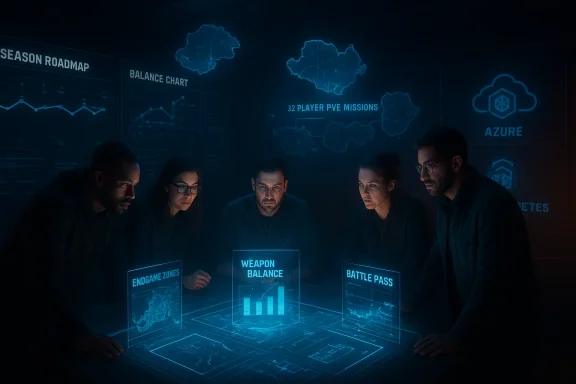 Background
Call of Duty has long been a tentpole franchise, but the modern battleground for player attention is a crowded live-service ecosystem where seasonal cadence, rapid fixes, and deep cross‑mode economies determine long‑term engagement. Treyarch’s recent comments about Black Ops 7 and Warzone crystallize how mature AAA live ops teams balance long lead times with last‑minute flexibility, and why modes like the campaign‑adjacent Endgame are reshaping what a “Call of Duty release” even looks like.This feature digs into the interview material, verifies the key technical and product claims, and evaluates the strengths and risks of Treyarch’s approach — from season planning windows to staff time‑off strategies, and from PvE Endgame design to the studio’s responsibilities as one of the largest live‑service operations in games.
How Treyarch plans a season: early work, late polish
Treyarch describes season planning as a long‑running manufacturing process rather than a short sprint. According to the studio, a significant portion of season content — often for Seasons 1 and 2 — is developed six to eight months before players see it, leaving a late window for polish and iteration. That allows the team to have content “80 to 90 percent of the way there” and then tune it once player feedback starts arriving.This pipeline model has three important consequences:
- It forces cross‑discipline alignment early (design, systems, art, servers).
- It creates an expectation that initial content will be iterated rapidly post‑ship.
- It requires investments in tooling and automation so late tweaks don’t cascade into weeks of rework.
Why early‑stage building matters
Building core content months in advance reduces risky rush work and allows larger systems (like progression and cross‑mode entitlements) to be validated. It also gives teams time to plan dependent features — for example, weapon progression that must work across Multiplayer, Zombies, Endgame, and Warzone. That shared economy is both a player value and a technical integration challenge.However, the model relies on accurate assumptions about player behavior. Mistakes in those early assumptions can be costly; the studio must hedge by preserving polish capacity and by designing modular systems that tolerate pivoting late in the schedule. The interview suggests Treyarch is consciously using this modularity to avoid wholesale rewrites as seasons progress.
Endgame: campaign developers in a live‑ops world
Endgame — the co‑op, open‑world PvE extraction mode introduced in Black Ops 7 — is an illustrative case study in how campaign teams are migrating into live services. Treyarch and Raven converted campaign designers into long‑running live content teams, building a mode that supports up to 32 players in mission‑based content with loot and extraction mechanics. That shift required different staffing, new pipelines, and an acceptance that content is not finished at ship.Key characteristics of Endgame as described by the developers:
- A mix of systemic, exploratory content (e.g., Avalon-style zones) and more scripted, quest-style encounters.
- Long‑term live‑service support with dedicated teams rather than a short campaign sprint.
- Design emphasis on player stories — emergent cooperative moments and replayable challenge architecture over one‑time narrative payoffs.
Live‑ops cadence and the player experience
Treyarch’s live‑ops job is fundamentally a balancing act between content velocity and quality. Players want new maps, modes, and Battle Pass rewards on a predictable cadence; they also demand stability and fair competition. Treyarch’s solution — heavy upfront work + built‑in flexibility — is aimed at satisfying both.- Players get predictable content pipelines (Seasons 1 and 2 roadmap visibility).
- The team ships content early enough to iterate on emergent metas.
- Rapid balance passes occur in the first weeks of each season to respond to discovered imbalances.
What players should expect from the cadence
- Early seasonal content delivered with room for changes.
- Quick tuning within the first weeks for weapon balance and attachments.
- Mid‑season content drops (new maps, modes), and event windows tied to the Battle Pass.
Workforce management: keeping people and servers healthy
Live services are a people problem as much as a technical one. Treyarch says it staggers time off so the studio never fully stops, ensuring breaks while maintaining the live pipeline. They view launch as the starting gun, not the finish line, which means sustained support, content, and playlist updates throughout the year.This model raises both operational and cultural questions:
- How do you protect creative morale when long‑term live commitments replace finite projects?
- How do you structure incentives to reward both episodic creativity and relentless iteration?
- How do you preserve long production runs for high‑risk features while meeting short‑term retention KPIs?
Technical backbone and server architecture considerations
Large‑scale live ops demand robust backend architecture. The wider coverage in industry reporting suggests a migration toward cloud infrastructures such as Microsoft Azure is likely for Call of Duty’s backend services — a logical step given Microsoft’s ownership and Azure’s global footprint. Migration talk has been linked to Demonware job postings referencing “large‑scale migration to Microsoft Azure” and Kubernetes expertise for scalable deployments. While neither Activision nor Microsoft made a single declarative public migration announcement in the interview, the technical rationale — lower latency, autoscaling for player surges, and smoother rollout via container orchestration — is consistent with the industry trend.Why Azure + Kubernetes matters for live service shooters:
- Autoscaling to handle massive concurrent spikes (tournaments, seasonal launches).
- More resilient patch rollouts via containerized deployments and gradual canary updates.
- Potential reduction in latency and improved regional presence when paired with Azure’s global data centers.
Strengths: why Treyarch’s approach can work
- Predictive planning prevents last‑minute chaos. By building early and saving polish windows, Treyarch reduces the likelihood of rushed, buggy drops.
- Multi‑discipline continuity: campaign staff moved to Endgame and long‑term live roles, preserving institutional knowledge.
- Active feedback loops: developers play the game and ingest community signals quickly; that speeds meaningful tuning.
- Player diversity focus: designing for core 6v6 players, Face Off fans, Endgame co‑opters, Zombies enthusiasts, and Warzone players keeps broad audiences engaged across modes.
Risks and unresolved issues
Even with the strengths noted above, significant risks remain.- Player friction tradeoffs: Always‑online models and tight live integration can alienate players who expect campaign pause and save‑and‑quit functionality. Reports of online‑only campaign behavior and strict AFK enforcement in recent Call of Duty releases illustrate the tension between unified progress systems and single‑player convenience. Those design choices can be perceived as hostile to traditional campaign players.
- Technical fragility during migration: Any backend migration to Azure or a Kubernetes‑centric architecture introduces a surface for regressions: authentication issues, entitlement mismatches, and patch‑time disruptions. These can be highly visible and damaging when they impact campaign sessions or long extraction runs in Endgame.
- Cultural and incentive changes: Large corporate ownership can alter studio incentives over time. Industry voices have warned that assimilation into bigger structures risks diluting studio bonus systems and creative autonomy. History suggests such shifts can affect long‑term franchise tone if not managed deliberately.
- Cross‑gen compromises: Supporting older console hardware alongside new‑gen features can force technical tradeoffs that show up as degraded performance or feature parity issues on legacy devices. That raises questions about how the studio communicates differences and maintains quality.
What this means for players and the market
For players who prize constant updates, seasonal rewards, and evolving co‑op options, Treyarch’s disciplined live‑ops model is good news: predictable seasons, active balance passes, and a continuous stream of content. For players who value a traditional single‑player, pauseable, save‑and‑quit campaign, the new live integration can feel like a net loss unless studios introduce offline or solo‑friendly alternatives. Early reports suggest this gulf is real and requires careful product choices to avoid alienating a significant audience segment.For the market, the Call of Duty example confirms the larger industry thesis: sustained engagement often beats one‑time sales in long‑term active user metrics. That advantage explains why live services attract massive investment and strategic alignment from platform owners — including potential backend integrations with cloud providers to secure the technical foundations of these services. However, with that upside comes elevated expectations from players and an enduring requirement to maintain technical and social trust.
Recommended watchlist: signals that matter going forward
- Server adoption and migration progress: any official announcements about Demonware, Azure, or Kubernetes rollouts will materially affect latency and scaling expectations.
- Campaign accessibility fixes: whether Treyarch introduces optional offline modes, save‑and‑quit, or solo‑friendly bots to address single‑player friction. Early community complaints make this a high‑impact area.
- Staffing and incentive transparency: how Microsoft and Activision structure bonuses, creative autonomy, and studio governance over the next 12–24 months will provide signals about the franchise’s cultural trajectory.
- Cross‑gen performance clarity: disclosure of parity or SKU differences for legacy consoles versus current‑gen hardware will reduce consumer confusion and help set expectations.
Final analysis — balancing ambition and empathy
Treyarch’s live‑service strategy for Black Ops 7 and Warzone reflects a mature understanding of what these games demand: long lead content pipelines, rapid post‑launch iteration, and dedicated teams for persistent modes like Endgame. The studio’s explicit embrace of flexibility built into planning is a constructive solution for a product that must be both predictable and adaptable.Yet ambition carries the cost of tradeoffs. The most consequential is user experience fracture: the same systems that enable unified progression and cross‑mode economies can erode single‑player convenience and alienate players accustomed to offline campaign elasticity. Technical migrations and corporate incentive shifts introduce additional, often invisible, risks.
This is the central tension of modern AAA live services: scale and engagement advantages come with structural changes that must be managed ethically and technically. If Treyarch and its publisher can continue to invest in tooling, transparent communication, and thoughtful concessions for players (especially solo players), the live‑service model can deliver both commercial success and respectful player experiences. If not, the very systems that keep the lights on — always‑online services, cross‑mode entitlements, and rapid monetization cycles — will become sources of friction that erode trust.
Treyarch is playing a long game: treating launch as a starting line, not a finish, and treating player feedback as an engine for iteration. That posture is the best path to sustain Call of Duty’s live‑service momentum — provided the studio and publisher maintain the technical backbone, cultural safeguards, and product empathy required to keep every type of player in the fold.
Conclusion: the live‑service Call of Duty of today is a complex organism — many moving parts, high operational demands, and clear wins when it works. Treyarch’s interview illuminates a disciplined, iterative approach that explains the franchise’s persistence; it also exposes the fault lines the studio must continuously navigate to keep a broad and demanding audience satisfied.
Source: Windows Central https://www.windowscentral.com/gami...-the-biggest-live-service-games-in-the-world/
