

The Kennedy Center now carries a new name on its façade — and the URL that might have been expected to follow was quietly pre-empted by a satirist who turned the moment into a lesson about branding, the web, and the limits of legal redress.
In mid-December, the board of the John F. Kennedy Center for the Performing Arts — dominated by appointees allied with the president — voted to add Donald J. Trump’s name to the institution’s official designation. Work crews applied new lettering to the center’s exterior within days, and the change immediately sparked political backlash, legal filings, and cancellations by performers who said they could not be associated with the renamed venue. Long before scaffolding hit the marble and before the announcement circulated on social feeds, a veteran comedy writer who has worked on shows such as South Park and Mad TV had quietly purchased the most obvious domain names tied to the story: trumpkennedycenter.org and trumpkennedycenter.com. Rather than park the domains, Toby Morton launched a full parody site that mimics official styling and then undercuts it with satirical content aimed at the political theatre surrounding the renaming. This episode sits at the intersection of three modern battlegrounds: the politics of naming public institutions, the legal boundaries of domain ownership and parody, and the cultural weaponization of branding in a 24/7 media cycle.
There are tactical reasons the approach works:
The legal outcomes remain unsettled — both for the board’s rename and for any potential claim against the satirist — and the coming weeks will reveal whether courts, platforms, or public opinion ultimately draw the boundaries. For institutions, the lesson is practical and immediate: control your name online, or others will control how it is first seen. For creators, the case underscores both the power and the peril of parody in the 21st century.
Source: PCMag UK Trump Put His Name on the Kennedy Center, But a Former South Park Writer Owns the Domain
 Background
In mid-December, the board of the John F. Kennedy Center for the Performing Arts — dominated by appointees allied with the president — voted to add Donald J. Trump’s name to the institution’s official designation. Work crews applied new lettering to the center’s exterior within days, and the change immediately sparked political backlash, legal filings, and cancellations by performers who said they could not be associated with the renamed venue. Long before scaffolding hit the marble and before the announcement circulated on social feeds, a veteran comedy writer who has worked on shows such as South Park and Mad TV had quietly purchased the most obvious domain names tied to the story: trumpkennedycenter.org and trumpkennedycenter.com. Rather than park the domains, Toby Morton launched a full parody site that mimics official styling and then undercuts it with satirical content aimed at the political theatre surrounding the renaming. This episode sits at the intersection of three modern battlegrounds: the politics of naming public institutions, the legal boundaries of domain ownership and parody, and the cultural weaponization of branding in a 24/7 media cycle.Overview: what happened online and on the ground
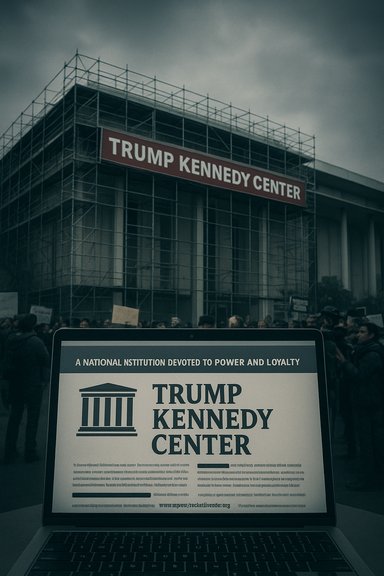
At a glance, Morton’s site resembles an institutional homepage: clean header, a logo echoing the Kennedy Center’s visual DNA, and a faux “login” affordance. But the mimicry is conscious and immediate; the page flips into biting satire as you scroll. A prominent tagline declares the venue to be “A National Institution Devoted To Power And Loyalty,” and the satirical events roster includes items such as “The Epstein Dancers,” while a reworked logo turns the center’s classical columns into jail-cell bars and incorporates redacted text referencing Epstein files. The site also carries an all-caps parody disclaimer and links for small donations via PayPal and Venmo. The real Kennedy Center continues to operate under its official web address — kennedy-center.org — and the coincidence of a building rebrand with the pre-existence of an ironic parody placed the institution and the satirist on a collision course that touches brand law, free speech, and reputation management.Why the domain mattered: timing, taste, and tactical registration
Toby Morton told reporters that he registered the domains months before the board vote — reportedly in August — after observing the purge of prior board members and the appointment of Trump loyalists earlier in the year. He has a track record of buying topical domains tied to explosive political moments, converting them into parody sites that leverage the authority of familiar branding to make a point. Morton said he now owns more than 50 such domains as part of this “absurdist experiment.” That planning explains the rapidity with which a credible-looking parody could occupy the URL that most casual users would assume to be the logical place for the renamed institution online. It’s a classic defensive or pre-emptive play known to domain strategists: if a story begins to “blow up in the news,” securing the predictable domain variations can be a cheap way to reserve the narrative. In Morton’s hands, those reservations become a form of pointed commentary.The legal front: can a board rename the Kennedy Center? And can it sue the parodist?
The name-change dispute
One of the first legal consequences arrived not against the satirist but against the board. Representative Joyce Beatty, an ex officio board member, filed a lawsuit challenging the legality of the renaming, arguing that the 1964 statute that established the center as a memorial to President John F. Kennedy restricts renaming without congressional action. Her complaint asserts that a unilateral board vote cannot convert a statutory memorial into a dual-name dedication and seeks to reverse the rebranding steps, including signage and digital changes. The suit raises a central legal question: when a federal statute designates a national memorial to a specific individual, does an independent board have the authority to create a new memorial designation that effectively alters the statutory intent? The case is likely to require both statutory interpretation and political stakes, because it involves a public memorial’s symbolic meaning and federal oversight.Potential suits around the parody domain
While the board’s legal actions focus on the rename itself, separate debates arise about whether trademark law or anti-cybersquatting statutes could be used to force down parody domains. U.S. law provides several pathways for trademark holders to challenge domain names, particularly if those names are “identical or confusingly similar” to a registered mark and if the registrant acted in bad faith to profit therefrom. But the jurisprudence on parody sites is mixed and fact-specific. Historic case law illustrates the murkiness:- In People for the Ethical Treatment of Animals v. Doughney, the Fourth Circuit found that a parody domain — peta.org used for “People Eating Tasty Animals” — could violate the Anticybersquatting Consumer Protection Act because the domain name itself created an initial likelihood of confusion before users could read any site content. That ruling shows how courts may treat the domain string as the first and dispositive point of potential confusion.
- Conversely, Lamparello v. Falwell saw a different outcome where critical and parodic use in the site content supported a non-infringement conclusion under certain circumstances. Courts often balance whether the domain name itself communicates parody or whether the parody only becomes apparent after the user consumes the site content.
The cultural fallout: artists, audiences, and institutional trust
The naming decision prompted immediate cultural ripples. Several artists cancelled performances in protest, including longtime hosts, and at least one musician who canceled a planned concert — Chuck Redd — was met with a notice from Kennedy Center President Richard Grenell threatening to pursue damages for the cancellation. That exchange crystallizes how reputational conflicts can quickly escalate into contractual and legal threats in the nonprofit arts space. Kennedy family members authored pointed responses as well, with some vowing to remove the added name through protest or other means once legal avenues are exhausted or political conditions change. The optics of a sitting president’s name appended to a memorial created after a president’s assassination cut across emotional lines and amplified the debate beyond a narrow legal technicality. For audiences and donors, the decision raises longer-term questions about institutional independence, donor influence, and the meaning of national memorials. When a cultural institution becomes a political battleground, its ability to serve as a neutral home for the arts is easily compromised — and that damage, whether temporary or enduring, is a core part of the social cost that Morton’s parody site aims to highlight.Satire as resistance — strategy and ethics
Morton’s approach is deliberately theatrical: mimic the brand, expose the seams, and let the dissonance create commentary. That tactic is effective because it exploits an everyday cognitive shortcut: users trust familiar.branding. The parody landing page weaponizes that trust to force a moment of recognition, then subverts it for satire.There are tactical reasons the approach works:
- A spoofed homepage reaches audiences who search for expected domain names first; domain-first discovery avoids some social-algorithm gatekeeping.
- Visual mimicry accelerates the satire’s rhetorical punch; a logo tweak signals the critique instantly.
- Small-dollar donations give the project a financial foothold and public audit trail that demonstrates intent (not commercial profiteering) while underwriting continued updates.
Risks and weaknesses: legal exposure, platform policies, and reputational spillover
Morton’s parody sits on a precarious legal and operational perch. The main risks are:- Trademark and cybersquatting claims: litigants can point to initial-interest confusion in the domain string itself. Precedent shows split outcomes. Courts have sometimes sided with trademark owners where the URL alone created a misleading impression. Expect plaintiffs to test these limits.
- Platform takedowns and payments friction: payment processors and social platforms have impersonation and community standards that can lead to account suspensions if a page is judged to mislead users. Recent platform rule changes across major services require parody or fan pages to be clearly labelled; otherwise platforms reserve the right to remove or limit distribution. That means a site that looks too much like the real thing risks losing amplification or the ability to take donations without further safeguards.
- Reputational backlash and escalation: one or more lawsuits — even if legally weak — can force a small-time satirist into expensive litigation or settlement, and civil costs can chill future projects. Morton appears prepared for that possibility and frames the work as political commentary rather than commercial behavior.
- Ethical grey areas: satire that references sexual abuse files or living victims can open separate legal and moral risks, including defamation claims if statements about private individuals are presented as factual rather than parodic. The use of provocative imagery and language amplifies the social debate but increases exposure. Creative designers and journalists should weigh whether the rhetorical gain justifies the potential harm to individuals or institutions.
What Morton’s move reveals about modern brand power
There are several takeaways for institutions and technologists:- URLs are strategic assets. When a public debate centers on a known brand or institutional name, domain acquisition is a fast, low-cost way to shape the digital first impression. Organizations that do not control logical domain variations are exposed.
- Visual identity still rules perception. A convincing logo and page layout can create immediate credibility, which is why design literacy matters in both defensive brand management and in discerning satire from official communications.
- Parody remains a potent tool. Political humor that repurposes institutional language can cut through polarization by using a recognizable frame to deliver critique. At the same time, the legal texture around parody — split case law, evolving platform rules, and stricter anti-impersonation policies — constrains how easily creators can deploy this technique without cost.
Practical advice for institutions and creators
For boards, communications teams, and satirists, the episode suggests practical steps:- Audit and register defensive domains for core institutional names and common misspellings.
- Maintain a clear and accessible canonical homepage and strong metadata so search engines surface the legitimate site above lookalikes.
- For satirists: clearly label parody up front (not only in the site footer), avoid statements that could be read as factual allegations about private individuals, and be prepared for platform friction.
- For platforms and payment processors: define transparent rules for political parody that balance free expression and impersonation prevention and apply those rules consistently.
Conclusion: satire, law, and branding in an age of rapid renaming
Toby Morton’s TrumpKennedyCenter.org is more than a clever joke — it’s a live demonstration of how the internet’s plumbing interacts with institutional power. When a national cultural memorial is renamed amid political controversy, the predictable domain becomes a contested artifact. Morton’s pre-emptive registration and rapid parody release turned a naming controversy into a larger conversation about the fragility of institutional branding, the protective role of the law, and the continuing potency of satire.The legal outcomes remain unsettled — both for the board’s rename and for any potential claim against the satirist — and the coming weeks will reveal whether courts, platforms, or public opinion ultimately draw the boundaries. For institutions, the lesson is practical and immediate: control your name online, or others will control how it is first seen. For creators, the case underscores both the power and the peril of parody in the 21st century.
Source: PCMag UK Trump Put His Name on the Kennedy Center, But a Former South Park Writer Owns the Domain
