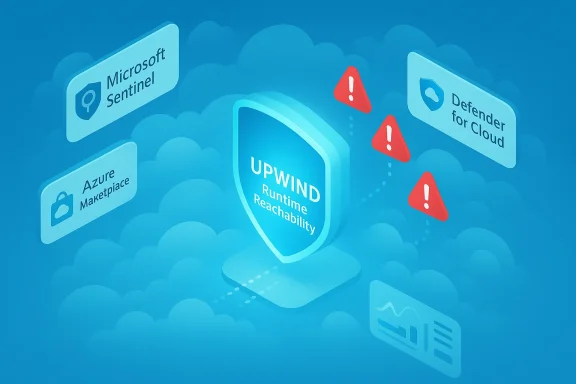
Upwind’s move into Azure — now available through the Microsoft Marketplace and positioned as a transactable, co‑sell-ready runtime security platform for Azure workloads — marks a significant signal in the CNAPP market: runtime visibility and prevention are shifting from niche add‑ons into cloud‑native procurement and operations. /www.upwind.io/partners/azure)
Cloud security has long been divided between pre‑deployment posture tools (CSPM, IaC scanning) and host‑level/endpoint protections (EDR/CWPP). Over the past two years a third vector — runtime security — has matured into a distinct capability that focuses on what is actually happening inside running workloads: processes, in‑memory code paths, live network connections and ephemeral containers. Upwind positions itself squarely in that runtime-first camp, combining agentless cloud context with an eBPF‑powered runtime sensor and a posture/vulnerability layer into a single CNAPP experience.
The announcement covered in the ChannelLife summary frames this as a joint effort with Microsoft to "embed runtime‑first protection directly into the fabric of Azure," calling out Marketplace availability, integrations with Microsoft Sentinel and Microsoft Defender for Cloud, and eligibility for Microure Consumption Commitment (MACC) programs.
Why eBPF? eBPF lets a vendor attach secure, in‑kernel probes to observe system calls, network flows and application behavior with low overhead. When done well, eBPF yields immediate, high‑fidelity indicators of suspicious activity inside containers and serverless execution environments — things that static image scans and cloud logs alone will never reveal. Academic and industry research into eBPF‑based runtime detection demonstrates strong potential for low‑latency detection, but also highlights design and operational tradeoffs that buyers must understand.
An early adopter cited in the announcement, Petrofac, reported fast time‑to‑value during onboarding and pointed to a dramatic reduction in noise and clear, actionable recommendations for AKS. Upwind’s own case study with Petrofac describes an AKS deployment where the platform surfaced prioritized vulnerabilities and blocked malicious processes in real time.
Co‑sell status also signals that Microsoft is willing to align field sales motions with the vendor for joint opportunities. This typically helps smaller vendors access larger enterprise pipelines but does not replace direct product fit and integration work required by customers.
For cloud‑native digital companies and organizations with heavy container use or early GenAI deployments, Upwind’s promise of GenAI workload protection and internet exposure management could be compelling — but these are still nascent features and should be validated experimentally.
That said, buyers must perform disciplined technical validation. eBPF implementations vary widely in quality; kernel compatibility, performance overhead, data governance, and the interplay with existing Microsoft controls are real issues that must be evaluated. Upwind’s strong customer reviews and analyst recognition are encouraging, and the Azure Marketplace path reduces procurement barriers — but security leaders should treat this as a capability to be integrated deliberately into an enterprise program, not a drop‑in cure‑all.
For security teams running Azure at scale, Upwind is worth a fast, scoped proof‑of‑concept that validates runtime detections against your own threat model, measures operational costs, and proves integration with Sentinel/Defender playbooks. If the vendor’s sensor quality and operational model check out in your tests, the Platform‑plus‑Marketplace package represents a pragmatic way to add high‑fidelity runtime protection into your Azure security fabric.
Conclusion
Runtime visibility has moved from a “nice to have” to a necessary capability for cloud teams that operate dynamic, containerized and serverless systems. Upwind’s Azure integration brings that capability into the Microsoft procurement and operational stack in a way that reduces friction and increases the chance that runtime signals will actually lead to timely action. The platform’s promise is real, supported by analyst recognition and early customer evidence, but practical adoption requires technical validation across kernels, workloads and compliance constraints. For Azure‑centric enterprises that need high‑fidelity attack detection and a faster path from detection to enterprise response, this partnership is an important development — one that security teams should evaluate now, but implement carefully.
Source: ChannelLife New Zealand https://channellife.co.nz/story/upwind-brings-runtime-cloud-security-platform-to-azure/
 Background / Overview
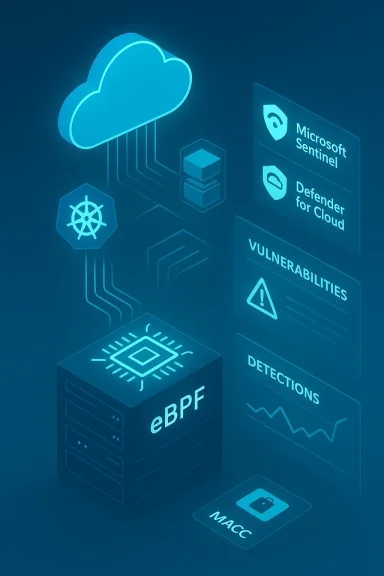
Cloud security has long been divided between pre‑deployment posture tools (CSPM, IaC scanning) and host‑level/endpoint protections (EDR/CWPP). Over the past two years a third vector — runtime security — has matured into a distinct capability that focuses on what is actually happening inside running workloads: processes, in‑memory code paths, live network connections and ephemeral containers. Upwind positions itself squarely in that runtime-first camp, combining agentless cloud context with an eBPF‑powered runtime sensor and a posture/vulnerability layer into a single CNAPP experience.The announcement covered in the ChannelLife summary frames this as a joint effort with Microsoft to "embed runtime‑first protection directly into the fabric of Azure," calling out Marketplace availability, integrations with Microsoft Sentinel and Microsoft Defender for Cloud, and eligibility for Microure Consumption Commitment (MACC) programs.
Why this matters now
- The pace of cloud innovation (serverless, ephemeral containers, GenAI services) creates dynamic attack surfaces that static scans cannot keep up with.
- Many organizations have duplicated consoles and signals for posture, workload protection and runtime detection — the result is noisy, slow, and expensive triage.
- Embedding runtime telemetry into a provider’s native security and log pipeline reduces friction for security operations teams and can speed detection → response cycles.
What Upwind’s Azure offering actually includes
Core capabilities called out in the announcement
- Runtime detection and workload protection powered by an eBPF sensor for Linux‑based workloads, including Kubernetes (AKS) and other container hosts.
- Cloud security posture management (CSPM) and vulnerability detection that combine build‑time and rioritize fixes.
- Integrations with Azure data sources such as cloud audit logs, Microsoft Sentinel, and Microsoft Defender for Cloud to surface Upwind findings in existing Microsoft security workflows.
- Marketplace procurement: Upwind is transactable on the Azure Marketplace and — critical for enterprise procurement — is listed as IP co‑sell and MACC‑eligible (meaning certain Marketplace spd against Azure Consumption Commitments).
- Planned expansions: identity protection, internet exposure management, and dedicated coverage for GenAI workloads were signposted as coming in the months after launch.
Technical integrations highlighted
- Connection to Azure Container Registry (image scanning) and runtime image scan jobs orchestrated within clusters, which Upwind says improves image coverage and timeliness. ([upwind.io](Upwind Enables Smarter, More Efficient, Security with Sensor Improvements - Upwind- Forwarding of enriched detections into Microsoft Sentinel and the Microsoft security ecosystem so existing SIEM/SOAR playbooks can act on Upwind signals.
- Use of Azure audit logs and other telemetry sources to marry cloud context with kernel‑level runtime events, producing a prioritized set of findings rather than isolated alerts.
Runtime-first: what Upwind claims and how it implements it
Upwind describes its platform as combining agentless discovery and cloud inventory with a lightweight eBPF kernel sensor that provides live behavioral telemetry. The company argues this hybrid approach avoids the blind spots of agentless‑only CNAPPs while also reducing the operational overhead and noise typical of naïve eBPF implementations.Why eBPF? eBPF lets a vendor attach secure, in‑kernel probes to observe system calls, network flows and application behavior with low overhead. When done well, eBPF yields immediate, high‑fidelity indicators of suspicious activity inside containers and serverless execution environments — things that static image scans and cloud logs alone will never reveal. Academic and industry research into eBPF‑based runtime detection demonstrates strong potential for low‑latency detection, but also highlights design and operational tradeoffs that buyers must understand.
Evidence of traction and third‑party recognition
Upwind has been vocal about momentum: the company has recently raised growth capital and publicly cited rapid revenue and logo growth. Independent reporting on the Series B funding round confirms a $250M raise and multiple press mentions that repeat the 900% year‑over‑year revenue and strong customer growth claims. Analyst and peer review recognition — including high ratings on Gartner Peer Insights and inclusion in Gartner reports — are also part of the vendor’s narrative.An early adopter cited in the announcement, Petrofac, reported fast time‑to‑value during onboarding and pointed to a dramatic reduction in noise and clear, actionable recommendations for AKS. Upwind’s own case study with Petrofac describes an AKS deployment where the platform surfaced prioritized vulnerabilities and blocked malicious processes in real time.
Strengths and where Upwind genuinely moves the needle
- Runtime fidelity reduces theoretical noise. By combining live kernel telemetry with cloud resource context, teams can focus on vulnerabilities and misconfigurations that are actually reachable or in use, not on every possible weakness in the inventory. This materially reduces triage overhead for SOCs and platform teams.
- Azure‑native procurement lowers deployment friction. Being transactable on the Azure Marketplace and IP co‑sell/MACC‑eligible makes it easier for enterprise buyers to budget, buy, and activate Upwind as part of an existing Microsoft relationship. That procurement path can accelerate PoCs and shorten contract cycles for large Azure customers.
- Operational integration with Sentinel and Defender for Cloud. Pushing runtime signals into Microsoft’s SIEM and Defender consoles reduces context switching for SecOps and increases the likelihood that detection will connect to enterprise incident response processes.
- Attention to serverless and GenAI exposures. Upwind’s roadmap calls out serverless and GenAI coverage — two areas where runtime visibility is often weak and where traditional host agents are of limited use. If implemented effectively, that coverage addresses a fast‑growing gap in cloud risk management.
Risks, caveats and technical critique — what buyers must ask
No product is a silver bullet. Upwind’s approach brings benefits, but raises practical and security questions buyers must validate during evaluation.1) eBPF is powerful — but implementation quality varies
eBPF can be used in lightweight, context‑rich ways, or as a superficial syscall sniffer that floods teams with noise. Independent analysis shows that not all eBPF sensors are equal; vendors that rely solely on raw syscall signatures without contextual enrichment will generate false positives and miss important attack links. Ask Upwind for specific technical evidence: stack‑trace‑level attribution, syscall argument parsing, cross‑referencing with container metadata, and how the sensor behaves under high churn.2) Kernel compatibility and managed‑hosting constraints
Running an in‑kernel sensor at scale requires careful handling across Linux distributions, kernel versions, and managed service environments. Azure’s managed host layers (AKS node images, Azure Functions runtime) may present differences in kernel availability, eBPF feature sets and alidate sensor compatibility across your target node images and managed offerings. Upwind’s Azure page claims broad runtime integrations, but you should confirm support matrices for your specific AKS images and Azure Functions SKUs.3) Performance and operational footprint
Although eBPF is lightweight by design, attaching many probes and performing heavy parsing or enrichment in userspace can still introduce overhead. Ask for independent performance metrics: CPU/memory overhead per node, network usage, and worst‑case behavior during bursts of telemetry. Vendors should provide benchmarks run under realistic workloads.4) Data residency, compliance and kernel‑level data collection
Kernel‑level telemetry can include sensitive information. Make sure Upwind’s data handling, retention, and export controls satisfy your compliance needs (HIPAA, PCI, finance sector rules). For regulated sectors the precise definitions of telemetry, the ability to redact PII, and where Upwind stores raw telemetry are essential procurement questions.5) Overlap and vendor consolidation with Microsoft Defender and other CNAPPs
Microsoft Defender for Cloud is positioning itself as a broad CNAPP and already offers CSPM, some workload protection and agent integrations. Upwind’s value is in runtime fidelity, but buyers must evaluate overlap and integration costs — both financial and operational — when consolidating multiple vendors. Confirm where Upwind adds capability rather than duplicating Defender or existing EDR investments.6) Maturity and support at enterprise scale
Rapid growth metrics and high peer review scores are encouraging, but enterprise buyers should validate support SLAs, global coverage for incident response, and long‑term roadmap commitments — especially for emerging areas like GenAI workload protection. Independent Gartner Peer Insights ratings show high customer satisfaction to date, but evaluate in the context of your scale and requirements.Practical evaluation checklist for security teams
If you’re running a PoC or evaluating Upwind for Azure, use this pragmatic checklist to reduce procurement risk:- Confirm which Azure services and SKUs are supported (AKS node images, Azure Functions SKUs, VM images) and request tests in your exact environment.
- Test sensor installation and removal procedures on a non‑prod cluster; measure resource overhead and impact under stress.
- Verify Sentinel and Defender for Cloud integrations by ingesting sample detections and running a realistic SOAR playbook end‑to‑end.
- Request a data handling and retention briefing (what telemetry is collected, where it’s stored, encryption at rest/in transit, and redaction capabilities).
- Validate vulnerability prioritization logic — confirm that the platform correlates CVEs with runtime evidence of exploitability and reachable attack paths.
- Run adversary emulation (purple team) tests to measure detection coverage for common container escape techniques, lateral movement inside the cluster, and serverless memory‑only attacks. (sstic.org)
What the partnership means commercially
Upwind being transactable on the Azure Marketplace and listed as IP co‑sell and MACC‑eligible is more than a marketing checkbox: it simplifies procurement for Microsoft accounts that already rely on Marketplace transactions and want Marketplace spend to apply to their Azure consumption commitments. In practice, this can make procurement faster for large enterprises and can reduce the friction of bringing a new security vendor into an existing Microsoft contract. However, MACC eligibility does not remove the need for vendor technical validation — it only streamlines the purchasing path.Co‑sell status also signals that Microsoft is willing to align field sales motions with the vendor for joint opportunities. This typically helps smaller vendors access larger enterprise pipelines but does not replace direct product fit and integration work required by customers.
Sector focus and likely adoption patterns
Upwind explicitly targets regulated and large enterprises running security operations on Azure: financial services, healthcare and digital‑native enterprises were named as priority segments. These sectors benefit most from runtime evidence because they need both fast detection and defensible audit trails for forensic and compliance purposes. The Petrofac case study — an oil‑services example running AKS — demonstrates a practical early success story and shows how runtime visibility can reduce alert noise and accelerate remediation.For cloud‑native digital companies and organizations with heavy container use or early GenAI deployments, Upwind’s promise of GenAI workload protection and internet exposure management could be compelling — but these are still nascent features and should be validated experimentally.
Strategic recommendations for CISOs and platform owners
- Treat runtime security as complementary, not a replacement, for posture and vulnerability management. A layered approach — inventory + posture + runtime evidence — yields the best reduction in overall risk.
- Prioritize vendor interoperability. If your environment is Azure‑centric, Upwind’s Marketplace listing and Sentinel/Defender integrations reduce operational friction; still insist on robust APIs and exportable telemetry so you’re not locked into a single console.
- For regulated workloads, insist on explicit documentation for telemetry provenance, retention, and the ability to operate the sensor in air‑gapped or high‑compliance modes.
- Run a focused purple team exercise during proof‑of‑concept to validate detection coverage for realistic attacker techniques relevant to your organization.
- Use procurement incentives (MACC‑eligible spend) to negotiate pilot terms and support packages, but keep legal and technical reviews separate — procurement convenience should not trump technical due diligence.
Final assessment: a pragmatic endorsement with guarded optimism
Upwind’s Azure move is strategically sensible and technically interesting. Putting runtime visibility on the Azure Marketplace and wiring detections into Microsoft Sentinel and Defender for Cloud removes a non‑trivial amount of friction for Azure customers who want to add runtime detection to their security stack. The vendor’s runtime‑first architecture — agentless discovery plus eBPF telemetry and adaptive image scanning — addresses real operational gaps that many security teams face today.That said, buyers must perform disciplined technical validation. eBPF implementations vary widely in quality; kernel compatibility, performance overhead, data governance, and the interplay with existing Microsoft controls are real issues that must be evaluated. Upwind’s strong customer reviews and analyst recognition are encouraging, and the Azure Marketplace path reduces procurement barriers — but security leaders should treat this as a capability to be integrated deliberately into an enterprise program, not a drop‑in cure‑all.
For security teams running Azure at scale, Upwind is worth a fast, scoped proof‑of‑concept that validates runtime detections against your own threat model, measures operational costs, and proves integration with Sentinel/Defender playbooks. If the vendor’s sensor quality and operational model check out in your tests, the Platform‑plus‑Marketplace package represents a pragmatic way to add high‑fidelity runtime protection into your Azure security fabric.
Conclusion
Runtime visibility has moved from a “nice to have” to a necessary capability for cloud teams that operate dynamic, containerized and serverless systems. Upwind’s Azure integration brings that capability into the Microsoft procurement and operational stack in a way that reduces friction and increases the chance that runtime signals will actually lead to timely action. The platform’s promise is real, supported by analyst recognition and early customer evidence, but practical adoption requires technical validation across kernels, workloads and compliance constraints. For Azure‑centric enterprises that need high‑fidelity attack detection and a faster path from detection to enterprise response, this partnership is an important development — one that security teams should evaluate now, but implement carefully.
Source: ChannelLife New Zealand https://channellife.co.nz/story/upwind-brings-runtime-cloud-security-platform-to-azure/