

The University of Wisconsin–Madison will become one of the first academic partners to pilot Microsoft’s new Discovery platform, placing Wisconsin at the center of a high-profile experiment in agentic artificial intelligence for scientific research and linking UW–Madison and TitletownTech to a small global cohort that includes Princeton University. This collaboration—framed by Microsoft as an expansion of its long-running TechSpark program in Wisconsin—assigns local institutions early access to a cloud-native research environment that combines a graph-driven knowledge engine, specialized AI agents, and Copilot-based orchestration to accelerate work in materials science, advanced manufacturing and life sciences. The announcement signals both an opportunity to compress research timelines and a set of governance and academic integrity questions that institutions must resolve before handing critical discovery pipelines to automated systems.
Microsoft unveiled the Discovery platform at its developer conference earlier in the year, positioning it as “Copilot for science”: a toolkit built to augment and automate stages of the research lifecycle from literature synthesis to hypothesis generation, simulation, and iterative experiment design. The platform packages several recent trends—multi-agent AI orchestration, retrieval-augmented reasoning over knowledge graphs (Graph RAG), and integration with high-performance compute (HPC) and future quantum compute capabilities—into a single research workflow aimed at industrial and academic R&D teams.
The UW–Madison pilot will operate through TitletownTech, Microsoft’s innovation hub with a strong presence in Wisconsin, with TitletownTech responsible for local coordination and industry engagement. The initial focus areas named by partners—materials design, manufacturing and life sciences—mirror UW–Madison’s long-running strengths and Microsoft’s stated use cases for Discovery. Formal programming is slated to expand through 2026, and the collaboration is explicitly described as a durable ecosystem effort rather than a one-off corporate grant.
Benefits for Microsoft:
However, the speed gains come with responsibility liabilities. Automated suggestion engines can produce high volumes of candidate hypotheses; without strong validation pipelines, institutions risk prioritizing quantity over quality. Academic norms—peer review, reproducibility, and open science—must be reconciled with vendor-managed platforms that offer proprietary orchestration advantages.
Finally, institutional bargaining power matters. Universities that accept early access should extract robust contractual protections: data portability, explicit nonuse of private datasets for vendor-wide model training unless separately negotiated, transparency of agent logic where possible, and commitments to capacity-building for campus IT staff.
What campuses and regional partners build next will determine whether this moment becomes a durable step forward for scientific productivity—or a cautionary tale about handing the research lifecycle to automated systems without first hardening the guardrails that make science trustworthy.
Source: The Daily Cardinal UW-Madison selected for new AI research partnership with Microsoft
 Background / Overview
Microsoft unveiled the Discovery platform at its developer conference earlier in the year, positioning it as “Copilot for science”: a toolkit built to augment and automate stages of the research lifecycle from literature synthesis to hypothesis generation, simulation, and iterative experiment design. The platform packages several recent trends—multi-agent AI orchestration, retrieval-augmented reasoning over knowledge graphs (Graph RAG), and integration with high-performance compute (HPC) and future quantum compute capabilities—into a single research workflow aimed at industrial and academic R&D teams.The UW–Madison pilot will operate through TitletownTech, Microsoft’s innovation hub with a strong presence in Wisconsin, with TitletownTech responsible for local coordination and industry engagement. The initial focus areas named by partners—materials design, manufacturing and life sciences—mirror UW–Madison’s long-running strengths and Microsoft’s stated use cases for Discovery. Formal programming is slated to expand through 2026, and the collaboration is explicitly described as a durable ecosystem effort rather than a one-off corporate grant.
What the Microsoft Discovery platform is — and what it promises
Agentic R&D: AI agents as research collaborators
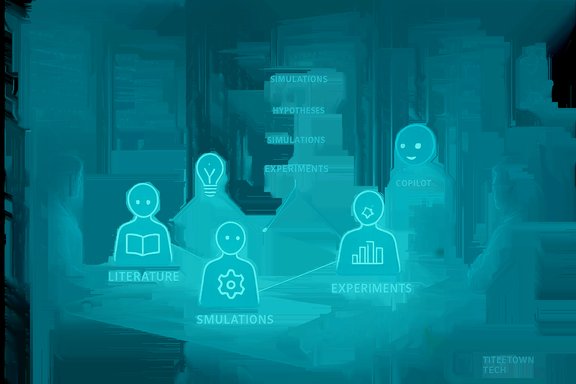
At the platform’s core is an agentic approach: teams of specialized AI agents designed to play distinct roles in an R&D workflow—literature review, candidate generation, simulation orchestration, data analysis and experiment planning. Rather than handing researchers a single monolithic model, Discovery lets organizations assemble a custom team of agents that operate in a continuous iterative research cycle.- Agents can be defined by domain knowledge and process logic via natural language.
- Agents interact with each other and with human researchers, sharing intermediate results and adapting based on new data.
- The system supports agent-to-agent collaboration rather than static, linear pipelines.
Graph-based knowledge engine (Graph RAG)
Discovery uses a graph-style knowledge layer—sometimes called Graph RAG—that maps entities, experiments, citations and relationships across public literature and private datasets. The platform’s reasoning attempts to go beyond simple fact retrieval by:- Reconciling conflicting studies and highlighting nuanced connections.
- Tracing provenance so researchers can inspect which sources informed a conclusion.
- Enabling agents to “reason over knowledge” and not just regurgitate surface-level facts.
Copilot as the orchestration layer
Microsoft has positioned Copilot as the interface and coordinator inside Discovery: a scientific AI assistant that understands the catalog of agents, tools and data available and composes workflows accordingly. Copilot identifies which agents to deploy, which compute kernels or simulation backends to use, and ties together multi-stage R&D processes into an end-to-end flow.Built on Azure, extensible to open-source and commercial tools
Discovery is designed as an Azure-native platform with enterprise governance, compliance and access controls. It is explicitly extensible:- Supports custom models, third-party and open-source tools.
- Integrates with HPC resources and, in Microsoft’s roadmap, future quantum compute and embodied AI capabilities.
- Includes audit and provenance features aimed at traceability.
Why UW–Madison and Wisconsin matter for Microsoft
A regional innovation strategy, not just a technical pilot
The UW–Madison partnership fits a broader Microsoft strategy to seed local innovation ecosystems. Microsoft’s TechSpark program has operated in Wisconsin for several years, underwriting workforce efforts, economic development and industry engagement. TitletownTech serves as the regional convenor—bringing academic researchers, manufacturers, startups and corporate partners into applied projects.Benefits for Microsoft:
- Access to domain expertise in materials, manufacturing, agriculture and life sciences.
- A geographically distributed testing ground for enterprise adoption patterns and governance models.
- Demonstrable local economic impact stories to pair with technical wins.
- Early access to advanced AI and HPC capabilities.
- Faster translation of research into real-world prototypes and commercialization.
- Job creation and skill development aligned with regional industry clusters.
Strategic fit with university strengths
UW–Madison’s existing leadership in materials science, biotechnology, and advanced manufacturing aligns closely with Microsoft’s targeted Discovery use cases. The university provides a deep pool of domain experts and long-running federally funded research projects that can serve as pilot workloads—ranging from catalyst design and polymer chemistry to factory-scale process optimization.What real-world research on Discovery may look like
The platform demo shown at the vendor level illustrated a multi-stage pipeline: reason over knowledge, generate hypotheses, run simulations, and iterate. Practical piloting at UW–Madison could involve:- Materials discovery: proposing new alloy or polymer candidates, running quantum-chemistry-informed simulations, and prioritizing candidates for lab synthesis.
- Advanced manufacturing: simulating process parameters, predicting failure modes, and optimizing for yield or energy efficiency.
- Life sciences: accelerating drug-target candidate triage, supporting experimental design for assays, or analyzing multi-omics datasets to identify mechanistic hypotheses.
Strengths: what makes this collaboration compelling
- Speed-to-insight: Agentic workflows and knowledge-driven reasoning can compress months of manual literature review and simulation setup into days or hours for well-posed problems.
- Integration across silos: The platform is designed to unify proprietary datasets, public literature, and simulation tools—reducing overhead in moving knowledge between groups.
- Enterprise-grade governance: Azure foundations promise familiar compliance, identity and security controls that are crucial for research with sensitive data.
- Economic and workforce upside: Embedding advanced tools locally can catalyze startups, spinouts and upskilling within the regional economy.
- Iterative human–AI collaboration: Rather than replacing researchers, the platform is explicitly designed to amplify expertise—letting domain experts guide agent behavior and validate outputs.
Risks and unanswered questions: what institutions must scrutinize
While promising, this model raises nontrivial concerns that universities and partners must confront before scaling usage across critical research domains.1) Data governance and intellectual property
- Combining proprietary lab datasets with external literature in a shared platform introduces complex IP boundaries. Policies must explicitly define who owns agent-generated artifacts, derivative candidate lists, and model outputs.
- Researchers must confirm that private data used for training or grounding agents remains under institutional control and cannot be inadvertently used to tune vendor foundation models.
2) Reproducibility and scientific rigor
- AI-driven hypothesis generation risks producing plausible-sounding but unvalidated outputs. Without rigorous experimental follow-through and statistical controls, there is a danger of amplifying false leads.
- The “black box” nature of some agent decisions—despite provenance logging—can complicate peer review and reproducibility unless transparent audit trails and reproducible code/execution logs are enforced.
3) Hallucination and overconfidence
- Large models are prone to confident but incorrect assertions. In high-stakes domains like life sciences or material toxicity, such hallucinations can misdirect resources or generate unsafe experimental proposals.
- Human oversight requirements must be explicit and enforced, not left to informal practice.
4) Vendor lock-in and ecosystem dependence
- Although the platform supports external tools, integrating heavily with a single cloud vendor’s orchestration and identity systems raises lock-in risk for long-term infrastructure and skills.
- Universities must weigh the benefits of convenience against the long-term cost of dependence on proprietary orchestration layers.
5) Equity and access
- Early access pilots can deepen divides if platform resources (compute credits, agent development expertise) are available only to privileged labs or industry partners.
- Policies should aim to democratize access across departments, collaborators and affiliated startups to prevent concentration of advantage.
6) Safety and dual-use concerns
- Advanced materials or biological hypotheses generated at machine scale could raise dual-use or biosafety concerns. Governance must include domain-specific safety reviews and ethical oversight.
Governance, safeguards and recommended guardrails
Implementing Discovery-style systems responsibly requires layered governance that combines technical controls, policy, and cultural practices.- Transparent provenance and audit trails: Every agent action, data source and compute run should be recorded in tamper-evident logs that are accessible for review and reproducibility checks.
- Human-in-the-loop enforcement: Define required human approvals at decision gates (e.g., any proposed wet-lab experiment must be signed off by a PI and safety officer).
- Data-use agreements and contractual protections: Ensure contractual terms explicitly ban vendor use of institution private datasets for foundation model training, or define clear opt-in arrangements with compensation and governance.
- Tiered access and training: Create role-based access controls so sensitive datasets and high-power agents are restricted. Pair access with mandatory training on AI limitations, bias, and safe research practices.
- Model validation and independent benchmarking: For research claims—especially those that the platform highlights as “accelerated discoveries”—perform independent validation and benchmark agent outputs against classical workflows.
- Open-science pathways: Preserve publishable artifacts and reproducible workflows in formats that can be shared with the scientific community to avoid “secret science” produced behind closed vendor panels.
- Ethics and biosafety board oversight: Expand institutional review boards or set up dedicated AI research ethics committees that include external experts in AI safety, bioethics and materials risk.
Implementation steps university leaders should prioritize
- Create a joint governance committee with Microsoft, TitletownTech, and UW–Madison to draft data governance, IP, and safety rules before any sensitive datasets are uploaded.
- Start with low-risk pilots: non-biological, simulation-heavy projects to stress-test agent workflows and audit logging before moving to wet-lab or translational work.
- Document reproducibility pipelines: require that every Discovery workflow produces a version-controlled specification, scripts, and containerized environments that reproduce agent runs.
- Invest in local capacity: hire or train platform engineers and data stewards who can manage the interface between campus computing and Microsoft’s cloud environment.
- Negotiate exit and portability terms: ensure that models, agents and collected metadata can be exported in usable formats if partnerships change.
What to watch for in the first year
- Adoption patterns: which departments and industry partners gain priority access, and whether a broad cross-section of campus labs can leverage the platform.
- Published validations: peer-reviewed studies that clearly document agent-assisted discoveries and reproducible workflows will be the strongest evidence of the platform’s scientific value.
- Contractual transparency: how the university secures IP, data-use restrictions and guarantees regarding vendor use of institutional data.
- Workforce impact: new job pathways in AI-savvy R&D, and whether local companies spin off products or services based on early pilot outputs.
- Safety incidents or corrective actions: any preprint or institutional report documenting problematic agent outputs, safety near-misses, or misapplied experiments will require rapid policy responses.
Critical appraisal: balancing optimism and skepticism
The technical design of the Discovery platform addresses real pain points in modern R&D—fragmented data, slow iteration cycles, and the manual toil of literature synthesis. The ability to define agents that encode disciplinary heuristics and to run integrated simulation loops is genuinely novel and could accelerate ideation and candidate triage in materials and manufacturing.However, the speed gains come with responsibility liabilities. Automated suggestion engines can produce high volumes of candidate hypotheses; without strong validation pipelines, institutions risk prioritizing quantity over quality. Academic norms—peer review, reproducibility, and open science—must be reconciled with vendor-managed platforms that offer proprietary orchestration advantages.
Finally, institutional bargaining power matters. Universities that accept early access should extract robust contractual protections: data portability, explicit nonuse of private datasets for vendor-wide model training unless separately negotiated, transparency of agent logic where possible, and commitments to capacity-building for campus IT staff.
Conclusion
UW–Madison’s selection as a Discovery pilot partner, administered through TitletownTech, places Wisconsin at the vanguard of an emerging approach to AI-driven science. The collaboration promises genuinely disruptive boosts to research speed and cross-sector translation—if and only if it is paired with clear governance, reproducibility safeguards, and equitable access policies. The coming year will be decisive: successful, transparent pilots could help define a national model for responsible agentic R&D; missteps around IP, data use, or safety could set back trust in university–industry AI partnerships.What campuses and regional partners build next will determine whether this moment becomes a durable step forward for scientific productivity—or a cautionary tale about handing the research lifecycle to automated systems without first hardening the guardrails that make science trustworthy.
Source: The Daily Cardinal UW-Madison selected for new AI research partnership with Microsoft
