

Veeam is using a recent Omdia technical validation of Veeam Data Cloud for Microsoft 365 to argue that its SaaS backup service can simplify protection and recovery for Exchange Online, SharePoint, OneDrive, Teams, and Microsoft Entra ID environments. That is not just marketing garnish. It is Veeam trying to win a more important argument: in the Microsoft 365 era, backup is no longer a checkbox feature but a control plane for business continuity. The timing matters because enterprises are rethinking whether native retention, compliance tooling, and cloud resilience are enough when identity, collaboration, and ransomware risk now occupy the same blast radius.
Third-party validation is a familiar move in enterprise software, but Veeam’s emphasis here is unusually well targeted. Microsoft 365 backup has become a crowded market where every vendor claims speed, granularity, immutability, and ransomware readiness. A technical review from an analyst firm gives Veeam a way to reframe the discussion away from feature comparison grids and toward operational confidence.
That matters because backup buyers are not merely buying storage for old emails. They are buying a promise that, when an executive mailbox disappears, a SharePoint document library is encrypted, or an Entra ID configuration is damaged, the recovery process will be understandable under pressure. A web-based interface and automation are not glamorous, but in a crisis they may be the difference between a controlled restore and a long war-room session.
The TipRanks item frames the Omdia validation as an investor signal, and that is a reasonable lens. Veeam is privately held, but the company operates in a market where recurring cloud services, SaaS attach rates, and security-adjacent spending shape valuation narratives. If customers increasingly treat Microsoft 365 backup as mandatory infrastructure, Veeam’s cloud-delivered offering becomes more than a convenience SKU.
The deeper story, however, is not that an analyst firm liked a product. It is that Microsoft 365 protection is being pulled out of the server-room backup category and into the board-level resilience category. Veeam is trying to make sure it is seen as one of the vendors defining that transition rather than one merely adapting to it.
Microsoft provides resilient services, retention features, recycle bins, litigation hold, eDiscovery, and now its own Microsoft 365 Backup offering. Those are important capabilities, and in many cases they are faster or more integrated than the third-party alternatives available years ago. But they do not eliminate the basic question every administrator eventually has to answer: can the organization restore the right data, to the right point, with the right permissions and context, after the wrong thing happens?
That “wrong thing” is rarely a clean storage failure. It may be a malicious insider, a compromised admin account, accidental deletion that goes unnoticed until retention windows expire, a misapplied policy, or ransomware that spreads through synchronized files. In those cases, the difference between platform availability and data recovery becomes painfully real.
This is why the old shared-responsibility argument still has teeth, even if vendors have sometimes oversold it. Microsoft operates the service; the customer remains responsible for its data governance, access decisions, recovery objectives, and business continuity strategy. Veeam’s pitch works because it starts from that uncomfortable boundary.
Entra ID is not just a directory of users. It holds groups, roles, enterprise applications, Conditional Access policies, service principals, administrative units, and other configuration objects that determine who can access what. Damage there can be more disruptive than a deleted mailbox because it can affect every workload at once.
That changes the meaning of “Microsoft 365 backup.” A collaboration backup product restores content. A collaboration-and-identity resilience product tries to restore the structure that lets users safely get back to work. Veeam’s decision to talk about Microsoft 365 and Entra ID together is therefore not incidental; it reflects how real outages and compromises unfold.
For WindowsForum readers who manage tenants, this is the part worth watching closely. A Teams restore is useful. A SharePoint restore is essential. But the ability to recover identity objects and policy state may become the feature that separates basic SaaS backup from serious cloud recovery planning.
But backup administration has a long history of being too dependent on specialists, infrastructure quirks, and tribal memory. If the person who built the backup job is unavailable, if the storage repository needs care, if credentials have expired, or if restore documentation is stale, the nominally protected environment may be protected only on paper. SaaS backup services are attractive because they shift some of that operational burden away from the customer.
Veeam’s traditional strength has been trust among administrators who like hands-on control. Veeam Data Cloud has to preserve that confidence while asking customers to accept more managed-service abstraction. That is a delicate balance: too much simplification, and admins worry they have lost control; too little, and the SaaS model fails to deliver its promised reduction in overhead.
The web UI is therefore a proxy for a bigger design question. Can Veeam make recovery accessible without making it shallow? If the answer is yes, the service becomes useful not only to backup specialists but also to lean IT teams, MSPs, and security operations staff who may need to execute a restore quickly.
The relevant claim is not that AI magically stops ransomware. The useful idea is that backup systems can observe suspicious changes across protected data, such as mass encryption patterns, unusual extension changes, or abnormal entropy shifts. If backup tooling can detect those signals early and preserve clean restore points, it becomes part of the security response rather than a passive archive.
This is especially relevant for Microsoft 365 because ransomware is no longer confined to endpoint disks and file servers. OneDrive synchronization, SharePoint libraries, and Teams-connected files can extend the impact of encrypted or maliciously modified content. A restore plan that ignores cloud collaboration data is incomplete.
The risk is that security language can inflate expectations. Backup is not endpoint detection and response. It is not identity threat protection. It is not a substitute for least privilege, phishing resistance, conditional access, device hygiene, or tested incident response. But in a realistic defense model, backup is the last control that must still work after other controls have failed.
That is why Veeam’s validation story will resonate with security-minded buyers only if it is paired with practical evidence. Administrators will want to know how alerts are surfaced, how clean restore points are identified, how permissions are handled, and how recovery behaves at scale. Marketing can open the door; restore testing closes the sale.
For Veeam, the answer appears to be breadth, independence, management experience, and identity-aware resilience. A third-party backup strategy can give organizations a separate administrative plane, different recovery workflows, and vendor diversity. For some buyers, especially regulated or security-conscious enterprises, that separation is not a nicety but a requirement.
Still, Microsoft’s entry changes buyer expectations. Restore speed, policy simplicity, and integration are no longer optional advantages; they are table stakes. If a third-party product is slower, harder to administer, or less aligned with Microsoft 365’s current architecture, customers will ask why they should not use the native option.
That makes the Omdia validation useful for Veeam. It helps the company argue that its SaaS offering is not merely a legacy backup tool pointed at cloud workloads. It is a modern service designed for Microsoft 365’s operational reality, including collaboration data, identity data, automation, and threat-aware recovery.
The contest will not be settled by one report. It will be settled by restore outcomes, pricing clarity, partner execution, and how well vendors handle edge cases that do not show up in demos. But third-party validation helps Veeam make the case that it belongs in that shortlist.
Veeam built its reputation in backup and recovery across virtualized and hybrid environments. The market around it is now moving toward SaaS-delivered data resilience, cloud-native workloads, cyber recovery, and data security posture. Veeam Data Cloud fits that transition because it turns backup from software a customer operates into a service the vendor can expand, update, and monetize over time.
That is why Microsoft 365 matters so much. It is one of the most widely deployed enterprise SaaS platforms, and its data footprint keeps growing through Teams, SharePoint, OneDrive, Exchange Online, and identity services. A customer that starts by protecting mailboxes may later expand into broader collaboration backup, Entra ID resilience, compliance-driven retention, or cyber recovery workflows.
Recurring revenue is not automatic, though. SaaS backup is competitive, and customers have alternatives from Microsoft, Commvault, AvePoint, Rubrik, Druva, Barracuda, Acronis, Cohesity, and others. Many MSPs also have established tools and operational preferences. Veeam’s brand helps, but it does not exempt the company from price pressure or proof-of-value scrutiny.
The Omdia validation should therefore be read as part of a larger credibility campaign. Veeam wants customers, partners, and investors to see its cloud services as a natural extension of its backup leadership, not as a late pivot. In enterprise IT, that perception can matter almost as much as the product roadmap.
Data residency is one obvious example. Veeam says its service stores data in an Azure region of the customer’s choice, but region availability, regulatory obligations, and internal policy requirements still need careful review. A technically capable service can still be a poor fit if it cannot satisfy the organization’s sovereignty or audit requirements.
Permissions deserve the same scrutiny. Microsoft 365 backup products typically require app registrations, delegated or application permissions, and administrative consent. That is unavoidable, but it means backup tooling becomes part of the tenant’s security boundary. Buyers should understand exactly what privileges are granted, how they are monitored, and how access is revoked.
Recovery granularity is another area where demo language can hide complexity. Restoring a single email is different from restoring a large mailbox. Restoring a Teams channel is different from reconstructing the broader context of conversations, files, membership, and permissions. Restoring Entra ID objects may depend on object type, dependency mapping, and Microsoft Graph behavior.
The strongest backup product is the one an organization has tested under conditions that resemble real incidents. That means timed restores, role-based access checks, ransomware simulations, and documented escalation paths. Analyst validation can help narrow the field, but it cannot replace a restore rehearsal.
For MSPs, the value is not only technical. A standardized Microsoft 365 backup service can simplify onboarding, billing, reporting, and recovery support across customers. If Veeam can make tenant management and delegated administration straightforward, it strengthens its channel story.
For lean internal IT teams, the appeal is fewer moving parts. Many organizations have moved aggressively into Microsoft 365 precisely because they do not want to run Exchange, file servers, or collaboration infrastructure. Asking those same teams to build and maintain a separate backup estate can feel like reintroducing the complexity they migrated away from.
The counterargument is control. Some organizations prefer self-managed backup because they want their own storage, their own retention architecture, and their own operational isolation from both Microsoft and a backup SaaS provider. That preference is not outdated; for some risk models, it is sensible.
This is where Veeam’s hybrid heritage could help. The company can speak to customers who understand traditional backup discipline while offering a path into managed SaaS protection. The challenge is making that transition feel like an upgrade rather than a surrender of control.
That is why the inclusion of Entra ID is so strategically important. Identity is not just another workload. It is the connective tissue of the modern Microsoft estate. If the backup market can protect both content and identity state, it moves closer to the actual shape of enterprise risk.
This also explains the rise of automation in the messaging. Manual recovery processes do not scale well when an incident affects thousands of users, sites, files, or identity objects. Automation is not merely a convenience; it is how recovery objectives become plausible in large environments.
The vendors that win here will be the ones that reduce uncertainty. They will show administrators what is protected, what is restorable, how long recovery takes, what dependencies exist, and what risks remain. Veeam’s third-party validation is a signal that it wants to compete on those terms.
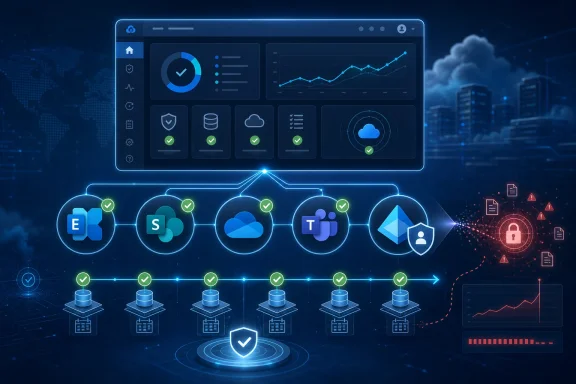 Veeam Wants Validation to Do More Than Validate
Third-party validation is a familiar move in enterprise software, but Veeam’s emphasis here is unusually well targeted. Microsoft 365 backup has become a crowded market where every vendor claims speed, granularity, immutability, and ransomware readiness. A technical review from an analyst firm gives Veeam a way to reframe the discussion away from feature comparison grids and toward operational confidence.That matters because backup buyers are not merely buying storage for old emails. They are buying a promise that, when an executive mailbox disappears, a SharePoint document library is encrypted, or an Entra ID configuration is damaged, the recovery process will be understandable under pressure. A web-based interface and automation are not glamorous, but in a crisis they may be the difference between a controlled restore and a long war-room session.
The TipRanks item frames the Omdia validation as an investor signal, and that is a reasonable lens. Veeam is privately held, but the company operates in a market where recurring cloud services, SaaS attach rates, and security-adjacent spending shape valuation narratives. If customers increasingly treat Microsoft 365 backup as mandatory infrastructure, Veeam’s cloud-delivered offering becomes more than a convenience SKU.
The deeper story, however, is not that an analyst firm liked a product. It is that Microsoft 365 protection is being pulled out of the server-room backup category and into the board-level resilience category. Veeam is trying to make sure it is seen as one of the vendors defining that transition rather than one merely adapting to it.
Microsoft 365 Made Backup Easier to Ignore and Harder to Replace
Microsoft 365 changed the psychology of backup. When Exchange servers, file shares, and SharePoint farms lived in the customer’s estate, backup was visibly part of infrastructure hygiene. Once those workloads moved into Microsoft’s cloud, the durability of the platform was easy to confuse with recoverability of the business.Microsoft provides resilient services, retention features, recycle bins, litigation hold, eDiscovery, and now its own Microsoft 365 Backup offering. Those are important capabilities, and in many cases they are faster or more integrated than the third-party alternatives available years ago. But they do not eliminate the basic question every administrator eventually has to answer: can the organization restore the right data, to the right point, with the right permissions and context, after the wrong thing happens?
That “wrong thing” is rarely a clean storage failure. It may be a malicious insider, a compromised admin account, accidental deletion that goes unnoticed until retention windows expire, a misapplied policy, or ransomware that spreads through synchronized files. In those cases, the difference between platform availability and data recovery becomes painfully real.
This is why the old shared-responsibility argument still has teeth, even if vendors have sometimes oversold it. Microsoft operates the service; the customer remains responsible for its data governance, access decisions, recovery objectives, and business continuity strategy. Veeam’s pitch works because it starts from that uncomfortable boundary.
The Entra ID Angle Turns Backup Into Identity Resilience
The most interesting part of Veeam’s positioning is not Exchange, SharePoint, OneDrive, or Teams. Those are the obvious Microsoft 365 backup workloads. The sharper move is the inclusion of Microsoft Entra ID, because identity is now the dependency that makes the rest of the cloud estate usable.Entra ID is not just a directory of users. It holds groups, roles, enterprise applications, Conditional Access policies, service principals, administrative units, and other configuration objects that determine who can access what. Damage there can be more disruptive than a deleted mailbox because it can affect every workload at once.
That changes the meaning of “Microsoft 365 backup.” A collaboration backup product restores content. A collaboration-and-identity resilience product tries to restore the structure that lets users safely get back to work. Veeam’s decision to talk about Microsoft 365 and Entra ID together is therefore not incidental; it reflects how real outages and compromises unfold.
For WindowsForum readers who manage tenants, this is the part worth watching closely. A Teams restore is useful. A SharePoint restore is essential. But the ability to recover identity objects and policy state may become the feature that separates basic SaaS backup from serious cloud recovery planning.
A Web Console Is Boring Until the Restore Clock Starts
The Omdia-linked messaging emphasizes a web-based user interface, automation, and simplified backup and recovery. That can sound like enterprise software wallpaper. Every SaaS vendor promises a clean interface and fewer moving parts.But backup administration has a long history of being too dependent on specialists, infrastructure quirks, and tribal memory. If the person who built the backup job is unavailable, if the storage repository needs care, if credentials have expired, or if restore documentation is stale, the nominally protected environment may be protected only on paper. SaaS backup services are attractive because they shift some of that operational burden away from the customer.
Veeam’s traditional strength has been trust among administrators who like hands-on control. Veeam Data Cloud has to preserve that confidence while asking customers to accept more managed-service abstraction. That is a delicate balance: too much simplification, and admins worry they have lost control; too little, and the SaaS model fails to deliver its promised reduction in overhead.
The web UI is therefore a proxy for a bigger design question. Can Veeam make recovery accessible without making it shallow? If the answer is yes, the service becomes useful not only to backup specialists but also to lean IT teams, MSPs, and security operations staff who may need to execute a restore quickly.
Ransomware Has Made “Restore” a Security Feature
Backup vendors used to sell recovery after failure. Now they sell recovery after compromise. That distinction explains why Veeam’s messaging around built-in AI and ransomware detection matters, even if buyers should treat all AI language with skepticism.The relevant claim is not that AI magically stops ransomware. The useful idea is that backup systems can observe suspicious changes across protected data, such as mass encryption patterns, unusual extension changes, or abnormal entropy shifts. If backup tooling can detect those signals early and preserve clean restore points, it becomes part of the security response rather than a passive archive.
This is especially relevant for Microsoft 365 because ransomware is no longer confined to endpoint disks and file servers. OneDrive synchronization, SharePoint libraries, and Teams-connected files can extend the impact of encrypted or maliciously modified content. A restore plan that ignores cloud collaboration data is incomplete.
The risk is that security language can inflate expectations. Backup is not endpoint detection and response. It is not identity threat protection. It is not a substitute for least privilege, phishing resistance, conditional access, device hygiene, or tested incident response. But in a realistic defense model, backup is the last control that must still work after other controls have failed.
That is why Veeam’s validation story will resonate with security-minded buyers only if it is paired with practical evidence. Administrators will want to know how alerts are surfaced, how clean restore points are identified, how permissions are handled, and how recovery behaves at scale. Marketing can open the door; restore testing closes the sale.
Microsoft’s Own Backup Push Raises the Bar for Everyone Else
The competitive context has changed because Microsoft is no longer just the platform being protected. Microsoft 365 Backup gives customers a native option designed around fast backup and restore within Microsoft’s own service boundaries. That puts pressure on third-party vendors to explain why they still deserve a place in the architecture.For Veeam, the answer appears to be breadth, independence, management experience, and identity-aware resilience. A third-party backup strategy can give organizations a separate administrative plane, different recovery workflows, and vendor diversity. For some buyers, especially regulated or security-conscious enterprises, that separation is not a nicety but a requirement.
Still, Microsoft’s entry changes buyer expectations. Restore speed, policy simplicity, and integration are no longer optional advantages; they are table stakes. If a third-party product is slower, harder to administer, or less aligned with Microsoft 365’s current architecture, customers will ask why they should not use the native option.
That makes the Omdia validation useful for Veeam. It helps the company argue that its SaaS offering is not merely a legacy backup tool pointed at cloud workloads. It is a modern service designed for Microsoft 365’s operational reality, including collaboration data, identity data, automation, and threat-aware recovery.
The contest will not be settled by one report. It will be settled by restore outcomes, pricing clarity, partner execution, and how well vendors handle edge cases that do not show up in demos. But third-party validation helps Veeam make the case that it belongs in that shortlist.
The Investor Story Is Really a Product-Mix Story
TipRanks understandably frames the news through an investing lens. Independent validation can strengthen product credibility, which can support enterprise adoption, which can contribute to recurring revenue. That logic is straightforward, but the more interesting investor question is how Veeam’s business mix evolves.Veeam built its reputation in backup and recovery across virtualized and hybrid environments. The market around it is now moving toward SaaS-delivered data resilience, cloud-native workloads, cyber recovery, and data security posture. Veeam Data Cloud fits that transition because it turns backup from software a customer operates into a service the vendor can expand, update, and monetize over time.
That is why Microsoft 365 matters so much. It is one of the most widely deployed enterprise SaaS platforms, and its data footprint keeps growing through Teams, SharePoint, OneDrive, Exchange Online, and identity services. A customer that starts by protecting mailboxes may later expand into broader collaboration backup, Entra ID resilience, compliance-driven retention, or cyber recovery workflows.
Recurring revenue is not automatic, though. SaaS backup is competitive, and customers have alternatives from Microsoft, Commvault, AvePoint, Rubrik, Druva, Barracuda, Acronis, Cohesity, and others. Many MSPs also have established tools and operational preferences. Veeam’s brand helps, but it does not exempt the company from price pressure or proof-of-value scrutiny.
The Omdia validation should therefore be read as part of a larger credibility campaign. Veeam wants customers, partners, and investors to see its cloud services as a natural extension of its backup leadership, not as a late pivot. In enterprise IT, that perception can matter almost as much as the product roadmap.
Administrators Should Read the Fine Print Before They Read the Praise
For IT teams, the right response to an analyst validation is neither cynicism nor blind trust. It is a procurement checklist. The validation may identify strengths, but each tenant has its own constraints around licensing, geography, retention, compliance, identity architecture, and recovery objectives.Data residency is one obvious example. Veeam says its service stores data in an Azure region of the customer’s choice, but region availability, regulatory obligations, and internal policy requirements still need careful review. A technically capable service can still be a poor fit if it cannot satisfy the organization’s sovereignty or audit requirements.
Permissions deserve the same scrutiny. Microsoft 365 backup products typically require app registrations, delegated or application permissions, and administrative consent. That is unavoidable, but it means backup tooling becomes part of the tenant’s security boundary. Buyers should understand exactly what privileges are granted, how they are monitored, and how access is revoked.
Recovery granularity is another area where demo language can hide complexity. Restoring a single email is different from restoring a large mailbox. Restoring a Teams channel is different from reconstructing the broader context of conversations, files, membership, and permissions. Restoring Entra ID objects may depend on object type, dependency mapping, and Microsoft Graph behavior.
The strongest backup product is the one an organization has tested under conditions that resemble real incidents. That means timed restores, role-based access checks, ransomware simulations, and documented escalation paths. Analyst validation can help narrow the field, but it cannot replace a restore rehearsal.
MSPs and Lean IT Teams May Be the Real Swing Vote
Veeam’s SaaS pitch may be especially compelling for managed service providers and small-to-midsize IT teams. These groups often know they need Microsoft 365 backup but do not want to maintain backup servers, storage repositories, update cycles, and monitoring stacks for every tenant. A managed cloud service offers a cleaner operational model.For MSPs, the value is not only technical. A standardized Microsoft 365 backup service can simplify onboarding, billing, reporting, and recovery support across customers. If Veeam can make tenant management and delegated administration straightforward, it strengthens its channel story.
For lean internal IT teams, the appeal is fewer moving parts. Many organizations have moved aggressively into Microsoft 365 precisely because they do not want to run Exchange, file servers, or collaboration infrastructure. Asking those same teams to build and maintain a separate backup estate can feel like reintroducing the complexity they migrated away from.
The counterargument is control. Some organizations prefer self-managed backup because they want their own storage, their own retention architecture, and their own operational isolation from both Microsoft and a backup SaaS provider. That preference is not outdated; for some risk models, it is sensible.
This is where Veeam’s hybrid heritage could help. The company can speak to customers who understand traditional backup discipline while offering a path into managed SaaS protection. The challenge is making that transition feel like an upgrade rather than a surrender of control.
The Market Is Moving From Data Protection to Operational Resilience
The phrase “data protection” is starting to feel too narrow for what Microsoft 365 backup products are trying to become. Protecting data is still the foundation, but the buyer’s real goal is operational resilience: keeping the business able to communicate, authenticate, collaborate, and recover after disruption.That is why the inclusion of Entra ID is so strategically important. Identity is not just another workload. It is the connective tissue of the modern Microsoft estate. If the backup market can protect both content and identity state, it moves closer to the actual shape of enterprise risk.
This also explains the rise of automation in the messaging. Manual recovery processes do not scale well when an incident affects thousands of users, sites, files, or identity objects. Automation is not merely a convenience; it is how recovery objectives become plausible in large environments.
The vendors that win here will be the ones that reduce uncertainty. They will show administrators what is protected, what is restorable, how long recovery takes, what dependencies exist, and what risks remain. Veeam’s third-party validation is a signal that it wants to compete on those terms.
The Validation Veeam Needs Next Will Come From Restore Drills
The practical meaning of this news is not that every Microsoft 365 tenant should immediately standardize on Veeam Data Cloud. It is that the Microsoft 365 backup conversation has matured beyond “Do we need backup?” and into “What kind of recovery architecture can we defend?” That is a healthier and more demanding question.- Organizations should treat Microsoft 365 backup as a business-continuity control, not as an optional add-on to cloud email.
- Entra ID protection is becoming a serious differentiator because identity failures can disrupt multiple Microsoft 365 workloads at once.
- A SaaS backup model can reduce infrastructure overhead, but buyers still need to examine permissions, data residency, retention, and administrative control.
- Ransomware detection in backup platforms is valuable only when it helps identify clean restore points and accelerate tested recovery workflows.
- Microsoft’s native backup offering raises expectations for speed and integration, forcing third-party vendors to prove their independence and breadth are worth paying for.
- Analyst validation can support credibility, but real confidence comes from restore drills performed against the customer’s own tenant and risk model.
References
- Primary source: TipRanks
Published: Mon, 01 Jun 2026 00:09:17 GMT
Veeam Highlights Third-Party Validation of Microsoft 365 Data Protection Offering - TipRanks.com
According to a recent LinkedIn post from Veeam Software, the company is drawing attention to a third‑party technical validation of its Veeam Data Cloud for Microsof...www.tipranks.com
- Related coverage: veeam.com
M365 & Entra Id Backup | Veeam Data Cloud
Get future-ready Microsoft 365 and Entra ID backup with Veeam. Secure, compliant, all-in-one protection with unlimited storage and fast, reliable recovery.www.veeam.com - Related coverage: helpcenter.veeam.com
Microsoft Entra ID Protection - Veeam Data Cloud User Guide
Veeam Data Cloud for Microsoft Entra ID is a backup as a service solution developed to deliver data protection and disaster recovery for Microsoft Entra ID.helpcenter.veeam.com - Related coverage: go.veeam.com
Veeam Data Cloud for Microsoft 365 Technical Guide
This guide is designed to help you understand the technical aspects of Veeam Data Cloud for Microsoft 365.go.veeam.com
- Related coverage: businesswire.com
- Official source: learn.microsoft.com
Overview of Microsoft 365 Backup | Microsoft Learn
Learn about the backup and recovery capabilities for OneDrive, SharePoint, and Exchange Online using Microsoft 365 Backup.learn.microsoft.com
- Official source: microsoft.com
Your request has been blocked. This could be due to several reasons.
www.microsoft.com
- Related coverage: avepoint.com
Shared Responsibility Model for Microsoft 365 (2026) | AvePoint
The shared responsibility model is a framework that divides security and data protection duties between a cloud provider and the customer. In Microsoft 365, Microsoft covers physical infrastructure, platform uptime, and service-level security.www.avepoint.com - Related coverage: xen.com.tr
Microsoft 365 Backup: The 2026 Shared Responsibility Guide | Xen Bilişim
Last week an Istanbul accounting office called: an intern accidentally deleted the entire team's OneDrive folder, can we restore it? "We use Microsoft 365, surely there's an automatic cloud backup?" No, there isn't. Microsoft promises uptime — not backup. www.xen.com.tr
- Official source: adoption.microsoft.com
- Official source: download.microsoft.com
(MOS03)MOSAAgrAmend(Office365DataProcessAgrWithModelClauses)(WW)(ENG)(Jan2012)
PDF documentdownload.microsoft.com
