

After more than four decades in classrooms across Cape York and the Torres Strait, Vera Christian is preparing to close a chapter that has quietly shaped generations in Bamaga and beyond — a retirement that marks the end of a rare, 40-year teaching career and a profound loss for the Northern Peninsula Area State College (NPASC) community. Her departure from the Bamaga Junior Campus — where she has taught early childhood and primary classes for 35 years — is being remembered locally as the exit of a trusted educator, mentor, and cultural anchor.
In remote Indigenous and island communities, continuity in schooling staff is exceptional; turnover is the norm. That makes long-serving teachers like Vera Christian uncommon and especially influential. For more than three decades at NPASC’s Bamaga Junior Campus, Ms Christian worked across kindergarten and early primary grades, often acting as both educator and community liaison. Her career reportedly spans 40 years in the profession, with the first five spent at other schools across Cape York and the Torres Strait before settling in Bamaga. Those figures and the local reflections on her service have been documented in recent community and regional news coverage. The public celebration of Ms Christian’s work underscores two persistent realities in remote education: the outsized effect of individual educators on small communities, and the importance of family- and community-centered approaches in early childhood learning. Local reporting highlights her emphasis on family engagement, her roles beyond classroom teaching (including learning support and special education), and invitations she received to share early childhood practice with remote educators more widely.
These risks are not theoretical; they follow from the community functions described in local reporting and from broader literature on teacher turnover in remote areas. Addressing them requires deliberate succession planning, knowledge-capture practices, and targeted recruitment with cultural induction supports.
In short: celebration and succession planning must go hand in hand. The community’s expressions of thanks can be channelled into practical supports for teachers who follow — scholarships, mentorship roles, and a formalised knowledge-transfer program named in her honour would be durable legacies that translate gratitude into future benefit.
Source: psnews.com.au Huge loss for NPASC as veteran teacher finishes 40-year career | PS News
 Background / Overview
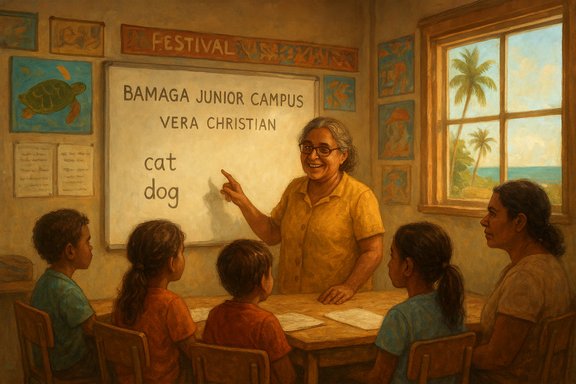
In remote Indigenous and island communities, continuity in schooling staff is exceptional; turnover is the norm. That makes long-serving teachers like Vera Christian uncommon and especially influential. For more than three decades at NPASC’s Bamaga Junior Campus, Ms Christian worked across kindergarten and early primary grades, often acting as both educator and community liaison. Her career reportedly spans 40 years in the profession, with the first five spent at other schools across Cape York and the Torres Strait before settling in Bamaga. Those figures and the local reflections on her service have been documented in recent community and regional news coverage. The public celebration of Ms Christian’s work underscores two persistent realities in remote education: the outsized effect of individual educators on small communities, and the importance of family- and community-centered approaches in early childhood learning. Local reporting highlights her emphasis on family engagement, her roles beyond classroom teaching (including learning support and special education), and invitations she received to share early childhood practice with remote educators more widely. The teacher, the classroom, the community
A steady presence in a remote school
For many families in Bamaga, familiarity breeds trust. Ms Christian’s multi-decade presence has given parents and carers a reliable point of contact between home and school — a resource that teachers who rotate through remote placements rarely have the time to build. According to regional coverage, her decision to remain in Bamaga for 35 years at the junior campus allowed her to build relationships with families over multiple student generations, an outcome she cites as a central reason for staying. Students she taught as children later returned as young parents, creating a continuity loop that strengthened engagement and community leadership.Early childhood focus and cross-role experience
Ms Christian worked across Kindergarten and the primary years from prep to Year 3, a foundational period when literacy, numeracy, and school routines are established. Local reports attribute to her several expanded responsibilities: learning support, special education roles, and program leadership for tutor and support initiatives. These combined duties reflect a common reality in smaller or remote schools where teachers often wear multiple hats, delivering core instruction while coordinating interventions, support services, and community engagement programs.Community rituals and public visibility
Beyond school walls, Ms Christian has appeared in local cultural moments and community events, reinforcing the role of teachers as civic participants in small towns. Photographs and local festival coverage placed her among community elders and school leaders at regional gatherings, illustrating the social side of long-term teaching service in the Northern Peninsula Area. This public visibility strengthens the perception of teachers in remote areas not only as instructors but also as cultural custodians and trusted adults.What made her stay: family engagement and trust-building
Putting families first
A recurring theme in local reporting is Ms Christian’s philosophy: “I always put families first, because they are the first teachers.” That prioritisation of parent and caregiver involvement is not just rhetorical; it appears embedded in her classroom practice. In early childhood settings, inviting families into the learning story — explaining what kindergarten is for, sharing milestones like writing a name, and using home context to scaffold learning — is widely regarded as best practice. Ms Christian’s long tenure allowed her to develop culturally appropriate strategies for building those bridges in a community where intergenerational ties and local knowledge are central to schooling outcomes.How continuity improves engagement
Educational research repeatedly shows that continuity of staff fosters higher parental trust, stronger relationships with local services, and more consistent monitoring of a child’s progress. In remote Indigenous contexts these effects are magnified: a familiar face can mean the difference between a family enrolling and participating in schooling or remaining disengaged. Ms Christian’s decades at Bamaga provided the time needed to earn trust, to understand household dynamics, and to adapt pedagogical choices to local linguistic and cultural realities — outcomes local reporting attributes to her long-term presence.The regional footprint: sharing practice beyond Bamaga
One of the most notable strands in the coverage is Ms Christian’s invitation by a regional office to share her early childhood approaches with remote educators across the state. According to reports, she worked beyond the Torres Strait Islands, supporting kindergartens and sharing what she described as practical experience on how to be an effective early childhood teacher in remote settings. That kind of peer-to-peer professional development is valuable: it translates tacit knowledge — built from years of context-specific practice — into shared technique and capacity building for other educators working in similar conditions. The impact of these sessions goes both ways: early childhood educators in remote communities learn scalable strategies from experienced colleagues, and long-serving teachers like Ms Christian access reflective practice that keeps classroom approaches current. Those cross-community exchanges are especially important in regions where centralized professional development is expensive or logistically difficult.Strengths of a long-serving teacher model
- Deep local knowledge: Knowing families, community leaders, and local cultural practices enables better-tailored pedagogy.
- Trust and consistency: Multi-year relationships reduce friction and improve attendance and engagement.
- Cross-role expertise: Long-term teachers often accumulate experience across special education, learning support, and program coordination — valuable in small schools.
- Knowledge-sharing: Veteran teachers act as informal mentors and conduits for professional development across the region.
- Cultural continuity: A stable teaching presence helps preserve local identity and supports intergenerational learning.
Risks and limitations: what a retirement exposes
The departure of a long-serving educator exposes several operational and pedagogical risks that educational leaders and communities need to anticipate.1. Loss of tacit knowledge
When a teacher who has spent decades in a community retires, they take with them informal institutional knowledge about family histories, learning trajectories, behavioral patterns, and community protocols. That tacit knowledge is rarely captured in files or formal handovers, and its loss can cause short-term disruption in student support and community relationships.2. Shortage of culturally competent replacements
Remote postings often struggle to recruit teachers with community-specific cultural competency. New teachers may be excellent classroom practitioners but lack the lived experience and trust relationships necessary to replicate the engagement Ms Christian enjoyed.3. Program continuity and special roles
Ms Christian’s multiple roles — learning support, special ed, program leadership for tutors — mean her exit will leave operational gaps unless explicitly planned for. Replacing one person with multiple specialists requires resources that remote schools often lack.4. Emotional and social impacts
Students and families may experience a sense of loss and instability. For children who have known the same teacher for years, a change can affect confidence, attendance, and classroom behaviour. School leaders must attend to the emotional transition as carefully as to operational matters.These risks are not theoretical; they follow from the community functions described in local reporting and from broader literature on teacher turnover in remote areas. Addressing them requires deliberate succession planning, knowledge-capture practices, and targeted recruitment with cultural induction supports.
Practical recommendations for NPASC and regional education authorities
- Document institutional memory now
- Record Ms Christian’s classroom strategies, community engagement routines, and tips for working with families in Bamaga. Short video interviews and lesson-mapping documents can be created quickly and serve as training materials.
- Plan role-based succession
- Break down her multiple functions into discrete roles: class teacher, learning support coordinator, and community liaison. Budget to recruit or train staff into each role rather than expecting one person to fill all those tasks.
- Invest in induction and cultural mentorship for newcomers
- Pair incoming teachers with local cultural mentors (Elders, community liaison officers, or local education workers) and provide extended induction within the community to scaffold relationship-building.
- Use peer networks and visiting specialists
- Leverage the regional connections Ms Christian helped make by scheduling visiting specialists and short-term placements to transfer specialist skills while new staff build trust locally.
- Create a tribute-focused professional development workshop
- Use Ms Christian’s departure as an impetus to run a recorded masterclass on family engagement and early childhood practice for remote educators across the region.
The broader context: teacher retention in remote Australia
Retention in remote and Indigenous communities is a long-standing policy challenge. Short-term contracts, housing pressures, cultural disconnection, and logistical isolation drive high turnover among early-career teachers. Conversely, long-serving local educators deliver stability that often correlates with better attendance, community engagement, and improved outcomes in early childhood measures. Ms Christian’s 35-year tenure in Bamaga is therefore exceptional and instructive: it shows what continuity looks like in practice and highlights the structural supports that enable it — strong family relationships, local cultural respect, and opportunities for professional development that build from lived experience. Regional policymakers and school systems seeking to replicate the positive aspects of such tenures should study the incentives and supports that help teachers remain: culturally safe workplaces, community recognition, career development that values remote experience, and housing and logistical supports that reduce attrition.Portraits of impact: what students and families remember
Local reporting captures two types of memories that families and students share about Ms Christian’s service.- First-discovery moments: The simple joys of early learning — a child writing their name, learning their first sounds, or performing in a class assembly — are framed as privileges Ms Christian cherished. Those moments are central to early childhood pedagogy and form the emotional core of a teacher’s legacy.
- Leadership emergence: Observers noted the pride of watching former students become community leaders and role models. This intergenerational arc — a teacher instructing both a parent and later that parent’s child — is a powerful indicator of deep community integration and long-term influence.
Celebrating a career without romanticising the gap
The community reaction to Ms Christian’s retirement celebrates the genuine impact one teacher had on Bamaga. Public gratitude and local festival appearances demonstrate how educators become woven into the social fabric of remote towns. At the same time, the event prompts urgent questions about how to capture and transfer that value system to incoming staff and how to institutionalise the best practices she modelled.In short: celebration and succession planning must go hand in hand. The community’s expressions of thanks can be channelled into practical supports for teachers who follow — scholarships, mentorship roles, and a formalised knowledge-transfer program named in her honour would be durable legacies that translate gratitude into future benefit.
Legacy actions: turning gratitude into systems
- Create a recorded oral-history module with Ms Christian on family engagement and remote early childhood practice.
- Establish a small “Vera Christian Memorial Mentorship Fund” (or a similarly named professional development scholarship) to support incoming Bamaga teachers during their first year.
- Build a short-course for remote early childhood educators, drawing on Ms Christian’s classroom methods and the regional training she previously provided.
- Formalise community induction protocols that include time for new teachers to shadow long-serving local staff and community figures.
Conclusion
The retirement of Vera Christian is a community moment that matters: it is a celebration of a rare, long-standing commitment to early childhood and primary education in one of Australia’s most remote regions, and a reminder of the fragile institutional knowledge that walks out the door when a veteran educator leaves. Local reporting documents her 40-year career, 35 years at Bamaga Junior Campus, expansive roles across learning support and special education, and invitations to share her practices across the region — facts that together sketch an instructive portrait of what long-term teaching can deliver in remote contexts. What Bamaga and NPASC now need is strategic follow-through: capture Ms Christian’s tacit knowledge, plan discrete role replacements, invest in culturally informed induction, and translate community gratitude into sustainable professional supports. Doing so would honour both the person and the practice — ensuring that the advantages of her decades of service persist for the children and families she served.Source: psnews.com.au Huge loss for NPASC as veteran teacher finishes 40-year career | PS News
