

Verifying a downloaded Windows 10 22H2 ISO with its SHA‑256 checksum is the single most reliable way to confirm the file is complete, authentic, and untampered before you burn it to USB, mount it in a VM, or run setup on a live machine.
Microsoft distributes Windows ISOs through several channels (public download pages, the Media Creation Tool, Visual Studio subscriptions / MSDN, and Volume Licensing portals). Historically, Microsoft sometimes published SHA‑256 checksums alongside ISO downloads, but that practice is inconsistent for consumer ISOs today. That means users must know how to compute a local SHA‑256 and how to validate the result against an authoritative checksum (when available) — or how to perform additional integrity checks when an official hash can’t be found. The practical, reproducible verification steps are: compute the SHA‑256 locally with built‑in Windows tools, look for an authoritative checksum to compare, and use image-level checks (digital signatures, DISM reads of the WIM/ESD) to raise confidence when no published checksum exists. Community guidance and short how‑to writeups reproduce these steps repeatedly because they work in the field.
This article explains why verification matters, how to compute the checksum on Windows, where you can realistically look for Microsoft checksums, what to do if verification fails, and how to perform fallback integrity checks. It also highlights key risks, best practices for secure downloads, and practical troubleshooting for stubborn failures.
SHA‑256 is preferred over older algorithms like MD5 or SHA‑1 because those older algorithms can suffer from collision attacks and are no longer considered robust for security‑sensitive verification. Most current guidance and built‑in Windows tools default to SHA‑256.
Practical, layered verification — checksum, signature, and image‑read tests — gives technicians and home users strong, defensible assurance that their Windows installation media is intact and trustworthy.
Source: How2shout How to Verify the Windows 10 22H2 ISO File - Checksum
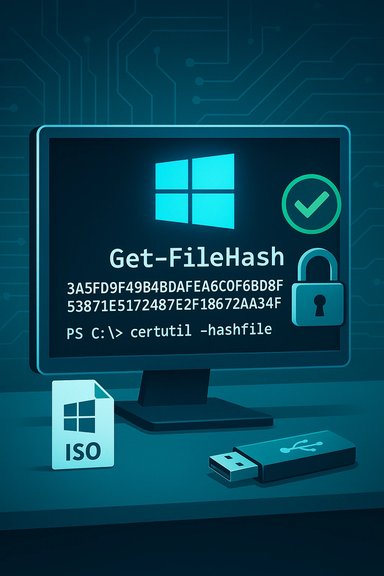 Background / Overview
Microsoft distributes Windows ISOs through several channels (public download pages, the Media Creation Tool, Visual Studio subscriptions / MSDN, and Volume Licensing portals). Historically, Microsoft sometimes published SHA‑256 checksums alongside ISO downloads, but that practice is inconsistent for consumer ISOs today. That means users must know how to compute a local SHA‑256 and how to validate the result against an authoritative checksum (when available) — or how to perform additional integrity checks when an official hash can’t be found. The practical, reproducible verification steps are: compute the SHA‑256 locally with built‑in Windows tools, look for an authoritative checksum to compare, and use image-level checks (digital signatures, DISM reads of the WIM/ESD) to raise confidence when no published checksum exists. Community guidance and short how‑to writeups reproduce these steps repeatedly because they work in the field.This article explains why verification matters, how to compute the checksum on Windows, where you can realistically look for Microsoft checksums, what to do if verification fails, and how to perform fallback integrity checks. It also highlights key risks, best practices for secure downloads, and practical troubleshooting for stubborn failures.
Why verification matters
- Downloads can fail silently. A browser may report 100% completion while the file is actually truncated or corrupted. Network hiccups, proxy errors, or storage faults can produce an ISO that appears normal until setup fails during installation.
- Tampering risk is real when files are downloaded from third‑party sites or mirrored sources. A matched SHA‑256 gives strong evidence the ISO is bit‑for‑bit identical to the copy that produced the published checksum.
- Re-install and deployment operations are time‑consuming. Spending a minute to verify prevents hours of reinstall troubleshooting or data loss.
What a checksum is (short technical primer)
A checksum (hash) is a deterministic, cryptographic fingerprint of a file. SHA‑256 produces a 256‑bit (64‑hex‑character) string that changes completely if even a single bit in the file differs. That makes SHA‑256 a practical integrity check: if your computed SHA‑256 equals the published value, the file is identical to the source that published that value. If they differ, the file is corrupted or modified.SHA‑256 is preferred over older algorithms like MD5 or SHA‑1 because those older algorithms can suffer from collision attacks and are no longer considered robust for security‑sensitive verification. Most current guidance and built‑in Windows tools default to SHA‑256.
Where to find an authoritative Windows 10 22H2 checksum
Realistically, authoritative checksums come from Microsoft channels that list file metadata. Expect differences by channel:- Visual Studio Subscriptions (formerly MSDN) and the Volume Licensing Service Center (VLSC): historically the most reliable places for official ISO checksums. These require a subscription or enterprise access and do list SHA‑256 values for ISO downloads. If you have access, use those pages. Community references repeatedly point to these sources as authoritative.
- Microsoft support / download pages and KB articles: occasionally Microsoft publishes a checksum for a specific image or servicing package in a KB or support article. When present, this is authoritative.
- Public consumer download flows (Media Creation Tool, public download page): Microsoft does not consistently publish SHA‑256 for every consumer ISO available through the Media Creation Tool. Relying solely on the MCT download without a published hash is common, which is why alternate checks are necessary.
- Third‑party index sites and community mirrors: these sometimes publish SHA‑256 values for ISO builds (especially older MSDN/Visual Studio ISOs). Treat these as secondary evidence: corroborate with at least one other reputable source before trusting them.
How to compute the SHA‑256 hash on Windows (recommended)
Windows includes multiple reliable methods to compute a SHA‑256 checksum without installing third‑party software. Two widely used, built‑in approaches are PowerShell’s Get‑FileHash and the legacy certutil command.Using PowerShell: Get‑FileHash (simple and modern)
- Open PowerShell (press Windows key, type “powershell,” and press Enter).
- Run the command (replace the path with your ISO path):
Get-FileHash "C:\Users\YourUser\Downloads\Win10_22H2_English_x64.iso" -Algorithm SHA256 - PowerShell prints a result with columns Algorithm, Hash, and Path. Copy the Hash string and compare it to the authoritative value.
- Get‑FileHash uses SHA‑256 by default and supports other algorithms if needed. It is included in modern versions of PowerShell and Windows. It reads the entire file and computes the hash, so the time depends on file size and disk speed.
Using certutil (alternative)
- Open an elevated Command Prompt or PowerShell.
- Run:
certutil -hashfile "C:\Users\YourUser\Downloads\Win10_22H2_English_x64.iso" SHA256 - certutil outputs the SHA‑256 digest as a sequence of hex pairs separated by spaces or otherwise formatted. Copy and compare.
- certutil is a Windows command‑line utility that can compute various hashes and is useful on older systems where PowerShell may lack Get‑FileHash. The certutil documentation shows the -hashfile option for this purpose.
Step‑by‑step verification workflow (practical checklist)
- Compute the SHA‑256 locally using Get‑FileHash or certutil.
- Locate the authoritative checksum for the exact ISO build/edition/language/architecture:
- Prefer: Visual Studio Subscriptions / VLSC or Microsoft support KB.
- If you don’t have a Microsoft‑published value, find at least two reputable independent sources that report the same checksum (MSDN dumps, archived Microsoft mirrors). Treat third‑party single reports cautiously.
- Compare the two hex strings exactly (case and whitespace don’t matter to computers, but manual copy must be exact).
- If they match: the ISO is identical to the copy that published the checksum — proceed to create media or install, but still perform routine malware scans before executing files.
- If they don’t match: do not use the ISO. Delete it and redownload from the official Microsoft source. Try different browsers, networks, or a download manager that supports resume. If mismatches persist, use the Media Creation Tool on a different host or obtain the ISO via Visual Studio/VLSC if available.
- PowerShell output:
Algorithm Hash
SHA256 A6F470CA6D331EB353B815C043E327A347F594F37FF525F17764738FE812852E
If your published target is A6F470CA6D331EB353B815C043E327A347F594F37FF525F17764738FE812852E then it’s a perfect match.
If you cannot find an official published SHA‑256 — alternative integrity checks
When Microsoft hasn’t published a checksum for your consumer ISO, combine the following checks to raise reasonable confidence:- Mount the ISO in Explorer and verify the installer is signed:
- Mount → open the mounted drive → right‑click setup.exe → Properties → Digital Signatures. The signer should be Microsoft and the signature should show as valid. This is an authenticity check for that executable, not a bit‑for‑bit proof for the entire ISO, but it’s important and quick.
- Use DISM to read the install.wim/install.esd:
- Open an elevated Command Prompt and run:
dism /Get‑WimInfo /WimFile :\sources\install.wim
 - If DISM reads the WIM/ESD and lists image indexes and sizes, the Windows image inside the ISO is structurally intact. If DISM fails to read, the image is corrupted. This is one of the most telling ISO internal checks.
- Use 7‑Zip’s “Test” operation or extract a handful of files:
- 7‑Zip can open the ISO and test internal archive streams. If it reports errors, the ISO is damaged. If it tests clean, that’s positive but not definitive against targeted tampering.
- Check the ISO against multi‑engine scanners:
- Uploading a checksum to VirusTotal (or searching for the checksum there) will show if any public scanners have flagged that exact binary. This is useful when multiple users have the same ISO hash indexed. It doesn’t prove origin but helps detect reported malware.
- Recreate via Media Creation Tool:
- Use the Media Creation Tool on a reliable host to obtain a fresh ISO. If your initial download came from a mirror or a third party, MCT is typically the simplest official route. Bear in mind MCT sometimes produces an ISO without a public checksum, so still perform the digital signature and DISM checks afterward.
The How2shout checksum table and unverifiable claims — caution
Many community how‑to pages publish full lookup tables of SHA‑256 values for every language and architecture (these are convenient). However:- Unless those tables are explicitly copied from a Microsoft subscription portal page or a Microsoft support KB, they are a third‑party reproduction and should be cross‑checked.
- Microsoft does not maintain a single public page listing every consumer ISO SHA‑256 value for every language/ARCH build in the Media Creation Tool flow; this inconsistency means third‑party tables can be stale or incorrect for updated images.
- Always look for independent corroboration of any table entry before trusting it for production deployments.
Troubleshooting failed verification (practical steps)
If your computed SHA‑256 does not match the expected value:- Delete the ISO (don’t try to use it).
- Re-download from Microsoft’s official download page or re-run the Media Creation Tool.
- Try a different browser (Edge vs Chrome/Firefox) — browser download engines vary in how they handle resume and temporary files.
- Use a reliable download manager (or the MCT) that supports resume and is less susceptible to transient network issues.
- Temporarily switch networks (a home connection versus a work VPN) to rule out middleboxes and proxy corruption.
- Check local storage (SMART status on the disk, run chkdsk) — storage corruption can produce recurring checksum mismatches.
- If a corporate proxy or appliance performs traffic inspection (e.g., SSL/TLS interception), download using a machine not behind that appliance.
Enterprise and deployment considerations
- For imaging fleets, maintain a canonical repository of verified, hashed ISOs. Store the checksum (SHA‑256) with the image and a copy of the media creation metadata (build number, cumulative update included).
- For scripted deployments, verify the checksum as part of the pipeline before allowing the image into your distribution catalog.
- For large-scale USB creation, use Rufus (or enterprise imaging tools) that can write the ISO in a way that preserves UEFI boot while handling >4 GB install.wim files. Test the media on a spare machine or VM and confirm the build with winver.exe after booting.
Security risks and limitations (what verification does—and does not—protect against)
What SHA‑256 verification protects:- Silent network transmission errors that change the binary.
- Bit‑for‑bit tampering detectable by a mismatch to an authoritative checksum.
- A malicious ISO that was produced by the vendor (rare for Microsoft but theoretically possible for any publisher) — the checksum will match because the binary was altered before the publisher published the certificate. This is why you must use only official Microsoft channels for the downloaded file.
- A signed but malicious component cleverly grafted into an otherwise valid ISO. Checking the setup.exe signature helps (Authenticode) but does not guarantee every file inside the ISO was untouched.
- A supply‑chain compromise at the source that produced both the binary and its published checksum (again, low probability for mainstream Microsoft consumer ISOs but non‑zero as a conceptual risk).
Quick reference commands (copy / paste)
- PowerShell (recommended):
Get-FileHash "C:\Path\To\Windows10_22H2_x64.iso" -Algorithm SHA256 - certutil (works on older Windows):
certutil -hashfile "C:\Path\To\Windows10_22H2_x64.iso" SHA256 - DISM inspect WIM:
dism /Get‑WimInfo /WimFile:\sources\install.wim - Check Signer on setup.exe (PowerShell):
Get-AuthenticodeSignature "D:\setup.exe"
Final checkpoints (short checklist before you install)
- Confirm the ISO came from an official Microsoft source (MCT / Microsoft download page / Visual Studio subscription / VLSC).
- Compute SHA‑256 with Get‑FileHash or certutil.
- If an official SHA‑256 is published for that build, verify exact match.
- If no official SHA‑256 exists, mount the ISO and:
- Confirm setup.exe Authenticode signature is valid.
- Run DISM /Get‑WimInfo on install.wim or install.esd.
- Run 7‑Zip test on the ISO (optional).
- Optionally upload the hash to multi‑engine scanners for extra confidence.
- If anything fails, delete the file and redownload from an official source; consider using a different network or the Media Creation Tool.
Conclusion
Verifying the Windows 10 22H2 ISO using SHA‑256 is a fast, low‑cost safeguard that prevents installation failures and reduces the risk of using tampered or corrupted media. Use PowerShell’s Get‑FileHash or certutil to compute the digest, compare it against Microsoft’s published value when available, and—when no published checksum exists—perform image‑level and signature checks (DISM, Authenticode, 7‑Zip). For enterprise deployments, maintain a canonical, hashed ISO repository and verify checksums as part of your ingestion pipeline.Practical, layered verification — checksum, signature, and image‑read tests — gives technicians and home users strong, defensible assurance that their Windows installation media is intact and trustworthy.
Source: How2shout How to Verify the Windows 10 22H2 ISO File - Checksum
