

Microsoft's Windows story this week reads like a compact primer on where the platform stands: active community hubs are galvanizing discussion, Microsoft continues to reshape its media and security posture, and the lifecycle debates around Windows 10 and upgrade paths remain urgent for everyday users and IT teams alike. The coverage from community posts and BetaNews pieces highlights three practical threads — community, apps & branding, and security & upgrades — that together define the choices Windows users must make in the months ahead. This feature pulls those threads together, verifies the key facts against vendor and independent reports, and surfaces the benefits, tradeoffs, and clear next steps for both consumers and administrators.
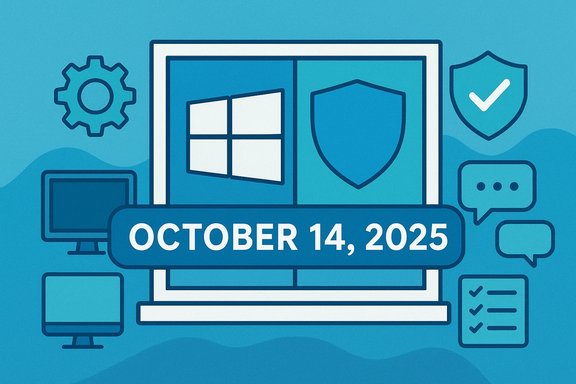
Windows as a platform is simultaneously mature and in motion. Microsoft’s official lifecycle calendar confirmed that Windows 10 reached end of support on October 14, 2025, which means free security updates, feature updates, and standard technical support ceased on that date. Microsoft’s public guidance is explicit: plan to move eligible devices to Windows 11, enroll in the consumer Extended Security Updates (ESU) program if a device is ineligible, or replace the device. This is not theoretical — it is the anchor that now drives upgrade decisions for millions of endpoints. At the same time, product-level moves — like preview releases of media apps and ongoing dialog between Microsoft and third‑party security vendors — reveal a company still iterating on the user experience and on platform governance. Community touchpoints such as subreddit groups and weekly app roundups continue to surface useful, practical guidance for users looking to pick apps, troubleshoot upgrades, or make security choices. The pieces under review in this feature come from community and industry coverage that together sketch a practical map of the Windows landscape today.
The strengths are tangible — clearer lifecycle notices, better partner engagement, and active community support — but they come with real tradeoffs: hardware refresh costs, preview instability, and the need for disciplined rollout governance. Prioritize inventory, backups, and staged testing. Make migration plans explicit and timebound. The platform remains flexible and feature-rich, but its complexity requires deliberate choices: those who plan will gain security and newer experiences; those who delay will increasingly face exposure and fragmentation.
Source: Windows Central https://www.windowscentral.com/micr...m/series/best-windows-10-apps-this-week-199/]
 Background / Overview
Windows as a platform is simultaneously mature and in motion. Microsoft’s official lifecycle calendar confirmed that Windows 10 reached end of support on October 14, 2025, which means free security updates, feature updates, and standard technical support ceased on that date. Microsoft’s public guidance is explicit: plan to move eligible devices to Windows 11, enroll in the consumer Extended Security Updates (ESU) program if a device is ineligible, or replace the device. This is not theoretical — it is the anchor that now drives upgrade decisions for millions of endpoints. At the same time, product-level moves — like preview releases of media apps and ongoing dialog between Microsoft and third‑party security vendors — reveal a company still iterating on the user experience and on platform governance. Community touchpoints such as subreddit groups and weekly app roundups continue to surface useful, practical guidance for users looking to pick apps, troubleshoot upgrades, or make security choices. The pieces under review in this feature come from community and industry coverage that together sketch a practical map of the Windows landscape today.Community: Where Windows users gather and why it matters
r/WindowsCentral and the power of community curation
Online communities remain the most effective way for Windows users to discover actionable tips, early warnings, and curated app lists. Forums and subreddits dedicated to Windows news and how‑tos are where real-world testing, troubleshooting, and human judgments happen at scale. Participating in those communities provides two key benefits:- Rapid, real-world problem reports, often faster than vendor KBs.
- Curated app recommendations and practical walkthroughs that reflect a broad user base.
Why community voices still matter to enterprises
Enterprises benefit when staff and IT pros monitor relevant communities because issues observed by end users often precede official advisories. The community channel acts as an early-warning network for compatibility problems, deployment regressions, and service changes — and it’s a resource IT should actively monitor rather than ignore.Apps and branding: Microsoft’s Media apps and the branding reset
The Music and Video preview apps — a branding and UX reset
Microsoft’s preview releases of the Music and Video apps for Windows 10 (seen historically during the Technical Preview era) dropped explicit Xbox-centric branding in favor of a broader consumer-facing identity. That change is significant for two reasons:- Perception: Xbox labeling can confuse consumers who assume Xbox-branded services are console‑only; broader branding aims to make media features feel native to Windows.
- Product strategy: Decoupling media apps from the Xbox umbrella aligns them closer to Windows and the Microsoft Store ecosystem, letting the company reposition these apps as cross-device utilities rather than niche entertainment storefronts.
What the branding change means today
The older move to remove “Xbox” from music/video namespaces presaged a larger evolution: Microsoft has progressively retreated from being a standalone entertainment storefront provider and instead leans on third‑party streaming ecosystems. This is consistent with later product choices that shifted Microsoft away from running a full retail storefront for movies & TV — a strategy with clear implications for users who have purchased digital media in Microsoft’s ecosystem. The lesson: users should track both preview app behavior and longer-term storefront policy to understand how and where media purchases remain accessible.Upgrade pathways and the end-of-support reality
The hard date and what it means
Microsoft’s lifecycle announcement that Windows 10 support ended on October 14, 2025 is the most consequential fact for users and organizations: it changes the threat model, the compliance posture, and life‑cycle planning priorities. Devices that remain on Windows 10 after that date will not receive new security patches unless they are enrolled in the consumer ESU program or covered by enterprise extended support. Microsoft explicitly recommends upgrading eligible devices to Windows 11 and provides a one‑year consumer ESU option for ineligible machines.Free upgrade reality — eligibility matters
The notion of a “free upgrade” has migrated across different Windows cycles. Historically, Microsoft offered free upgrade windows and unofficial paths for prior versions. In the current lifecycle, a free upgrade to Windows 11 is available only to devices that meet Windows 11’s minimum hardware requirements and are running a qualifying Windows 10 release (for example, 22H2 at certain points). The upgrade is free in the sense that Microsoft does not charge for the OS upgrade on eligible devices — but eligibility is strictly enforced by hardware criteria such as TPM 2.0, secure boot, and supported CPUs. That makes the upgrade path simple for some users and a hardware replacement problem for others.Practical upgrade checklist (recommended order)
- Inventory devices and record current OS, CPU, TPM, and firmware versions.
- Run Microsoft’s PC Health Check or similar OEM tool to check Windows 11 compatibility.
- Back up user data and create a system image before attempting upgrades.
- For eligible machines: check Windows Update > Check for updates for the Windows 11 offer and follow the upgrade path.
- For ineligible machines: plan either ESU enrollment for one additional year of updates or hardware refresh, and harden the device if retention is necessary (isolation, EDR, segmentation).
Security and third‑party AV: the Kaspersky episode and platform governance
What happened with Kaspersky and Microsoft
In 2017, Kaspersky publicly raised antitrust concerns about how Windows updates and notifications treated third‑party antivirus vendors. Microsoft responded by publicly committing to changes in how it engaged AV partners and how Windows communicates protection status to users. Concessions included improved compatibility review processes for AV vendors ahead of feature updates, more predictable release schedules for partner testing, and allowing AV vendors to show persistent notifications about expiring protection — rather than ephemeral toasts. Kaspersky subsequently withdrew its complaint after Microsoft agreed to those changes.Why that matters now
- Platform fairness: Microsoft’s willingness to clarify and adjust AV provider processes showed that platform owners can — and sometimes must — alter update mechanics to preserve a competitive ecosystem.
- User choice vs. platform safety: Microsoft’s position has consistently been to prioritize an “always-on” protection posture for customers. The balance is delicate: when Windows temporarily disabled incompatible AV components during updates, Windows Defender sometimes acted as the fallback. That behavior triggered scrutiny and the need for clearer partner communication.
Practical risk for admins and consumers
- Monitor AV vendor guidance during OS feature updates and stage updates in test rings where AV compatibility can be validated.
- Ensure patch policies and emergency rollback procedures are in place; AV interaction with OS updates is a known operational risk vector.
- For enterprises, insist on AV vendor-stated compatibility window assurances before mass rollouts.
Best Windows apps and the value of curated weekly roundups
How curated lists help users
Weekly app roundups — the kind featured by BetaNews and other outlets — serve three useful functions:- Surface quality apps for everyday tasks (note‑taking, utilities, media players).
- Identify noteworthy updates (new features, offline improvements, codec support).
- Highlight potential privacy or telemetry tradeoffs introduced by new app versions.
Typical curation checklist for recommending apps
- Stability and crash frequency
- Security posture (permissions, telemetry)
- Update cadence and developer responsiveness
- Cost (free vs. paid) and licensing model
- Integration with cloud services or offline-first capabilities
Cross‑checking key claims: verifying facts and calling out uncertainty
Journalistic verification is crucial for platform coverage. The most load‑bearing claims in the material reviewed include:- The Windows 10 end-of-support date (Oct 14, 2025): corroborated by Microsoft’s own lifecycle pages and recent KB notices.
- Microsoft’s public response to Kaspersky and the AV partner improvements: corroborated by Microsoft’s Windows Experience Blog and contemporary reporting.
- The Music & Video preview apps dropping Xbox branding: reported in contemporaneous coverage during the Windows 10 preview cycle (BetaNews, Pocket-lint, Ars Technica). Those reports are consistent about branding changes and UX experimentation.
Strengths, weaknesses, and risks — critical analysis
Strengths
- Clarity of urgency: Microsoft’s lifecycle messaging gives a clear anchor date, which is important for planning and security posture.
- Improved partner engagement: Public commitments to work with AV vendors and clearer testing schedules reduce the chance of large-scale incompatibilities on feature update days. That change reflects mature platform governance.
- Community ecosystem: Forums, subreddits, and weekly curated lists accelerate user knowledge transfer, surfacing both practical tips and software alternatives rapidly.
Weaknesses and operational risks
- Hardware-driven upgrade friction: Windows 11’s minimum hardware requirements create a dichotomy: many devices are eligible and can upgrade for free, but a substantial installed base cannot, forcing costly hardware refresh choices or short-term ESU enrollment.
- Preview instability: App previews and new OS features (Copilot integrations, media changes) can deliver regressions that break workflows; preview feedback cycles are helpful but not risk-free for non-technical users.
- Ecosystem drift: Moves away from first‑party media storefronts and rebranding can create long-term access uncertainties for purchased content unless migration paths and DRM rules are made explicit. Recent decisions to sunset storefronts illustrate this concern.
Security and governance risks
- Update-time AV interactions: As the Kaspersky episode demonstrated, AV interactions with OS updates can create transient protection gaps or produce confusing user-facing messages. Enterprises must test update flows with deployed security stacks.
- Complacency after EoS: Devices kept online without ESU or hardware migration will quickly become attractive targets for exploitation; organizations that postpone action expose themselves to operational and compliance risks.
Practical recommendations (for consumers and IT)
For individual users
- Check your device’s Windows 11 compatibility today using the PC Health Check tool.
- Back up files and create a system image before attempting an OS upgrade.
- If your hardware doesn’t qualify for Windows 11, plan a budget for ESU or hardware replacement and consider alternative OS options (e.g., supported Linux distributions) for older devices used for non‑Windows‑specific tasks.
- Use community roundups and curated app lists to find stable, privacy-conscious replacements for apps that stop receiving updates.
For IT teams and organizations
- Inventory all endpoints and classify by upgrade eligibility and business criticality.
- Build test rings that include real-world AV, EDR, and third‑party tools; validate feature updates there before wide deployment.
- Track vendor compatibility statements (AV, line‑of‑business apps) and maintain a rollback playbook.
- Treat consumer ESU enrollment as a controlled, temporary bridge — not a substitute for an active migration plan.
- Monitor community signals (forums, curated lists) as part of your early-warning telemetry for issues that may not yet be in vendor KBs.
Conclusion
The material reviewed — encompassing community calls-to-action, app previews, upgrade how‑tos, and platform governance changes — paints a practical picture: Microsoft is steering Windows into a new phase where hardware eligibility, integrated AI features, and clearer partner governance shape user choices. The end of free mainstream support for Windows 10 on October 14, 2025, is the factual hinge on which many decisions now turn. For consumers and organizations alike, the sensible path is to treat that date as a hard planning milestone: verify hardware eligibility, test upgrades and AV compatibility in controlled rings, and use the vibrant Windows communities and curated app roundups to shorten the learning curve.The strengths are tangible — clearer lifecycle notices, better partner engagement, and active community support — but they come with real tradeoffs: hardware refresh costs, preview instability, and the need for disciplined rollout governance. Prioritize inventory, backups, and staged testing. Make migration plans explicit and timebound. The platform remains flexible and feature-rich, but its complexity requires deliberate choices: those who plan will gain security and newer experiences; those who delay will increasingly face exposure and fragmentation.
Source: Windows Central https://www.windowscentral.com/micr...m/series/best-windows-10-apps-this-week-199/]
