

Microsoft’s decision to push the Windows Insider Dev Channel into the 26300 build series is not a cosmetic update — it’s a visible signal that the company is reworking the foundation of Windows 11, and that foundation work will shape how millions of PCs and a new wave of Arm devices behave over the next year. The change is deliberate: Microsoft has told Insiders that the 26300 series will contain “behind‑the‑scenes platform changes” and that those changes may produce different known issues than Beta-channel builds, a point the Insider team made explicit in the January 27, 2026 announcement.
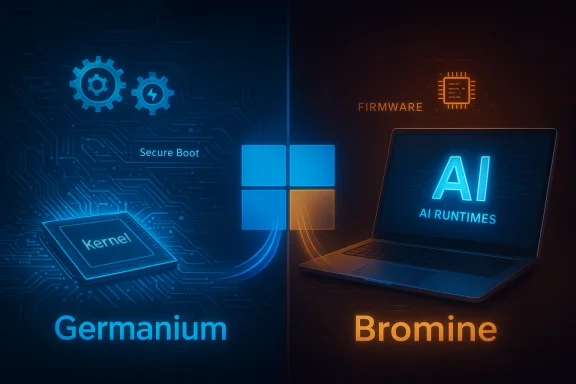
Windows feature updates have historically mixed visible UI changes with deeper platform work. This time, Microsoft is separating those concerns more clearly. The company is continuing development on the Germanium platform that underpins current mainstream Windows 11 releases, while simultaneously producing a new platform baseline codenamed Bromine for a targeted group of new Arm-based, AI-first devices. Windows 11 versioning will reflect this split: most existing PCs are expected to receive a Germanium-based feature update later in the year (often referred to as 26H2 in reporting), while a Bromine-based 26H1 image will shit‑generation Arm machines rather than being pushed broadly via Windows Update.
This architecture — dual platform baselines, staggered rollouts, and a Dev-channel that leads with platform hacks — is the most consequential change inside Microsoft’s release planning. It’s subtle in day-to-day UI but fundamental in how Windows talks to silicon, drivers, power management, and security primitives.
Why that should worry and excite you:
Why cross‑device resume matters commercially: it helps Windows feel like the hub of a user’s digital life — analogous to Apple’s Handoff — and encourages deeper integration with Android OEMs and Microsoft services. But it also depends on a stable underlying platform and reliable device linking to be frictionless.
However, the change raises real operational risk: more platform baselines mean more complexity for enterprise management, more variant testing for OEMs, and a steeper communication challenge for Microsoft to explain why two device classes will behave differently under the hood. The company must avoid shipping Bromine with half‑baked driver contracts or forcing existing Windows fleets into bracingly brittle upgrades.
Source: PCQuest Windows 11 Is Getting a Massive Hidden Overhaul That Changes Everything
 Background
Windows feature updates have historically mixed visible UI changes with deeper platform work. This time, Microsoft is separating those concerns more clearly. The company is continuing development on the Germanium platform that underpins current mainstream Windows 11 releases, while simultaneously producing a new platform baseline codenamed Bromine for a targeted group of new Arm-based, AI-first devices. Windows 11 versioning will reflect this split: most existing PCs are expected to receive a Germanium-based feature update later in the year (often referred to as 26H2 in reporting), while a Bromine-based 26H1 image will shit‑generation Arm machines rather than being pushed broadly via Windows Update. This architecture — dual platform baselines, staggered rollouts, and a Dev-channel that leads with platform hacks — is the most consequential change inside Microsoft’s release planning. It’s subtle in day-to-day UI but fundamental in how Windows talks to silicon, drivers, power management, and security primitives.
What Microsoft actually announced (and why it matters)
The Dev Channel is stepping to 26300
On January 27, 2026 Microsoft released Windows Insider Preview Build 26300.x to the Dev Channel and explicitly warned that these builds “will contain many of the same features and improvements as the 26220 series” while also adding that “over time, we will be making behind‑the‑scenes platform changes … so they may have different known issues.” That wording matters: this isn’t a cosmetic jump in build number, it’s an engineering directive to preview and harden low‑level platform code under the scrutiny of the Insider community.Why that should worry and excite you:
- Worry: platform changes can introduce driver regressions, boot-time quirks, or compatibility edge cases that don’t show up when only surface features are switched between channels.
- Excite: once stable, platform changes resolve recurring reliability problems at their roots — scheduling, power, driver APIs — which can reduce the frequency and severity of future visible breakages.
A two‑track platform strategy: Germanium and Bromine
Microsoft’s engineering teams are shipping two different baselines:- Germanium — the current platform baseline that most existing Windows 11 installations and the forthcoming 26H2 release are built on.
- Bromine — a new plaed at next‑generation Arm and AI-enabled hardware, intended primarily as a factory image on new devices rather than a mass push to installed bases. Bromine contains low‑level kernel, power, and runtime changes needed to expose NPUs, new SoC power models, and firmware expectations of upcoming silicon.
Technical anatomy: what “platform changes” actually mean
When Microsoft says “platform,” it’s shorthand for the low-level pieces of the OS that interact directly with hardware and drivers. Platform changes can include:- Kernel scheduling and thread management tweaks that affect responsiveness and battery life.
- Power management and thermal control changes s (big‑LITTLE CPU clusters, NPUs, custom power islands).
- Hardware Abstraction Layer (HAL) updates and driver interface contracts that OEMs and silicon vendors must implement.
- NPU runtimes and low-level APIs used to surface on-device AI acceleration to Windows components and to applications.
- Firmware and boot-time expectations (secure boot nuances, ACPI tables, and vendor firmware interfacing).
Why Microsoft is doing this now
There are three converging pressures:- Hardware evolution: new Arm SoCs and dedicated NPUs are arriving with non‑trivial firmware, driver, and runtime requirements. A platform baseline like Bromine lets Microsoft align the OS with these new silicon features without destabilizing the existing installed base. (windowscentral.com
- Update fatigue and reliability concerns: recent months of rapid feature deliveries exposed a persistent problem — features were arriving faster than the underlying platform could reliably support, creating driver conflicts and update headaches for users. Microsoft appears to be responding by pausing the blitz of visible features in favor of consolidating foundation work. The Dev-channel move to 26300 is explicit about prioritizing foundation stability.
- Strategic product differentiation: by putting Bromine on selected new devices (for example, Copilot+ and certain Arm machines), Microsoft can advertise hardware-specific AI and NPU benefits without forcing the general installed base through disruptive platform migrations.
Cross‑device work: how Windows is threading devices together
Platform work is not the only story. Microsoft is also expanding cross‑device continuity features — a practical, visible benefit to users. The “Cross‑Device Resume” capability, which first surfaced in preview with Spotify support, lets you pick up a mobile activity on a PC via a taskbar badge. That functionality has since been expanded in Release Preview to allow resuming documents and browsing sessions from supported Android apps (M365 Copilot, certain OEM browsers) directly on a Windows PC. Microsoft has published guidance on prerequisites and settings for the Resume feature, which require Phone Link and Link to Windows and the same account logged in on both devices.Why cross‑device resume matters commercially: it helps Windows feel like the hub of a user’s digital life — analogous to Apple’s Handoff — and encourages deeper integration with Android OEMs and Microsoft services. But it also depends on a stable underlying platform and reliable device linking to be frictionless.
What to expect in practical terms (timeline and channels)
- Insiders:
- Dev Channel: now receiving the 26300 series (builds started landing in late January 2026). Expect platform-level churn, driver regressions, and edge-case bugs. Microsoft warns that switching back to the Beta Channel after installing a 26300 build is complicated; Insiders should plan accordingly.
- Beta / Release Preview: will continue shipping 26220/26100 family builds that contain the same user-facing features but without the early platform plumbing.
- Mainstream users:
- Most existing PCs should receive the Germanium-based release (commonly described as 26H2) later in the year.
- New Arm/AI-focused devices will ship with Bromine as 26H1 preinstalled in spring/early‑2026 windows. Those Bromine devices will be targeted OEM launches, not broad Windows Update rollouts.
- Feature rollouts:
- Cross‑device resume is moving from Dev/Beta to Release Preview and appears close to broader availability, starting with Spotify and selected M365 Copilot experiences.
Impact analysis: benefits, risks, and tradeoffs
Benefits (what Microsoft can get right)
- Stability at the foundation: addressing kernel, driver, and power-management issues at the platform level is where systemic reliability gains are earned. If the Bromine/Germanium split is executed well, users should see fewer update‑triggered regressions and smoother driver behavior on new silicon.
- Hardware enablement: Bromine will let OEMs ship devices that require new runtime and NPU support without compromising older machines.
- Controlled risk surface for new tech: shipping Bromine on factory images isolates aggressive changes to hardware that needs them, rather than imposing them broadly. That’s a pragmatic path to rolling out AI-enabled capabilities tied to silicon vendors.
Risks (what can go wrong)
- Fragmentation and complexity for IT admins: having multiple platform baselines (Germanium vs Bromine) raises the operational bar for enterprise testing. IT departments must now treat device fleet segmentation by platform baseline, not just by OS version.
- Channel confusion for Insiders and enthusiasts: the Dev Channel’s forward jump and the statement that switching back becomes more complicated could strand some Insiders on builds that are difficult to downgrade.
- Driver and OEM fragility: platform changes surface new driver requirements. Older or poorly maintained driver stacks could break unexpectedly during testing windows, producing compatibility headaches.
- Perception and adoption risk: market signals suggest Windows 11 adoption momentum has shown variability in recent months; that governance problem compounds urgency to get stability right. StatCounter data shows Windows 11’s share fluctuating around the 50–55% range late in 2025, with a dip into the low‑50s after earlier gains. That volatility — and the attendant coverage — tightens the PR and engineering timelines for Microsoft.
What users and IT professionals should do now
For regular consumers
- If you value stability, stay on Beta or Release Preview builds rather than jumping into Dev. The Dev 26300 builds are explicitly platform‑focused and may be less stable than the Beta family.
- Keep Link to Windows and Phone Link updated if you plan to use Cross‑Device Resume; verify that both devices are signed into the same account before expecting seamless continuity.
For enthusiasts and Insiders
- Back up important data before enrolling in Dev-channel runs.
- Expect to encounter platform-level issues: drivers, firmware interactions, and odd system behaviors are part of the test process.
- If you change your mind: check Microsoft’s guidance on pausing updates and switching channels before installing 26300-series builds because moving back to Beta after installing Dev builds may be restricted.
For IT admins and enterprise teams
- Treat Bromine-based devices as a distinct SKU and test them in controlled pilot rings. Bromine may expose different driver stacks and management quirks than Germanium machines, and you should not assume feature parity or identical update behavior.
- Update your device inventory and patch management playbooks to flag Bromine vs Germanium devices.
- Prioritize driver and firmware testing with OEMs, particularly for mission‑critical applications where a platform regression could impact business continuity.
- Consider staged adoption: pilot groups → field trial → broader deployment.
Timeline and realistic expectations
- January 27, 2026: Dev Channel jump to 26300 announced; builds land to Insiders. Expect continued platform experiments and churn across the Dev ring.
- Spring 2026 (approx.): Bromine-based 26H1 expected to be factory-installed on selected new Arm/AI machines (reporting and vendor timelines place these releases in early 2026).
- Later in 2026: Germanium-based 26H2 likely to be the Broad Feature Update for the installed base, focusing on stability and cumulative feature delivery for existing devices. The actual rollout cadence will still depend on Microsoft’s internal validation and telemetry during the Dev/Beta/Release Preview flights.
The broader business angle: adoption and optics
Windows 11’s adoption trajectory has been noisy. StatCounter’s global desktop breakdown placed Windows 11 near the 50–55% range in late 2025, with some months showing small declines as Windows 10 remained resilient in many environments. These shifts — which multiple outlets reported and which StatCounter’s dataset confirms — increase pressure on Microsoft to prioritize the stability and update experience over headline features. Platform work that reduces the rate of breakages on upgrades and feature updates is precisely the kind of investment that can restore confidence among cautious enterprises and individual users.Verdict: a necessary but delicate pivot
Microsoft’s decision to re‑prioritize platform stability — expressed via the 26300 Dev push and the Bromine/Germanium split — is the right approach technically. Foundational fixes are harder to market but deliver the quality that keeps systems reliable long-term. If Microsoft executes this well, Windows 11 will feel less brittle during feature updates and better able to support the next wave of Arm and AI-enabled hardware.However, the change raises real operational risk: more platform baselines mean more complexity for enterprise management, more variant testing for OEMs, and a steeper communication challenge for Microsoft to explain why two device classes will behave differently under the hood. The company must avoid shipping Bromine with half‑baked driver contracts or forcing existing Windows fleets into bracingly brittle upgrades.
Quick checklist: practical steps for the next 60–90 days
- Consumers: defer Dev-channel installs unless you enjoy debugging platform churn; keep Phone Link updated if you want cross-device resume features.
- Insiders: read Microsoft’s Dev-channel advisory and pause updates before switching channels if you anticipate a need to return to Beta.
- IT teams: identify Bromine vs Germanium targets in your estate, coordinate with OEMs for driver/firmware verification, and plan pilot rings for any Bromine-equipped test devices.
- OEMs and driver vendors: collaborate early with Microsoft on HAL/driver contracts and NPU runtimes; Bromine will demand close hardware/OS alignment.
Conclusion
The move to a 26300 Dev-series and the Bromine/Germanium platform bifurcation is a strategic tightening of Windows’ engineering priorities. It trades short-term feature velocity for longer-term reliability, and it aligns Windows’ internal architecture with a future where NPUs, diverse Arm SoCs, and device continuity matter more than ever. Users will feel the benefits only if Microsoft, OEMs, and driver vendors coordinate tightly — and if the company communicates the rollout and support model clearly so enterprise customers and consumers can make informed upgrade choices. For anyone managing Windows devices, the message is clear: test early, segment devices by platform baseline, and expect platform-level changes to ripple through drivers and firmware in ways that visible UI updates never did.Source: PCQuest Windows 11 Is Getting a Massive Hidden Overhaul That Changes Everything
