

Microsoft's plan to make Windows "agentic" — where the operating system can proactively act on your behalf using AI agents — went from corporate roadmap to frontline controversy in a single X post from Windows president Pavan Davuluri, and the reaction has been blunt: large swaths of users say they don't want an AI‑first Windows. The commentariat's fury is about more than a single phrase; it's the culmination of organizational changes, aggressive feature pushes (Copilot Voice, Copilot Vision, on‑device agents), hardware gating for premium experiences, and long‑standing gripes about privacy, telemetry and an OS that increasingly nudges users toward Microsoft services. This feature dissects what Microsoft announced and promised, explains the engineering and product moves behind the "agentic OS" narrative, measures the public backlash, and lays out the practical risks and tradeoffs that will determine whether Windows' AI pivot succeeds or further erodes user trust.
Examples of the public's core complaints:
But the biggest barriers are not purely technical: they are social and reputational. Years of nagging UI defaults, aggressive service nudges, opaque telemetry and stability complaints have eroded trust among many Windows users. Rolling out agentic features under those circumstances imposes a steep "trust tax." To pay it, Microsoft must be surgical in defaults, unambiguously transparent in data handling, liberal in user choice, and conservative in the scope of agentic autonomy.
Right now, the conversation on social platforms and technical forums is far more about whether Microsoft deserves to build this future than about whether the technology can work. The company can still change the narrative — but only by designing agentic Windows in a way that earns trust rather than assumes it. The engineering foundation is being put in place; the next moves will determine whether agentic computing becomes a genuine productivity advance or a wedge that drives users to more predictable, less monetized alternatives.
Microsoft's agentic OS ambition is one of the most consequential platform bets in the PC era — and it's a bet that will live or die in the messy reality of human expectations, legal limits, hardware economics and the daily reliability of the software itself. The next year will show whether Microsoft can translate architecture and marketing into trusted features, or whether the backlash becomes a long‑running brand headwind it must repair.
Source: Windows Central Windows president says platform is "evolving into an agentic OS," gets cooked in the replies — "Straight up, nobody wants this"
 Background / Overview
What did Microsoft and Pavan Davuluri actually say?
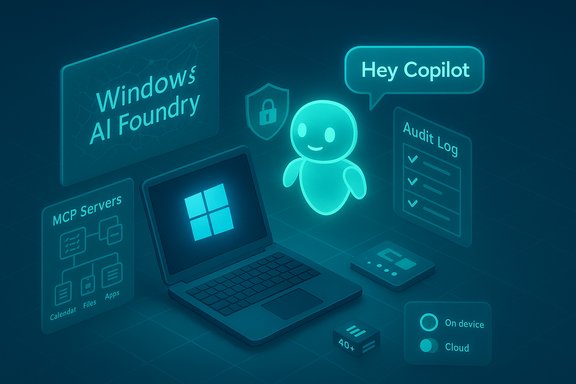
In public statements and internal memos circulated to press, Microsoft leaders — led by Pavan Davuluri, who now oversees Windows engineering and device strategy — have framed the company's Windows roadmap around a single idea: turning Windows into an "agentic OS." That phrase captures a vision where small, permissioned AI agents running locally or hybrid‑cloud can observe context (text, UI, the screen), access authorized data and tools, and carry out multi‑step tasks on behalf of users. The company linked a recent reorganization — reuniting core platform and client engineering teams under Davuluri — directly to this goal, arguing that tight cross‑stack control is necessary to make agentic features reliable and safe. The concept moved from memo to market as Microsoft expanded Copilot across Windows: voice activation with “Hey, Copilot,” Copilot Vision that can view selected screen content with user permission, and nascent Copilot Actions that can take multi‑step actions locally (or via cloud fallbacks). Microsoft also promoted developer primitives — a Windows integration of Model Context Protocol (MCP), a Windows AI Foundry to help run models locally, and a registry / permissions model intended to gate agent access to system capabilities. These are not theoretical prototypes; they are being rolled into Windows updates and developer previews.Why Microsoft reorganized Windows engineering
Microsoft's September reorg reunified many core Windows teams that had been split across Azure and client groups since 2018. The publicly stated rationale: reduce cross‑org handoffs and accelerate features that require end‑to‑end platform control (kernel, drivers, NPUs, UI) — precisely the dependencies of an agentic OS. The memo and press coverage tie that structural change to a strategic push: make Windows the platform where agents run reliably, privately and with enterprise controls. That organizational move is a significant signal: Microsoft is treating agentic capabilities as platform plumbing, not optional apps.What "Agentic OS" means in practice
The building blocks Microsoft is shipping
- Windows AI Foundry: a developer and runtime platform to run, test and deploy local models; includes a "Foundry Local" runtime for on‑device models.
- Model Context Protocol (MCP) support: a Windows integration of MCP (a community protocol enabling agents to talk to services and tools) designed to let agents securely discover and call local and cloud "MCP servers" like file systems, apps, calendars, or cloud connectors. MCP access is opt‑in and intended to be auditable.
- Copilot features: expanded Copilot Voice (wake word “Hey, Copilot”), Copilot Vision (screen‑aware, opt‑in vision sessions), and Copilot Actions (preview agentic actions that perform tasks). These are being staged through Insider channels and phased rollouts.
- Hardware gating (Copilot+ PC): Microsoft defines a Copilot+ device category with an NPU baseline of 40+ TOPS (trillions of operations per second). That NPU floor is positioned to make on‑device SLMs and vision models practical for low‑latency, private experiences. Devices that do not meet the Copilot+ spec will rely more on cloud fallbacks and will receive a reduced on‑device experience.
Why MCP and on‑device models matter
MCP and the Windows AI Foundry are the company's answer to an obvious engineering challenge: agents need controlled, auditable access to local tooling and data. By exposing discrete, signaled APIs and a registry of allowed “MCP servers,” Microsoft aims to let agents operate without free‑for‑all system access. On the model side, running smaller models locally answers latency and privacy objections — if the agent's reasoning happens on a device NPU and only essential requests go to cloud models, the user experience can be both faster and more private — at least in promise.Public reaction: sharp pushback and why it matters
The immediate response to Davuluri's post
Pavan Davuluri's post outlining Windows' agentic path was met with intense skepticism on social platforms and across enthusiast forums. The most visible threads repeat a blunt refrain: "Nobody wants this." Users expressed anger about perceived coercion — forced Microsoft Accounts, persistent OneDrive nudges, upsell prompts, and an OS that increasingly pushes Microsoft services. That pushback was not limited to a small corner of the web; multiple outlets and forum threads captured the volume and intensity of negative replies.Examples of the public's core complaints:
- Loss of control: features that act on users' behalf raise fears of unwanted actions, permission creep, and opaque automation.
- Privacy anxiety: even if agentic features are opt‑in, users worry about telemetry, on‑device indexing (Recall), and cloud fallbacks.
- Monetization optics: many users see Copilot and OneDrive nudges as upsell mechanics layered on an OS they already pay for.
- Stability and reliability: users report that recent updates introduced regressions and that adding more AI complexity risks making the OS "bug‑ridden" rather than better.
The broader context for the backlash
The anger is cumulative. Many long‑time Windows users point to years of interface changes, removed conveniences, hidden settings, and increasing pushes toward Microsoft services (Edge, OneDrive, Microsoft Account requirements) as the reason they distrust big platform changes now marketed under the AI banner. That context matters more than the technical merits of agentic AI: trust is the currency, and Microsoft has spent it unevenly. Forum archives and community threads show persistent frustration that predates the agentic announcement, which amplifies the current reaction.Technical strengths and the practical upside
1) Real productivity potential when done right
Agentic workflows can genuinely save time on complex, multi‑step tasks: scheduling meetings, collating research across files and apps, and automating repetitive editing tasks. When agent actions are auditable, reversible and constrained to declared app actions, they can be powerful helpers rather than annoyances. Microsoft’s hybrid local/cloud model and MCP registry give a credible architecture to build controlled agentic experiences.2) Privacy and offline capability via on‑device models
The push for local models and NPU acceleration aims to keep sensitive inference on the device. For enterprises, the ability to run reasoning locally or under strict governance is a real advantage, especially where data residency or low latency matters. Copilot+ NPUs and Windows AI Foundry are engineered to make those scenarios technically feasible.3) Unified engineering can reduce friction
The reunification of Windows teams reduces the organizational friction that previously slowed cross‑stack features. When developers owning the kernel, drivers, NPUs, and UX work more closely, complex features that touch everything from driver stacks to File Explorer can be implemented with fewer cross‑org delays. That can translate to faster, more cohesive releases — if execution is competent.Real risks — technical, commercial and policy
1) Two‑tier Windows: hardware gating and fragmentation
Requiring Copilot+ NPUs (40+ TOPS) for premium on‑device experiences creates a clear two‑tiered reality: buyers who can afford new Copilot+ hardware get fast, private agent features; the rest get cloud‑dependent fallbacks or degraded experiences. That fragmentation complicates developer expectations and risks alienating users who feel compelled to upgrade to get features they’re told are “core” to Windows' future. Independent benchmarks for NPUs will be essential; vendor TOPS claims are only part of the story.2) Privacy, telemetry and auditability hazards
Agentic agents need context — files, apps, calendar entries — to be useful. That context acquisition is also a surface for privacy risk. Microsoft claims MCP access is off by default and that agent actions will be auditable, but the devil is in the defaults, retention policies, and telemetry detail. Users (and regulators) will demand clear, machine‑readable audit trails and verifiable data‑handling practices. The security model must be provable and include human‑in‑the‑loop controls for high‑risk actions.3) Reliability when agents act autonomously
An AI agent that edits or moves files, schedules meetings, or interacts with other apps must be correct and predictable. Mistakes in agentic actions carry outsized cost compared with a bad search result. Microsoft’s staged preview approach for Copilot Actions is prudent — but expectations management is key. A single high‑profile mishap (an agent sending private data, deleting files, or making billing changes) could permanently sour public trust.4) Monetization optics and user trust
Many users interpret agentic pushes as a cloak for upselling subscriptions, storage, and Copilot tiers. Even technically excellent features will meet resistance if users feel they are being nudged, tricked, or coerced into services. Microsoft must demonstrate that agentic defaults respect user choice and that paid features are clearly delineated, not buried. Forum sentiment shows this is a live, reputational risk.5) Regulatory and security surface area
Agentic systems that can interact with external services (MCP) introduce new attack surfaces: agent impersonation, prompt injection, or malicious MCP servers. Microsoft explicitly calls out security as a priority in design, but meaningful third‑party audits, robust isolation, and identity/credential policies will be necessary to mitigate systemic risk. The industry is waking up to agent‑scale threats — the controls must be rigorous and transparent.Claims that need caution or further verification
- "Windows 11 is the only modern OS that requires an online account during setup." This is misleading. macOS, iOS, Android and many Linux distributions allow local accounts or let users defer account sign‑in; ChromeOS and many consumer Chromebooks are tightly tied to Google Accounts for mainstream setup, and vendors often tie more functionality to a cloud identity. Microsoft has been closing bypasses that allowed easy local installs on Windows 11, but claiming categorical uniqueness for Windows is inaccurate — the reality depends on platform, OEM behavior and enterprise provisioning. Treat absolute comparisons with caution.
- "Microsoft cut Surface and Xbox budgets to fund AI." There are reports of organizational shifts and some resource reallocation in recent years, including workforce reductions in certain groups, but public, line‑item confirmations tying specific budget cuts from Surface/Xbox directly to AI funding are not uniformly documented in a single authoritative source. This narrative circulates in community comment and press analysis — it is plausible given corporate priorities, but avoid treating it as confirmed without Microsoft’s formal disclosure. Flag as unverified.
What Microsoft must do to avoid repeating past mistakes
1) Make agentic behavior opt‑in and transparent
- Default agentic capabilities to off, and require explicit, contextual consent for any agent that acts on the user's behalf.
- Provide a clear, human‑readable audit log for every agent action and a one‑click rollback where feasible.
2) Ship a visible "power user" mode
Veteran Windows users want deterministic behavior and minimal nudges. A single, discoverable mode that disables promotional nudges, telemetry channels not strictly required for security, and agentic autoblend should be available and persistent across updates. This would address years of community requests for a "hardcore" mode and would pay dividends in trust.3) Publish independent audits and transparent retention policies
Third‑party security and privacy audits focused on MCP, agent permissions, and data retention will be essential to convince enterprise and privacy‑conscious users that agentic features are safe to adopt.4) Avoid gating fundamental UX behind premium hardware
Instead of implying that the "full" Windows experience requires new expensive Copilot+ hardware, Microsoft should clearly separate convenience features that benefit from NPUs from base functionality. That reduces the perception of artificial scarcity and the impression that the OS is being weaponized to drive hardware sales.Practical advice for users and IT teams (short, actionable)
- For individuals: treat agentic Copilot features as experimental — enable only what you trust, keep automatic cloud fallbacks disabled if privacy is a concern, and inspect agent audit logs.
- For IT teams: pilot agentic features on a small representative fleet, require explicit policy gating for any agent that touches sensitive data, and require acceptance testing on standard images before broad deployment.
- For buyers: demand independent NPU benchmarks if Copilot+ capabilities are a deciding factor; TOPS claims are a good starting point, but real‑world inference throughput, latency and energy efficiency matter more.
Final assessment — innovation with a steep trust tax
Microsoft’s engineering pivot to an agentic Windows is both technically coherent and strategically bold. There is real potential: private, low‑latency on‑device models combined with a secure, auditable MCP fabric could create genuinely useful assistants that save time and reduce friction. The platform work (Windows AI Foundry, MCP, Copilot runtime) demonstrates a credible engineering path.But the biggest barriers are not purely technical: they are social and reputational. Years of nagging UI defaults, aggressive service nudges, opaque telemetry and stability complaints have eroded trust among many Windows users. Rolling out agentic features under those circumstances imposes a steep "trust tax." To pay it, Microsoft must be surgical in defaults, unambiguously transparent in data handling, liberal in user choice, and conservative in the scope of agentic autonomy.
Right now, the conversation on social platforms and technical forums is far more about whether Microsoft deserves to build this future than about whether the technology can work. The company can still change the narrative — but only by designing agentic Windows in a way that earns trust rather than assumes it. The engineering foundation is being put in place; the next moves will determine whether agentic computing becomes a genuine productivity advance or a wedge that drives users to more predictable, less monetized alternatives.
Microsoft's agentic OS ambition is one of the most consequential platform bets in the PC era — and it's a bet that will live or die in the messy reality of human expectations, legal limits, hardware economics and the daily reliability of the software itself. The next year will show whether Microsoft can translate architecture and marketing into trusted features, or whether the backlash becomes a long‑running brand headwind it must repair.
Source: Windows Central Windows president says platform is "evolving into an agentic OS," gets cooked in the replies — "Straight up, nobody wants this"
