

Microsoft’s terse pronouncement that Windows is “evolving into an agentic OS” has blown up into a larger debate about priorities, polish and control—one that Microsoft’s Windows leadership now admits will require concrete fixes, not just fresh marketing.
Windows’ pivot toward native, autonomous AI capabilities—what Microsoft calls an “agentic” operating system—was intended as a forward-looking positioning ahead of Microsoft Ignite. Instead, the short public message from Pavan Davuluri, President of Windows & Devices, triggered a wave of pushback from long-time users, power users and prominent engineers who said Microsoft is neglecting basic reliability and user-control features in favour of headline-grabbing AI. Microsoft’s follow-up acknowledged the criticism and conceded there is “a lot to fix,” while reaffirming the company will continue to pursue its AI roadmap. This piece examines what the term agentic OS actually implies, why users reacted so strongly, where Microsoft’s technical work already stands, and what the company must do next to reconcile ambitious AI features with the fundamentals that keep power users, developers and IT admins engaged.
Source: digit.in Microsoft receives backlash over Windows 11, says we have a lot to fix
 Overview
Windows’ pivot toward native, autonomous AI capabilities—what Microsoft calls an “agentic” operating system—was intended as a forward-looking positioning ahead of Microsoft Ignite. Instead, the short public message from Pavan Davuluri, President of Windows & Devices, triggered a wave of pushback from long-time users, power users and prominent engineers who said Microsoft is neglecting basic reliability and user-control features in favour of headline-grabbing AI. Microsoft’s follow-up acknowledged the criticism and conceded there is “a lot to fix,” while reaffirming the company will continue to pursue its AI roadmap. This piece examines what the term agentic OS actually implies, why users reacted so strongly, where Microsoft’s technical work already stands, and what the company must do next to reconcile ambitious AI features with the fundamentals that keep power users, developers and IT admins engaged.Background: what Microsoft announced and why it matters
What Pavan Davuluri said — and why the phrasing landed poorly
In an X post intended to preview Windows’ next phase, Pavan Davuluri described Windows as “evolving into an agentic OS” that connects devices, cloud services and AI agents to unlock smarter productivity and secure remote work. The message was brief and meant for a conference audience, but it became widely visible and rapidly drew tens of thousands of replies; replies were later restricted as the thread filled with criticism. The problem was not just wording. The word agentic implies initiative—software that can act on behalf of users without being explicitly commanded each step of the way. For many seasoned Windows users and developers that suggestion collided with long-standing sensitivities about consent, telemetry, update regressions and loss of deterministic control over their machines. The result: a swift, emotional reaction that mixed practical complaints with deeper worries about autonomy and governance.Why Microsoft is pursuing an agentic Windows
The engineering rationale is straightforward: autonomous agents can automate multi-step workflows across apps and services, allowing Windows to directly orchestrate complex tasks—everything from scheduling and booking to maintaining a running context of user activity to simplify repetitive work. Microsoft has been building the infrastructure pieces for this vision—Windows AI Foundry, Model Context Protocol (MCP) support, and a hardware tier (Copilot+ PCs) designed to accelerate on-device AI. Those components are intended to make an agentic OS technically feasible and enterprise-ready. However, the promise of agents depends on trust: predictable updates, clear permissioning, auditable behavior and a baseline of performance and UI polish. When those fundamentals feel compromised, the promise becomes a liability rather than a benefit.Technical reality: what’s built, what’s in preview, and what’s aspirational
Concrete building blocks Microsoft has announced
- Windows AI Foundry: the rebranded evolution of the Copilot runtime providing tooling to run models locally, offer APIs for text/vision tasks, and deploy models across CPUs, GPUs and NPUs. It’s intended to let developers “bring their own models” and optimize them for Windows devices.
- Model Context Protocol (MCP) support: Microsoft is integrating MCP—an open protocol for agent-tool interoperability—so agents can discover and access app-exposed capabilities on-device via an MCP registry. This promises a standardized way for native apps to participate in agentic interactions while allowing permissioned, discoverable access.
- Copilot+ PCs and NPUs: Microsoft’s Copilot+ program defines a hardware tier for richer on-device experiences; Microsoft has signalled expectation of NPUs in the “40+ TOPS” class to deliver full-featured Copilot+ capabilities on device. That hardware guidance is part of the company’s push to move inference locally for latency and privacy reasons.
The challenge: agents are slow, brittle and stateful
AI agents in 2025 are still often slow, contextually fragile and error-prone. They require careful design around memory, consent, undo, and auditing. When a system can take initiative—make calendar changes, move files, send messages—designing transparent, reversible controls and clearly communicating data handling are mandatory. Without those guardrails, agentic becomes a frightening term for administrators and privacy-conscious users.Why users erupted: a map of grievances
The backlash was not purely rhetorical. It reflected measurable pain points that have accumulated in recent Windows releases.Key complaint categories
- Reliability and update regressions: Frequent cumulative updates and feature drops have introduced regressions—for some users these are more visible and disruptive than the benefits offered. Many voiced concern that patch hygiene needs improvement.
- UI polish and consistency: Small mismatches—misaligned dialogs, inconsistent menus and half-baked features—pile up. A seemingly tiny example, the “Show smaller taskbar buttons” option that shrinks icons but leaves the taskbar height unchanged, became an emblematic complaint: users said it felt unfinished and indicative of attention on features over finish.
- Developer and power-user controls: Defaults that favor cloud links, Microsoft account nudges during onboarding, and the perception of diminishing local control have led some developers to publicly question whether Windows remains their preferred platform. Influential voices in the engineering community amplified those concerns.
- Privacy and telemetry around agents: Agents that store context or act on a user’s behalf require clear, durable consent and audit logs. Enterprises and privacy-minded users want simple, visible controls that persist across updates.
The small taskbar icons kerfuffle — why a UI tweak became a symbol
A small UI change turned into a symbolic flashpoint. Microsoft’s introduction of a “Show smaller taskbar buttons” setting in Insider builds, which reduced icon size without reducing taskbar height, was widely mocked and triggered a torrent of user posts and memes. What should have been a minor usability option became a proxy for the larger complaint: incremental, visible regressions that feel half-finished. Why did that specific change sting so much?- It’s highly visible: the taskbar is central to daily workflows, so even a minor visual inconsistency is noticed immediately.
- It signals priorities: users interpreted cosmetic, AI-forward feature investment as occurring instead of addressing enduring UX friction.
- It’s symptomatic: the behavior—icons small but taskbar tall—felt like a release that hadn’t completed the loop of design and testing.
Developer reaction: is Windows still a platform for builders?
Prominent technologists publicly questioned Windows’ direction. One widely cited voice argued that an opinionated, agent-first Windows risks alienating developers who want control over their tools and predictable platform behavior. The critique is not simply nostalgia: modern developers rely on stable APIs, toolchains, and predictable system behavior to ship software reliably. When core OS behavior becomes variable, the friction accumulates into a real cost. Microsoft’s public response targeted that exact anxiety. Davuluri replied to critics directly, saying “the team (and I) take in a ton of feedback” and listing reliability, performance and power-user scenarios among the priorities the team is reviewing. He added the blunt admission that Microsoft “knows we have a lot of work to do.” That acknowledgement was necessary, but for many it felt like a first step rather than a plan.What Microsoft must do: a pragmatic roadmap
The company can continue its AI investments while repairing the trust deficit—but it requires a disciplined, evidence-based approach. The following actions would materially reduce community friction.1. Publish measurable goals and timelines for fundamentals
- Commit to measurable SLAs for update regression rates, Known Issue closure times and API stability guarantees for developer-facing surfaces.
- Share a public cadence for fixes to the highest-priority power-user complaints (taskbar, File Explorer regressions, update blocks). Visibility reduces speculation and impatience.
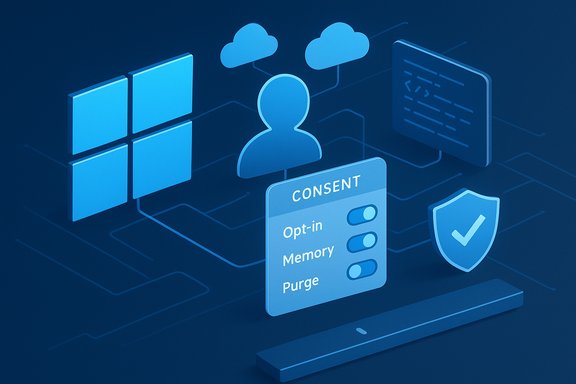
2. Make agentic features opt-in by default; hard opt-out for stateful systems
- Deliver agentic capabilities as opt-in experiences with clearly labeled, time-limited trials.
- Any feature that records or persists contextual memory must have explicit, discoverable controls and an audit log UI that homeowners and admins can inspect and purge.
3. Harden update engineering and rollout signals
- Increase phased rollouts with stronger telemetry gating and longer time windows for high-variability subsystems.
- Offer IT and advanced users more accessible deferral controls and clearer guidance for when features are experimental versus fully supported.
4. Ship guardrails and developer primitives with every agent release
- Every agentic API must include robust permissioning primitives, deterministic behavior contracts, and an “explain why” trace that developers can examine when an agent acts across app boundaries.
5. Invest visible effort in UI polish and micro-UX fixes
- Create a bug-bash program focused on UI consistency, with community-reported priority voting so teams know which visual regressions harm perception most.
Risk assessment: where the plan can go wrong
An agentic Windows offers meaningful upside—but it also introduces new categories of risk.- Governance and compliance risk: State-bearing agents that act on behalf of users can complicate regulatory compliance unless logs, retention settings and auditor access are baked in. Enterprises will demand these controls.
- Security and supply-chain risk: Agent ecosystems that allow third-party skill injection or tool access expand the attack surface. MCP-style openness is powerful but must be paired with a restrictive default and a clear vetting model.
- Performance and hardware fragmentation: Copilot+ experiences assume NPUs with certain throughput; many devices will not meet that bar, risking a tiered experience that confuses users. Microsoft must ensure graceful degradation and avoid creating a “second-class” Windows for older hardware.
- Reputation and platform migration: If developers perceive Windows as losing predictability, some may choose macOS or Linux for development and deployment work. That would have long-term platform costs beyond immediate telemetry dips.
Where things stand: realistic expectations for the next 6–12 months
- Expect Microsoft to continue rolling out agentic primitives in developer previews while also publishing more public-facing guidance on consent, audit and opt-in. The Windows AI Foundry and MCP previews will expand but remain gated to partners and Insiders for controlled feedback.
- Microsoft will increasingly emphasize local inference and Copilot+ hardware as a path for lower-latency, privacy-preserving agent experiences, but mass-market parity will take time—particularly on older PCs.
- Quick wins are available: visible fixes to high-impact UI regressions, more transparent update blocking and stronger dialog consistency would yield disproportionate goodwill before shipping larger agent features. Many users are willing to accept AI features if the basics stop breaking so often.
Practical advice for users and admins today
- For individual users: use Insider builds for early features only on secondary machines; delay major updates on critical systems and monitor Known Issues pages before upgrading. Back up before any feature update.
- For developers: continue to monitor Microsoft’s developer previews for Windows AI Foundry and MCP, but insist on clear API stability guarantees before building mission-critical agent integrations. Advocate for local-first, permissioned models.
- For IT admins: treat agentic features like any emerging platform capability—pilot with a small cohort, insist on logs and retention policies, and ensure vendor contracts include support for forensic audits.
Final analysis: ambition needs discipline
Microsoft’s vision for an agentic Windows is technically plausible and potentially transformative: agents that securely coordinate across local apps, cloud services and devices could save time and reduce friction for many users. The company has invested in concrete engineering work—Windows AI Foundry, MCP support, and a Copilot+ hardware tier—that suggests this is more than a slogan. But ambition without discipline breeds distrust. The recent backlash is not a rejection of AI per se; it’s a demand for better execution on the parts of Windows that millions rely on daily. Microsoft’s acknowledgment—“we know we have a lot of work to do”—is the right first phrase, but users and developers now need to see prioritized fixes, measurable commitments and durable controls. If Microsoft can pair agentic innovation with ironclad engineering hygiene, transparent consent frameworks and visible progress on the fundamentals, Windows can evolve into a more helpful platform without surrendering the control that power users and enterprises require. If it fails to do so, the company risks accelerating an exodus of confidence that no marketing message can easily repair. The next few release cycles will tell whether Windows becomes a trusted environment for agents—or a cautionary tale about building initiative-taking software without first proving the basics.Quick reference — key verified facts
- Pavan Davuluri publicly framed Windows as “evolving into an agentic OS,” a post that provoked widespread public backlash and later replies acknowledging user concerns.
- Microsoft has published developer-facing work such as Windows AI Foundry and announced support for the Model Context Protocol (MCP) to enable agentic interactions on Windows.
- Microsoft’s Copilot+ hardware guidance targets NPUs capable of ~40 TOPS or more to deliver the richest on-device AI experiences.
- The small taskbar icons change became a focal point for user ire because it symbolized unfinished UI work and inconsistent UX polish.
Source: digit.in Microsoft receives backlash over Windows 11, says we have a lot to fix
