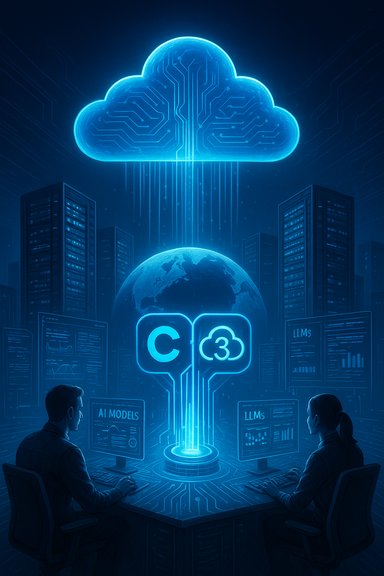
Microsoft’s marketing line — that Windows is “evolving into an agentic OS” — landed like a splash of cold water on long‑time users this week, triggering an unusually intense wave of online backlash that exposed a widening trust gap between Microsoft’s AI ambitions and what many people want from a desktop operating system. The controversy crystallizes three realities: Microsoft is aggressively embedding Copilot and agentic automation into Windows at a platform level; many users view that change as intrusive, hardware‑gated, or monetized; and the technical building blocks (voice, vision, agent actions, and standards such as MCP) are real and moving fast.
Microsoft’s public messaging — repeated by Windows leadership in the run‑up to Microsoft Ignite — frames the future of Windows as a platform where AI agents can understand context, plan, and act on the user’s behalf. That vision stitches together three headline Copilot capabilities now being delivered to Windows 11: Copilot Voice (wake‑word, conversational control), Copilot Vision (screen‑aware assistance), and Copilot Actions (agentic, multi‑step workflows that can interact with apps and local files). Microsoft also promotes a “Copilot+” hardware tier and platform primitives — notably a Windows integration for the Model Context Protocol (MCP) and a Windows AI Foundry runtime — to support on‑device and hybrid agent experiences. Microsoft positioned this set of changes as a central theme at Microsoft Ignite (November 18–21, 2025), and the company’s public statements tie the push toward agentic capabilities to a recent reorganization of Windows engineering teams. The objective is clear: make Windows an AI‑native platform where agents are first‑class citizens of the OS rather than exotic add‑ons.
But the rollout strategy so far has a steep “trust tax.” Years of product placement, telemetry debates, and UX churn mean that the default public reaction is skepticism rather than curiosity. That trust gap is not solved by technical defenses alone; it requires deliberate product defaults, transparent governance, visible power‑user controls, and independent validation.
The company can still recover the narrative, but it must show — not merely promise — that agentic Windows will be:
The current user revolt is not simply anti‑AI posturing; it’s a market signal: the company that controls the PC platform must earn the right to act on behalf of users. Microsoft’s path forward requires technical rigor, regulatory care, and above all an ethic of default restraint. If the vendor accepts that social contract — codifies it, tests it publicly, and provides real admin and user controls — then agentic Windows can become the quiet, helpful assistant many people would welcome. If it treats the controversy as noise, the backlash will harden into durable resistance, and the promise of the agentic desktop may stall under the weight of mistrust.
Source: TechSpot Microsoft says Windows is becoming an agentic OS, but users simply hate the idea
 Background / overview
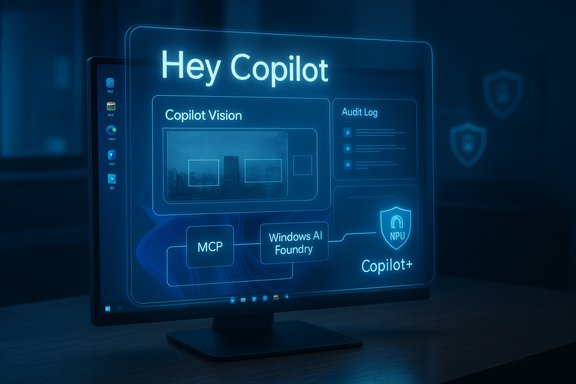
Microsoft’s public messaging — repeated by Windows leadership in the run‑up to Microsoft Ignite — frames the future of Windows as a platform where AI agents can understand context, plan, and act on the user’s behalf. That vision stitches together three headline Copilot capabilities now being delivered to Windows 11: Copilot Voice (wake‑word, conversational control), Copilot Vision (screen‑aware assistance), and Copilot Actions (agentic, multi‑step workflows that can interact with apps and local files). Microsoft also promotes a “Copilot+” hardware tier and platform primitives — notably a Windows integration for the Model Context Protocol (MCP) and a Windows AI Foundry runtime — to support on‑device and hybrid agent experiences. Microsoft positioned this set of changes as a central theme at Microsoft Ignite (November 18–21, 2025), and the company’s public statements tie the push toward agentic capabilities to a recent reorganization of Windows engineering teams. The objective is clear: make Windows an AI‑native platform where agents are first‑class citizens of the OS rather than exotic add‑ons. What Microsoft is shipping (the concrete bits)
Copilot Voice: hands‑free interaction
Microsoft has expanded Copilot with a wake‑word interface so users can say “Hey, Copilot” to summon the assistant, with local wake‑word detection and an on‑screen indicator while Cortana‑style voice sessions run. The wake‑word spotter and short audio buffer can run on device to reduce unwanted uploads, but full reasoning generally relies on cloud models unless the device meets the Copilot+ on‑device performance target.Copilot Vision: screen‑aware help
Copilot Vision can inspect selected windows or shared screen regions (explicitly opt‑in) and offer contextual summaries, highlight interface elements, or extract data from documents and images. Vision aims to reduce friction when a user needs quick help inside complex UI flows. Microsoft’s previews emphasize visible session boundaries and user control, but the presence of a system‑level “screen‑aware” assistant changes the threat model for privacy and security.Copilot Actions: agentic automation
Copilot Actions moves past single commands into chained, multi‑step tasks: reorganize files, summarize and transform documents, draft and send email, or even call external services via connectors. Actions rely on a permissioned execution model and connectors that let Copilot retrieve additional cloud data when permitted. Microsoft says Actions run in controlled sandboxes and will be staged via Insider previews before broader rollouts.Platform plumbing: MCP, Windows AI Foundry, Copilot+ hardware
Microsoft is adopting and exposing standards and toolchains — including support for the Model Context Protocol (MCP) — so agents can discover “capability providers” (apps, files, services) via a registry and request scoped access. Windows AI Foundry and improved model runtimes target heterogeneous hardware (CPU/GPU/NPU). For the most private, low‑latency experiences Microsoft points to a Copilot+ device class and an NPU performance guideline that’s been discussed publicly as roughly 40+ TOPS (trillions of operations per second), which will influence whether heavy reasoning runs locally or in the cloud.Why users rebelled — the community grievances
The visceral reaction to the “agentic OS” phrasing was not simply rhetorical nitpicking. It exposed accumulated frustrations that predate this announcement and amplify the fears that agentic software raises.- Trust erosion from years of UX decisions: Users pointed to forced Microsoft Account prompts, repeated OneDrive nudges, visible upgrade advertising, and frequent UI churn as reasons they no longer trust Microsoft to add initiative‑taking features without downside.
- Privacy and sensor anxiety: A system that can see your screen or hear a wake word expands the potential attack surface and creates anxiety about telemetry, retention, and what actually leaves the device. Even opt‑in features alarm privacy‑minded users who worry about defaults and cloud fallbacks.
- Monetization optics: Many replies read agentic features as a new surface for upselling Microsoft services or third‑party commerce — an especially sensitive perception for users who already feel the OS pushes Microsoft services aggressively.
- Hardware gating and two‑tier experiences: The Copilot+ narrative — better privacy and latency on NPU‑equipped machines — implies a two‑tier Windows where older or budget machines get degraded, cloud‑dependent behavior. That creates a churn hazard and an economic friction for users who don’t want to buy new hardware.
The technical case in favor — real benefits if done correctly
Despite the backlash, the technical vision has plausible upsides when engineered with care.- Time savings on complex workflows: Agents that can orchestrate multi‑step tasks across apps — collating research, preparing meeting packs, extracting data from PDFs — can deliver substantial productivity gains for knowledge workers and accessibility users.
- Accessibility improvements: Voice and vision modalities are intrinsically helpful for people with mobility or vision limitations; a capable Copilot can reduce friction for users who struggle with mice and keyboards.
- On‑device privacy and latency: Running lightweight models locally on capable NPUs reduces the need to send sensitive content to the cloud and cuts round‑trip latency for immediate tasks — a meaningful win for enterprise deployments that need data residency and offline operation.
- Standards‑driven interoperability: MCP (and similar efforts) solves a difficult N×M integration problem for agents and tools, enabling reusable connectors rather than bespoke integrations for each model‑app pair. That should accelerate third‑party innovation if security and governance controls are solid.
Real risks — stability, security, privacy, and policy
The upside is substantial, but the risks are structural and non‑trivial.1) Over‑automation and error amplification
An agent that performs multi‑step changes can amplify mistakes — moving the wrong files, sending an incomplete or inaccurate email, or unintentionally escalating permissions. Mistakes at that scale are costlier than a bad chat reply. Primary mitigations must include strong human‑in‑the‑loop checks, auditable action logs, and one‑click rollback where feasible.2) Attack surfaces and adversarial prompts
Agentic systems introduce new vectors for exploitation: malicious documents could attempt prompt‑injection to cause unintended agent actions; compromised connectors could leak data; or poorly isolated agent sandboxes could be hijacked. Red‑teaming, third‑party audits, and clear supply‑chain controls are essential.3) Privacy defaults and telemetry creep
Even with opt‑in controls, convenience nudges encourage opt‑in. Without transparent retention policies and machine‑readable audit logs, users will fear that contextual data (screenshots, file indices, voice buffers) will persist longer than expected or be reused for training. Microsoft must publish explicit, accessible policies and give users straightforward tools to inspect, export, and delete agent‑related artifacts.4) Regulatory exposure (EU AI Act and beyond)
System‑level agents that access personal or sensitive data fall under increasing regulatory scrutiny. The European AI Act (now in force) imposes transparency, human‑oversight and conformity obligations for many AI uses; general‑purpose and high‑impact models face staged compliance timelines and reporting duties. Vendors and enterprise deployers must map agent behaviors to legal obligations and maintain incident‑reporting and risk‑management processes. This is not optional.5) Platform fragmentation and fairness
A hardware‑gated experience (Copilot+ NPUs) risks creating unequal access and complicates developer expectations. Relying on TOPS as a headline metric hides workload and energy efficiency differences; independent benchmarks will be necessary to validate Microsoft’s Copilot+ claims for real world scenarios.Cross‑checking the facts (what’s verified and what’s still fuzzy)
- Verified: Microsoft has been rolling Copilot Voice (wake‑word), Copilot Vision (screen awareness), and Copilot Actions (agentic workflows) into Windows 11 and promoting those features at Ignite. Multiple outlets and Microsoft documentation confirm staged rollouts and Insider previews.
- Verified: The public backlash — including many blunt replies calling the change unwanted — was visible on X and in forum captures; coverage across TechSpot, Windows Central and other outlets documented the reaction.
- Verified: Microsoft is adopting or interoperating with standards like MCP, and MCP has been widely described as an open standard to connect models and tools. That protocol is a central piece of Microsoft’s agent plumbing.
- Caution — unverified or contested claims: Reports that Microsoft is cutting Surface or Xbox budgets to “fund AI” appear in community posts and analysis but are not uniformly confirmed by direct Microsoft line‑item disclosure; label such claims as unverified unless corroborated by official financial statements or company disclosures.
What Microsoft should do now (practical, platform‑level fixes)
Microsoft can still redesign how this future lands to reduce the trust tax. Concrete steps include:- Ship a visible, persistent “Power User / Minimalist” mode that disables promotional nudges, strips non‑essential telemetry, and prevents agentic prompts unless explicitly enabled.
- Default all agentic capabilities to opt‑in with granular per‑capability consent (vision, voice, file access, connectors), session bounds, and automatic expiry for long‑lived tokens.
- Publish machine‑readable audit logs of agent actions plus concise, human‑readable rationales (“why” the agent accessed this file and what it did). Make rollback simple and visible where possible.
- Fund independent security audits and public red‑team results for MCP, agent sandboxes, and connector implementations — then act on the findings.
- Clarify Copilot+ vs baseline behavior in plain language and release independent NPU benchmarking guidance so buyers can judge real‑world performance rather than marketing claims.
- Expose enterprise policy controls (Intune/MDM/Group Policy) that let admins block Vision/Actions on regulated endpoints and require manual confirmation for any agent action that impacts PII or financial flows.
What users and IT teams should do today
- Individual users: Treat agentic features as experimental. Keep wake‑word and vision features disabled until you understand the settings. When linking connectors (Gmail, Drive, etc. only connect accounts you trust and review scopes carefully.
- IT administrators: Pilot agentic features on a small representative fleet first. Use Group Policy/Intune to disable Copilot on regulated endpoints, require multi‑factor confirmation for agent‑initiated actions that touch sensitive systems, and include agent behavior in regular incident response plans.
- Procurement teams: If Copilot+ capabilities influence buying decisions, demand independent NPU benchmarks, real‑world latency and energy metrics, and contractual guarantees around data handling and incident reporting. TOPS is a headline, not a guarantee.
The market and political dimensions
Microsoft’s agentic Windows is not just an engineering bet; it’s a strategic play with market and political consequences. OEMs gain an angle to push refresh cycles with Copilot+ devices, and enterprises face governance decisions that will shape procurement priorities. Regulators in the EU and elsewhere are already activating new legal obligations for AI — transparency, conformity assessments, human oversight — meaning platform vendors and customers must incorporate legal risk into architecture and rollout plans. At a societal level, recent surveys show public skepticism about AI remains high: substantial shares of people say they are more concerned than excited about AI in daily life, and a majority want more control over how AI is used. That gap between corporate enthusiasm and user sentiment explains why a single executive tweet could spark such an outsized reaction. Companies that assume acceptance because experts like a roadmap risk alienating broader user bases.Editorial assessment — ambition meets a trust test
Microsoft’s agentic vision is technically coherent and strategically plausible. The integration of voice, vision, agentic workflows, and interoperable connectors addresses real productivity opportunities and accessibility needs. Standards like MCP and local model runtimes make the architecture credible.But the rollout strategy so far has a steep “trust tax.” Years of product placement, telemetry debates, and UX churn mean that the default public reaction is skepticism rather than curiosity. That trust gap is not solved by technical defenses alone; it requires deliberate product defaults, transparent governance, visible power‑user controls, and independent validation.
The company can still recover the narrative, but it must show — not merely promise — that agentic Windows will be:
- predictable (minimal surprise actions),
- auditable (machine and human‑readable logs),
- reversible (easy rollbacks),
- and optional (clear, persistent opt‑outs).
Conclusion
Turning Windows into an “agentic OS” is one of the most consequential product pivots the platform has seen in a generation. The upside is real: faster workflows, better accessibility, and new classes of productivity. The downside — if defaults, governance, and transparency are mishandled — is equally real: privacy regressions, security headaches, and a platform that feels more like a commercial agent than a personal tool.The current user revolt is not simply anti‑AI posturing; it’s a market signal: the company that controls the PC platform must earn the right to act on behalf of users. Microsoft’s path forward requires technical rigor, regulatory care, and above all an ethic of default restraint. If the vendor accepts that social contract — codifies it, tests it publicly, and provides real admin and user controls — then agentic Windows can become the quiet, helpful assistant many people would welcome. If it treats the controversy as noise, the backlash will harden into durable resistance, and the promise of the agentic desktop may stall under the weight of mistrust.
Source: TechSpot Microsoft says Windows is becoming an agentic OS, but users simply hate the idea