

Microsoft’s short announcement that “Windows is evolving into an agentic OS” landed like a splinter in a long‑running conversation about AI, control, and the purpose of the personal computer — and the reaction makes one thing clear: many Windows users are not interested in an operating system that takes initiative on their behalf.
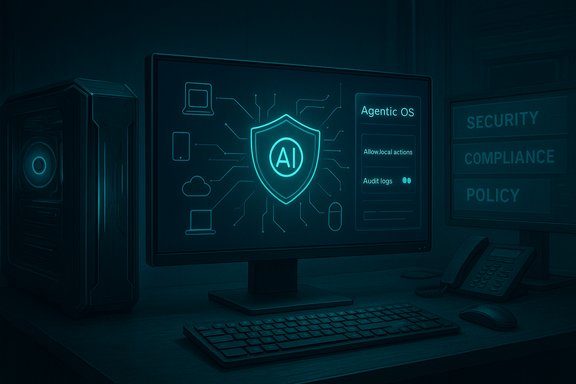
Windows’ recent strategic messaging ties a handful of concrete technologies together under a single phrase: agentic OS. That includes on‑device AI runtimes, multimodal Copilot experiences (voice and vision), a new runtime and protocol stack for agents, and a hardware tier (Copilot+ PCs) intended to deliver low‑latency local inference. These pieces are being rolled out via preview channels and partner programs, with Microsoft positioning the work as a natural next step for productivity and device management. Pavan Davuluri, the president of Windows and Devices, posted the now‑notorious line on a public social platform ahead of Microsoft Ignite, describing Windows as “evolving into an agentic OS, connecting devices, cloud, and AI to unlock intelligent productivity and secure work anywhere.” The post was promotional in tone but ignited intense criticism online — not least because the soundbite triggers familiar anxieties about loss of control, telemetry, and a growing sense that Microsoft is prioritizing AI integration over the basics of reliability and user choice.
Two technical changes make this vision feasible today:
But the public response to a single tweet exposed a deeper reality: Microsoft’s relationship with many Windows users has been strained by years of upsells, forced flows, and perceived regressions. That trust deficit cannot be solved with jargon. It will require transparent defaults, clean opt‑outs, solid QA, and a commitment to keep the platform dependable for those who don’t want their OS to act autonomously.
Windows can become more helpful without becoming more intrusive — but only if Microsoft listens to the critiques, prioritizes control and reliability, and treats agentic features as privileges granted by the user, not permissions silently assumed by the platform. The technical scaffolding is increasingly real; whether agentic Windows becomes a liberating productivity shift or a new source of annoyance will depend on the next months of product design, governance, and honest communication.
Source: PC Gamer The Windows president wants it to turn into an 'agentic OS' for some reason
 Background
Windows’ recent strategic messaging ties a handful of concrete technologies together under a single phrase: agentic OS. That includes on‑device AI runtimes, multimodal Copilot experiences (voice and vision), a new runtime and protocol stack for agents, and a hardware tier (Copilot+ PCs) intended to deliver low‑latency local inference. These pieces are being rolled out via preview channels and partner programs, with Microsoft positioning the work as a natural next step for productivity and device management. Pavan Davuluri, the president of Windows and Devices, posted the now‑notorious line on a public social platform ahead of Microsoft Ignite, describing Windows as “evolving into an agentic OS, connecting devices, cloud, and AI to unlock intelligent productivity and secure work anywhere.” The post was promotional in tone but ignited intense criticism online — not least because the soundbite triggers familiar anxieties about loss of control, telemetry, and a growing sense that Microsoft is prioritizing AI integration over the basics of reliability and user choice. What “agentic” means in practice
An “agentic” system is one that can maintain state, reason about context over time, and take sequenced actions without being re‑prompted at every step. On desktops, that maps to agents that:- remember context across windows and files,
- accept multimodal inputs (voice, vision, text),
- orchestrate multi‑step workflows (for example: gather documents, prepare a meeting folder, open a workspace and invite collaborators),
- decide when to run locally versus calling cloud services, and
- expose platform primitives so third parties can register and interoperate with agents.
The engineering thesis: why Microsoft is doing this
Microsoft is reorganizing Windows engineering and consolidating product and platform ownership to reduce cross‑team friction and accelerate features that touch kernel, drivers, NPUs, local indexing, and shell surfaces. In other words, the company argues that agentic capabilities require tighter integration across low‑level plumbing and user‑facing experiences, and the recent internal reorg reflects that practical constraint.Two technical changes make this vision feasible today:
- On‑device accelerators (NPUs) that deliver privacy‑sensitive, low‑latency inference at scale. Microsoft’s Copilot+ hardware guidance references an NPU performance floor often stated around 40+ TOPS (trillions of operations per second) as a baseline for richer, local Copilot features. That hardware floor makes local, private agents practical for common tasks.
- New runtime and connector standards (MCP, Windows AI Foundry) that let models discover and call tools securely, rather than relying on brittle UI automation or ad‑hoc scripting. That standardization is designed to make agentic interactions more predictable and auditable.
Why the announcement provoked such strong backlash
The public reaction has three overlapping roots: trust erosion from prior experiences, genuine privacy concerns, and a sense that the company is adding surface area for upsells and telemetry rather than fixing fundamentals.- Perceived loss of control: “Agentic” suggests initiative. For many users that equates to unpredictability — software that does things you didn’t explicitly authorize. That fear is amplified by previous features (Recall, intrusive prompts, account nudges) that have already provoked privacy debates.
- Copilot fatigue and upsell concerns: Copilot has already moved from a standalone assistant to a recurring presence in Windows UI. Users report feeling nagged by assistant prompts and worried that the OS is becoming an entry point for Microsoft services and subscriptions.
- Stability and regression anxiety: Many users pointed to recent update regressions and long‑standing reliability issues in Windows as reasons Microsoft should “fix the basics” before deploying autonomous features at scale. This isn’t just a fringe opinion; the critique recurred across enthusiast forums and mainstream reporting.
Technical strengths and realistic benefits
There are several concrete areas where an agentic Windows could deliver real value — if executed carefully.- Productivity automation: Agents can chain multi‑step, context‑aware tasks (compile a summary, gather attachments, prep a meeting). For knowledge workers these aren’t hypothetical — they’re time savers. Microsoft’s demonstration of Copilot Actions and web of system connectors shows the plausible plumbing for that to work.
- Accessibility: Voice and vision capabilities open up new interaction models for users with motor or visual impairments. A robust, permissioned voice interface can be transformative for certain workflows.
- Privacy‑sensitive on‑device computation: Copilot+ NPUs and local runtimes make it possible to keep sensitive data on the device and only escalate to cloud models when necessary. In scenarios where data residency matters, that hybrid model is a logical trade‑off.
- Enterprise governance: Centralized primitives (MCP, registries, auditable connectors) give IT teams a chance to treat agents like first‑class enterprise services — with DLP hooks, logging, and revocable permissions instead of fragile GUI automation.
Real risks and structural downsides
When the OS gains agency, the stakes change. Some of the top risks are:- Privacy and telemetry creep: Even opt‑in vision and voice features increase surface area for sensitive data capture. Without ironclad defaults and transparent retention policies, users will reasonably distrust agentic features. Recent changes to Extended Security Updates that require Microsoft Accounts underscore how account‑centric policies can intensify these concerns.
- Surface area for misbehavior: Agents that can open files, send messages, or modify settings put more power into fewer software components. If an agent is compromised, the blast radius grows. That demands robust sandboxing, identity verification, and revocation mechanics that are still immature at platform scale.
- Hardware fragmentation and inequality: The Copilot+ hardware gating (NPU performance guidance like 40+ TOPS) creates a two‑tier Windows experience. New devices will run richer local agents while older hardware falls back to cloud services — introducing disparity in latency, privacy, and quality. That has procurement and equity implications across consumer and enterprise fleets.
- Bloat and performance regressions: Agents require background services, local indexes, and runtime frameworks. On resource‑constrained devices this can translate into slower boot times, higher power draw, and annoyed users. Gamers and power users who prize a deterministic, low‑latency environment are particularly sensitive. Microsoft’s attempts to balance a “full” agentic desktop with dedicated gaming shells speak to this tension.
- Regulatory and legal exposure: Agents that act on user behalf — particularly in regulated industries — will require audit trails, explainability, and tight data governance to meet compliance frameworks. Enterprises will demand those features before widely deploying agentic agents across fleets.
What Microsoft must do to make this acceptable
The technology is promising; the rollout must be accountable. Practical actions that would materially reduce user friction include:- Design a “Professional Mode” or “Minimal Mode” that strips agentic services, removes assistant UI chrome, and restores low‑noise defaults for experienced users. This gives power users a reliable, minimal environment while keeping experimentation available.
- Default to off and explicit consent for agentic capabilities. If an agent can access screen content or messages, permission dialogs must be clear, contextual, and reversible. Auditable logs and obvious indicators when agents are active are essential.
- Rich enterprise controls from day one: Intune policies, DLP hooks, audit trails, and signed MCP connector registries for verified vendors. Enterprises will not accept agentic automation without these controls.
- Transparent telemetry and retention policies: publish retention windows, local index behaviors, and whether data is used to improve cloud models — and provide local opt‑outs. Recent ESU changes that require a Microsoft account for extended updates show how account policies can be contentious; Microsoft should separate those debates from voluntary agentic features.
- Staged pilots and robust rollback plans: release agentic features incrementally in Insider channels, instrumented with usability and safety telemetry, and avoid promotional slogans until controls are in place. The rollout should be measured and auditable.
Practical guidance for users and IT professionals
For consumers, gamers, and admins who are currently skeptical, here are concrete steps to protect choice and performance:- Review Copilot and agent settings immediately after updates: disable Copilot Voice, Vision, and Actions if you prefer a quieter system.
- For new purchases, check for explicit Copilot+ PC labeling and verify hardware claims; don’t rely solely on marketing copy for NPU performance. Independent benchmarks will be necessary once devices arrive.
- If you must remain on Windows 10: enrollment in Extended Security Updates may require a Microsoft account; understand that path and its privacy trade‑offs. Consider the timing — Windows 10 reached end of mainstream support in mid‑October 2025 and ESU options expire on staggered schedules.
- Enterprise fleets should pilot agentic features in a contained environment and insist on DLP, audit logs, and governance controls before broad deployment. Treat agents like services that require sign‑off from security and compliance teams.
- If privacy and predictability are paramount, evaluate alternatives: a trimmed Linux setup, Chrome OS Flex, or a tightly configured Windows configuration without Copilot services. For some users, the minimalism of Linux is still the better tradeoff for control.
Gaming and power‑user angle: why many resist agentic Windows
Gaming and other latency‑sensitive workloads expose the friction point plainly. Background agents, local indexing, and voice/vision sensors can all subtract from a lean, gaming‑ready environment. Microsoft has made gestures — a focused “Xbox Full Screen Experience” and configurations for handhelds — but the fundamental trade remains: agentic richness vs predictable, low‑noise performance. For players who expect a machine to be a dedicated gaming device, agentic features will feel like an unwelcome tenant unless they are fully optional and removable.Final analysis: promise, but only if trust is rebuilt
The agentic OS vision is a plausible next chapter for the personal computer. When implemented with deliberate constraints — signed connectors, revocable permissions, local‑first options, and enterprise governance — agents can meaningfully reduce friction, increase accessibility, and automate repetitive work.But the public response to a single tweet exposed a deeper reality: Microsoft’s relationship with many Windows users has been strained by years of upsells, forced flows, and perceived regressions. That trust deficit cannot be solved with jargon. It will require transparent defaults, clean opt‑outs, solid QA, and a commitment to keep the platform dependable for those who don’t want their OS to act autonomously.
Windows can become more helpful without becoming more intrusive — but only if Microsoft listens to the critiques, prioritizes control and reliability, and treats agentic features as privileges granted by the user, not permissions silently assumed by the platform. The technical scaffolding is increasingly real; whether agentic Windows becomes a liberating productivity shift or a new source of annoyance will depend on the next months of product design, governance, and honest communication.
Source: PC Gamer The Windows president wants it to turn into an 'agentic OS' for some reason
