

Microsoft’s reported Windows K2 initiative is an internal effort, surfaced by Windows Central and echoed by XDA, to refocus Windows 11 in 2026 on performance, reliability, gaming, and fewer forced Copilot touchpoints rather than another wave of conspicuous AI branding. That matters because Windows users have not merely been complaining about one bad button in Notepad. They have been objecting to a product strategy that made the operating system feel less like infrastructure and more like a billboard. If K2 is real in the way Microsoft’s recent public moves suggest, it is less a feature roadmap than a concession: Windows has to earn trust again before it can sell users on the future.
For the better part of the Copilot boom, Microsoft treated Windows as the natural distribution layer for its AI ambitions. That made commercial sense. Windows remains the most valuable piece of real estate Microsoft controls at consumer scale, and every Start menu search box, system app, and taskbar surface is a place where the company can normalize a new behavior.
The problem is that users do not experience Windows as a growth channel. They experience it as the thing between them and their work, games, peripherals, files, and browser tabs. When Copilot began appearing in Paint, Notepad, Photos, Widgets, and other familiar corners of the OS, the reaction was not awe at a seamless AI future. It was irritation at the sense that Microsoft had found yet another way to make Windows feel busy.
That is the context behind the XDA piece’s unusually optimistic tone. The author is not saying Microsoft has suddenly become a community-first Linux distribution with a trillion-dollar market cap. The argument is subtler: Microsoft appears to have noticed that its Windows strategy was losing the people most likely to care about Windows.
That group includes enthusiasts, power users, sysadmins, developers, and gamers — the very people who influence broader platform credibility. They are also the users most likely to defect to Linux, macOS, SteamOS-like appliances, or browser-first workflows when Windows feels less dependable than it should.
The Windows Central reporting described K2 as a push to repair user confidence after Microsoft concluded that people no longer felt pride in using Windows. That phrase may sound sentimental, but for a platform business it is a hard commercial problem. Pride is what turns friction into forgiveness. Lose it, and every update prompt, every broken driver, every unwanted icon, and every sluggish context menu becomes evidence for the prosecution.
K2’s reported priorities are striking because they are so unglamorous. Faster Start menu behavior. Better responsiveness under CPU load. More reliable system UI. Gaming performance that can stand closer to SteamOS. A more disciplined approach to where AI appears. These are not keynote features. They are the kind of boring improvements that make an operating system feel cared for.
That is why the pivot has landed differently from previous Windows quality campaigns. Microsoft has promised polish before, and Windows users have developed a healthy allergy to promises. But in this case, the public rollback of some Copilot entry points gives the story a visible hook. Microsoft is not merely saying “quality” while adding more cruft; it is removing or renaming some of the very cruft users had complained about.
That phrasing is doing a lot of work. In Snipping Tool and Photos, Microsoft says the Copilot button is gone. In Notepad, the AI capability appears to be reframed rather than removed. The distinction is important because it shows what this pivot is — and what it is not.
Microsoft is not abandoning AI in Windows. It is abandoning the idea that every AI-adjacent feature should be stamped with Copilot branding and pushed into the user’s field of vision. That is a tactical retreat from overexposure, not a strategic retreat from AI.
For some users, that will be enough. A writing-assist feature tucked behind a clearly named tool is less offensive than a bright Copilot logo occupying a simple text editor that many people use precisely because it has historically done almost nothing. For others, the change will look like cosmetic rebranding: the assistant did not leave, it just changed clothes.
Both readings can be true. Microsoft’s immediate problem was not only AI functionality; it was the collapse of restraint. K2, if it is to mean anything, has to restore that restraint across the product.
The anger came from seeing Microsoft move quickly where users had not asked it to move, while moving slowly where users had been pleading for years. A Copilot button in Notepad arrived with a kind of corporate urgency that a fully coherent Control Panel replacement never seemed to receive. AI arrived everywhere while basic Windows polish still felt uneven.
That mismatch is what made the agentic Windows rhetoric land so poorly. When Microsoft executives talked about a future where the PC could act more autonomously on the user’s behalf, many users heard a company proposing to add another abstraction layer before it had fixed the layers already there.
The lesson should not be that Windows users hate automation. They hate automation that feels imposed, opaque, or premature. A good operating system earns the right to be clever by first being predictable.
That is where K2 could become more than a public relations correction. Windows 11’s central tension has always been that it looks like a cleaner, more modern OS while often carrying the behavioral baggage of its predecessors. Context menus can hesitate. File Explorer can feel strangely heavy. Settings and legacy dialogs coexist. System surfaces sometimes look modern but behave as if they are layered over old assumptions.
For ordinary users, these details become vibes. The machine feels fast or it does not. The Start menu appears instantly or it does not. Right-clicking feels native or it feels like Windows is negotiating with itself before responding.
For IT pros, the stakes are more practical. Responsiveness problems translate into help desk noise, user distrust, and resistance to migrations. A beautiful design language means little if users believe the old machine felt snappier before the upgrade.
SteamOS changed the psychological comparison. It did not replace Windows on the desktop, and it still carries compatibility caveats. But on handheld gaming PCs, Valve proved that a Linux-based environment could feel more console-like, more focused, and in some contexts more pleasant than Windows.
That is dangerous for Microsoft because gaming has long been one of Windows’ emotional anchors. A developer may tolerate Windows for Visual Studio, Office, or enterprise compatibility. A gamer tolerates it because the games work. But if a growing class of devices makes Windows feel like the clumsy option, Microsoft has a perception problem before it has a market share crisis.
K2’s reported SteamOS benchmarking suggests Microsoft understands that it cannot rely forever on legacy advantage. Windows gaming has to be performant, power-aware, controller-friendly, and less cluttered on devices that are not traditional keyboard-and-mouse PCs. The desktop OS cannot simply be squeezed onto every form factor and declared victorious.
The Insider Program is supposed to be a feedback engine. At its best, it gives Microsoft early warning when a feature is confusing, unstable, or unwanted. At its worst, it becomes a maze of channels, controlled rollouts, partial availability, and ambiguity that makes even technical users unsure whether they are testing the thing Microsoft just announced.
That ambiguity has consequences. If Microsoft announces an improvement and only some Insiders see it, the community spends energy litigating rollout mechanics instead of testing quality. If a bug appears in one channel but not another, the signal gets noisier. If features appear and disappear without clear rationale, users stop trusting the program as a meaningful conversation.
A quality reset therefore has to include the machinery of feedback. Microsoft cannot credibly say it is listening if the people most willing to test Windows cannot tell what they are supposed to be listening for.
Some of those integrations are useful in managed Microsoft environments. Many are defensible in isolation. The problem is cumulative: Windows can feel increasingly like a service surface optimized for Microsoft’s strategic priorities rather than a neutral endpoint platform controlled by the organization that bought the device.
Copilot raises that concern because AI features touch data, context, policy, and user behavior. Even when Microsoft provides controls, administrators need clarity about what is installed, what can be removed, what is merely hidden, and what data flows where. A button in a consumer app is a nuisance; an ambiguous assistant surface in a regulated environment is a governance issue.
This is where K2’s credibility will be tested. Removing unnecessary entry points is useful, but enterprises will look for policy depth, uninstall paths, documentation, auditability, and predictable defaults. Microsoft has to prove that “intentional” AI integration means administratively legible AI integration.
But enthusiast defections matter because they are a leading indicator of narrative decay. The people who leave first are often the people who used to troubleshoot the family PC, recommend hardware, build gaming rigs, manage small business systems, or write the forum posts that other users find through search. When those people stop defending Windows, Microsoft loses more than a few installs.
Linux has also become a more credible refuge than it used to be. Gaming is better than it was. Desktop environments are more polished. Hardware support is broader. For developers, Linux often feels closer to the production environments they target. For privacy-minded users, it offers a sense of agency Windows increasingly struggles to provide.
That does not mean Linux is easy or universally superior. It means Windows no longer gets unlimited benefit of the doubt merely because the alternative is intimidating. K2 is happening in a world where exit is more plausible than it was a decade ago.
The reason the cynical reading has traction is history. Windows users remember forced upgrade campaigns. They remember Start menu ads. They remember Edge prompts. They remember default app resets, Microsoft account pressure, and the long tail of Windows 11 hardware requirements. They remember quality issues that seemed to survive long after flashy features shipped.
That institutional memory means Microsoft does not get full credit for a roadmap. It gets partial credit for shipped changes, more credit for sustained behavior, and real credit only when users stop bracing for the next intrusion.
K2 therefore has to be boringly consistent. One rollback is news. Six months of fewer annoyances is progress. A year of measurable responsiveness improvements, clearer controls, and fewer self-serving surfaces would be something closer to trust.
That means prioritizing latency over spectacle. It means treating milliseconds in File Explorer as seriously as new AI demos. It means finishing migrations instead of leaving users to wander between Settings and ancient dialogs. It means reducing update anxiety, not simply writing friendlier copy around it.
It also means being honest about AI’s place in the OS. There are places where local or cloud-assisted intelligence could genuinely improve Windows: accessibility, search, troubleshooting, file organization, window management, and system diagnostics. But those features have to be optional, explainable, and useful before they are branded.
If Microsoft wants Windows to become more agentic, it must first make Windows more accountable. Users will not trust an assistant to act on their behalf if they do not trust the platform to respect a default browser choice.
That tells us how starved Windows users are for restraint. They are not asking for the moon. They are asking for an OS that launches quickly, responds consistently, updates predictably, games well, respects policy, and does not treat every quiet corner as an opportunity for promotion.
The next phase is where K2 either becomes meaningful or evaporates into branding. Microsoft will need to show that performance work reaches mainstream builds, not just Insider notes. It will need to show that Copilot integration becomes more selective, not merely less colorful. It will need to show that gaming improvements matter outside carefully chosen comparisons.
Most of all, it will need to show that Windows leadership can say no. No to redundant entry points. No to shipping a feature before the surrounding experience is ready. No to turning every app into a strategic messaging surface. No to the reflex that says the platform exists to advance the quarter’s corporate priority rather than the user’s task.
Source: XDA I left Windows for Linux, but Microsoft's K2 pivot just gave me a reason to reconsider
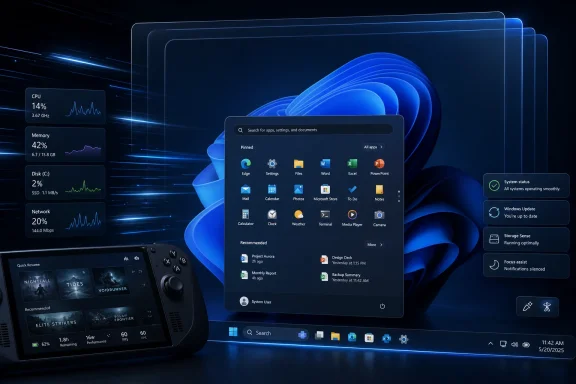 Microsoft Discovers That an Operating System Is Not an Ad Slot
For the better part of the Copilot boom, Microsoft treated Windows as the natural distribution layer for its AI ambitions. That made commercial sense. Windows remains the most valuable piece of real estate Microsoft controls at consumer scale, and every Start menu search box, system app, and taskbar surface is a place where the company can normalize a new behavior.The problem is that users do not experience Windows as a growth channel. They experience it as the thing between them and their work, games, peripherals, files, and browser tabs. When Copilot began appearing in Paint, Notepad, Photos, Widgets, and other familiar corners of the OS, the reaction was not awe at a seamless AI future. It was irritation at the sense that Microsoft had found yet another way to make Windows feel busy.
That is the context behind the XDA piece’s unusually optimistic tone. The author is not saying Microsoft has suddenly become a community-first Linux distribution with a trillion-dollar market cap. The argument is subtler: Microsoft appears to have noticed that its Windows strategy was losing the people most likely to care about Windows.
That group includes enthusiasts, power users, sysadmins, developers, and gamers — the very people who influence broader platform credibility. They are also the users most likely to defect to Linux, macOS, SteamOS-like appliances, or browser-first workflows when Windows feels less dependable than it should.
K2 Sounds Like a Codename for Humility
The reported K2 effort is not, at least according to current reporting, a new Windows version. That distinction matters. Microsoft does not need another branding exercise; it needs a maintenance campaign with executive cover.The Windows Central reporting described K2 as a push to repair user confidence after Microsoft concluded that people no longer felt pride in using Windows. That phrase may sound sentimental, but for a platform business it is a hard commercial problem. Pride is what turns friction into forgiveness. Lose it, and every update prompt, every broken driver, every unwanted icon, and every sluggish context menu becomes evidence for the prosecution.
K2’s reported priorities are striking because they are so unglamorous. Faster Start menu behavior. Better responsiveness under CPU load. More reliable system UI. Gaming performance that can stand closer to SteamOS. A more disciplined approach to where AI appears. These are not keynote features. They are the kind of boring improvements that make an operating system feel cared for.
That is why the pivot has landed differently from previous Windows quality campaigns. Microsoft has promised polish before, and Windows users have developed a healthy allergy to promises. But in this case, the public rollback of some Copilot entry points gives the story a visible hook. Microsoft is not merely saying “quality” while adding more cruft; it is removing or renaming some of the very cruft users had complained about.
The Copilot Retreat Is Real, but It Is Not Total
The most concrete public evidence for the shift came from Microsoft’s May 1 Windows quality update, which described progress made since March. The company said it had removed the “Ask Copilot” button from Snipping Tool and Photos, and replaced Notepad’s generic Copilot icon with a clearer “Writing Tools” label.That phrasing is doing a lot of work. In Snipping Tool and Photos, Microsoft says the Copilot button is gone. In Notepad, the AI capability appears to be reframed rather than removed. The distinction is important because it shows what this pivot is — and what it is not.
Microsoft is not abandoning AI in Windows. It is abandoning the idea that every AI-adjacent feature should be stamped with Copilot branding and pushed into the user’s field of vision. That is a tactical retreat from overexposure, not a strategic retreat from AI.
For some users, that will be enough. A writing-assist feature tucked behind a clearly named tool is less offensive than a bright Copilot logo occupying a simple text editor that many people use precisely because it has historically done almost nothing. For others, the change will look like cosmetic rebranding: the assistant did not leave, it just changed clothes.
Both readings can be true. Microsoft’s immediate problem was not only AI functionality; it was the collapse of restraint. K2, if it is to mean anything, has to restore that restraint across the product.
Windows Users Were Not Rejecting the Future
One of the laziest interpretations of the Copilot backlash is that Windows users simply do not want change. That is wrong. The Windows enthusiast community has spent years asking Microsoft to modernize old interfaces, fix inconsistent design, accelerate File Explorer, repair Settings migration, improve HDR, reduce update disruption, and make the OS feel less internally divided.The anger came from seeing Microsoft move quickly where users had not asked it to move, while moving slowly where users had been pleading for years. A Copilot button in Notepad arrived with a kind of corporate urgency that a fully coherent Control Panel replacement never seemed to receive. AI arrived everywhere while basic Windows polish still felt uneven.
That mismatch is what made the agentic Windows rhetoric land so poorly. When Microsoft executives talked about a future where the PC could act more autonomously on the user’s behalf, many users heard a company proposing to add another abstraction layer before it had fixed the layers already there.
The lesson should not be that Windows users hate automation. They hate automation that feels imposed, opaque, or premature. A good operating system earns the right to be clever by first being predictable.
Performance Is the Place Where Trust Is Won Back
The most interesting K2 reporting is not about Copilot at all. It is about performance. Windows Central has reported that Microsoft is working on changes such as a System Compositor for WinUI 3, intended to improve responsiveness in areas like Start and the taskbar under heavy CPU load, along with broader efforts to make Windows feel faster.That is where K2 could become more than a public relations correction. Windows 11’s central tension has always been that it looks like a cleaner, more modern OS while often carrying the behavioral baggage of its predecessors. Context menus can hesitate. File Explorer can feel strangely heavy. Settings and legacy dialogs coexist. System surfaces sometimes look modern but behave as if they are layered over old assumptions.
For ordinary users, these details become vibes. The machine feels fast or it does not. The Start menu appears instantly or it does not. Right-clicking feels native or it feels like Windows is negotiating with itself before responding.
For IT pros, the stakes are more practical. Responsiveness problems translate into help desk noise, user distrust, and resistance to migrations. A beautiful design language means little if users believe the old machine felt snappier before the upgrade.
SteamOS Has Become the Benchmark Microsoft Cannot Ignore
The reported K2 focus on gaming performance is especially revealing. For decades, Windows was the default PC gaming platform not because users loved every design choice, but because the ecosystem gravity was overwhelming. Drivers, anti-cheat systems, launchers, GPU utilities, modding tools, and game support all reinforced Windows as the safe choice.SteamOS changed the psychological comparison. It did not replace Windows on the desktop, and it still carries compatibility caveats. But on handheld gaming PCs, Valve proved that a Linux-based environment could feel more console-like, more focused, and in some contexts more pleasant than Windows.
That is dangerous for Microsoft because gaming has long been one of Windows’ emotional anchors. A developer may tolerate Windows for Visual Studio, Office, or enterprise compatibility. A gamer tolerates it because the games work. But if a growing class of devices makes Windows feel like the clumsy option, Microsoft has a perception problem before it has a market share crisis.
K2’s reported SteamOS benchmarking suggests Microsoft understands that it cannot rely forever on legacy advantage. Windows gaming has to be performant, power-aware, controller-friendly, and less cluttered on devices that are not traditional keyboard-and-mouse PCs. The desktop OS cannot simply be squeezed onto every form factor and declared victorious.
The Insider Program Becomes Part of the Repair Job
Microsoft’s May quality update also emphasized changes to the Windows Insider experience, including making it easier to understand which builds users are choosing. That may sound procedural, but it fits the broader repair narrative.The Insider Program is supposed to be a feedback engine. At its best, it gives Microsoft early warning when a feature is confusing, unstable, or unwanted. At its worst, it becomes a maze of channels, controlled rollouts, partial availability, and ambiguity that makes even technical users unsure whether they are testing the thing Microsoft just announced.
That ambiguity has consequences. If Microsoft announces an improvement and only some Insiders see it, the community spends energy litigating rollout mechanics instead of testing quality. If a bug appears in one channel but not another, the signal gets noisier. If features appear and disappear without clear rationale, users stop trusting the program as a meaningful conversation.
A quality reset therefore has to include the machinery of feedback. Microsoft cannot credibly say it is listening if the people most willing to test Windows cannot tell what they are supposed to be listening for.
The Enterprise Argument Is Less Sentimental and More Severe
For businesses, the K2 pivot is not about pride. It is about control. Enterprise admins have spent the past few years watching Microsoft weave cloud identity, Microsoft account nudges, Edge promotion, Teams integration, OneDrive defaults, and Copilot messaging through more of the Windows experience.Some of those integrations are useful in managed Microsoft environments. Many are defensible in isolation. The problem is cumulative: Windows can feel increasingly like a service surface optimized for Microsoft’s strategic priorities rather than a neutral endpoint platform controlled by the organization that bought the device.
Copilot raises that concern because AI features touch data, context, policy, and user behavior. Even when Microsoft provides controls, administrators need clarity about what is installed, what can be removed, what is merely hidden, and what data flows where. A button in a consumer app is a nuisance; an ambiguous assistant surface in a regulated environment is a governance issue.
This is where K2’s credibility will be tested. Removing unnecessary entry points is useful, but enterprises will look for policy depth, uninstall paths, documentation, auditability, and predictable defaults. Microsoft has to prove that “intentional” AI integration means administratively legible AI integration.
Linux Defections Are a Symptom, Not the Crisis
The XDA author’s framing — leaving Windows for Linux and now reconsidering — captures an important slice of the audience, but Microsoft should be careful not to overread it. Most Windows users are not about to install Fedora, Arch, Mint, or Ubuntu because Notepad gained a Copilot button. The mass market is sticky.But enthusiast defections matter because they are a leading indicator of narrative decay. The people who leave first are often the people who used to troubleshoot the family PC, recommend hardware, build gaming rigs, manage small business systems, or write the forum posts that other users find through search. When those people stop defending Windows, Microsoft loses more than a few installs.
Linux has also become a more credible refuge than it used to be. Gaming is better than it was. Desktop environments are more polished. Hardware support is broader. For developers, Linux often feels closer to the production environments they target. For privacy-minded users, it offers a sense of agency Windows increasingly struggles to provide.
That does not mean Linux is easy or universally superior. It means Windows no longer gets unlimited benefit of the doubt merely because the alternative is intimidating. K2 is happening in a world where exit is more plausible than it was a decade ago.
Microsoft’s Hardest Problem Is That Users Remember
The optimistic reading of K2 is that Microsoft heard the backlash and changed course. The cynical reading is that Microsoft overplayed Copilot branding, saw the sentiment data, and is now sanding down the roughest edges while continuing the same strategy more quietly.The reason the cynical reading has traction is history. Windows users remember forced upgrade campaigns. They remember Start menu ads. They remember Edge prompts. They remember default app resets, Microsoft account pressure, and the long tail of Windows 11 hardware requirements. They remember quality issues that seemed to survive long after flashy features shipped.
That institutional memory means Microsoft does not get full credit for a roadmap. It gets partial credit for shipped changes, more credit for sustained behavior, and real credit only when users stop bracing for the next intrusion.
K2 therefore has to be boringly consistent. One rollback is news. Six months of fewer annoyances is progress. A year of measurable responsiveness improvements, clearer controls, and fewer self-serving surfaces would be something closer to trust.
The Best Version of K2 Is Anti-Keynote Engineering
The phrase “Windows K2” sounds like something that could become a slide deck, a logo, and eventually a disappointment. Microsoft should resist that instinct. The best version of K2 is not a campaign users see; it is a discipline users feel.That means prioritizing latency over spectacle. It means treating milliseconds in File Explorer as seriously as new AI demos. It means finishing migrations instead of leaving users to wander between Settings and ancient dialogs. It means reducing update anxiety, not simply writing friendlier copy around it.
It also means being honest about AI’s place in the OS. There are places where local or cloud-assisted intelligence could genuinely improve Windows: accessibility, search, troubleshooting, file organization, window management, and system diagnostics. But those features have to be optional, explainable, and useful before they are branded.
If Microsoft wants Windows to become more agentic, it must first make Windows more accountable. Users will not trust an assistant to act on their behalf if they do not trust the platform to respect a default browser choice.
The K2 Test Is Whether Windows Can Stop Interrupting Itself
The concrete lesson from the XDA reaction is that even skeptical users are open to being won back. That should encourage Microsoft, but it should also worry the company. The bar for renewed optimism was not revolutionary. It was Microsoft removing some unwanted buttons, acknowledging quality problems, and promising to focus on responsiveness.That tells us how starved Windows users are for restraint. They are not asking for the moon. They are asking for an OS that launches quickly, responds consistently, updates predictably, games well, respects policy, and does not treat every quiet corner as an opportunity for promotion.
The next phase is where K2 either becomes meaningful or evaporates into branding. Microsoft will need to show that performance work reaches mainstream builds, not just Insider notes. It will need to show that Copilot integration becomes more selective, not merely less colorful. It will need to show that gaming improvements matter outside carefully chosen comparisons.
Most of all, it will need to show that Windows leadership can say no. No to redundant entry points. No to shipping a feature before the surrounding experience is ready. No to turning every app into a strategic messaging surface. No to the reflex that says the platform exists to advance the quarter’s corporate priority rather than the user’s task.
The Reconsideration Microsoft Has Actually Earned
K2 has not earned celebration yet, but it has earned attention. The difference matters, especially for a Windows community that has seen too many course corrections become marketing weather.- Microsoft’s reported K2 initiative is best understood as a Windows 11 quality and trust campaign, not a new Windows release.
- The removal of some Copilot buttons shows a real shift in presentation, but it does not mean Microsoft is backing away from AI in Windows.
- The most important K2 work may be performance engineering around Start, taskbar, File Explorer, WinUI 3, and system responsiveness.
- SteamOS has become a serious comparison point because it makes Windows look less inevitable on gaming handhelds and couch-first PCs.
- Enterprise customers will judge the pivot by controls, policies, uninstall options, and predictable defaults rather than by softer language about user feedback.
- Microsoft’s challenge is not to produce one impressive update, but to sustain a less intrusive Windows strategy long enough for users to believe it.
Source: XDA I left Windows for Linux, but Microsoft's K2 pivot just gave me a reason to reconsider
