

A Brazilian Xbox player has reportedly won a court order requiring Microsoft to restore a hacked account, its digital game library, and access to associated services. The first-instance ruling, shared on Reddit on July 10, 2026, also awards the player 2,000 Brazilian reais—roughly $400—in damages and gives Microsoft 15 days to return the account.
The player, known online as Ordo_Liberal, said the dispute began after an account takeover in April. As detailed by Windows Central, Tom’s Hardware, and Engadget, the intruder changed the account’s security information despite two-factor authentication being enabled, after which Microsoft permanently suspended the account as unrecoverable.
That response locked the player out of more than Xbox purchases. The same Microsoft identity was reportedly connected to OneDrive files and other services, turning an Xbox support failure into the loss of an entire Microsoft cloud identity.
According to support messages published by the player, Microsoft detected unauthorized access but concluded that its policies prevented the account from being safely recovered. The proposed resolution was effectively to create another account and repurchase the games.
From a fraud-prevention perspective, freezing a compromised identity can be necessary. The problem is that a permanent suspension protects an account from the attacker by also denying it to the legitimate customer—and takes every license, save, file, subscription, and entitlement connected to that identity with it.
That is an especially harsh consequence when the platform itself recognizes that the account was compromised. The customer was not accused of cheating, marketplace fraud, harassment, or another deliberate violation; according to the published account of events, Microsoft’s inability to verify ownership became the reason for destroying access.
Ordo_Liberal rejected that outcome and brought the matter before a Brazilian court. The screenshot of the judgment reported by Tom’s Hardware and Engadget indicates that Microsoft must restore the account within 15 days or face a daily penalty of 150 reais, capped at 1,500 reais, in addition to the damages award.
Microsoft had not issued a public response to the ruling at the time of the initial reports. It is also not yet clear whether the company will appeal, comply within the deadline, or dispute details of the player’s public account.
The significant part is the remedy. The court did not merely order Microsoft to refund the value of a handful of recent purchases or pay nominal compensation. It reportedly required the company to restore the account—and therefore the customer’s access to the accumulated digital library.
That distinction gets to the heart of modern platform ownership. A refund based on the present value of old software would not necessarily replace delisted games, saved progress, achievements, cloud data, or purchases accumulated across console generations. Account restoration preserves the customer’s existing relationship with the platform rather than forcing that customer to start again.
The relatively small damages figure should not obscure that result. For Microsoft, $400 is immaterial; being ordered to reverse an “unrecoverable” account decision is more consequential because it challenges the idea that an internal support policy must be the final word.
Brazil’s consumer-protection system also gave the player a practical route to contest that decision. Reports differ on whether he used counsel or public legal assistance, but the case proceeded without the kind of legal expense that would make pursuing a single gaming account irrational. In jurisdictions where litigation costs can exceed the value of an entire game collection, the same strategy may be far less accessible.
A compromised or incorrectly suspended Microsoft account can consequently have a blast radius far beyond multiplayer access. Depending on how the account is used, the owner may lose access to cloud files, purchased applications, BitLocker recovery information, email, subscriptions, game saves, and Windows-related services at the same time.
Organizations mitigate comparable identity risks through backup accounts, documented recovery procedures, offline copies, break-glass credentials, and separation of duties. Consumers are encouraged to consolidate everything under one identity but are rarely given equivalent recovery tools when automated verification cannot resolve a takeover.
Two-factor authentication remains essential, but this case also illustrates its limits. MFA can reduce takeover risk; it cannot guarantee that an attacker will never capture a session, manipulate recovery channels, or convince a service to accept changed security information. Nor does MFA help after a provider has permanently suspended the identity it was intended to protect.
Users with valuable Microsoft accounts should therefore retain independent records of purchases, recovery codes, device identifiers, billing history, and correspondence with support. OneDrive should not be treated as the only copy of irreplaceable data, and critical BitLocker recovery keys should be stored somewhere that does not depend exclusively on the same Microsoft account.
Sony has also notified customers that more than 500 previously purchased StudioCanal movies will become inaccessible on September 1, 2026, after the relevant licensing agreement expires. Those events are separate from the Microsoft dispute, but together they expose the dependencies hidden behind a “Buy” button: continued access may rely on an account, authentication servers, licensing agreements, storefront infrastructure, and a provider willing and able to recover the customer’s identity.
Physical discs do not solve every preservation problem. Some games require large patches, server connections, activation services, or downloadable components, while discs can be damaged and hardware eventually fails. They nevertheless provide a degree of separation between a customer’s library and the status of a single online account.
Digital distribution removes that separation. When all purchases are attached to one cloud identity, account recovery becomes part of the preservation system. A platform cannot credibly claim that customers’ libraries are safe if its support process responds to a recognized takeover by permanently locking the victim out and recommending that everything be purchased again.
The Brazilian judgment does not establish a universal right to perpetual access, and the public record currently rests heavily on screenshots and the player’s account rather than a fully published case file. It does, however, demonstrate that a platform’s internal designation of “unrecoverable” need not be legally unchallengeable.
Microsoft’s next move will matter more than the damages. Compliance would return one customer’s library and data; an appeal or missed deadline could provide a clearer test of whether the court can force a global platform to repair an identity its own support system had written off.
The player, known online as Ordo_Liberal, said the dispute began after an account takeover in April. As detailed by Windows Central, Tom’s Hardware, and Engadget, the intruder changed the account’s security information despite two-factor authentication being enabled, after which Microsoft permanently suspended the account as unrecoverable.
That response locked the player out of more than Xbox purchases. The same Microsoft identity was reportedly connected to OneDrive files and other services, turning an Xbox support failure into the loss of an entire Microsoft cloud identity.
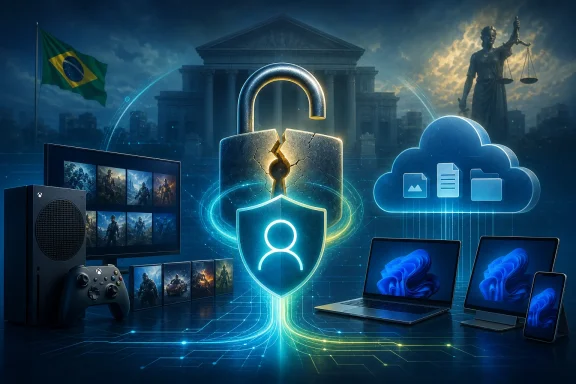 Microsoft Secured the Account by Taking It Away
According to support messages published by the player, Microsoft detected unauthorized access but concluded that its policies prevented the account from being safely recovered. The proposed resolution was effectively to create another account and repurchase the games.From a fraud-prevention perspective, freezing a compromised identity can be necessary. The problem is that a permanent suspension protects an account from the attacker by also denying it to the legitimate customer—and takes every license, save, file, subscription, and entitlement connected to that identity with it.
That is an especially harsh consequence when the platform itself recognizes that the account was compromised. The customer was not accused of cheating, marketplace fraud, harassment, or another deliberate violation; according to the published account of events, Microsoft’s inability to verify ownership became the reason for destroying access.
Ordo_Liberal rejected that outcome and brought the matter before a Brazilian court. The screenshot of the judgment reported by Tom’s Hardware and Engadget indicates that Microsoft must restore the account within 15 days or face a daily penalty of 150 reais, capped at 1,500 reais, in addition to the damages award.
Microsoft had not issued a public response to the ruling at the time of the initial reports. It is also not yet clear whether the company will appeal, comply within the deadline, or dispute details of the player’s public account.
The Victory Is Narrow, but the Remedy Matters
This is not a sweeping declaration that gamers own digital purchases like physical property. It is reportedly a first-instance judgment involving one consumer, one account, and Brazilian law; it does not automatically bind another court in Brazil, much less courts in the United States or Europe.The significant part is the remedy. The court did not merely order Microsoft to refund the value of a handful of recent purchases or pay nominal compensation. It reportedly required the company to restore the account—and therefore the customer’s access to the accumulated digital library.
That distinction gets to the heart of modern platform ownership. A refund based on the present value of old software would not necessarily replace delisted games, saved progress, achievements, cloud data, or purchases accumulated across console generations. Account restoration preserves the customer’s existing relationship with the platform rather than forcing that customer to start again.
The relatively small damages figure should not obscure that result. For Microsoft, $400 is immaterial; being ordered to reverse an “unrecoverable” account decision is more consequential because it challenges the idea that an internal support policy must be the final word.
Brazil’s consumer-protection system also gave the player a practical route to contest that decision. Reports differ on whether he used counsel or public legal assistance, but the case proceeded without the kind of legal expense that would make pursuing a single gaming account irrational. In jurisdictions where litigation costs can exceed the value of an entire game collection, the same strategy may be far less accessible.
One Login Now Carries an Unreasonable Blast Radius
For Windows users and administrators, the case is bigger than Xbox. Microsoft increasingly uses a single identity layer across Windows, Microsoft 365, OneDrive, the Microsoft Store, Xbox, subscriptions, rewards, and device services. That integration is convenient until an account recovery process fails.A compromised or incorrectly suspended Microsoft account can consequently have a blast radius far beyond multiplayer access. Depending on how the account is used, the owner may lose access to cloud files, purchased applications, BitLocker recovery information, email, subscriptions, game saves, and Windows-related services at the same time.
Organizations mitigate comparable identity risks through backup accounts, documented recovery procedures, offline copies, break-glass credentials, and separation of duties. Consumers are encouraged to consolidate everything under one identity but are rarely given equivalent recovery tools when automated verification cannot resolve a takeover.
Two-factor authentication remains essential, but this case also illustrates its limits. MFA can reduce takeover risk; it cannot guarantee that an attacker will never capture a session, manipulate recovery channels, or convince a service to accept changed security information. Nor does MFA help after a provider has permanently suspended the identity it was intended to protect.
Users with valuable Microsoft accounts should therefore retain independent records of purchases, recovery codes, device identifiers, billing history, and correspondence with support. OneDrive should not be treated as the only copy of irreplaceable data, and critical BitLocker recovery keys should be stored somewhere that does not depend exclusively on the same Microsoft account.
Digital-Only Gaming Makes Recovery Policy a Preservation Policy
The ruling arrives while confidence in digital media is under renewed pressure. Sony announced on July 1 that physical disc production for new PlayStation games will end in January 2028, framing the change as a response to consumer preference for digital distribution.Sony has also notified customers that more than 500 previously purchased StudioCanal movies will become inaccessible on September 1, 2026, after the relevant licensing agreement expires. Those events are separate from the Microsoft dispute, but together they expose the dependencies hidden behind a “Buy” button: continued access may rely on an account, authentication servers, licensing agreements, storefront infrastructure, and a provider willing and able to recover the customer’s identity.
Physical discs do not solve every preservation problem. Some games require large patches, server connections, activation services, or downloadable components, while discs can be damaged and hardware eventually fails. They nevertheless provide a degree of separation between a customer’s library and the status of a single online account.
Digital distribution removes that separation. When all purchases are attached to one cloud identity, account recovery becomes part of the preservation system. A platform cannot credibly claim that customers’ libraries are safe if its support process responds to a recognized takeover by permanently locking the victim out and recommending that everything be purchased again.
The Brazilian judgment does not establish a universal right to perpetual access, and the public record currently rests heavily on screenshots and the player’s account rather than a fully published case file. It does, however, demonstrate that a platform’s internal designation of “unrecoverable” need not be legally unchallengeable.
Microsoft’s next move will matter more than the damages. Compliance would return one customer’s library and data; an appeal or missed deadline could provide a clearer test of whether the court can force a global platform to repair an identity its own support system had written off.
References
- Primary source: Windows Central
Published: 2026-07-13T13:01:46+00:00
Xbox fan successfully sues Microsoft for blocking his entire digital games library — in what could be a huge win for consumer rights | Windows Central
Brazilian Xbox player, Ordo_Liberal, recently won a court case against Microsoft, proving you can fight for the right to preserve digital ownership of your games and win.www.windowscentral.com - Related coverage: tomshardware.com
- Related coverage: engadget.com
Xbox Gamer Wins Lawsuit Against Microsoft To Restore Account And Digital Library
Microsoft also has to pay roughly $400 in damages to the user.www.engadget.com - Related coverage: notebookcheck.net
Microsoft loses lawsuit after blocking hacked Xbox account with digital games - Notebookcheck News
One gamer took extreme measures to restore access to his compromised Xbox account. The Brazilian user filed a lawsuit against Microsoft after it refused to unfreeze his digital library. A court ruled in the plaintiff’s favor, and the decline of physical games could lead to more legal challenges. www.notebookcheck.net
- Related coverage: insider-gaming.com
XBOX Gamer Wins Digital Library Lawsuit Against Microsoft - Insider Gaming
In Brazil, one gamer has won their lawsuit against Microsoft over a locked account and blocked digital games library.insider-gaming.com - Related coverage: neowin.net
Microsoft reportedly ordered to restore Xbox account, pay damages after gamer wins lawsuit - Neowin
A Brazilian gamer's legal battle with Microsoft raises fresh questions about digital ownership and consumer rights. www.neowin.net