

Microsoft’s Xbox leadership crisis sharpened in June 2026 after new Xbox CEO Asha Sharma publicly described the business as unhealthy, warned that tough decisions were ahead, and inherited a brand still defined by Phil Spencer’s long rescue-and-expansion era. The obvious temptation is to turn that week into a referendum on one executive. The better question is whether Xbox’s job has become too big, too cyclical, and too strategically conflicted for any one leader to hold indefinitely. Term limits would not magically fix Xbox, but the argument for planned succession has rarely looked stronger.
Phil Spencer’s reputation was built on a real rescue. After the Xbox One launch damaged Microsoft’s standing with core players, Spencer became the executive who listened, apologized, reversed bad ideas, and rebuilt the brand around compatibility, services, accessibility, cross-play, PC integration, and Game Pass. For a company that had looked ready to squander the Xbox 360 generation’s goodwill, that mattered.
The danger is that a successful rescue can become its own governance trap. When a leader is identified with saving a brand, criticism of the strategy starts to feel like ingratitude. Every missed target can be framed as part of a larger transformation, every delay as a long game, and every contradiction as the unavoidable price of navigating Microsoft’s corporate machinery.
Xbox spent years telling players that the future was bigger than a plastic box under the TV. That was not wrong. But it created a brand that now has to be a console platform, a PC storefront, a subscription service, a cloud service, a mobile ambition, and one of the world’s largest third-party publishers all at once.
No executive should be expected to be permanently right across that many transitions. The same instincts that are useful in one era can become liabilities in the next. Spencer was arguably the right leader to stabilize Xbox after 2013. That does not mean he was automatically the right leader to manage the consequences of buying Bethesda, absorbing Activision Blizzard, defending Game Pass economics, and persuading customers that Xbox hardware still matters.
But the underlying principle is sound: large platform businesses need structured leadership renewal before the business visibly stalls. That is not because every CEO grows incompetent. It is because organizations gradually learn to protect the assumptions of the person at the top.
Xbox’s problem was not that Spencer stayed too long in some abstract moral sense. The problem is that Microsoft allowed too many unresolved strategic tensions to pile up under one long-running public narrative. Xbox was pro-console and post-console. It valued exclusives but wanted its games everywhere. Game Pass was both a growth engine and a cost problem. Studio acquisitions were both a content solution and an integration risk.
A planned leadership cycle would have forced Microsoft to ask earlier whether the same operating model still fit the next phase. It would also have made succession feel normal rather than punitive. Instead, any leadership change after a crisis looks like an indictment, even when the old leader deserves credit for earlier wins.
That is the strongest case for term limits: not automatic exile, but automatic review. At the five- or seven-year mark, the burden should shift. The question should no longer be “Has this leader done enough to keep the job?” It should become “Is this still the right leader for the next version of the business?”
If Xbox releases its biggest games everywhere, it maximizes software revenue but weakens the emotional and practical case for buying Xbox hardware. If Xbox holds games back as exclusives, it protects the platform but sacrifices revenue from PlayStation, Nintendo, and PC storefronts. If Game Pass gets everything day one, subscribers love it but the company has to carry the financial burden of feeding the service with expensive content. If Game Pass becomes more selective or more expensive, the value proposition that made it famous starts to erode.
This is not simply a messaging failure. It is a business-design problem. Xbox trained different audiences to believe different things. Console loyalists heard that the box still mattered. PC players heard that Microsoft had moved beyond console tribalism. Investors heard that gaming was a growth market. Developers heard that Game Pass could expand reach. Each promise had a logic, but they were not all equally sustainable at the same time.
A leadership reset can help only if it names the tradeoffs plainly. Sharma appears to be doing some of that. The risk is that Xbox now enters a corrective phase after years of strategic ambiguity, and corrective phases are rarely pleasant for customers, studios, or employees.
Backward compatibility was a genuine triumph. So was Xbox’s broader move toward accessibility and cross-platform play. Game Pass was one of the most compelling consumer propositions in modern gaming, particularly during the years when it felt like a disruptive alternative to $70 purchases and fragmented storefronts. Microsoft’s willingness to support PC more seriously also made Xbox feel less provincial.
But success encouraged expansion. Xbox bought studios, promised a steadier content pipeline, and asked Game Pass to become not merely a feature but a central economic engine. The Activision Blizzard deal made Microsoft a gaming giant on paper, but scale is not the same as coherence. A company can own more games and still have a weaker platform story.
Spencer’s public style also became part of the brand. He was approachable, fluent in gamer language, and unusually visible for a corporate executive. That helped after the Xbox One debacle, but it also personalized Xbox’s strategy in a way that made institutional accountability harder to parse. Was Xbox’s direction Spencer’s vision, Microsoft’s corporate mandate, or the consequence of market pressures outside anyone’s control? The answer was usually “all of the above,” which is true but unsatisfying.
That is why succession planning matters. When a platform leader becomes the face of hope, the company needs an orderly way to separate gratitude from evaluation. Otherwise, the brand waits until external pressure forces the conversation.
She inherits a customer base that has been conditioned to expect high value from Game Pass, a hardware audience anxious about the future of consoles, studios that have lived through integration and uncertainty, and a parent company that expects gaming to justify enormous capital allocation. Even the best strategy will disappoint some constituency.
That is why her comments about business health matter. Executives usually prefer euphemism. When a leader says the business is not healthy, the intended audience is not just players. It is employees, partners, Microsoft leadership, and investors. It is a declaration that the next phase will involve tradeoffs that cannot be hidden behind showcase trailers.
The question is whether Sharma’s reset becomes strategic discipline or another swing of the pendulum. Xbox does not need a leader who simply reverses every Spencer-era assumption. It needs one who decides which promises are central and which were products of a more forgiving moment.
If that means fewer day-one subscription assumptions, Xbox should say so. If it means more selective exclusivity, Xbox should explain why. If it means hardware becomes more premium, more partner-led, or more PC-like, the company needs to stop pretending that every model serves the same audience equally well.
Xbox’s hardware predicament is therefore not just about the cost of memory or storage. It is about weakened leverage. A traditional console makes sense when the device is the best gateway to the ecosystem. But Microsoft has spent years making Xbox less dependent on Xbox hardware, which is consumer-friendly in many ways but commercially awkward when defending a console roadmap.
If the next Xbox is closer to a Windows gaming device, perhaps with broader store access or OEM partnerships, it may solve one problem while creating another. An open or semi-open Xbox could be more flexible, but it would also be harder to subsidize if Microsoft cannot reliably capture software revenue. A closed console protects the platform toll, but it looks increasingly out of step with Microsoft’s broader “play anywhere” pitch.
This is where leadership tenure matters. Hardware strategy unfolds over years. A CEO who begins one console generation may still be living with its assumptions two generations later. Planned succession would not guarantee better hardware calls, but it would force the company to periodically test whether its console philosophy still matches its software strategy.
Xbox’s future hardware does not need to look like PlayStation to matter. But it does need a reason to exist beyond brand nostalgia. That reason has to be sharper than “the best place to play Xbox games,” especially if more Xbox games are available everywhere else.
The problem is that Game Pass also changed how Xbox’s success was judged. Once the service became the center of the story, individual game sales, console purchases, and platform loyalty were all filtered through subscription logic. That made sense when growth was the priority. It becomes more difficult when profitability, pricing, and content costs dominate the conversation.
A subscription service needs either enormous scale, careful content economics, or both. Xbox pursued scale while also promising premium content. That is expensive. The larger Microsoft’s gaming empire became, the more pressure there was to make Game Pass look like a rational distribution model rather than a subsidy-fueled land grab.
This is another place where a fixed leadership review would have helped. Game Pass began as a disruptive wedge. Over time, it became an institution with its own defenders, expectations, and internal politics. A new leader should not have to wait for a crisis to ask whether the original bargain still works.
If Sharma adjusts Game Pass pricing, windows, tiers, or day-one availability, the reaction will be fierce. But the more important test is whether Xbox can articulate a sustainable version of the service that does not feel like a slow-motion downgrade. Players will tolerate change more readily when they believe the company has a coherent destination.
Exclusives are not just about denying games to rival customers. They are about giving a platform a clear identity, a reason for investment, and a cultural center. Nintendo understands this instinctively. Sony has built much of PlayStation’s modern prestige around it. Xbox’s challenge is that it spent years broadening the definition of its platform until the word itself became slippery.
Sharma’s reported interest in “signature” exclusives suggests an attempt to restore some gravity without abandoning Microsoft’s publisher ambitions. That is a narrow path. Too few exclusives, and Xbox hardware remains optional. Too many, and Microsoft leaves money on the table after spending enormous sums to become a multiplatform powerhouse.
This is not a morality play. Players who own PlayStation or Nintendo hardware understandably want more games. Xbox console owners understandably want reasons to feel their purchase still matters. Microsoft understandably wants revenue from every viable screen. The problem is that a strategy designed to please everyone often fails to give anyone confidence.
A term-limited or review-driven executive structure would not answer the exclusivity question by itself. But it would reduce the odds that one era’s branding becomes the next era’s trap. Xbox needs the freedom to change its mind, and customers need the honesty to be told when that is happening.
But Xbox’s recent history suggests the larger danger is drift, not overcorrection. The brand accumulated initiatives faster than it resolved contradictions. It had cloud ambitions, PC ambitions, console ambitions, mobile ambitions, subscription ambitions, and publishing ambitions. Each could be defended individually. Together, they became a fog.
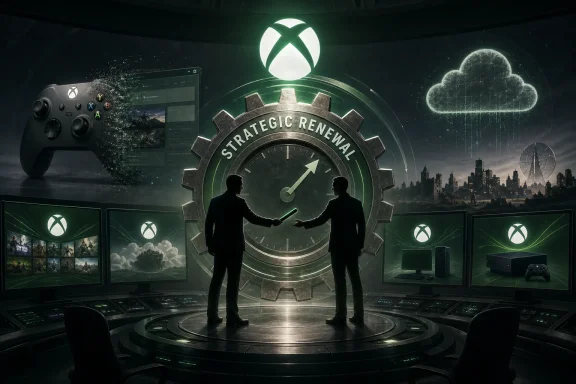
So perhaps the better model is not a hard term limit, but a mandatory strategic renewal cycle. Every major Xbox chief should be expected to present a new mandate after a defined period, with measurable commitments and an explicit succession plan. If the mandate is compelling, the leader continues. If not, Microsoft changes leadership before the business forces its hand.
That may sound bureaucratic, but the alternative is worse. Without structured renewal, companies rely on vibes: goodwill, internal politics, brand mythology, and the hope that the next showcase will reset sentiment. Xbox has lived too long on the emotional credit of better days.
The lesson is not that Spencer should be erased from Xbox history. It is that no executive’s best chapter should entitle them to own the next one indefinitely.
That matters because Xbox’s audience is not a single audience anymore. It includes console loyalists, PC players, cloud experimenters, Game Pass subscribers, developers, publishers, modders, parents buying a first console, and enterprise-minded Microsoft watchers trying to understand why one of the world’s richest companies keeps making gaming look so hard.
Here is the practical read on the term-limit debate:
 Xbox Has Outgrown the Myth of the Permanent Savior
Phil Spencer’s reputation was built on a real rescue. After the Xbox One launch damaged Microsoft’s standing with core players, Spencer became the executive who listened, apologized, reversed bad ideas, and rebuilt the brand around compatibility, services, accessibility, cross-play, PC integration, and Game Pass. For a company that had looked ready to squander the Xbox 360 generation’s goodwill, that mattered.The danger is that a successful rescue can become its own governance trap. When a leader is identified with saving a brand, criticism of the strategy starts to feel like ingratitude. Every missed target can be framed as part of a larger transformation, every delay as a long game, and every contradiction as the unavoidable price of navigating Microsoft’s corporate machinery.
Xbox spent years telling players that the future was bigger than a plastic box under the TV. That was not wrong. But it created a brand that now has to be a console platform, a PC storefront, a subscription service, a cloud service, a mobile ambition, and one of the world’s largest third-party publishers all at once.
No executive should be expected to be permanently right across that many transitions. The same instincts that are useful in one era can become liabilities in the next. Spencer was arguably the right leader to stabilize Xbox after 2013. That does not mean he was automatically the right leader to manage the consequences of buying Bethesda, absorbing Activision Blizzard, defending Game Pass economics, and persuading customers that Xbox hardware still matters.
The Term-Limit Question Is Really a Succession Question
The phrase “term limits” sounds too political for a gaming division, and in a literal sense it probably is. Microsoft is not a legislature, Xbox is not a public office, and corporate leadership cannot be reduced to a calendar. A brilliant executive should not be removed merely because the stopwatch expired.But the underlying principle is sound: large platform businesses need structured leadership renewal before the business visibly stalls. That is not because every CEO grows incompetent. It is because organizations gradually learn to protect the assumptions of the person at the top.
Xbox’s problem was not that Spencer stayed too long in some abstract moral sense. The problem is that Microsoft allowed too many unresolved strategic tensions to pile up under one long-running public narrative. Xbox was pro-console and post-console. It valued exclusives but wanted its games everywhere. Game Pass was both a growth engine and a cost problem. Studio acquisitions were both a content solution and an integration risk.
A planned leadership cycle would have forced Microsoft to ask earlier whether the same operating model still fit the next phase. It would also have made succession feel normal rather than punitive. Instead, any leadership change after a crisis looks like an indictment, even when the old leader deserves credit for earlier wins.
That is the strongest case for term limits: not automatic exile, but automatic review. At the five- or seven-year mark, the burden should shift. The question should no longer be “Has this leader done enough to keep the job?” It should become “Is this still the right leader for the next version of the business?”
Xbox’s Contradictions Finally Reached the Surface
Sharma’s blunt language landed because it confirmed what many Xbox watchers had already inferred. The brand had been trying to square a circle. Microsoft wanted the economics of a giant publisher, the loyalty of a console platform, the growth story of a subscription business, and the optionality of cloud and PC. Those goals can coexist in theory, but they create brutal tradeoffs in practice.If Xbox releases its biggest games everywhere, it maximizes software revenue but weakens the emotional and practical case for buying Xbox hardware. If Xbox holds games back as exclusives, it protects the platform but sacrifices revenue from PlayStation, Nintendo, and PC storefronts. If Game Pass gets everything day one, subscribers love it but the company has to carry the financial burden of feeding the service with expensive content. If Game Pass becomes more selective or more expensive, the value proposition that made it famous starts to erode.
This is not simply a messaging failure. It is a business-design problem. Xbox trained different audiences to believe different things. Console loyalists heard that the box still mattered. PC players heard that Microsoft had moved beyond console tribalism. Investors heard that gaming was a growth market. Developers heard that Game Pass could expand reach. Each promise had a logic, but they were not all equally sustainable at the same time.
A leadership reset can help only if it names the tradeoffs plainly. Sharma appears to be doing some of that. The risk is that Xbox now enters a corrective phase after years of strategic ambiguity, and corrective phases are rarely pleasant for customers, studios, or employees.
The Spencer Era Was Both the Cure and the Cause
It is too easy to say Phil Spencer saved Xbox and then ruined it. That is a clean story, which is why it is probably wrong. Spencer’s tenure contained both the recovery and the seeds of the current strain.Backward compatibility was a genuine triumph. So was Xbox’s broader move toward accessibility and cross-platform play. Game Pass was one of the most compelling consumer propositions in modern gaming, particularly during the years when it felt like a disruptive alternative to $70 purchases and fragmented storefronts. Microsoft’s willingness to support PC more seriously also made Xbox feel less provincial.
But success encouraged expansion. Xbox bought studios, promised a steadier content pipeline, and asked Game Pass to become not merely a feature but a central economic engine. The Activision Blizzard deal made Microsoft a gaming giant on paper, but scale is not the same as coherence. A company can own more games and still have a weaker platform story.
Spencer’s public style also became part of the brand. He was approachable, fluent in gamer language, and unusually visible for a corporate executive. That helped after the Xbox One debacle, but it also personalized Xbox’s strategy in a way that made institutional accountability harder to parse. Was Xbox’s direction Spencer’s vision, Microsoft’s corporate mandate, or the consequence of market pressures outside anyone’s control? The answer was usually “all of the above,” which is true but unsatisfying.
That is why succession planning matters. When a platform leader becomes the face of hope, the company needs an orderly way to separate gratitude from evaluation. Otherwise, the brand waits until external pressure forces the conversation.
Asha Sharma Inherits the Bill, Not a Blank Sheet
Sharma’s arrival gives Xbox a chance to reset, but it does not give her a clean slate. New CEOs often get a honeymoon period in which every old problem can be blamed on the previous regime. Xbox does not have the luxury of that simplicity.She inherits a customer base that has been conditioned to expect high value from Game Pass, a hardware audience anxious about the future of consoles, studios that have lived through integration and uncertainty, and a parent company that expects gaming to justify enormous capital allocation. Even the best strategy will disappoint some constituency.
That is why her comments about business health matter. Executives usually prefer euphemism. When a leader says the business is not healthy, the intended audience is not just players. It is employees, partners, Microsoft leadership, and investors. It is a declaration that the next phase will involve tradeoffs that cannot be hidden behind showcase trailers.
The question is whether Sharma’s reset becomes strategic discipline or another swing of the pendulum. Xbox does not need a leader who simply reverses every Spencer-era assumption. It needs one who decides which promises are central and which were products of a more forgiving moment.
If that means fewer day-one subscription assumptions, Xbox should say so. If it means more selective exclusivity, Xbox should explain why. If it means hardware becomes more premium, more partner-led, or more PC-like, the company needs to stop pretending that every model serves the same audience equally well.
Hardware Is the Brutal Part of the Argument
The console business has always depended on a delicate bargain. Platform holders sell hardware at tight margins or losses, then make money through software, services, licensing, and ecosystem lock-in. That bargain becomes harder when components rise in price, cloud infrastructure is expensive, and the platform owner is also incentivized to sell games on rival hardware.Xbox’s hardware predicament is therefore not just about the cost of memory or storage. It is about weakened leverage. A traditional console makes sense when the device is the best gateway to the ecosystem. But Microsoft has spent years making Xbox less dependent on Xbox hardware, which is consumer-friendly in many ways but commercially awkward when defending a console roadmap.
If the next Xbox is closer to a Windows gaming device, perhaps with broader store access or OEM partnerships, it may solve one problem while creating another. An open or semi-open Xbox could be more flexible, but it would also be harder to subsidize if Microsoft cannot reliably capture software revenue. A closed console protects the platform toll, but it looks increasingly out of step with Microsoft’s broader “play anywhere” pitch.
This is where leadership tenure matters. Hardware strategy unfolds over years. A CEO who begins one console generation may still be living with its assumptions two generations later. Planned succession would not guarantee better hardware calls, but it would force the company to periodically test whether its console philosophy still matches its software strategy.
Xbox’s future hardware does not need to look like PlayStation to matter. But it does need a reason to exist beyond brand nostalgia. That reason has to be sharper than “the best place to play Xbox games,” especially if more Xbox games are available everywhere else.
Game Pass Changed the Conversation, Then Became the Conversation
Game Pass was Xbox’s boldest consumer idea of the past decade. It reframed value, gave Microsoft a distinct identity, and made Xbox feel more imaginative than a console sales race it was losing. For players, the appeal was obvious: a large catalog, first-party releases, discovery, and reduced friction.The problem is that Game Pass also changed how Xbox’s success was judged. Once the service became the center of the story, individual game sales, console purchases, and platform loyalty were all filtered through subscription logic. That made sense when growth was the priority. It becomes more difficult when profitability, pricing, and content costs dominate the conversation.
A subscription service needs either enormous scale, careful content economics, or both. Xbox pursued scale while also promising premium content. That is expensive. The larger Microsoft’s gaming empire became, the more pressure there was to make Game Pass look like a rational distribution model rather than a subsidy-fueled land grab.
This is another place where a fixed leadership review would have helped. Game Pass began as a disruptive wedge. Over time, it became an institution with its own defenders, expectations, and internal politics. A new leader should not have to wait for a crisis to ask whether the original bargain still works.
If Sharma adjusts Game Pass pricing, windows, tiers, or day-one availability, the reaction will be fierce. But the more important test is whether Xbox can articulate a sustainable version of the service that does not feel like a slow-motion downgrade. Players will tolerate change more readily when they believe the company has a coherent destination.
Exclusives Are Back Because Platforms Still Need Gravity
For years, Xbox seemed almost embarrassed by exclusivity. The company spoke the language of access, openness, and meeting players where they are. That sounded enlightened, and in many respects it was. But platform businesses still need gravity.Exclusives are not just about denying games to rival customers. They are about giving a platform a clear identity, a reason for investment, and a cultural center. Nintendo understands this instinctively. Sony has built much of PlayStation’s modern prestige around it. Xbox’s challenge is that it spent years broadening the definition of its platform until the word itself became slippery.
Sharma’s reported interest in “signature” exclusives suggests an attempt to restore some gravity without abandoning Microsoft’s publisher ambitions. That is a narrow path. Too few exclusives, and Xbox hardware remains optional. Too many, and Microsoft leaves money on the table after spending enormous sums to become a multiplatform powerhouse.
This is not a morality play. Players who own PlayStation or Nintendo hardware understandably want more games. Xbox console owners understandably want reasons to feel their purchase still matters. Microsoft understandably wants revenue from every viable screen. The problem is that a strategy designed to please everyone often fails to give anyone confidence.
A term-limited or review-driven executive structure would not answer the exclusivity question by itself. But it would reduce the odds that one era’s branding becomes the next era’s trap. Xbox needs the freedom to change its mind, and customers need the honesty to be told when that is happening.
The Real Limit Should Be on Strategic Drift
The best argument against CEO term limits is that arbitrary timelines can remove good leaders at precisely the wrong moment. Gaming is volatile. Console cycles are long. Acquisitions take years to integrate. A rigid limit could punish continuity and reward short-term theatrics.But Xbox’s recent history suggests the larger danger is drift, not overcorrection. The brand accumulated initiatives faster than it resolved contradictions. It had cloud ambitions, PC ambitions, console ambitions, mobile ambitions, subscription ambitions, and publishing ambitions. Each could be defended individually. Together, they became a fog.
So perhaps the better model is not a hard term limit, but a mandatory strategic renewal cycle. Every major Xbox chief should be expected to present a new mandate after a defined period, with measurable commitments and an explicit succession plan. If the mandate is compelling, the leader continues. If not, Microsoft changes leadership before the business forces its hand.
That may sound bureaucratic, but the alternative is worse. Without structured renewal, companies rely on vibes: goodwill, internal politics, brand mythology, and the hope that the next showcase will reset sentiment. Xbox has lived too long on the emotional credit of better days.
The lesson is not that Spencer should be erased from Xbox history. It is that no executive’s best chapter should entitle them to own the next one indefinitely.
Microsoft’s Gaming Empire Needs Less Hero Worship and More Clock Discipline
The case for term limits at Xbox is really a case for making leadership change boring. A healthy platform should not need a crisis, a leaked memo, a bruising interview cycle, or a fan panic to ask whether its structure still works. It should treat succession as maintenance, not betrayal.That matters because Xbox’s audience is not a single audience anymore. It includes console loyalists, PC players, cloud experimenters, Game Pass subscribers, developers, publishers, modders, parents buying a first console, and enterprise-minded Microsoft watchers trying to understand why one of the world’s richest companies keeps making gaming look so hard.
Here is the practical read on the term-limit debate:
- Xbox would benefit from scheduled leadership reviews even if it never adopts literal CEO term limits.
- Phil Spencer’s strongest legacy is the recovery of Xbox’s reputation, but his era also normalized strategic contradictions that now require correction.
- Asha Sharma’s first test is not whether she can sound different from Spencer, but whether she can make Xbox’s tradeoffs explicit and durable.
- Game Pass, hardware, exclusivity, and multiplatform publishing can coexist only if Microsoft stops pretending each goal can be maximized at the same time.
- The Xbox brand needs a succession culture that separates appreciation for past leadership from accountability for future strategy.
References
- Primary source: Windows Central
Published: Sun, 14 Jun 2026 13:00:00 GMT
Should Xbox CEOs have term limits, and did this week show why the question matters? | Windows Central
A week that should have belonged to Halo, Fable, and Windows 11 instead turned into a debate about the future of Xbox.www.windowscentral.com - Related coverage: tomshardware.com
Xbox will pay five times more for memory and storage in 2027 than it did two years ago — CEO Asha Sharma admits there's an unsustainable hardware gap that 'cannot continue' | Tom's Hardware
The next-gen Xbox could end up costing well over $1,000.www.tomshardware.com - Related coverage: gamesradar.com
"Our business today is not healthy": Xbox exec says plan for exclusive games is "not ready" but Microsoft is working on it | GamesRadar+
Gears of War is exclusive, but Halo is notwww.gamesradar.com - Related coverage: pcgamer.com
Xbox speedruns 'we're so back' to 'it's so over' pipeline at a speed previously thought impossible | PC Gamer
More layoffs are on the way, framed as a "reset" for a brighter future.www.pcgamer.com - Related coverage: gamespot.com
Xbox CEO Believes Consoles Are Too Expensive And "Radically Different" Plans Are Needed
Asha Sharma hints that big changes may be coming to Xbox later this year as she acknowledges the difficult moment for the industry.www.gamespot.com - Related coverage: tweaktown.com
Xbox CEO admits Xbox 'isn't healthy' and exclusive titles hinge on brand success
Xbox CEO Asha Sharma has admitted the Xbox business isn't healthy and that more exclusives will be on the way if it becomes healthy again. www.tweaktown.com
- Related coverage: purexbox.com
- Related coverage: pcgamesn.com
New Xbox CEO Asha Sharma doubles down on 'no AI slop' promise: "We won't have careless output, we won't have derivative work"
Microsoft's Xbox shakeup won't result in forced AI adoption at its studios or an end to new hardware, Asha Sharma and Matt Booty assure.www.pcgamesn.com - Related coverage: arstechnica.com
"This cannot continue": Xbox leaders lay out "hard truths" behind sagging brand - Ars Technica
Brutal self-assessment paints a picture of a Microsoft gaming division in crisis.arstechnica.com - Related coverage: invenglobal.com
"Business Model Unsustainable": Xbox CEO Asha Sharma Signals Overhaul and Change - Inven Global
MS Gaming CEO Asha Sharma ©MSAsha Sharma, the newly appointed CEO of Microsoft Gaming, marked her 100th day in office today (the 11st) by sharing her achievements and upcoming...www.invenglobal.com - Related coverage: as.com
Asha Sharma, CEO de Xbox, reconoce los problemas de la marca: “Hemos invertido 20.000 millones de dólares y los ingresos han caído” - Meristation
Asha Sharma reconoce los problemas que hay en la actual Xbox: 20.000 millones de dólares invertidos en cinco años y unos ingresos que siguen cayendo.as.com
