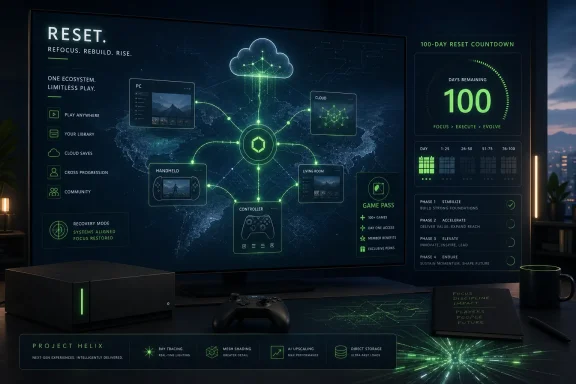
Xbox Game Studios head Craig Duncan and chief of staff Louise O’Connor are leaving Microsoft’s gaming division in mid-June 2026, according to multiple reports, just days after new Xbox leaders Asha Sharma and Matt Booty outlined a broad “Xbox reset” aimed at an overextended studio empire. The timing makes this more than a personnel story. It is a visible fracture line in the post-Phil Spencer Xbox era, where Microsoft is trying to turn years of acquisitions into a coherent business before the cost of carrying that empire forces uglier decisions.
The easy reading is that two executives left and a reshuffle followed. The more convincing reading is that Xbox is entering its hard-integration phase. Microsoft spent the last decade buying scale; now it has to prove that scale can produce profit, dependable release cadence, and a platform strategy that still makes sense when “Xbox” no longer simply means a box under the television.
Craig Duncan’s departure is striking because he was not a short-term corporate tourist parachuted into Xbox Game Studios. He came from Rare, where he spent nearly 13 years leading the studio behind Sea of Thieves, one of Microsoft’s clearest examples of a first-party game that found a long life beyond launch day. That made his 2024 promotion to head of Xbox Game Studios feel like a bet on studio culture rather than spreadsheet austerity.
Louise O’Connor’s exit cuts in the same direction. She joined Rare in 1999, worked across art and production roles, and moved into the Xbox Game Studios chief of staff post less than a year ago. Losing both Duncan and O’Connor at once removes two leaders whose credibility came from actually having lived inside Microsoft’s creative machine, not merely supervised it.
That matters because Xbox Game Studios is no longer a tidy label for a handful of Microsoft-owned teams. It sits inside a sprawling gaming operation that includes legacy Xbox studios, Bethesda, Activision Blizzard, King, and a shifting set of platform commitments across console, PC, cloud, and rival hardware. The bigger the map gets, the more valuable internal translators become: people who can talk to artists, engineers, finance executives, and platform strategists without sounding like tourists in any room.
Duncan had been in the top Xbox Game Studios role for only about 18 to 20 months, depending on how one counts the transition. That is not enough time to put a deep stamp on a development organization whose projects often take five years or more. His exit therefore reads less like the end of a completed chapter and more like a sign that the chapter itself has been torn up.
That strategy bought Microsoft relevance after the Xbox One generation damaged the brand. It also created a strategic ambiguity that the company never fully resolved. Was Xbox a console platform, a subscription service, a publishing giant, a cloud bet, a Windows gaming layer, or all of those things at once?
For years, Spencer’s answer was essentially yes. That worked while Microsoft was expanding and while the broader tech market rewarded growth, subscription narratives, and ecosystem capture. It works less cleanly when the company has to justify headcount, absorb Activision Blizzard, fund expensive AAA development, and sell hardware into a market where component costs and consumer expectations are moving in opposite directions.
Asha Sharma’s arrival as Microsoft Gaming CEO marked a very different kind of signal. Coming from Microsoft’s CoreAI world, she represents the parent company’s current center of gravity: operational discipline, platform leverage, data, infrastructure, and AI-era productivity claims. Matt Booty, elevated into a broader chief content officer role, supplies the games-industry continuity. Together, they now inherit a structure that Spencer built but no longer has to defend internally.
That is the essence of the “Xbox reset.” It is not simply a new slogan. It is Microsoft asking whether the gaming business it assembled during the cheap-money, land-grab phase can survive a stricter corporate review.
That mismatch has been visible for some time. Microsoft owns an enviable collection of developers and intellectual property, but its first-party output has often felt oddly diffuse. There are acclaimed releases, durable service games, and beloved niche projects, yet the overall portfolio has struggled to create the kind of unified momentum that justifies Microsoft’s enormous gaming footprint.
The old defense was patience. Games take time. Acquired studios need autonomy. Game Pass changes the economics. PC growth expands the audience. Activision Blizzard will transform the revenue base. Each claim had logic behind it, but together they also became a way to postpone harder measurement.
Now the bill is coming due. Once Microsoft bought Activision Blizzard, it could no longer ask investors, employees, or customers to judge Xbox as a scrappy platform challenger. It became one of the largest gaming companies in the world. At that scale, charming underdog language stops working.
The question Microsoft appears to be asking is brutal but predictable: which studios, franchises, platforms, and experiments are essential to the next version of Xbox, and which were accumulated because acquisition was easier than prioritization?
Bloomberg has reportedly described significant layoffs as part of the coming changes, and PC Gamer’s account points to industry chatter around Compulsion Games, Double Fine, Ninja Theory, and others as vulnerable. Microsoft has not publicly confirmed a final list of affected teams, and that uncertainty matters. Rumor can become reputational shrapnel long before employees receive official clarity.
The studios named in reporting and speculation are not interchangeable content mills. Double Fine carries a particular creative identity. Ninja Theory has been associated with technically ambitious, prestige-style development. Compulsion has represented a smaller, more stylized corner of Microsoft’s portfolio. If those are the kinds of teams under scrutiny, then the reset is not just about trimming redundancy. It is about deciding how much eccentricity Xbox can afford.
That is where the Game Pass era runs into its contradiction. A subscription library benefits from variety, surprise, and smaller bets that make the service feel alive between blockbuster launches. But the corporate accounting around a massive gaming division may favor predictable franchises, cross-platform revenue, and projects that can scale globally.
Microsoft cannot have it both ways indefinitely. If Xbox wants to be Netflix for games, it needs breadth. If it wants to be a lean publisher with high margins, it needs focus. If it wants to be a console platform, it needs reasons to buy the hardware. The reset is likely the painful process of choosing which of those identities gets priority.
Duncan’s leadership at Rare became part of that success story. Sea of Thieves was not merely a content pipeline; it was a long-tail community project that required patience, iteration, and trust between studio and audience. That is exactly the kind of lesson Microsoft often claims to value in the Game Pass and live-service era.
But patience is expensive. Long-tail success stories are easier to celebrate after they work than to fund while they are uncertain. For every Sea of Thieves, there are projects that miss, stall, or consume years without becoming durable businesses.
O’Connor’s history at Rare deepens the symbolism. Her move into a chief of staff role suggested an attempt to bring studio-grounded operational knowledge into the center of Xbox Game Studios. Her quick departure suggests either that the role changed, the environment changed, or the reset made the job fundamentally different from the one she accepted.
Nobody outside Microsoft should pretend to know the personal reasons behind either exit. But in corporate politics, timing is evidence even when it is not proof. Two Rare veterans leaving as Xbox prepares a reset sends a message whether Microsoft intends one or not.
For Windows users, this has mostly been a win. More Microsoft-published games arrive on PC. Xbox app integration, cross-buy, cloud saves, and Game Pass have made the PC a first-class Xbox endpoint rather than a grudging afterthought. The old wall between Xbox and Windows gaming has been eroding for a decade.
For console loyalists, the same strategy can feel like abandonment by degrees. If major Xbox games appear elsewhere, if PC gets the best technical experience, and if cloud is treated as the future access layer, then what exactly is the console for? The answer may still be convenience, living-room simplicity, and ecosystem continuity, but that is a narrower pitch than platform exclusivity.
Sharma and Booty’s reported reset language about infrastructure and hardware cost points toward a company reconsidering the economic basis of the box itself. A console built around subsidized hardware, locked software sales, and exclusive content is hard to square with Microsoft’s increasingly platform-agnostic publishing behavior. A premium hybrid device, meanwhile, risks becoming too expensive for the mass market that consoles traditionally served.
This is why leadership exits inside Xbox Game Studios matter to WindowsForum readers. The future of Xbox is no longer a separate console-industry drama. It affects PC storefront strategy, Game Pass value, Windows gaming investments, cross-platform release timing, and the fate of studios whose games may define Microsoft’s consumer identity beyond Office, Azure, and Copilot.
That opacity helped Xbox during the growth years. Microsoft could frame first-party launches as service events rather than boxed-product tests. A game did not need to sell ten million copies at $70 if it made the subscription stickier. The trouble is that this logic becomes harder to sustain when the company is carrying dozens of studios and the broader market is asking whether subscriptions in gaming have the same upside as subscriptions in film, music, or productivity software.
The reset likely reflects a more disciplined version of that math. Which games move Game Pass? Which franchises sell across PlayStation, Steam, and Nintendo hardware? Which teams build technology or content that Microsoft can reuse? Which projects exist because they make the portfolio look culturally rich, and how much is Microsoft willing to pay for that richness?
Those questions can produce rational answers and still damage the product. A platform made only of obvious bets becomes sterile. A subscription catalog without distinctive mid-budget or experimental work becomes just another discount bin with better branding. Xbox’s best argument has often been that it can use Microsoft’s scale to fund games that might struggle elsewhere.
If the reset removes that argument, Xbox becomes a more conventional publisher at the exact moment it is trying to justify an unconventional platform strategy.
Activision Blizzard brought enormous franchises, mobile reach through King, and a commercial engine far larger than the old Xbox Game Studios portfolio. It also changed the center of financial gravity. When Call of Duty, World of Warcraft, Diablo, Candy Crush, Minecraft, Halo, Forza, Gears, Fallout, and The Elder Scrolls all sit somewhere inside the same corporate structure, the smaller creative teams inevitably have to defend their place in a much louder room.
That does not mean Microsoft will or should become Activision with a green logo. But it does mean the company’s tolerance for scattered bets may decline. The more revenue is concentrated in giant franchises, the more every other project has to explain itself in relation to the giants.
For developers, this can be demoralizing. The industry already endured years of layoffs after pandemic-era expansion, and Microsoft’s gaming teams have not been immune. When a company that owns so much still says it is overextended, workers hear a grim message: even being part of one of the richest corporations in history does not guarantee stability.
That is the paradox at the heart of the reset. Microsoft bought scale to reduce strategic weakness. Now that scale itself is being treated as a problem to solve.
The Xbox app on PC has improved, but it remains burdened by years of mistrust. PC gamers remember broken installs, awkward file handling, inconsistent mod support, and a store experience that rarely matched Steam’s maturity. Microsoft has made progress, yet it still has to earn default status on its own operating system.
A leaner Xbox could cut two ways. It could focus Microsoft on making Windows the best place to play its games, with fewer internal distractions and a clearer publishing strategy. Or it could turn PC into merely another distribution endpoint, useful for revenue but not important enough to receive deep platform investment.
The distinction matters for sysadmins and IT pros too. Gaming features in Windows are not isolated toys; they touch drivers, graphics stacks, input systems, identity, anti-cheat, virtualization, cloud streaming, and increasingly AI-assisted workflows. Microsoft’s consumer gaming bets often become stress tests for broader Windows platform decisions.
If Xbox becomes more disciplined, Windows gaming could benefit. If Xbox becomes more defensive, Windows users may see fewer experiments, safer releases, and a gradual narrowing of what Microsoft is willing to fund outside proven franchises.
Duncan and O’Connor’s departures weaken that trust because they remove leaders associated with the studio side of the house at the exact moment corporate discipline is moving to the foreground. Again, that does not make the departures sinister. But perception is part of platform management, and Xbox has spent years asking audiences to believe in a broad, patient, creator-friendly model.
The reported reset language is more severe. “Overextended” may be honest, but honesty can still alarm people. It tells every studio to wonder whether it is essential. It tells every fan community to wonder whether its favorite franchise is next. It tells every competitor that Microsoft is still searching for the right operating model after spending tens of billions of dollars to obtain one.
Microsoft’s defenders will argue that this is exactly what responsible leadership looks like. They have a point. A sprawling studio network without prioritization is not kindness; it is deferred crisis. If Xbox cannot fund teams properly, ship games consistently, and explain its platform future, then a reset is necessary.
But necessary does not mean harmless. The history of tech restructuring is filled with companies that correctly identified a cost problem and then cut away the very capabilities that made the business worth saving.
The departures of Duncan and O’Connor do not prove which path Microsoft has chosen. They do, however, mark the end of a comforting fiction: that Xbox could keep expanding, keep promising creative freedom, keep redefining platform boundaries, and never eventually impose a sharper hierarchy of value.
The coming months will show whether Sharma and Booty can turn that hierarchy into strategy rather than triage. Microsoft has the money, IP, infrastructure, and distribution to remain a gaming power indefinitely. What it does not automatically have is coherence.
The easy reading is that two executives left and a reshuffle followed. The more convincing reading is that Xbox is entering its hard-integration phase. Microsoft spent the last decade buying scale; now it has to prove that scale can produce profit, dependable release cadence, and a platform strategy that still makes sense when “Xbox” no longer simply means a box under the television.
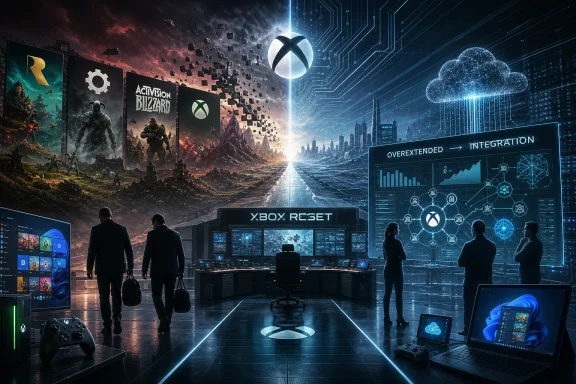 Microsoft’s Studio Empire Has Reached the Management Hangover
Craig Duncan’s departure is striking because he was not a short-term corporate tourist parachuted into Xbox Game Studios. He came from Rare, where he spent nearly 13 years leading the studio behind Sea of Thieves, one of Microsoft’s clearest examples of a first-party game that found a long life beyond launch day. That made his 2024 promotion to head of Xbox Game Studios feel like a bet on studio culture rather than spreadsheet austerity.Louise O’Connor’s exit cuts in the same direction. She joined Rare in 1999, worked across art and production roles, and moved into the Xbox Game Studios chief of staff post less than a year ago. Losing both Duncan and O’Connor at once removes two leaders whose credibility came from actually having lived inside Microsoft’s creative machine, not merely supervised it.
That matters because Xbox Game Studios is no longer a tidy label for a handful of Microsoft-owned teams. It sits inside a sprawling gaming operation that includes legacy Xbox studios, Bethesda, Activision Blizzard, King, and a shifting set of platform commitments across console, PC, cloud, and rival hardware. The bigger the map gets, the more valuable internal translators become: people who can talk to artists, engineers, finance executives, and platform strategists without sounding like tourists in any room.
Duncan had been in the top Xbox Game Studios role for only about 18 to 20 months, depending on how one counts the transition. That is not enough time to put a deep stamp on a development organization whose projects often take five years or more. His exit therefore reads less like the end of a completed chapter and more like a sign that the chapter itself has been torn up.
The Phil Spencer Era Ended Before Its Strategy Did
The leadership churn lands in the shadow of Phil Spencer’s retirement earlier this year, a transition that would have been destabilizing even under calmer conditions. Spencer was not merely the public face of Xbox. He was the executive who made Microsoft’s gaming pitch feel less like a console-war slogan and more like a services strategy: Game Pass, PC releases, cloud streaming, backward compatibility, studio buying, and eventually a softer stance toward shipping games beyond Xbox hardware.That strategy bought Microsoft relevance after the Xbox One generation damaged the brand. It also created a strategic ambiguity that the company never fully resolved. Was Xbox a console platform, a subscription service, a publishing giant, a cloud bet, a Windows gaming layer, or all of those things at once?
For years, Spencer’s answer was essentially yes. That worked while Microsoft was expanding and while the broader tech market rewarded growth, subscription narratives, and ecosystem capture. It works less cleanly when the company has to justify headcount, absorb Activision Blizzard, fund expensive AAA development, and sell hardware into a market where component costs and consumer expectations are moving in opposite directions.
Asha Sharma’s arrival as Microsoft Gaming CEO marked a very different kind of signal. Coming from Microsoft’s CoreAI world, she represents the parent company’s current center of gravity: operational discipline, platform leverage, data, infrastructure, and AI-era productivity claims. Matt Booty, elevated into a broader chief content officer role, supplies the games-industry continuity. Together, they now inherit a structure that Spencer built but no longer has to defend internally.
That is the essence of the “Xbox reset.” It is not simply a new slogan. It is Microsoft asking whether the gaming business it assembled during the cheap-money, land-grab phase can survive a stricter corporate review.
“Overextended” Is the Word That Changes the Story
The reported open letter from Sharma and Booty described Xbox as overextended, a word companies do not use casually when talking to employees. It implies that the problem is not one bad launch, one weak console cycle, or one underperforming studio. It implies a structural mismatch between ambitions and resources.That mismatch has been visible for some time. Microsoft owns an enviable collection of developers and intellectual property, but its first-party output has often felt oddly diffuse. There are acclaimed releases, durable service games, and beloved niche projects, yet the overall portfolio has struggled to create the kind of unified momentum that justifies Microsoft’s enormous gaming footprint.
The old defense was patience. Games take time. Acquired studios need autonomy. Game Pass changes the economics. PC growth expands the audience. Activision Blizzard will transform the revenue base. Each claim had logic behind it, but together they also became a way to postpone harder measurement.
Now the bill is coming due. Once Microsoft bought Activision Blizzard, it could no longer ask investors, employees, or customers to judge Xbox as a scrappy platform challenger. It became one of the largest gaming companies in the world. At that scale, charming underdog language stops working.
The question Microsoft appears to be asking is brutal but predictable: which studios, franchises, platforms, and experiments are essential to the next version of Xbox, and which were accumulated because acquisition was easier than prioritization?
Layoff Reports Turn Strategy Into Human Consequence
Reports of significant layoffs and possible studio cuts are what give the leadership departures their edge. Executive exits happen in large companies all the time. Executive exits just before a reset, amid reporting that studios may be at risk, look less routine.Bloomberg has reportedly described significant layoffs as part of the coming changes, and PC Gamer’s account points to industry chatter around Compulsion Games, Double Fine, Ninja Theory, and others as vulnerable. Microsoft has not publicly confirmed a final list of affected teams, and that uncertainty matters. Rumor can become reputational shrapnel long before employees receive official clarity.
The studios named in reporting and speculation are not interchangeable content mills. Double Fine carries a particular creative identity. Ninja Theory has been associated with technically ambitious, prestige-style development. Compulsion has represented a smaller, more stylized corner of Microsoft’s portfolio. If those are the kinds of teams under scrutiny, then the reset is not just about trimming redundancy. It is about deciding how much eccentricity Xbox can afford.
That is where the Game Pass era runs into its contradiction. A subscription library benefits from variety, surprise, and smaller bets that make the service feel alive between blockbuster launches. But the corporate accounting around a massive gaming division may favor predictable franchises, cross-platform revenue, and projects that can scale globally.
Microsoft cannot have it both ways indefinitely. If Xbox wants to be Netflix for games, it needs breadth. If it wants to be a lean publisher with high margins, it needs focus. If it wants to be a console platform, it needs reasons to buy the hardware. The reset is likely the painful process of choosing which of those identities gets priority.
Rare’s Shadow Hangs Over the Departures
The Rare connection is more than biography. Rare is one of Microsoft’s most interesting studio stories because it embodies both the promise and anxiety of Xbox’s first-party management. The studio spent years searching for its post-Nintendo identity, then found unexpected modern relevance with Sea of Thieves, a game that grew into itself over time rather than arriving fully formed.Duncan’s leadership at Rare became part of that success story. Sea of Thieves was not merely a content pipeline; it was a long-tail community project that required patience, iteration, and trust between studio and audience. That is exactly the kind of lesson Microsoft often claims to value in the Game Pass and live-service era.
But patience is expensive. Long-tail success stories are easier to celebrate after they work than to fund while they are uncertain. For every Sea of Thieves, there are projects that miss, stall, or consume years without becoming durable businesses.
O’Connor’s history at Rare deepens the symbolism. Her move into a chief of staff role suggested an attempt to bring studio-grounded operational knowledge into the center of Xbox Game Studios. Her quick departure suggests either that the role changed, the environment changed, or the reset made the job fundamentally different from the one she accepted.
Nobody outside Microsoft should pretend to know the personal reasons behind either exit. But in corporate politics, timing is evidence even when it is not proof. Two Rare veterans leaving as Xbox prepares a reset sends a message whether Microsoft intends one or not.
The Console Is No Longer the Center, But It Still Has Gravity
The Xbox reset also arrives during a broader identity crisis for dedicated gaming hardware. Microsoft has spent years telling players that Xbox is not confined to a console. That message has helped the company expand onto PC, cloud, mobile ambitions, and competing platforms. It has also weakened the simple emotional proposition that powered earlier console generations.For Windows users, this has mostly been a win. More Microsoft-published games arrive on PC. Xbox app integration, cross-buy, cloud saves, and Game Pass have made the PC a first-class Xbox endpoint rather than a grudging afterthought. The old wall between Xbox and Windows gaming has been eroding for a decade.
For console loyalists, the same strategy can feel like abandonment by degrees. If major Xbox games appear elsewhere, if PC gets the best technical experience, and if cloud is treated as the future access layer, then what exactly is the console for? The answer may still be convenience, living-room simplicity, and ecosystem continuity, but that is a narrower pitch than platform exclusivity.
Sharma and Booty’s reported reset language about infrastructure and hardware cost points toward a company reconsidering the economic basis of the box itself. A console built around subsidized hardware, locked software sales, and exclusive content is hard to square with Microsoft’s increasingly platform-agnostic publishing behavior. A premium hybrid device, meanwhile, risks becoming too expensive for the mass market that consoles traditionally served.
This is why leadership exits inside Xbox Game Studios matter to WindowsForum readers. The future of Xbox is no longer a separate console-industry drama. It affects PC storefront strategy, Game Pass value, Windows gaming investments, cross-platform release timing, and the fate of studios whose games may define Microsoft’s consumer identity beyond Office, Azure, and Copilot.
Game Pass Cannot Hide the Portfolio Problem Forever
Game Pass remains one of Microsoft’s most important gaming ideas, but it also complicates how success is measured. A traditional publisher can point to unit sales, premium pricing, downloadable content, and platform royalties. A subscription service has to argue that individual games drive retention, acquisition, engagement, and ecosystem value, even when the revenue connection is less visible from the outside.That opacity helped Xbox during the growth years. Microsoft could frame first-party launches as service events rather than boxed-product tests. A game did not need to sell ten million copies at $70 if it made the subscription stickier. The trouble is that this logic becomes harder to sustain when the company is carrying dozens of studios and the broader market is asking whether subscriptions in gaming have the same upside as subscriptions in film, music, or productivity software.
The reset likely reflects a more disciplined version of that math. Which games move Game Pass? Which franchises sell across PlayStation, Steam, and Nintendo hardware? Which teams build technology or content that Microsoft can reuse? Which projects exist because they make the portfolio look culturally rich, and how much is Microsoft willing to pay for that richness?
Those questions can produce rational answers and still damage the product. A platform made only of obvious bets becomes sterile. A subscription catalog without distinctive mid-budget or experimental work becomes just another discount bin with better branding. Xbox’s best argument has often been that it can use Microsoft’s scale to fund games that might struggle elsewhere.
If the reset removes that argument, Xbox becomes a more conventional publisher at the exact moment it is trying to justify an unconventional platform strategy.
The Activision Blizzard Deal Changed the Internal Politics
Microsoft’s acquisition of Activision Blizzard was so large that it inevitably changed the internal politics of Xbox. Before the deal, Xbox could argue that it needed more studios to compete with Sony and Nintendo. After the deal, the question flipped: what does Microsoft do with all these studios now?Activision Blizzard brought enormous franchises, mobile reach through King, and a commercial engine far larger than the old Xbox Game Studios portfolio. It also changed the center of financial gravity. When Call of Duty, World of Warcraft, Diablo, Candy Crush, Minecraft, Halo, Forza, Gears, Fallout, and The Elder Scrolls all sit somewhere inside the same corporate structure, the smaller creative teams inevitably have to defend their place in a much louder room.
That does not mean Microsoft will or should become Activision with a green logo. But it does mean the company’s tolerance for scattered bets may decline. The more revenue is concentrated in giant franchises, the more every other project has to explain itself in relation to the giants.
For developers, this can be demoralizing. The industry already endured years of layoffs after pandemic-era expansion, and Microsoft’s gaming teams have not been immune. When a company that owns so much still says it is overextended, workers hear a grim message: even being part of one of the richest corporations in history does not guarantee stability.
That is the paradox at the heart of the reset. Microsoft bought scale to reduce strategic weakness. Now that scale itself is being treated as a problem to solve.
Windows Users Should Watch the Storefront, Not Just the Studios
For PC players, the immediate temptation is to treat this as console news. That would be a mistake. Microsoft’s gaming strategy increasingly runs through Windows, and any reset at Xbox will show up in release policies, app investments, account systems, cross-save support, cloud integration, and how aggressively Microsoft competes with Steam.The Xbox app on PC has improved, but it remains burdened by years of mistrust. PC gamers remember broken installs, awkward file handling, inconsistent mod support, and a store experience that rarely matched Steam’s maturity. Microsoft has made progress, yet it still has to earn default status on its own operating system.
A leaner Xbox could cut two ways. It could focus Microsoft on making Windows the best place to play its games, with fewer internal distractions and a clearer publishing strategy. Or it could turn PC into merely another distribution endpoint, useful for revenue but not important enough to receive deep platform investment.
The distinction matters for sysadmins and IT pros too. Gaming features in Windows are not isolated toys; they touch drivers, graphics stacks, input systems, identity, anti-cheat, virtualization, cloud streaming, and increasingly AI-assisted workflows. Microsoft’s consumer gaming bets often become stress tests for broader Windows platform decisions.
If Xbox becomes more disciplined, Windows gaming could benefit. If Xbox becomes more defensive, Windows users may see fewer experiments, safer releases, and a gradual narrowing of what Microsoft is willing to fund outside proven franchises.
The Reset Is Really About Trust
The hardest asset for Xbox to rebuild is not market share, subscription growth, or even first-party cadence. It is trust. Players need to trust that buying into the ecosystem will not leave them stranded. Developers need to trust that Microsoft understands creative risk. Employees need to trust that leadership will not sell autonomy during acquisitions and then impose austerity after the ink dries.Duncan and O’Connor’s departures weaken that trust because they remove leaders associated with the studio side of the house at the exact moment corporate discipline is moving to the foreground. Again, that does not make the departures sinister. But perception is part of platform management, and Xbox has spent years asking audiences to believe in a broad, patient, creator-friendly model.
The reported reset language is more severe. “Overextended” may be honest, but honesty can still alarm people. It tells every studio to wonder whether it is essential. It tells every fan community to wonder whether its favorite franchise is next. It tells every competitor that Microsoft is still searching for the right operating model after spending tens of billions of dollars to obtain one.
Microsoft’s defenders will argue that this is exactly what responsible leadership looks like. They have a point. A sprawling studio network without prioritization is not kindness; it is deferred crisis. If Xbox cannot fund teams properly, ship games consistently, and explain its platform future, then a reset is necessary.
But necessary does not mean harmless. The history of tech restructuring is filled with companies that correctly identified a cost problem and then cut away the very capabilities that made the business worth saving.
The Next Xbox Will Be Judged by What It Keeps
The most revealing part of the reset will not be the language Microsoft uses. It will be what survives. If the company keeps a mix of blockbuster franchises, PC-first investments, distinctive smaller teams, and long-term creative bets, then the reset may become the painful maturation of an overgrown division. If it mostly protects the safest revenue engines while shedding the weird, slow, and human parts of Xbox, then the company will have answered the identity question in the bleakest possible way.The departures of Duncan and O’Connor do not prove which path Microsoft has chosen. They do, however, mark the end of a comforting fiction: that Xbox could keep expanding, keep promising creative freedom, keep redefining platform boundaries, and never eventually impose a sharper hierarchy of value.
The coming months will show whether Sharma and Booty can turn that hierarchy into strategy rather than triage. Microsoft has the money, IP, infrastructure, and distribution to remain a gaming power indefinitely. What it does not automatically have is coherence.
The Green Logo Enters Its Austerity Test
The concrete picture is already coming into focus, even if Microsoft has not filled in every name on the org chart or every line item in the restructuring plan. The important thing is not to confuse uncertainty with absence of direction. Xbox is plainly moving from acquisition-led expansion to accountability-led consolidation.- Craig Duncan is leaving Xbox Game Studios after roughly a year-and-a-half leading the organization, following a long tenure running Rare.
- Louise O’Connor is also departing after less than a year as Xbox Game Studios chief of staff, removing another senior leader with deep Rare roots.
- The exits arrive shortly after Asha Sharma and Matt Booty reportedly described Xbox as overextended and began framing a broader reset of the gaming business.
- Reported layoffs and possible studio cuts would turn the reset from executive language into direct consequences for developers and game communities.
- Windows and PC players should watch this closely because Xbox’s future now runs through PC distribution, Game Pass, cloud services, and cross-platform publishing as much as console hardware.
References
- Primary source: PC Gamer
Published: Mon, 15 Jun 2026 20:52:26 GMT
Xbox Game Studios head and chief of staff step down as 'Xbox reset' looms | PC Gamer
Studio closures are expected as Xbox's new leadership looks for a fresh start.www.pcgamer.com - Related coverage: tomshardware.com
Xbox will pay five times more for memory and storage in 2027 than it did two years ago — CEO Asha Sharma admits there's an unsustainable hardware gap that 'cannot continue' | Tom's Hardware
The next-gen Xbox could end up costing well over $1,000.www.tomshardware.com - Related coverage: windowscentral.com
Xbox admits it’s “over‑extended” as leadership signals a major rethink of its studio strategy | Windows Central
Xbox leadership admits the company became overextended and says major changes are needed to strengthen its biggest franchises.www.windowscentral.com - Related coverage: gematsu.com
Xbox Game Studios head Craig Duncan and chief of staff Louise O’Connor to depart - Gematsu
Xbox Game Studios head Craig Duncan will depart the organization this week after more than 18 months in the role, while Xbox Game Studios chief of staff Louise…www.gematsu.com - Related coverage: gamespot.com
Xbox Game Studios Boss Is Out Ahead Of Reported Layoffs And Other Major Changes To "Reset" Xbox - GameSpot
A major shakeup is underway.www.gamespot.com - Related coverage: arstechnica.com
Microsoft gaming chief Phil Spencer steps down after 38 years with company - Ars Technica
Microsoft CoreAI exec Asha Sharma will take over in surprise executive shake-up.arstechnica.com
- Related coverage: geekwire.com
Xbox chief Phil Spencer retiring after 38 years at Microsoft; Asha Sharma named new gaming CEO – GeekWire
Phil Spencer, who reshaped Xbox through landmark acquisitions and a bet on cloud gaming, is stepping down. His successor, Asha Sharma, has roots in the Seattle startup community, with deep experience in consumer platforms. Xbox President Sarah Bond is leaving.www.geekwire.com - Related coverage: gamedeveloper.com
Report: Two former Rare execs are leaving Xbox
Head of Xbox Game Studios Craig Duncan and Xbox Game Studios chief of staff Louise O’Connor are leaving the outfit.www.gamedeveloper.com - Related coverage: gadgets360.com
- Related coverage: pesesurstart.com
- Related coverage: hobbyconsolas.com
El jefe de Xbox Game Studios y la jefa de personal abandonan la compañía en medio de los rumores de reestructuración
Craig Duncan, director de Xbox Game Studios, y la jefa de personal Louise O'Connor, han decidido abandonar Xbox en plenos rumores de reestructuración.www.hobbyconsolas.com - Related coverage: gameinformer.com
Phil Spencer Is Retiring, Xbox President Sarah Bond Is Leaving, And Microsoft's CoreAI Head Is New CEO Of Microsoft Gaming
This is a massive shake up for one of the industry's big three console makers.gameinformer.com - Related coverage: tomshw.it