

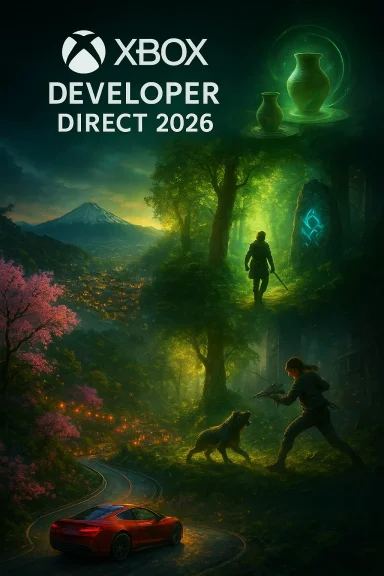
Microsoft’s January Developer Direct set the tone for a packed 2026 on Xbox and Windows, delivering extended developer-led looks at three headline releases — Forza Horizon 6, the long-awaited Fable reboot, and Game Freak’s ambitious action RPG Beast of Reincarnation — and closing the show with a late surprise reportedly tied to Double Fine’s Kiln prototype. overview
Microsoft’s Developer Direct format is compact by design: fewer games, longer developer segments, technical depth, and a focus on titles scheduled for release in the same calendar year. This January 22, 2026 presentation doubled down on that formula, giving studios extra time to explain systems, show extended gameplay, and confirm launch timing — a different beat from sprawling summer showcases that trade depth for breadth. The show’s confirmed slate underscored Microsoft’s strategy for 2026: rely on marquee first‑party franchises while spotlighting strategic third‑party partners who bring high-profile, console‑defining experiences to Game Pass and Windows. Across the broadcast, three broad themes emerged:
Playground emphasized authenticity in cultural and environmental design. The studio conducted on‑site reference trips across Japan, capturing photogrammetry for landscapes, scanning roads and architecture, studying weather patterns, and even recording natural soundscapes to inform in‑game audio. The result, the developers say, is a map with large urban centers and richly detailed rural regions, dramatic verticality, and striking seasonal shifts. Tokyo — or the game’s Tokyo district — was presented as roughly five times larger than any city previously in a Horizon title.
The surprise around Kiln, whether fully confirmed or partially reported, highlights another thread in Microsoft’s first‑party strategy: support for smaller, imaginative projects that expand the ecosystem without the same financial footprint as AAA productions. That mix — tentpole spectacle and boutique creativity — is Apple‑like in its curation and useful in hedging platform risk.
This Developer Direct did two important things: it demonstrated that Microsoft still understands how to create appointment viewing for gamers who want substantive gameplay and technical context, and it reminded the industry that the hill to win in 2026 will be mastery of launch execution, post‑launch content cadence, and a sustainable economic model for Game Pass that keeps studios healthy while delivering player value.
The coming months will show how well these titles meet their promise. For now, the calendar is set, the ambitions are clear, and Xbox’s 2026 slate has one foot in the present and another aimed at sustaining a long‑term platform ecosystem across console and Windows.
Source: Windows Central https://www.windowscentral.com/gami...izon-6-fable-beast-of-reincarnation-and-more/
Microsoft’s Developer Direct format is compact by design: fewer games, longer developer segments, technical depth, and a focus on titles scheduled for release in the same calendar year. This January 22, 2026 presentation doubled down on that formula, giving studios extra time to explain systems, show extended gameplay, and confirm launch timing — a different beat from sprawling summer showcases that trade depth for breadth. The show’s confirmed slate underscored Microsoft’s strategy for 2026: rely on marquee first‑party franchises while spotlighting strategic third‑party partners who bring high-profile, console‑defining experiences to Game Pass and Windows. Across the broadcast, three broad themes emerged:
- Big, confident worldbuilding (Forza Horizon 6’s Japan, Fable’s Albion reimagined)
- Studio evolution and diversification (Game Freak tackling a non‑Pokémon AAA ARPG)
- Platform and services alignment (several titles confirmed for Xbox Game Pass and multi‑platform releases)
 Forza Horizon 6 — Playground Games takes you to Japan
First sentence summary
Forza Horizon 6 is an open‑world racer set across a meticulously crafted, Japan‑inspired Horizon map that Playground Games says is the largest in franchise history, and it launches May 19, 2026 on Xbox Series consoles and PC with PlayStation support arriving later.What Playground showed and why it matters
The segment framed the campaign as a journey: you begin as a tourist in Japan and earn your place in the Horizon Festival by completing qualifiers, Horizon Rush obstacle events, and unlocking wristbands. Earning the top trophy — the “gold wristband” — grants access to a special “Legend” island with exclusive points of interest. This progression design positions exploration and discovery at the core of the campaign loop, rather than pure linear career progression.Playground emphasized authenticity in cultural and environmental design. The studio conducted on‑site reference trips across Japan, capturing photogrammetry for landscapes, scanning roads and architecture, studying weather patterns, and even recording natural soundscapes to inform in‑game audio. The result, the developers say, is a map with large urban centers and richly detailed rural regions, dramatic verticality, and striking seasonal shifts. Tokyo — or the game’s Tokyo district — was presented as roughly five times larger than any city previously in a Horizon title.
Key features and systems
- Map scale and biomes: The biggest Forza Horizon map yet, with dense urban districts, mountain ranges, coastal roads, and seasonal transformations.
- Cars at launch: Over 550 vehicles at launch, with deeper customization and improved performance balancing compared to prior titles.
- Estate property system: The Estate begins overgrown and undeveloped and can be upgraded progressively into a personalized luxury compound — a long‑term meta goal that complements the festival campaign.
- Track building and social play: Create custom tracks anywhere on the map and invite friends to build and run them together, an extension of Horizon’s social, emergent play focus.
- Accessibility: All prior accessibility options are retained, with additional new settings designed to broaden playability. Playground explicitly committed to carrying forward and expanding accessibility systems.
Platforms, editions, and schedule
Playground confirmed that Forza Horizon 6 will launch on May 19, 2026 for Xbox Series X|S and PC, with PlayStation arriving later in the year. Early access windows tied to special editions were mentioned by outlets covering the show, consistent with the franchise’s recent commercial pattern.Analysis — technical and market implications
Forza Horizon has often been a technical showcase for Playground and Microsoft, and FH6 continues that trend. The Japan setting requires high‑fidelity streaming of dense city geometry, tight physics tuning for elevated roads and multilayered urban environments, and an audio pipeline that captures varied mechanical soundscapes across hundreds of cars. The scale and number of cars at launch signal a major live‑service opportunity for microtransactions, cosmetics, and seasonal content — but they also raise production risk around post‑launch content cadence and server load for large social features.- Strengths: huge map variety, social track creation at scale, strong production pedigree from Playground.
- Risks: delivering consistent post‑launch content and balancing a massive car roster for fairness in multiplayer and rewards.
Fable — the reboot’s first deep dive
First sentence summary
Playground Games used its extended Developer Direct segment to deliver the first substantive gameplay look at the Fable reboot, showcasing tone, player choice systems, and environmental fidelity while confirming the project remains a major 2026 focus for Xbox.What was shown
Playground’s Fable presentation leaned into what defines the franchise — choice, consequence, and a distinctly British brand of humor — while demonstrating how the studio is modernizing mechanics and world interaction systems. The demo illustrated how quests, moral alignment, and emergent NPC behavior interlock to produce narrative outcomes, and it highlighted that Fable has been built in the same engine family that underpins the Forza Horizon series, enabling high‑fidelity landscapes and complex environmental interactions.Release timing and development context
Playground and Xbox have previously pushed Fable’s release into 2026 to allow more time for polish; Microsoft has described this as a deliberate choice to ensure the game meets the studio’s ambitious vision. The Developer Direct deep dive was explicitly positioned as the title’s “first deep dive,” an important PR pivot that aims to reassure fans while building excitement.Analysis — expectations and potential
Fable sits at the intersection of legacy IP nostalgia and modern AAA standards. Playground’s use of a Forza‑grade engine gives the reboot an opportunity to deliver dynamic environmental systems and cinematic set‑pieces, but resurrecting a franchise with strong fan expectations is a balancing act: the game must honor series staples while introducing systems that appeal to contemporary RPG audiences (robust RPG systems, combatat depth, and replayability).- Strengths: technical muscle from Playground, careful positioning and communication by Xbox.
- Risks: timing pressure in a packed 2026 release calendar, the perennial challenge of satisfying both longtime fans and modern RPG critics.
Beast of Reincarnation — Game Freak’s post‑Pokémon leap
First sentence summary
Game Freak’s Beast of Reincarnation is a single‑player action RPG set in a post‑apocalyptic Japan starring Emma and her canine companion Koo, confirmed for Xbox, PlayStation, and PC, and slated for release in Summer 2026 with a day‑one appearance on Xbox Game Pass.What the developers revealed
The Developer Direct segment offered extended gameplay demonstrating the game’s technical combat systems, plant‑manipulation mechanics, and the dynamic bond between protagonist Emma and her dog Koo. Game Freak described the title as a demanding, technical ARPG with an emphasis on precise player control and a living, reactive world. The publisher Fictions and director Kota Furushima were credited with steering the project’s combat and soundscape design.Platforms and Game Pass
Multiple outlets and Xbox promotion materials indicate Beast of Reincarnation will launch on Xbox Series X|S, PS5, and Windows, and it will be available via Xbox Game Pass at or near launch — a noteworthy win for Microsoft and for Game Pass subscribers who value day‑one access to high‑profile third‑party titles.Analysis — why this matters
Game Freak’s pivot to a mature, story‑driven ARPG outside the Pokémon brand is one of the more interesting studio evolutions in recent years. For Microsoft and Game Pass, adding a third‑party AAA act with a unique vision and clear multi‑platform ambitions stre catalog diversity and appeal to single‑player fans.- Strengths: fresh studio direction, cinematic and mechanical ambition, Game Pass day‑one placement increases reach.
- Risks: Game Freak’s relative inexperience at scale outside Pokémon could complicate expectations for polish and post‑launch support, especially if the title aspires to live‑service elements.
Kiln — Double Fine’s surprise (and a note about uncertainty)
What surfaced during the show
A surprise fourth entry surfaced late in the broadcast: Kiln, a team‑based multiplayer party brawler that traces its origins to a Double Fine Amnesia Fortnight prototype. The concept centers on creating pottery or “Vessels” on a wheel and using them as physics‑driven combat avatars to carry water to the enemy kiln while defending your own. Windows Central’s recap characterized Kiln as the show’s “hidden” game and reported a Spring 2026 release window with a Closed Beta planned.Verifiable facts and caveats
Double Fine has long hosted a Kiln prototype on its site and has discussed the concept publicly in past Amnesia Fortnight events; the studio’s archive materials describe Kiln as a pottery‑creation, physics‑led multiplayer brawler with rich procedural animations. That historical material is public and confirms the studio’s intellectual property and prototype work on the concept. However, independent confirmation that a polished Kiln product will ship in Spring 2026, or that a Closed Beta will imminently launch, is limited outside the résumé recaps and Windows Central’s report. Until Double Fine or Xbox publishes a formal press release with dates and beta sign‑ups, treat the Spring 2026 timing and Closed Beta notices as reported but not fully corroborated.Why this matters
If Double Fine does ship Kiln as a smaller, socially oriented first‑party release, it signals Xbox’s willingness to amplify boutique, creative projects alongside its big tentpole franchises. Those smaller titles can provide low‑friction experiences for Game Pass subscribers and help diversify content while absorbing far less production risk than large AAA projects.What these announcements mean for Xbox, Windows, and Game Pass
Reinforcing the platform strategy
Microsoft’s Developer Direct cast 2026 as a year where Xbox leans on its content catalog to drive engagement across console and PC, with an explicit tie‑in to Game Pass. Several elements make this clear:- Multiple titles were confirmed for Game Pass (notably Beast of Reincarnation), increasing the service’s diversity of blockbuster and niche offerings.
- Forza Horizon 6’s PC and Xbox release on the same date (with PS5 later) continues the platform cross‑pollination strategy that Xbox has pursued in recent years while leaving room for timed console exclusivity windows that generate subscriber value.
- Playground Games’ use of its high‑fidelity engine across both Forza and Fable implies shared R&D investments that can accelerate production and feature parity across Xbox and Windows.
Service economics and player value
Day‑one Game Pass additions remain a critical lever for Microsoft to retain and grow subscriptions. High‑profile third‑party signings (Game Freak’s title) and first‑party tentpoles strengthen perceived value. That said, the company still faces questions about long‑term monetization and the sustainability of subsidizing premium development via a subscription model — especially as production budgets for AAA titles continue to rise.Critical appraisal — strengths, weaknesses, and risks
Notable strengths from Developer Direct
- Studio transparency: Developer‑led segments gave meaningful insight into design decisions, not just marketing gloss. This helps with community trust and pre‑launch expectations.
- Balanced slate: The show mixed big, high‑budget projects with smaller creative pieces, catering to a wider audience and providing Game Pass with both tentpoles and experiments.
- Platform convergence: Emphasis on PC parity and Game Pass reach underlines Microsoft’s multi‑device strategy.
Key risks and unanswered questions
- Scheduling congestion: 2026 is crowded for Xbox and partner studios. Multiple major releases in the same fiscal windows increase pressure on QA cycles, marketing budgets, and player attention. Delays are still possible and could ripple across the slate.
- Game Pass economics vs. long‑term IP value: While day‑one Game Pass exposure drives player counts, it also affects retail pricing dynamics and long‑tail revenue for publishers. Microsoft must balance subscriber value with sustainable developer economics.
- Verification gaps for smaller reveals: Claims around Kiln’s launch timing and Closed Beta are currently less corroborated; until official publisher/first‑party channels post firm schedules, treat those details as provisional.
What to watch next — concrete dates and milestones
- May 19, 2026 — Forza Horizon 6 launch on Xbox Series X|S and PC (confirmed).
- Summer 2026 — Beast of Reincarnation is slated to release and has been promoted as appearing on Game Pass; watch for a firm date and preorder windows.
- 2026 (window) — Fable remains a 2026 focus for Playground; exact date TBD and the project has previously been pushed into 2026 to allow additional polish.
- Spring 2026 (reported) — Kiln Closed Beta and Spring release windows were reported in recap coverage, but these remain to be verified via official Double Fine or Xbox announcements. Exercise caution until formal listings or beta signup pages go live.
Final assessment — a service‑first, studio‑driven start to 2026
Xbox Developer Direct 2026 was, by design, focused and consequential: it prioritized playable detail over spectacle, and the slate presented both a reaffirmation of Microsoft’s strengths and a pragmatic admission that careful, staged launches are necessary in today’s production environment. Forza Horizon 6 promises to be the franchise’s next technical and social showcase, Fable represents a strategic franchise revival built on Playground’s tech pedigree, and Beast of Reincarnation stands out as the most interesting third‑party Game Pass addition — an ambitious, mature project from a studio best known for Pokémon.The surprise around Kiln, whether fully confirmed or partially reported, highlights another thread in Microsoft’s first‑party strategy: support for smaller, imaginative projects that expand the ecosystem without the same financial footprint as AAA productions. That mix — tentpole spectacle and boutique creativity — is Apple‑like in its curation and useful in hedging platform risk.
This Developer Direct did two important things: it demonstrated that Microsoft still understands how to create appointment viewing for gamers who want substantive gameplay and technical context, and it reminded the industry that the hill to win in 2026 will be mastery of launch execution, post‑launch content cadence, and a sustainable economic model for Game Pass that keeps studios healthy while delivering player value.
The coming months will show how well these titles meet their promise. For now, the calendar is set, the ambitions are clear, and Xbox’s 2026 slate has one foot in the present and another aimed at sustaining a long‑term platform ecosystem across console and Windows.
Source: Windows Central https://www.windowscentral.com/gami...izon-6-fable-beast-of-reincarnation-and-more/
