

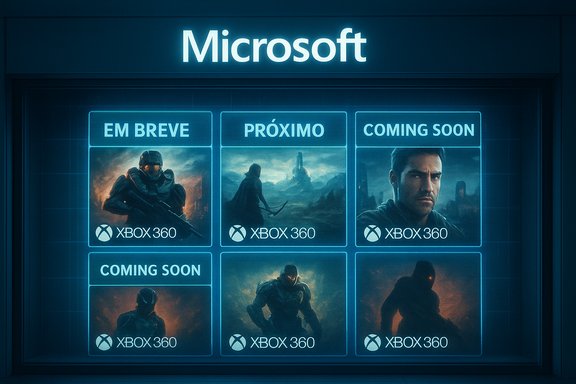
A small patch of the Microsoft Store quietly flickered to life this week, revealing a string of Xbox 360-era games that had long been delisted — and each listing carried the same tantalizing label: “Coming Soon.” What began as a single screenshot shared on X (formerly Twitter) quickly spread into a swell of cross‑region sightings, forum threads, and headlines. The change is real in the storefront UI that users are seeing in some locales, but what it means — whether a planned re‑release, a backend database update, or a simple mistake — remains unconfirmed by Microsoft.
Why this is plausible: Microsoft has an active history of negotiating to reintroduce legacy titles, and the Xbox team has publicly signaled an ongoing commitment to backward compatibility efforts. A coordinated relisting could precede formally announced sales, remasters, or newly enabled digital purchases for titles previously limited to disc playback. However, licensing negotiations are complex and individualized; a “coming soon” placeholder alone does not confirm successful rights clearance for every listed game.
Why this is plausible: Microsoft has continued to invest in compatibility layers and platform tooling that surface older content on new hardware. A preemptive store‑side change could appear as placeholders while backend systems are updated in tandem. That said, enabling 360 titles to run on modern consoles is not only a software engineering task; it also requires publisher cooperation and rights clearance. Any large‑scale compatibility program would likely be accompanied by Microsoft communication or developer guidance before mass relisting.
Why this is plausible: Multiple outlets and observers immediately flagged the possibility of a technical glitch because metadata on affected pages is incomplete and because Microsoft had not announced anything. The selective regional propagation also fits with a partial cache update or a replication lag between datacenters. Historically, store errors — temporary reappearances or placeholder labels — have occurred across platforms when teams perform bulk catalog maintenance.
Why this is plausible: If an internal QA flag toggled for a subset of regions, users would see the UI change without a full external announcement. The presence of “coming soon” — a typical pre‑release tag — supports the idea that someone set a release state for certain SKUs. The counterargument is that Microsoft frequently controls those toggles tightly; public exposure of internal test states is possible but usually limited and patched quickly.
But the sober reality is that store placeholders are cheap; legal, technical, and operational work is not. A relist for even a handful of titles can require months of negotiation, packaging, testing, and coordination across regions. Conversely, if this is a glitch, it will likely be corrected with little fanfare. The best approach for players is measured optimism: celebrate the possibility, but await official confirmation before assuming anything about access, price, or timing.
If Microsoft is preparing a considered return of select Xbox 360 titles, the company will need to navigate licensing, engineering, and customer communication cleanly to rebuild trust with players who lost access in 2024. If this is a technical hiccup, it’s a reminder that the architectures that serve global digital catalogs are brittle and require careful operational hygiene.
Either way, the incident is a useful probe into how legacy content is managed at scale. For players, it’s a prompt to document what they own, keep physical media where possible, and await clear announcements before making decisions about purchases or catalog expectations. For the industry, it underscores the importance of transparent remediation when beloved legacy content returns — because re‑introducing classic games is not only a technical act, it’s a promise to players about access, preservation, and the value of ownership.
The listings that reappeared in the Microsoft Store this week are a small, visible sign of a much larger conversation about digital ownership, platform stewardship, and the practical limits of backward compatibility. For now the most responsible stance is cautious curiosity: celebrate the possibility, verify the facts, and wait for the official word.
Source: Windows Report Delisted Xbox 360 Games Resurface on Microsoft Store as ‘Coming Soon’
 Background
What was observed and who flagged it
Late on November 2 a user known as JB (handle @JBishie) posted a screenshot showing multiple Xbox 360 titles returning to the Microsoft Store with a “coming soon” (Portuguese: “Em Breve”) tag underneath their box art. That post triggered immediate attention across Xbox‑focused outlets and social feeds as enthusiasts checked their local storefronts. Subsequent coverage confirmed the same phenomenon was visible in some regions, though not universally.Why this is notable
The Microsoft Store’s current behavior is significant because large swathes of the Xbox 360 digital catalog were removed from storefront sale following the formal winding down of the Xbox 360 Marketplace. Microsoft closed purchases on the Xbox 360 storefront — ceasing active sales through the console’s native marketplace and marketplace.xbox.com — on July 29, 2024. That shutdown left many 360 titles delisted or technically unavailable to new digital buyers, even where backward compatibility on modern consoles allowed playback for disc owners or previously purchased digital copies. The resurfacing of delisted entries — even as placeholders — could be the first visible hint of a catalog restoration, or it could be the result of internal catalog changes.What we saw in the Store: titles and patterns
Representative titles resurfacing
Across screenshots and regional checks, outlets and users reported a recurring list of familiar names appearing with the “coming soon” treatment. Examples cited in reports include:- Left 4 Dead and Left 4 Dead 2
- Batman: Arkham Origins
- Lost Planet: Extreme Condition
- Castlevania: Symphony of the Night
- Catherine
- Deadly Premonition
- Steins;Gate FD
- Jurassic Park: The Game
Regional inconsistency and storefront quirks
The phenomenon does not appear to be global. Multiple outlets verified sightings in specific languages and countries (Portuguese, Spanish, Italian, and others), while other regions show no such tags. This regional inconsistency suggests a server‑side or database change that has propagated selectively — which could reflect a staged rollout, a region‑specific release plan, or simply a partial cache update. Observers also reported oddities in product pages: missing prices, “not available separately” notes, or incomplete metadata — signs consistent with a back‑end listing state rather than a finished commercial offering.Four plausible explanations (and the technical realities behind each)
1) A deliberate relisting tied to renewed licensing or re‑launch
One clear route for previously delisted games to return is new or renewed licensing agreements. Delistings often occur when licensing windows for music, brands, or third‑party IP expire. If Microsoft (or a rights holder) renegotiates those terms, the platform can relist a title — but only once the legal and technical work is complete.Why this is plausible: Microsoft has an active history of negotiating to reintroduce legacy titles, and the Xbox team has publicly signaled an ongoing commitment to backward compatibility efforts. A coordinated relisting could precede formally announced sales, remasters, or newly enabled digital purchases for titles previously limited to disc playback. However, licensing negotiations are complex and individualized; a “coming soon” placeholder alone does not confirm successful rights clearance for every listed game.
2) A test or update for broader backward‑compatibility tooling (including emulation/backporting)
Another possible explanation is that Microsoft is preparing additional Xbox 360 content for modern consoles via emulation, compatibility packaging, or cloud‑based delivery. Placeholder entries might represent inventory reserved for an upcoming technical rollout — for example, enabling buyable digital versions for Series X|S, or adding those items to a Game Pass‑adjacent offering or a reissued store catalog.Why this is plausible: Microsoft has continued to invest in compatibility layers and platform tooling that surface older content on new hardware. A preemptive store‑side change could appear as placeholders while backend systems are updated in tandem. That said, enabling 360 titles to run on modern consoles is not only a software engineering task; it also requires publisher cooperation and rights clearance. Any large‑scale compatibility program would likely be accompanied by Microsoft communication or developer guidance before mass relisting.
3) A store database or caching error
The third and arguably likeliest explanation — at least for a partial, region‑limited appearance — is a catalog database or caching bug. Online stores rely on complex, distributed systems that sync thousands of entries across regions, languages, and pricing backends. An incorrect flag, a migration script, or an incomplete rollback could make delisted SKU records visible again under a default “coming soon” state.Why this is plausible: Multiple outlets and observers immediately flagged the possibility of a technical glitch because metadata on affected pages is incomplete and because Microsoft had not announced anything. The selective regional propagation also fits with a partial cache update or a replication lag between datacenters. Historically, store errors — temporary reappearances or placeholder labels — have occurred across platforms when teams perform bulk catalog maintenance.
4) A soft launch or internal QA leak
Finally, the change could be part of an internal test or staged rollout that accidentally reached live customers. Platform teams commonly deploy staging flags or “soft launch” markers while validating availability, and an errant configuration can expose those markers to public storefronts.Why this is plausible: If an internal QA flag toggled for a subset of regions, users would see the UI change without a full external announcement. The presence of “coming soon” — a typical pre‑release tag — supports the idea that someone set a release state for certain SKUs. The counterargument is that Microsoft frequently controls those toggles tightly; public exposure of internal test states is possible but usually limited and patched quickly.
What the change would — and would not — guarantee
What it could mean if intentional
- Renewed purchase options: If Microsoft and rights holders have settled licenses, these listings could foreshadow purchase availability for fans who previously only had disc options.
- Wider backward compatibility: Placeholder listings could indicate that Microsoft plans to package and deliver 360 titles as downloadable/ownable products on Series hardware or via cloud services.
- Bundle or anniversary campaigns: Microsoft has used anniversaries and catalog pushes to spotlight legacy content before; a curated relaunch tied to a milestone could be in play.
What it won’t necessarily mean
- Immediate playability: A “coming soon” tag is not the same as a release date. Some entries may remain placeholders for months, and the listing alone doesn’t confirm digital rights for every territory.
- Game Pass arrival: Store relisting does not automatically imply inclusion in Game Pass; subscription placement is a separate commercial negotiation.
- Servered or restored online services: Multiplayer or legacy online features depend primarily on publisher support and server infrastructure — relisting the SKU won’t revive game servers that publishers have shut down.
Legal, technical, and consumer implications
Licensing complexity and regional rights
Digital delistings nearly always involve legal complexity: music licensing, brand rights, or third‑party content can create permanent barriers to re‑sale. Even if Microsoft wants to relist a title globally, local licensing restrictions may force regional rollouts or partial availability. That explains why observers are seeing differences by country and language. Renewed availability often requires publisher cooperation and sometimes payment to legacy rights holders, which can be expensive and time‑consuming.DRM, preservation, and ownership
Digital storefronts and DRM regimes have long complicated game preservation. Even with relisting, modern SKUs may carry different DRM, different packaging, or restrictions compared to original releases. If Microsoft relists a remastered or rewrapped 360 game, the entitlement model (ownership vs. license) could differ for players who purchased the older digital versions. Players should not assume a relisting will preserve all forms of digital entitlement parity with prior purchases.Backward compatibility engineering hurdles
The Xbox 360 architecture and middleware stack are distinct from Series hardware. While Microsoft solved many compatibility problems in earlier waves (2015 onward) there are mechanical tasks to enable clean digital reissues: packaging legacy binaries, integrating achievement systems, ensuring save compatibility, and addressing networked features. Some titles require code patches or publisher binaries to run acceptably on modern hardware. That makes a wholesale relisting program both a technical and a partnership effort.Consumer confusion and refunds
A half‑visible relisting without clear communication can lead to consumer confusion. Players may attempt to purchase or pre‑order titles that are not yet buyable, or assume a digital purchase will guarantee multiplayer or legacy features. If Microsoft does proceed, clear messaging about regional limits, what’s included in a relisted SKU, and how existing entitlements map to new listings will be essential to avoid frustration.How to verify and what to monitor next
Concrete checks for readers
- Check the Microsoft Store in several regions (web and console) and note language/URL differences.
- Search for the exact SKU name rather than relying on curated lists; region caches can vary.
- Look for Microsoft or publisher statements on official Xbox channels and developer blogs. If Microsoft plans a broad technical initiative, the Xbox team typically posts guidance for players and partners.
Signals that would indicate a deliberate restoration
- Official Microsoft blog post or Xbox social announcements clarifying relists.
- Publisher blog posts confirming renewed rights or digital rereleases.
- Actual purchase pages with prices, platform targets (Series X|S, Xbox One), and release dates replacing placeholder tags.
Signals of a glitch or premature exposure
- Rapid reversion or removal of “coming soon” tags without comment.
- Store pages with missing metadata (no price, no publisher info, broken links).
- Microsoft internal posts or community threads indicating a known catalog migration or cache issue.
Why readers should temper excitement — and why to remain hopeful
The emotional response from the community is understandable: many players lost convenient digital access to beloved 360-era games when the Xbox 360 storefront wound down. The sudden appearance of familiar covers with a “coming soon” banner naturally fuels hope that long‑lost digital purchases will once again be possible.But the sober reality is that store placeholders are cheap; legal, technical, and operational work is not. A relist for even a handful of titles can require months of negotiation, packaging, testing, and coordination across regions. Conversely, if this is a glitch, it will likely be corrected with little fanfare. The best approach for players is measured optimism: celebrate the possibility, but await official confirmation before assuming anything about access, price, or timing.
Immediate recommendations for players and collectors
- If you own disc copies, keep them safe. Physical media remain the most reliable guarantee of access for some delisted titles.
- If you previously purchased a delisted 360 title and rely on digital access, catalog your purchases now — check your account download history and backup any relevant save data that you can. Microsoft’s shutdown guidance has emphasized preserving existing entitlements, but personal backups reduce future uncertainty.
- Avoid paying third‑party sellers for digital keys with inflated claims of permanent access; region‑locked or expired SKUs can cause account problems.
- Follow official Xbox channels and publisher announcements for authoritative updates rather than speculative posts alone. If a relisting campaign is planned, Microsoft and publishers will post guidance that includes region‑specific availability and technical notes.
Final analysis: what this event reveals about platform stewardship
This episode exposes an enduring truth about the modern digital gaming ecosystem: storefront UIs are only the visible tip of a complex backend composed of legal contracts, region flags, caching layers, and technical compatibility work. Small changes in one layer — a database flag, a rights renewal, an experiment in the QA environment — can ripple outward and create outsized optimism or confusion among communities that remember when titles could effectively vanish overnight.If Microsoft is preparing a considered return of select Xbox 360 titles, the company will need to navigate licensing, engineering, and customer communication cleanly to rebuild trust with players who lost access in 2024. If this is a technical hiccup, it’s a reminder that the architectures that serve global digital catalogs are brittle and require careful operational hygiene.
Either way, the incident is a useful probe into how legacy content is managed at scale. For players, it’s a prompt to document what they own, keep physical media where possible, and await clear announcements before making decisions about purchases or catalog expectations. For the industry, it underscores the importance of transparent remediation when beloved legacy content returns — because re‑introducing classic games is not only a technical act, it’s a promise to players about access, preservation, and the value of ownership.
The listings that reappeared in the Microsoft Store this week are a small, visible sign of a much larger conversation about digital ownership, platform stewardship, and the practical limits of backward compatibility. For now the most responsible stance is cautious curiosity: celebrate the possibility, verify the facts, and wait for the official word.
Source: Windows Report Delisted Xbox 360 Games Resurface on Microsoft Store as ‘Coming Soon’
