

Microsoft’s new Xbox chief Asha Sharma reportedly told staff in late April that Xbox will move to faster console and PC update cycles, including bi-weekly console updates, as part of a push to “fix the fundamentals” after years of player frustration. The message is less about patch cadence than institutional confession. Xbox is not merely promising more features; it is admitting that the basic experience of owning, updating, buying, launching, and playing through Xbox has become a competitive liability.
That matters because Xbox has spent the better part of a decade trying to make the word mean everything: a console, a subscription, a PC app, a cloud service, a publishing label, a store, a platform identity, and sometimes just a logo on someone else’s hardware. Sharma’s reported all-hands comments suggest the company now understands the risk of that strategy. A brand can stretch only so far before the people who bought the box under the TV start wondering whether they are still the customer.
The most important thing in the Windows Central report is not the alleged two-week console update cycle. It is the phrase “restore our core.” For a company as managerial and metrics-driven as Microsoft, that language is unusually plain. It says Xbox has an audience problem before it has a technology problem.
That problem was not created overnight. Xbox owners have watched Microsoft describe every screen as an Xbox, ship first-party games to rival platforms, push subscriptions harder than console identity, and underinvest in the emotional rituals that make a platform feel alive. Achievements stagnated. The PC app developed a reputation for friction. The console dashboard often felt more like a retail surface than a clubhouse.
Sharma’s reported remarks land because they acknowledge the complaint in the vocabulary of the players making it. “Players are frustrated with us” is not a normal corporate posture from a platform holder. It is also not a solution. But in the politics of Xbox, saying the quiet part aloud is the first act of repair.
The danger is that Microsoft will treat trust like a sprint. Trust in games is slower and stranger than trust in productivity software. A bad Office update annoys users; a bad console generation changes what living-room hardware people buy, where their friends gather, and which libraries they build for the next decade.
That is why “fix the fundamentals” is a more interesting promise than “ship more features.” The fundamentals are the things users notice when they are not trying to notice anything. How fast the console wakes. How gracefully storage is managed. How quickly a party forms. How easily captures move from console to phone to PC. How cleanly the store distinguishes ownership, entitlement, trial, Game Pass access, and cloud availability.
Xbox has often been rich in capability and poor in coherence. It can stream, install remotely, sync saves, suspend games, sell movies, host clubs, surface perks, recommend titles, and stitch together a subscription catalog across devices. Yet the lived experience can still feel like moving through a product org chart. The console knows how to do many things; it does not always know which thing the player came to do.
Frequent updates could change that if they become a discipline of refinement rather than a fountain of novelty. The lesson from modern software is not that everything should be in permanent beta. It is that product teams can earn patience when users feel the direction is visible, cumulative, and responsive.
Microsoft should also beware the hidden cost of speed. Console update fatigue is real, especially for families, casual players, and anyone who turns on a machine after two weeks away only to meet another progress bar. If the company wants to ship every two weeks, it needs to make updates boring in the best possible way: predictable, small, reliable, and clearly tied to visible improvements.
And yet the Xbox PC experience has long felt like Microsoft visiting its own house as a guest. Steam remains the default social, commercial, and library layer for much of PC gaming because it understands PC players as PC players. Microsoft has too often treated them as console users temporarily seated at a keyboard.
The Xbox app has improved, but its history still weighs on it. Install locations, mod access, library management, account confusion, store behavior, and update reliability have all contributed to a sense that Xbox on PC is a service rather than a native habitat. For a company that makes Windows, that is a remarkable strategic failure.
Sharma’s reported line about getting “to fun much faster” is exactly the correct diagnosis. PC gamers have a high tolerance for complexity when complexity gives them power. They have a low tolerance for complexity that exists because two Microsoft account systems, three storefront assumptions, and four entitlement layers are arguing in the background.
This is where Xbox’s future will probably be won or lost. The console business still matters enormously, especially for identity, loyalty, and spending concentration. But Microsoft’s unique claim is that it can bridge console convenience and PC openness better than anyone else. If the PC experience remains merely acceptable, that claim collapses into marketing.
Console players are not simply users who have failed to migrate to the cloud or PC. They are a distinct customer base with distinct expectations: predictable hardware, low-friction setup, native living-room social features, controller-first design, clear ownership, and platform pride. They do not need Xbox to be a walled garden in the old sense, but they do need it to be a place.
That sense of place has eroded. The Xbox Series X is powerful hardware, but power alone does not create belonging. A dashboard that foregrounds commerce over community, a first-party strategy that blurs platform distinction, and a services narrative that often sounds device-agnostic can leave console owners wondering what they are part of.
Sharma’s reported emphasis on hardware as the first pillar is therefore politically important. It tells console loyalists that the box is not just a delivery endpoint for Game Pass. It also creates a standard against which she will be judged. If Xbox “starts with console,” the console experience must feel like the best expression of Xbox, not a compatibility mode for Microsoft’s broader gaming business.
That does not mean exclusives must return in their old form. The industry is changing too quickly for easy nostalgia. But it does mean Microsoft has to explain why buying Xbox hardware is a privileged way to experience Xbox, not merely one possible client among many.
A PC-console hybrid sounds obvious until you ask what each word means. Console implies simplicity, certification, power efficiency, couch-first design, and a curated experience. PC implies openness, storefront plurality, user control, performance tuning, peripherals, mods, and a certain productive chaos. The magic would be in combining them without producing the worst of both: a locked-down PC with console branding, or a console burdened by PC maintenance.
That is why fundamentals cannot wait until the next hardware launch. If the existing Xbox console interface feels cluttered and the existing Xbox PC app feels second-class, Project Helix inherits both reputations. A hybrid device cannot be marketed into credibility. It has to arrive after a visible period of competence.
The most promising reading of Sharma’s reported plan is that it treats 2026 as preparation for the next hardware era. The next Xbox cannot simply be more teraflops and a new shell. It has to present a cleaner answer to a question Microsoft has complicated for years: what is Xbox for?
If the answer is “where the world plays,” the platform has to be astonishingly good at letting people play. That sounds almost insultingly basic. It is also the part Xbox has too often allowed to become negotiable.
Microsoft helped popularize that system, then allowed it to feel underdeveloped compared with its cultural importance. Players have asked for better achievement tracking, richer showcases, more meaningful profile identity, and systems that respect long-term engagement. These are not billion-dollar platform features. They are signals of care.
That is the deeper story behind Sharma’s reported focus on detail. Platform loyalty is built from countless tiny confirmations that someone at the company still uses the thing with affection. When a feature as emotionally central as Achievements feels stale, users infer that nobody with power is sweating the experience.
Sony understands this with trophies and the PlayStation identity layer. Valve understands it with profiles, reviews, wishlists, community pages, and the weirdly durable rituals of Steam sales. Nintendo understands it through consistency of tone, even when its online services lag. Xbox has the raw materials for comparable identity, but it has too often treated them as backlog items.
A faster update rhythm could revive these surfaces if Xbox stops seeing them as decoration. Profiles, captures, clubs, parties, wishlists, remote play, family settings, and achievements are not side quests. They are the texture of platform life.
Subscriptions are excellent at reducing purchasing anxiety. They are less good at creating identity. Netflix did not make people loyal to televisions; Spotify did not make people loyal to phones. Game Pass can make Xbox useful, but usefulness is not the same as attachment.
That distinction matters as Microsoft decides how much of its first-party slate should remain exclusive, timed, shared, or fully multiplatform. If everything becomes available everywhere, Xbox must compete on experience, convenience, community, price, and performance. That is possible, but it leaves no room for sloppy fundamentals.
The industry has moved beyond the old console-war purity test. Microsoft’s ownership of Activision Blizzard, Bethesda, and a large internal studio network makes total exclusivity harder to justify financially, especially for multiplayer and live-service games. But if exclusivity becomes selective rather than absolute, Xbox needs a sharper story about why its own ecosystem is the best place to play.
Sharma’s reported “daily active users” north star is revealing here. It shifts the goal from hardware unit symbolism to habitual engagement. That is a modern platform metric, but it can become corrosive if it rewards nagging, dark-pattern dashboards, or shallow retention loops. The best way to bring players back every day is not to trap them. It is to make the next session obvious, social, fast, and rewarding.
Xbox users have become sensitive to any sign that the console is being used as a vessel for corporate strategy from Redmond. That sensitivity is earned. The Xbox One reveal is still remembered because it looked like Microsoft mistook the living room for a convergence keynote. More recently, the company’s broader enthusiasm for Copilot has made many users wary of AI features that solve executive positioning before they solve customer problems.
If Sharma is bringing in technical leaders from AI-heavy parts of Microsoft while also killing or pausing unwanted AI features, the message is complicated but potentially smart. The issue is not whether AI appears in Xbox. The issue is whether it appears as infrastructure that improves search, moderation, accessibility, localization, support, discovery, and development pipelines — or as a chatbot nobody asked to meet on a console.
Players are not hostile to intelligence in software. They are hostile to bloat, surveillance vibes, upsell surfaces, and features that make a console feel less like a console. AI that helps a user find the right setting, summarize a game recap, improve parental controls, or troubleshoot a failed install may be welcomed. AI that wanders into the home screen waving a productivity banner will not.
This is another fundamentals test. The smartest AI strategy for Xbox may be the one users barely notice because the store is better, recommendations are less insulting, support is faster, and accessibility tools are stronger.
That is not cynicism for its own sake. Xbox sits inside one of the most successful enterprise software companies in history, and that heritage cuts both ways. Microsoft has unmatched infrastructure, capital, developer tools, cloud reach, and operating-system leverage. It also has a habit of turning consumer experiences into strategic matrices.
Games punish that tendency. The market is emotional, tribal, impatient, and intensely sensitive to authenticity. A technically rational strategy can fail if players feel it was built by people who understand distribution better than delight.
Sharma’s reported memo about spending too much time “inward instead of with the community” goes directly at that disease. Xbox does not lack smart people. It lacks, at times, a sufficiently ruthless product instinct about what the player sees, feels, and forgives. Internal alignment is not the same as external clarity.
The leadership changes around Sharma will therefore be judged less by résumés than by output. Bringing in people from CoreAI, Instacart, Meta, or elsewhere can help if they bring speed, consumer discipline, and technical execution. It will backfire if fans read the changes as more evidence that Xbox is being remade by people fluent in platforms but not in play.
For some fans, the return of Xbox means hard exclusives, big first-party swings, and a console that once again feels like a challenger. For others, it means a better Windows gaming layer, a handheld-friendly interface, and a device strategy that competes with Steam Deck and future living-room PCs. For families, it may simply mean fewer confusing purchases and better parental controls. For lapsed users, it may mean a reason to care.
Sharma cannot satisfy all of those constituencies with nostalgia. The Xbox of 2007 is not coming back, and neither is the market that produced it. Development costs are higher, platform boundaries are softer, and subscription economics have changed how players sample games. Sony, Nintendo, Valve, Apple, Nvidia, and mobile ecosystems all occupy parts of the gaming map Microsoft once hoped to simplify.
But a return does not have to be a rewind. It can mean recovering the old virtues — speed, clarity, identity, technical ambition, social ease — and applying them to a broader platform. That is a plausible future for Xbox. It is also a narrower path than Microsoft sometimes admits.
The company must resist the temptation to define success so broadly that no single user can feel it. If Xbox is everywhere, the Xbox experience must still be specific somewhere. The console dashboard, the PC app, the mobile companion, cloud play, and the next hardware generation need a shared grammar that players recognize immediately.
This is unglamorous work, but platform turnarounds usually begin there. Before a company can persuade users to believe in a grand strategic arc, it has to stop irritating them in daily use. The smallest recurring annoyance can outweigh a keynote promise because the annoyance is experienced, while the promise is remembered.
There is also a morale dimension. Teams that ship visible improvements every two weeks can regain a sense of agency, especially inside a large company where product work can be swallowed by planning rituals. If Sharma’s Xbox can create a public rhythm of delivery, the community may become part of the feedback loop rather than a distant complaint reservoir.
But velocity without editorial judgment will only create churn. Xbox needs someone saying no to features that clutter the experience, even if those features satisfy internal partner teams. It needs a hierarchy of user intent: play first, communicate second, discover third, transact fourth, promote last. That order should be visible on every screen.
Microsoft has the technical machinery to ship. The open question is whether it has the taste to simplify.
Gaming platforms are full of measurable behaviors that do not equal satisfaction. A user can click more because navigation is confusing. A user can open an app daily because rewards expire. A user can browse longer because discovery is bad. The spreadsheet may smile while the player quietly drifts to Steam, PlayStation, Switch, or a phone.
The right metric stack would combine activity with friction reduction, sentiment, performance, reliability, and user task completion. How long from power-on to gameplay? How often do installs fail? How many users abandon purchases after entitlement confusion? How many support contacts involve account issues? How many players customize the dashboard to hide things Microsoft prefers to show?
Those are not glamorous questions, but they are the questions of a platform trying to heal. If Xbox wants to be where the world plays, it has to measure the distance between intention and play. Everything else is commentary.
This is where Sharma’s consumer product background could matter. Instacart and Meta operate in worlds where friction, retention, and habitual use are studied obsessively. The trick is importing that discipline without importing the worst instincts of engagement farming. Games need service design, but they also need respect for attention.
That is necessary, but it raises the bar. Once a new leader declares a reset, every delay becomes evidence, every half-measure becomes a metaphor, and every unpopular decision is read as identity. Xbox fans have heard enough future-tense optimism to become forensic readers of corporate language.
The next six months therefore matter more than the average platform update cycle. If players see a cadence of meaningful fixes, the tone around Xbox can change quickly. Gaming communities are harsh, but they are also hungry for redemption arcs. A company that visibly listens can earn surprising goodwill.
If, however, the bi-weekly updates become tiny patch notes wrapped in big rhetoric, the backlash will be sharper than if Sharma had promised nothing. “Fix the fundamentals” is an admirably concrete slogan because everyone has their own list of broken fundamentals. It is dangerous for exactly the same reason.
The work must show up in places that matter to ordinary users, not just insiders. A better dev pipeline is valuable, but a parent trying to install a game for a child will judge Xbox by whether the install works before bedtime.
Source: Windows Central https://www.windowscentral.com/gami...ates-every-two-weeks-to-fix-the-fundamentals/
That matters because Xbox has spent the better part of a decade trying to make the word mean everything: a console, a subscription, a PC app, a cloud service, a publishing label, a store, a platform identity, and sometimes just a logo on someone else’s hardware. Sharma’s reported all-hands comments suggest the company now understands the risk of that strategy. A brand can stretch only so far before the people who bought the box under the TV start wondering whether they are still the customer.
 Sharma’s First Real Product Is Trust
The most important thing in the Windows Central report is not the alleged two-week console update cycle. It is the phrase “restore our core.” For a company as managerial and metrics-driven as Microsoft, that language is unusually plain. It says Xbox has an audience problem before it has a technology problem.That problem was not created overnight. Xbox owners have watched Microsoft describe every screen as an Xbox, ship first-party games to rival platforms, push subscriptions harder than console identity, and underinvest in the emotional rituals that make a platform feel alive. Achievements stagnated. The PC app developed a reputation for friction. The console dashboard often felt more like a retail surface than a clubhouse.
Sharma’s reported remarks land because they acknowledge the complaint in the vocabulary of the players making it. “Players are frustrated with us” is not a normal corporate posture from a platform holder. It is also not a solution. But in the politics of Xbox, saying the quiet part aloud is the first act of repair.
The danger is that Microsoft will treat trust like a sprint. Trust in games is slower and stranger than trust in productivity software. A bad Office update annoys users; a bad console generation changes what living-room hardware people buy, where their friends gather, and which libraries they build for the next decade.
The Two-Week Update Promise Is a Cultural Test
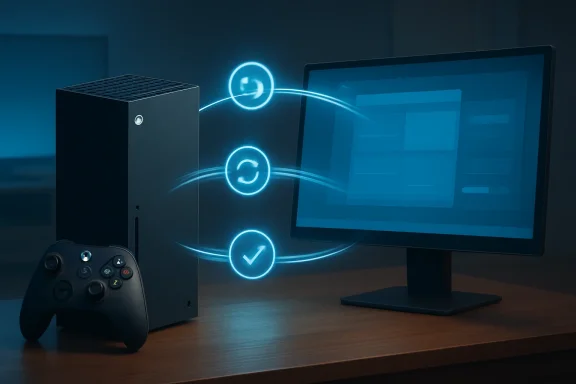
A bi-weekly console update schedule sounds aggressive, but the cadence itself is not the prize. Console owners do not want to see version numbers change for sport. They want updates that make the machine feel faster, clearer, more personal, and less like an ad-supported vestibule for services they may not use.That is why “fix the fundamentals” is a more interesting promise than “ship more features.” The fundamentals are the things users notice when they are not trying to notice anything. How fast the console wakes. How gracefully storage is managed. How quickly a party forms. How easily captures move from console to phone to PC. How cleanly the store distinguishes ownership, entitlement, trial, Game Pass access, and cloud availability.
Xbox has often been rich in capability and poor in coherence. It can stream, install remotely, sync saves, suspend games, sell movies, host clubs, surface perks, recommend titles, and stitch together a subscription catalog across devices. Yet the lived experience can still feel like moving through a product org chart. The console knows how to do many things; it does not always know which thing the player came to do.
Frequent updates could change that if they become a discipline of refinement rather than a fountain of novelty. The lesson from modern software is not that everything should be in permanent beta. It is that product teams can earn patience when users feel the direction is visible, cumulative, and responsive.
Microsoft should also beware the hidden cost of speed. Console update fatigue is real, especially for families, casual players, and anyone who turns on a machine after two weeks away only to meet another progress bar. If the company wants to ship every two weeks, it needs to make updates boring in the best possible way: predictable, small, reliable, and clearly tied to visible improvements.
Xbox on PC Remains Microsoft’s Most Embarrassing Home Game
The PC half of Sharma’s reported comments may be even more consequential than the console half. Xbox on PC should be Microsoft’s unfair advantage. Windows is the dominant PC gaming operating system, Game Pass is already embedded in the company’s subscription ambitions, and Microsoft owns some of the most important game studios in the world.And yet the Xbox PC experience has long felt like Microsoft visiting its own house as a guest. Steam remains the default social, commercial, and library layer for much of PC gaming because it understands PC players as PC players. Microsoft has too often treated them as console users temporarily seated at a keyboard.
The Xbox app has improved, but its history still weighs on it. Install locations, mod access, library management, account confusion, store behavior, and update reliability have all contributed to a sense that Xbox on PC is a service rather than a native habitat. For a company that makes Windows, that is a remarkable strategic failure.
Sharma’s reported line about getting “to fun much faster” is exactly the correct diagnosis. PC gamers have a high tolerance for complexity when complexity gives them power. They have a low tolerance for complexity that exists because two Microsoft account systems, three storefront assumptions, and four entitlement layers are arguing in the background.
This is where Xbox’s future will probably be won or lost. The console business still matters enormously, especially for identity, loyalty, and spending concentration. But Microsoft’s unique claim is that it can bridge console convenience and PC openness better than anyone else. If the PC experience remains merely acceptable, that claim collapses into marketing.
The Console Loyalist Is Not a Legacy User
One of the more revealing tensions in modern Xbox strategy is the way Microsoft talks about reach. “Play anywhere” is attractive as an engineering principle and as a business model. It becomes dangerous when it sounds like a demotion of the console audience that kept Xbox alive through the hard years.Console players are not simply users who have failed to migrate to the cloud or PC. They are a distinct customer base with distinct expectations: predictable hardware, low-friction setup, native living-room social features, controller-first design, clear ownership, and platform pride. They do not need Xbox to be a walled garden in the old sense, but they do need it to be a place.
That sense of place has eroded. The Xbox Series X is powerful hardware, but power alone does not create belonging. A dashboard that foregrounds commerce over community, a first-party strategy that blurs platform distinction, and a services narrative that often sounds device-agnostic can leave console owners wondering what they are part of.
Sharma’s reported emphasis on hardware as the first pillar is therefore politically important. It tells console loyalists that the box is not just a delivery endpoint for Game Pass. It also creates a standard against which she will be judged. If Xbox “starts with console,” the console experience must feel like the best expression of Xbox, not a compatibility mode for Microsoft’s broader gaming business.
That does not mean exclusives must return in their old form. The industry is changing too quickly for easy nostalgia. But it does mean Microsoft has to explain why buying Xbox hardware is a privileged way to experience Xbox, not merely one possible client among many.
Project Helix Is the Bet That Makes the Fundamentals Urgent
The reported Project Helix references sharpen the stakes. A future Xbox that plays both console and PC games is not just a new machine; it is a referendum on Microsoft’s entire platform theory. It asks players to believe that the company can merge two cultures it has often struggled to serve separately.A PC-console hybrid sounds obvious until you ask what each word means. Console implies simplicity, certification, power efficiency, couch-first design, and a curated experience. PC implies openness, storefront plurality, user control, performance tuning, peripherals, mods, and a certain productive chaos. The magic would be in combining them without producing the worst of both: a locked-down PC with console branding, or a console burdened by PC maintenance.
That is why fundamentals cannot wait until the next hardware launch. If the existing Xbox console interface feels cluttered and the existing Xbox PC app feels second-class, Project Helix inherits both reputations. A hybrid device cannot be marketed into credibility. It has to arrive after a visible period of competence.
The most promising reading of Sharma’s reported plan is that it treats 2026 as preparation for the next hardware era. The next Xbox cannot simply be more teraflops and a new shell. It has to present a cleaner answer to a question Microsoft has complicated for years: what is Xbox for?
If the answer is “where the world plays,” the platform has to be astonishingly good at letting people play. That sounds almost insultingly basic. It is also the part Xbox has too often allowed to become negotiable.
Achievements Show Why Small Things Become Big Things
Achievements are an instructive case because they are both trivial and sacred. To outsiders, they are digital badges. To many Xbox users, they are a living history of time spent, games completed, friendships formed, and eras passed.Microsoft helped popularize that system, then allowed it to feel underdeveloped compared with its cultural importance. Players have asked for better achievement tracking, richer showcases, more meaningful profile identity, and systems that respect long-term engagement. These are not billion-dollar platform features. They are signals of care.
That is the deeper story behind Sharma’s reported focus on detail. Platform loyalty is built from countless tiny confirmations that someone at the company still uses the thing with affection. When a feature as emotionally central as Achievements feels stale, users infer that nobody with power is sweating the experience.
Sony understands this with trophies and the PlayStation identity layer. Valve understands it with profiles, reviews, wishlists, community pages, and the weirdly durable rituals of Steam sales. Nintendo understands it through consistency of tone, even when its online services lag. Xbox has the raw materials for comparable identity, but it has too often treated them as backlog items.
A faster update rhythm could revive these surfaces if Xbox stops seeing them as decoration. Profiles, captures, clubs, parties, wishlists, remote play, family settings, and achievements are not side quests. They are the texture of platform life.
Game Pass Cannot Carry the Brand Alone
The reported Game Pass price cut, if sustained as strategy rather than promotion, fits the same repair narrative. Game Pass has been Xbox’s most successful recent idea and its most distorting one. It gave Microsoft a compelling reason to talk about value, but it also encouraged the company to talk about Xbox as a catalog before talking about it as a platform.Subscriptions are excellent at reducing purchasing anxiety. They are less good at creating identity. Netflix did not make people loyal to televisions; Spotify did not make people loyal to phones. Game Pass can make Xbox useful, but usefulness is not the same as attachment.
That distinction matters as Microsoft decides how much of its first-party slate should remain exclusive, timed, shared, or fully multiplatform. If everything becomes available everywhere, Xbox must compete on experience, convenience, community, price, and performance. That is possible, but it leaves no room for sloppy fundamentals.
The industry has moved beyond the old console-war purity test. Microsoft’s ownership of Activision Blizzard, Bethesda, and a large internal studio network makes total exclusivity harder to justify financially, especially for multiplayer and live-service games. But if exclusivity becomes selective rather than absolute, Xbox needs a sharper story about why its own ecosystem is the best place to play.
Sharma’s reported “daily active users” north star is revealing here. It shifts the goal from hardware unit symbolism to habitual engagement. That is a modern platform metric, but it can become corrosive if it rewards nagging, dark-pattern dashboards, or shallow retention loops. The best way to bring players back every day is not to trap them. It is to make the next session obvious, social, fast, and rewarding.
Ending Copilot on Xbox Was a Signal, Not a Retreat
The reported winding down of Copilot work on Xbox is easy to frame as an anti-AI backlash story, but that misses the more important point. Sharma came from Microsoft’s CoreAI world, so shelving or reducing a visible Xbox AI initiative is not the move of a leader allergic to AI. It is the move of a leader who knows the brand cannot absorb another imposed Microsoft agenda right now.Xbox users have become sensitive to any sign that the console is being used as a vessel for corporate strategy from Redmond. That sensitivity is earned. The Xbox One reveal is still remembered because it looked like Microsoft mistook the living room for a convergence keynote. More recently, the company’s broader enthusiasm for Copilot has made many users wary of AI features that solve executive positioning before they solve customer problems.
If Sharma is bringing in technical leaders from AI-heavy parts of Microsoft while also killing or pausing unwanted AI features, the message is complicated but potentially smart. The issue is not whether AI appears in Xbox. The issue is whether it appears as infrastructure that improves search, moderation, accessibility, localization, support, discovery, and development pipelines — or as a chatbot nobody asked to meet on a console.
Players are not hostile to intelligence in software. They are hostile to bloat, surveillance vibes, upsell surfaces, and features that make a console feel less like a console. AI that helps a user find the right setting, summarize a game recap, improve parental controls, or troubleshoot a failed install may be welcomed. AI that wanders into the home screen waving a productivity banner will not.
This is another fundamentals test. The smartest AI strategy for Xbox may be the one users barely notice because the store is better, recommendations are less insulting, support is faster, and accessibility tools are stronger.
Microsoft’s Biggest Competitor Is Its Own Organizational Gravity
The most skeptical reading of the Windows Central report is that Xbox has made this speech before in different clothes. Microsoft frequently discovers that it must simplify, focus, listen, and move faster. Then the next reorganization arrives, the next platform initiative takes priority, and users are left parsing whether the company’s declared strategy survived the quarter.That is not cynicism for its own sake. Xbox sits inside one of the most successful enterprise software companies in history, and that heritage cuts both ways. Microsoft has unmatched infrastructure, capital, developer tools, cloud reach, and operating-system leverage. It also has a habit of turning consumer experiences into strategic matrices.
Games punish that tendency. The market is emotional, tribal, impatient, and intensely sensitive to authenticity. A technically rational strategy can fail if players feel it was built by people who understand distribution better than delight.
Sharma’s reported memo about spending too much time “inward instead of with the community” goes directly at that disease. Xbox does not lack smart people. It lacks, at times, a sufficiently ruthless product instinct about what the player sees, feels, and forgives. Internal alignment is not the same as external clarity.
The leadership changes around Sharma will therefore be judged less by résumés than by output. Bringing in people from CoreAI, Instacart, Meta, or elsewhere can help if they bring speed, consumer discipline, and technical execution. It will backfire if fans read the changes as more evidence that Xbox is being remade by people fluent in platforms but not in play.
The Return of Xbox Cannot Be a Slogan
“The return of Xbox” is a powerful phrase because it concedes absence. It suggests there was a thing people loved, that thing drifted, and now someone intends to recover it. The danger is that everyone hears a different promise inside it.For some fans, the return of Xbox means hard exclusives, big first-party swings, and a console that once again feels like a challenger. For others, it means a better Windows gaming layer, a handheld-friendly interface, and a device strategy that competes with Steam Deck and future living-room PCs. For families, it may simply mean fewer confusing purchases and better parental controls. For lapsed users, it may mean a reason to care.
Sharma cannot satisfy all of those constituencies with nostalgia. The Xbox of 2007 is not coming back, and neither is the market that produced it. Development costs are higher, platform boundaries are softer, and subscription economics have changed how players sample games. Sony, Nintendo, Valve, Apple, Nvidia, and mobile ecosystems all occupy parts of the gaming map Microsoft once hoped to simplify.
But a return does not have to be a rewind. It can mean recovering the old virtues — speed, clarity, identity, technical ambition, social ease — and applying them to a broader platform. That is a plausible future for Xbox. It is also a narrower path than Microsoft sometimes admits.
The company must resist the temptation to define success so broadly that no single user can feel it. If Xbox is everywhere, the Xbox experience must still be specific somewhere. The console dashboard, the PC app, the mobile companion, cloud play, and the next hardware generation need a shared grammar that players recognize immediately.
The First Wins Have to Be Boring
The quickest way for Sharma to build credibility is not a grand metaverse of devices. It is a streak of boring, useful wins. Faster boot. Cleaner library. Better capture management. Less dashboard clutter. More reliable installs. Better PC game discovery. Smarter cross-buy clarity. Achievement improvements that respect legacy and modern play alike.This is unglamorous work, but platform turnarounds usually begin there. Before a company can persuade users to believe in a grand strategic arc, it has to stop irritating them in daily use. The smallest recurring annoyance can outweigh a keynote promise because the annoyance is experienced, while the promise is remembered.
There is also a morale dimension. Teams that ship visible improvements every two weeks can regain a sense of agency, especially inside a large company where product work can be swallowed by planning rituals. If Sharma’s Xbox can create a public rhythm of delivery, the community may become part of the feedback loop rather than a distant complaint reservoir.
But velocity without editorial judgment will only create churn. Xbox needs someone saying no to features that clutter the experience, even if those features satisfy internal partner teams. It needs a hierarchy of user intent: play first, communicate second, discover third, transact fourth, promote last. That order should be visible on every screen.
Microsoft has the technical machinery to ship. The open question is whether it has the taste to simplify.
The Metrics Must Learn to Respect the Player
Daily active users can be a healthy north star if it means the platform is good enough that people choose it habitually. It becomes unhealthy when it turns every surface into bait. The distinction will define whether Sharma’s Xbox feels renewed or merely optimized.Gaming platforms are full of measurable behaviors that do not equal satisfaction. A user can click more because navigation is confusing. A user can open an app daily because rewards expire. A user can browse longer because discovery is bad. The spreadsheet may smile while the player quietly drifts to Steam, PlayStation, Switch, or a phone.
The right metric stack would combine activity with friction reduction, sentiment, performance, reliability, and user task completion. How long from power-on to gameplay? How often do installs fail? How many users abandon purchases after entitlement confusion? How many support contacts involve account issues? How many players customize the dashboard to hide things Microsoft prefers to show?
Those are not glamorous questions, but they are the questions of a platform trying to heal. If Xbox wants to be where the world plays, it has to measure the distance between intention and play. Everything else is commentary.
This is where Sharma’s consumer product background could matter. Instacart and Meta operate in worlds where friction, retention, and habitual use are studied obsessively. The trick is importing that discipline without importing the worst instincts of engagement farming. Games need service design, but they also need respect for attention.
The April Reset Gives Xbox a Narrow Window
The end-of-April feature push, the reported leadership restructuring, the Copilot reversal, the Game Pass maneuvering, the Project Helix drumbeat, and now the promise of faster updates all form one unmistakable pattern. Sharma is trying to create a break point. She wants the market to understand that the post-Spencer Xbox will not simply administer the old strategy.That is necessary, but it raises the bar. Once a new leader declares a reset, every delay becomes evidence, every half-measure becomes a metaphor, and every unpopular decision is read as identity. Xbox fans have heard enough future-tense optimism to become forensic readers of corporate language.
The next six months therefore matter more than the average platform update cycle. If players see a cadence of meaningful fixes, the tone around Xbox can change quickly. Gaming communities are harsh, but they are also hungry for redemption arcs. A company that visibly listens can earn surprising goodwill.
If, however, the bi-weekly updates become tiny patch notes wrapped in big rhetoric, the backlash will be sharper than if Sharma had promised nothing. “Fix the fundamentals” is an admirably concrete slogan because everyone has their own list of broken fundamentals. It is dangerous for exactly the same reason.
The work must show up in places that matter to ordinary users, not just insiders. A better dev pipeline is valuable, but a parent trying to install a game for a child will judge Xbox by whether the install works before bedtime.
The New Xbox Has to Prove It Can Still Do the Simple Thing
The emerging Sharma doctrine is not hard to understand, and that is its strength. Xbox has to make the machine better, make Windows gaming feel native, make services clearer, and make the next hardware generation credible before it asks players for another leap of faith.- Xbox’s reported two-week console update plan will succeed only if updates reduce friction rather than merely increase activity.
- The PC app is no longer a side project, because a PC-console hybrid future depends on Microsoft finally making Xbox feel at home on Windows.
- Console owners need evidence that “Xbox everywhere” does not mean the dedicated Xbox device has become strategically expendable.
- Project Helix will inherit today’s software reputation, so the repair work has to happen before the hardware reveal cycle accelerates.
- Killing or winding down unwanted Copilot work is a useful signal only if Microsoft keeps AI subordinate to player experience.
- Sharma’s biggest challenge is not announcing a new direction, but forcing Microsoft’s gaming organization to behave like a product team obsessed with play rather than a portfolio defending strategy.
Source: Windows Central https://www.windowscentral.com/gami...ates-every-two-weeks-to-fix-the-fundamentals/
