
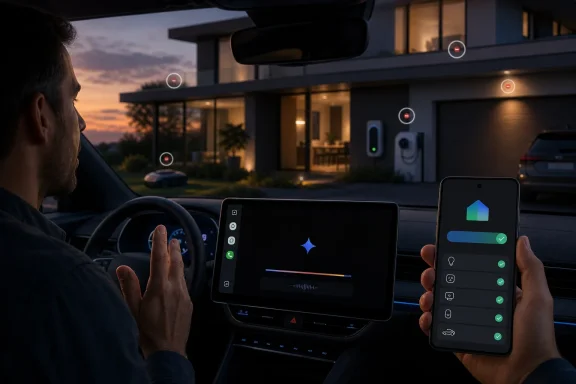
As first reported by autoevolution, affected users say Gemini either ignores a spoken routine request in Android Auto or returns a generic error. One user described being unable to unlock a car charger through an in-car routine despite the same command working on the handset moments later.
 Android Auto is becoming the weak link
Google’s own Gemini documentation says the mobile app can start connected Google Home routines through voice or typed commands on Android. Android Auto’s support page also positions Gemini as a hands-free assistant for compatible cars. That makes the reported gap particularly frustrating: the capability exists on the phone, but appears unreliable once the Android Auto session takes over.
The reports are not universal. Some Android Auto users say routines still work, suggesting the fault may involve an account configuration, phone model, regional rollout, connected-home provider, or a server-side Gemini change rather than a blanket removal of the feature. None of that is much consolation to drivers whose routines have become part of their daily charging or home-arrival workflow.
Google also warns that Google Home controls and routines are convenience features, not systems to rely on for safety- or security-critical actions. That caveat is sensible, but it does not erase the basic expectation that a routine accepted by Gemini on a phone should behave consistently when the same assistant is reached through a car display.
The fallback is Google Assistant — for now
Several users have reportedly switched their Android default assistant back to Google Assistant to restore routine support. That workaround is increasingly fragile. Google has been moving Android users toward Gemini, and its Android Auto guidance now supports Gemini alongside Google Assistant during the transition.
Google’s May 2026 Android announcement described Gemini for Android Auto as the replacement for the classic Assistant experience when Gemini is selected as the phone’s assistant. The company’s pitch is broader conversational capability: handling multi-step requests, helping compose messages, and surfacing information without forcing drivers through rigid commands.
But assistant migrations are judged on the mundane commands first. If “run my routine” fails while driving, Gemini’s more ambitious features do not compensate for the regression.
Reliability has to come before the AI pitch
This is not the first complaint about Gemini in Android Auto. Community reports have cited failed calling, location and navigation misunderstandings, interrupted responses, and inconsistent smart-home controls. Those reports are anecdotal, and there is no clear public confirmation from Google that a single defect connects them, but the pattern is damaging because Android Auto is a context where voice interaction must be predictable.
For Windows users who remember Cortana’s uneven handoff from novelty assistant to discontinued product, the comparison is easy to understand. The issue is not whether Gemini can produce a richer answer than Google Assistant; it is whether it can reliably perform the short, repeatable actions users built into their routines.
Until Google identifies the affected configuration and ships a fix, drivers dependent on Google Home routines may need to test commands before leaving home — or retain Google Assistant where their devices and regional rollout still allow it.
