
The figure came from HP CFO Karen Parkhill during the company’s May 2026 earnings call, as reported by ExtremeTech. Parkhill framed the remaining Windows 10 population as an eventual replacement opportunity, particularly for systems that cannot meet Windows 11’s hardware requirements.
That is an important distinction: HP is describing its own installed base, not Windows’ worldwide market share. But it is still a meaningful indicator for IT departments and PC buyers that hardware refresh cycles have not neatly aligned with Microsoft’s support calendar.
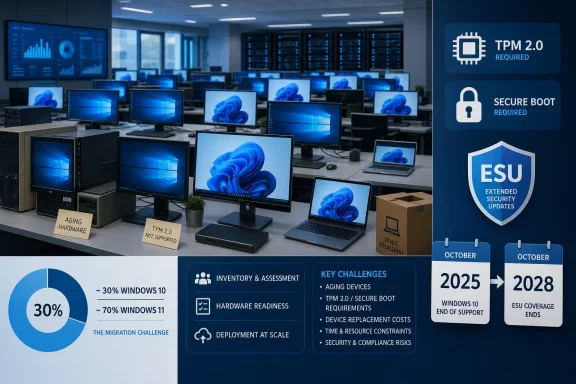 The migration is constrained by hardware, not just preference
Windows 11’s TPM 2.0, Secure Boot, and supported-CPU requirements turn an operating-system upgrade into a hardware decision for some Windows 10 users. A managed fleet can often be remediated with a staged replacement plan, but consumers and small organizations may be holding onto otherwise functional PCs rather than purchase new equipment solely to change operating systems.
HP had already estimated in its November 2025 earnings call that about 60% of its installed base had moved to Windows 11. The new 30% Windows 10 estimate suggests migration has continued, but the last segment is proving slower and more costly to move.
Extended Security Updates reduce urgency—but not the risk
Microsoft ended normal Windows 10 support in October 2025, meaning feature development, standard technical support, and regular security servicing stopped for the mainstream release. Extended Security Updates, or ESU, remain the safety net for systems that cannot yet be retired or upgraded.
Microsoft’s lifecycle documentation lists Windows 10 ESU coverage in annual increments through October 2028, depending on the customer program and licensing arrangement. Consumer eligibility and enrollment terms differ from commercial ESU plans, so administrators should not assume that a PC receiving updates today is covered indefinitely—or that it has been enrolled at all.
For Windows 10 systems that must stay in service, the immediate checks are straightforward:
- Confirm devices are on Windows 10 version 22H2 and are successfully receiving current cumulative updates.
- Verify ESU enrollment and licensing status for every device rather than treating Windows Update visibility as proof of coverage.
- Identify systems blocked from Windows 11 by processor, TPM, firmware, or line-of-business compatibility requirements.
- Set a replacement, Windows 11 migration, or alternative-platform deadline before ESU coverage ends.
HP’s 30% estimate is less a prediction of a sudden PC-buying surge than a reminder that the Windows 10 transition is now a long-tail support problem. The remaining machines will need a deliberate answer: paid extended servicing, replacement hardware, or a move away from Windows 10 before their patch window closes.
