Microsoft is reportedly preparing a commercial AI vulnerability-finding service, internally called
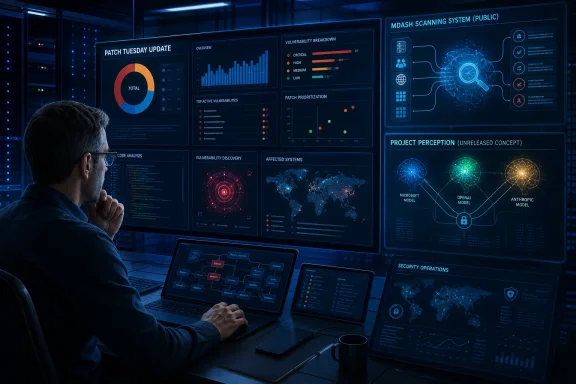
Project Perception, that could scan code, validate security flaws and generate fixes using a mix of Microsoft, OpenAI and Anthropic models. But Windows administrators should separate the report’s prospective product from what is already available: Microsoft’s own documentation says its codename MDASH agentic code scanner entered
private preview in Microsoft Security Exposure Management this month.
The Information, which first reported the Project Perception plans on July 16, says Microsoft could debut the product as soon as July and intends it as a lower-cost alternative to Anthropic’s restricted Claude Mythos offering. The reported product would go beyond a conventional static-analysis scanner, coordinating different models for bug discovery, root-cause analysis and patch generation.
That is a consequential shift for Windows, Azure and enterprise development teams. Microsoft is no longer presenting AI-assisted vulnerability research as an internal experiment; it is beginning to wire the capability into the Defender portal, GitHub connectors and remediation workflows that customers already use.
 MDASH Is the Technical Foundation, Not a Magic Patch Button
Microsoft introduced its Multi-Model Agentic Scanning Harness, or MDASH, in May 2026. The company describes it as a vulnerability discovery and remediation system built around more than 100 specialized agents and a panel of heavyweight and distilled AI models, rather than one all-purpose model.
Microsoft’s security blog said MDASH helped researchers uncover 16 previously unknown vulnerabilities in Windows networking and authentication components. Four were critical remote-code-execution issues, including flaws involving the Windows kernel TCP/IP stack and IKEv2. The May Patch Tuesday release included fixes for that group of findings, tying the system to a real Windows servicing outcome rather than a benchmark-only demonstration.
The company’s public performance claims are impressive but deserve the usual vendor caution. Microsoft says MDASH found all 21 planted bugs in one private test driver without false positives, reached 96% recall across five years of confirmed MSRC cases in
clfs.sys, and scored 88.45% on the public CyberGym benchmark. Those figures show why Microsoft sees a market opportunity, but they do not mean an organization should allow AI-generated patches into production unattended.
For its current private preview, Microsoft says teams can run MDASH scans from Defender CLI or a GitHub connector, review findings in the Defender portal, and use them to prioritize code-security risk. That wording matters. It describes a human-led security workflow augmented by AI, not automatic changes being merged into Windows images, application repositories or production infrastructure.
The Product Story Is Bigger Than a Scanner
The Information’s report adds a commercial layer to MDASH. Project Perception is said to use a model router that picks among Microsoft, OpenAI and Anthropic models depending on the task. The logic is straightforward: expensive reasoning models can be reserved for difficult validation and exploitability questions, while less costly models handle high-volume scanning, duplicate detection and preliminary triage.
That
multi-model design is arguably the more important news than the reported Project Perception name. It avoids betting an entire security product on a single model provider’s capabilities, pricing, availability or safety restrictions. It also gives Microsoft an avenue to treat vulnerability research as an orchestration problem: prove the defect, determine whether it is reachable and exploitable, produce a focused fix, and test whether the change breaks something else.
Microsoft has already described that workflow in broad terms. MDASH findings can flow into Microsoft Defender for prioritization alongside runtime signals and threat intelligence, then into GitHub and Azure DevOps for work-item creation, pull requests, validation and remediation. For organizations that run Windows-heavy estates alongside GitHub Enterprise, Azure DevOps and Defender, that closed loop is the potential differentiator.
The obvious challenge is trust. Automated code changes can fix a vulnerability while creating a regression, reducing performance, weakening compatibility or simply masking the original condition. Microsoft has repeatedly said human researchers and engineering teams remain in the process, and that is exactly where mature security organizations should keep them. AI can make the funnel wider; it cannot eliminate the need for code owners, test suites, release controls and rollback plans.
Anthropic’s Mythos Sets a Different Kind of Benchmark
The comparison target is
Claude Mythos, not “Claude Mitos.” Anthropic’s cybersecurity-focused model is designed for advanced vulnerability research and exploit reasoning, but access is tightly controlled through its Project Glasswing program. Anthropic says Mythos 5 is available only to a limited set of vetted partners because the same capabilities that help defenders find flaws can also be misused to develop attacks.
That policy creates an opening for Microsoft, but it also sets a high bar. Mythos is not merely marketed as a code-review assistant; Anthropic positions it as a frontier capability intended for critical infrastructure and major software providers. Anthropic’s broadly available Claude Fable 5 uses the same underlying model family with additional cyber and bio safeguards, while the more capable Mythos path remains gated.
Microsoft’s prospective offering appears to pursue a different balance. Rather than distributing one especially capable cybersecurity model, Project Perception reportedly would package multiple models inside an enterprise product with a security workflow around them. The practical distinction is not academic: Anthropic is controlling model access, whereas Microsoft’s opportunity lies in controlling the operational environment—identity, source repositories, Defender telemetry, DevOps pipelines, audit trails and remediation approval.
For IT departments, the relevant question will not be whether Microsoft has a more capable chatbot. It will be whether the service can reduce time-to-triage and time-to-fix without flooding security and engineering teams with speculative findings or risky patches.
Gallot’s Security Reorganization Gives the Launch Its Context
The Information reports that Microsoft security chief Hayete Gallot has made AI security a central priority since taking over the organization in February 2026. According to the publication, at least nine corporate vice presidents who previously reported into the security organization have departed this year, while teams focused on older products have faced cuts and AI-oriented groups have expanded.
The reported restructuring also suggests Microsoft may revisit a long-standing enterprise sales habit: bundling security features into broader Microsoft agreements. If AI-powered code security becomes a major standalone offering, pricing and licensing will matter as much as the models underneath it. The Information said Project Perception pricing had not been finalized.
That is particularly relevant for Windows and Microsoft 365 customers already paying for E5, Defender products, GitHub Advanced Security, Security Copilot or Azure services. A new AI code-security service could arrive as a premium add-on, an Exposure Management capability, a Security Copilot consumption feature, or some combination of those. Microsoft has not publicly confirmed the Project Perception branding, release date, price or licensing model.
More Findings Mean a Harder Patching Discipline
The near-term effect of MDASH may be less glamorous than autonomous patching:
more vulnerabilities will be found and disclosed. Microsoft has already put the system to work across Windows, Azure and identity engineering, targeting complex code where manual review is expensive and incomplete.
That is good news only if organizations can absorb the output. Security teams will need better asset inventories, dependable patch rings, evidence-based prioritization and a clear process for exceptional systems that cannot be updated immediately. An AI system that finds five times as many plausible flaws does not automatically make an enterprise five times safer if remediation queues, change-management windows and application testing remain unchanged.
Microsoft’s private preview is the immediate milestone to watch. A broader Project Perception launch, if it arrives in July as The Information reported, will show whether the company can turn MDASH from an internal Windows bug-finding engine into a product that helps customers close the same gap between discovery and remediation.

 Perception is separate from MDASH, for now